Editorial
How to Verify Thai Condo Foreign Quota Before Buying (2026)
By THAI.ESTATE Editorial Team14 min read
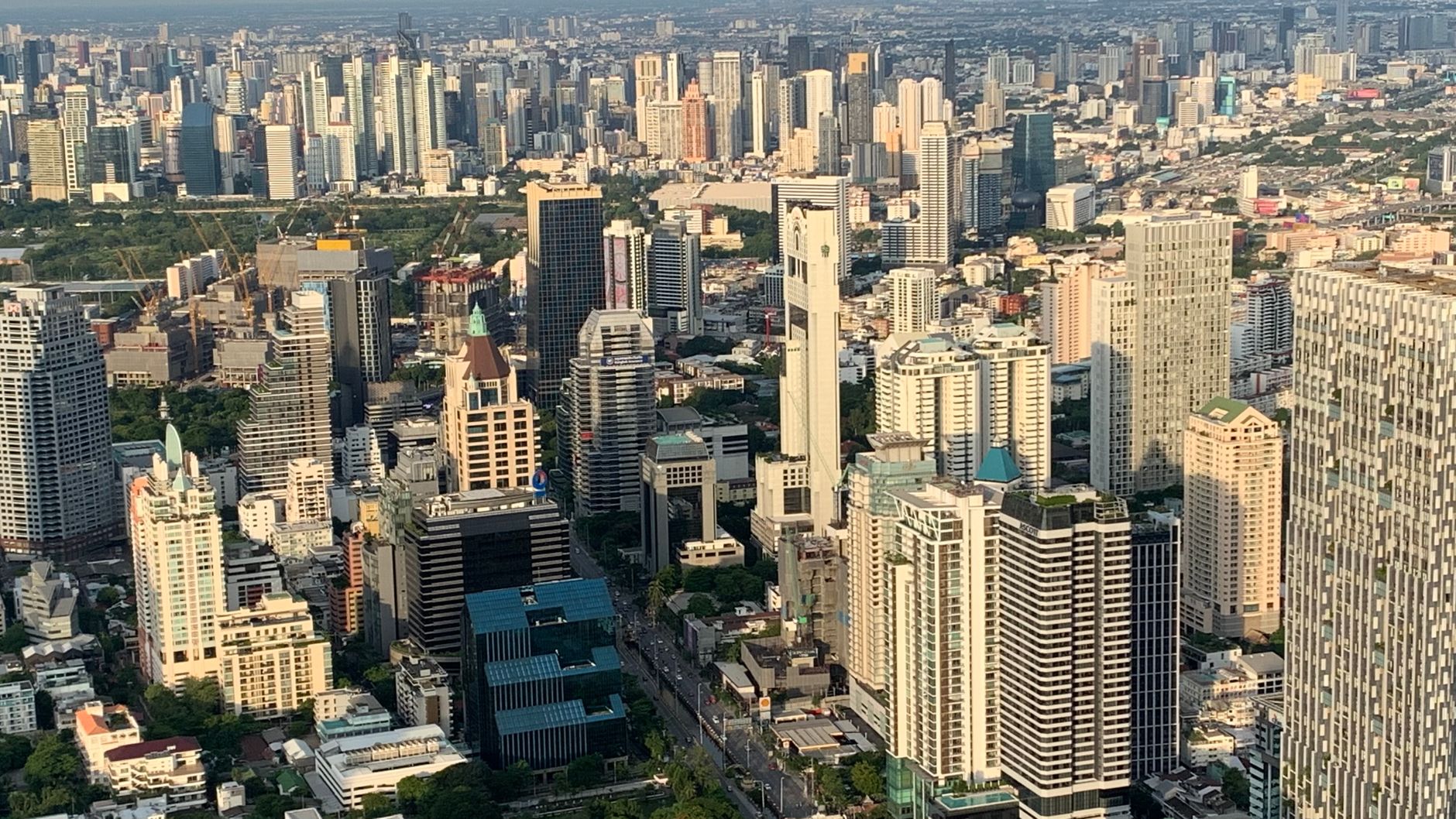
The 49% foreign quota rule is the single most important ownership constraint you face as a foreign buyer of a Thai condominium. If the quota is full at the building you want, you cannot hold freehold title - regardless of how long you have waited, how much you have paid in reservations, or how attractive the unit appears. This guide gives you a step-by-step verification process you can start from abroad, and the on-the-ground checks your lawyer must complete before you pay anything.
As of July 2026, the proposal to raise the foreign quota ceiling to 75% of floor area was confirmed as not enacted, per Thailand Law Online, July 2026. The 49% rule remains law. That makes quota-checking skills more critical now than at any point in the past decade.
Quick answer
- The 49% foreign quota applies to floor area, not unit count, across the entire condominium building, per the Condominium Act
- A building with, say, 10,000 sq m of saleable floor area can sell a maximum of 4,900 sq m to foreign nationals in freehold
- Quota availability is calculated at the building level, not by floor or tower phase - a developer's sales office figure is not legally binding
- The Land Department holds the authoritative quota record; your lawyer must check this directly, not rely on a developer's brochure
- In resale situations, quota availability is particularly opaque because units change hands without public tracking of buyer nationality
- Red flag threshold: any seller, agent, or developer who cannot produce a written Land Department confirmation of remaining foreign-quota floor area before contract signing is a risk you should not accept
Options and scenarios
Scenario 1: Buying a new-build unit from the developer
Developers of new projects are required to register unit sales with the Land Department. In theory, tracking remaining foreign quota is straightforward because the developer holds all sales data. In practice, some developers pre-sell units to foreign buyers under reservation agreements before formal registration, which means the Land Department record may lag behind actual sales. You need both the developer's internal allocation data and an independent Land Department check.
What to do:
- Request a written statement from the developer showing total saleable floor area of the building, total foreign-quota floor area already sold or reserved, and remaining foreign-quota floor area available
- Ask your lawyer to cross-check this figure against the Land Department's condominium registration file (the 'nor sor 4' file, also called the condominium juristic person file)
- Confirm the building permit and construction license are in place before any payment - renders sold without permits cannot guarantee future registration
- Verify the developer has completed at least one prior project on time; a developer with no completed projects carries materially higher delivery risk
Payment schedule risk: aggressive early-stage payment schedules - for example, 30% or more due before the building permit is confirmed - are a red flag. Legitimate milestone-based schedules tie each payment tranche to a verifiable construction stage.
Scenario 2: Buying a resale unit from a private seller
This is the highest-risk scenario for quota verification. When a foreign-held unit is resold, the quota it occupied transfers with the unit only if the new buyer is also foreign. If a Thai national buys that unit, the foreign quota it occupied is released back to the building total. If another foreign buyer purchases it, the quota remains consumed. The Land Department tracks this, but the data is not publicly searchable online in real time as of 2026.
What to do:
- Instruct a Thai property lawyer to conduct a physical search at the Land Department office in the province where the building is located
- Request the full condominium juristic person registration file, which records total foreign-owned floor area in the building
- Obtain the title deed (chanote - the highest-grade Thai land title, giving full ownership rights) for the specific unit and confirm it is currently registered in the foreign-ownership category
- If the seller is a foreigner, confirm they originally purchased under the foreign quota and not under a Thai nominee structure
- Per Chiang Rai Times, August 2026, nominee arrangements are increasingly scrutinised; a unit held by a Thai company on behalf of a foreign individual does not count against the foreign quota but also does not give you clean freehold title
For-sale-by-owner (FSBO) listings are growing in Thailand, per Chiang Rai Times, August 2026. A private seller may not know the current quota status of their own building. This is not bad faith - it is a gap in the information system. Your lawyer's physical search is the only reliable answer.
Scenario 3: Buying in a mixed-phase or multi-tower development
Some large projects are registered as a single condominium juristic person despite having multiple towers or phases built years apart. In this case, the 49% foreign quota applies across the entire registered development, not per tower. A developer may market Tower B as 'fully available to foreigners' while Tower A is already close to the 49% floor-area limit for the combined project.
What to do:
- Ask the developer to confirm in writing whether all towers or phases share a single condominium juristic person registration or have separate registrations
- If they share a single registration, request the combined floor-area quota calculation
- Your lawyer should verify the registration structure at the Land Department before you rely on any developer statement
Scenario 4: Buying remotely from abroad
Most international buyers begin their search online and may visit Thailand only briefly or not at all before committing to a reservation deposit. Remote buying significantly increases your exposure to quota risk because you cannot conduct physical checks yourself.
What to do:
- Appoint a Thai property lawyer by power of attorney before paying anything beyond a nominal, fully refundable holding fee
- A 'nominal holding fee' in this context means a small sum - market practice suggests figures under 50,000 THB - held by the developer or agent pending due diligence, with a written refund obligation if quota availability cannot be confirmed
- Do not sign a purchase agreement or pay a meaningful deposit until your lawyer confirms available foreign quota in writing, with the Land Department file number and date of search included
- Wire foreign currency from your home bank account and ensure the receiving Thai bank issues a Foreign Exchange Transaction (FET) certificate - formerly called a Thor Tor 3 form - for each transfer. Without FET documentation, you cannot repatriate funds or register freehold ownership at the Land Department
Comparison table
| Verification method | Who performs it | What it confirms | Reliability | Cost (indicative) |
|---|---|---|---|---|
| Developer written statement | Developer's sales team | Internal allocation data only | Low to medium - no legal force | Free |
| Agent or FSBO seller statement | Selling party | Seller's belief about quota | Low - no legal force | Free |
| Land Department physical file search | Your Thai property lawyer | Legally recorded foreign floor area at the building | High - authoritative source | 5,000-15,000 THB per search, indicative |
| Condominium juristic person records | Juristic person manager of the building | Current registered owners by nationality | Medium - updated periodically, may lag | 2,000-5,000 THB, indicative |
| FET certificate check | Your receiving Thai bank | That remitted funds are properly documented for ownership registration | High - mandatory for registration | Issued by bank, no separate fee |
| Title deed (chanote) check | Your Thai property lawyer | That the unit title is clean, unencumbered, and under the correct ownership category | High - mandatory check | Included in standard legal due diligence fee |
Risks and mistakes
Relying on a developer's verbal or brochure quota figure
Developers have a commercial interest in selling units. Their internal quota tracking may not reflect reservations that have not yet been formally registered. If you pay a substantial deposit based on a verbal assurance that 'foreign quota is available,' and the Land Department later shows the building is at or near the 49% limit, you face either losing your deposit or purchasing under a Thai company structure - which carries its own legal and financial risks. This mistake has cost buyers the full deposit amount plus legal fees to contest.
Ignoring the floor-area distinction
The quota is 49% of floor area, not unit count. A building with 100 units where foreign buyers have purchased the 20 largest units (each 120 sq m) may have consumed far more than 20% of the unit count but potentially 40% or more of the total saleable floor area. A quick count of 'foreign-owned units' will give you a false reading of how much quota remains. Always work from floor-area figures.
Assuming a pre-sale or off-plan reservation holds your quota slot
A reservation agreement is not a registered sale. Until the unit transfer is formally registered at the Land Department, the foreign quota is not legally locked to your name. If another foreign buyer registers a transfer before you, their floor area is counted against the quota first. In a fast-selling project, this can eliminate available quota between the time you reserve and the time you register.
Buying without FET documentation
The Land Department requires proof that the purchase funds were remitted from abroad in foreign currency and converted in Thailand. Each foreign transfer must be supported by an FET certificate from the receiving Thai bank. If you pay from a Thai bank account funded by a Thai baht transfer, or if the remittance records are incomplete, the Land Department will reject the foreign-ownership registration. You would then hold a unit you cannot legally register in freehold. There is no workaround after the fact.
Treating a leasehold as equivalent to foreign-quota freehold
If foreign quota in a building is full, some sellers or agents may offer a leasehold arrangement instead. Under the Thai Civil and Commercial Code, leases are capped at 30 years. Proposals for 99-year leases have circulated since 2024 but remain unenacted as of July 2026, per Thailand Law Online. A 30-year leasehold is a fundamentally different asset from freehold title. It does not appreciate in the same way, it cannot be mortgaged in most Thai bank structures, and it expires. Do not accept a leasehold as a substitute for freehold without fully understanding the difference and adjusting your price offer accordingly.
Overlooking the developer's construction financing structure
If a developer is financing construction primarily from buyer deposits rather than from a bank construction loan, your funds are at risk if sales slow. Ask the developer directly: 'Do you have a bank construction loan for this project, and can you show the loan agreement?' A developer with a bank construction loan has a lender conducting its own oversight of construction progress. A developer without one is building on buyer money, which is a materially higher risk profile. This is not a quota issue, but it is a project-completion risk that sits alongside quota risk.
Skipping litigation history checks
A developer with unresolved court cases from previous projects - particularly cases involving buyer complaints, contractor disputes, or land title challenges - is a warning sign. Your lawyer can check the Central Intellectual Property and International Trade Court records and the Civil Court records for the developer entity's company registration number. This search is not always available online and may require a physical check or a local legal service. Budget for it.
FAQ
How do I check if a Thai condo building has foreign quota remaining?
The authoritative check is a physical search of the condominium juristic person file at the Land Department office for the province where the building is located. This search must be conducted by a licensed Thai property lawyer. Developer statements and agent assurances are not legally binding and can be inaccurate. Budget 5,000-15,000 THB for a professional legal search, as an indicative figure.
Does the 49% foreign quota apply per floor or per building?
It applies to the entire registered building or development. Under the Thai Condominium Act, the limit is 49% of the total saleable floor area of the condominium juristic person as a whole. If multiple towers are registered under one juristic person, the 49% applies to all towers combined, not per tower.
Was the 75% foreign quota proposal enacted in 2026?
No. Per Thailand Law Online, July 2026, the proposal to raise the foreign ownership quota to 75% was not enacted and had not been tabled in Parliament as of that date. The 49% rule remains in force. Buyers should plan under the existing law, not under a proposed change that has not been legislated.
Can I buy a Thai condo if the foreign quota is full?
You cannot hold freehold title if the building's foreign quota is exhausted. Your practical options are: purchase a different unit in a building where quota remains available; purchase a leasehold interest (capped at 30 years under current law, not the proposed 99 years which is unenacted); or purchase through a Thai limited company structure, which carries its own legal risks and is subject to increasing regulatory scrutiny. Each option has a different risk and cost profile. None replicates clean freehold ownership under the foreign quota.
What is an FET certificate and why does it matter for foreign condo ownership?
An FET certificate (Foreign Exchange Transaction certificate, previously called a Thor Tor 3 form) is issued by a Thai bank when you receive a foreign-currency remittance and convert it to Thai baht. The Land Department requires this document as proof that the purchase funds originated abroad, which is a legal requirement for registering a condominium unit under the foreign quota. Without complete FET documentation matching your purchase price, the Land Department will not register freehold title in your name.
How many prior completed projects should a Thai developer have before I commit?
As a practical threshold, look for a developer with at least two fully completed, registered, and handed-over projects where buyers successfully received freehold title deeds. Ask the developer for the names of completed projects and verify at least one of them through an independent Land Department check. A developer with no completed projects is not automatically fraudulent, but the delivery risk is substantially higher and your payment schedule should reflect that.
What is a chanote title and why does it matter?
A chanote (Nor Sor 4 Jor) is the highest-grade Thai land title, confirming full, precisely GPS-surveyed ownership rights. For condominiums, each unit should have its own chanote-class title document. Lower-grade title documents exist in Thailand but are not appropriate for a condominium freehold purchase. Always confirm the unit's title document is a full chanote before proceeding.
What payment schedule should I accept for an off-plan Thai condo?
A safe off-plan payment schedule ties each payment tranche to a verified construction milestone - for example, foundation completion, structure topping-out, and building permit sign-off. A schedule that demands 30% or more before construction begins, or before the building permit is issued, is a red flag. Contractual delay penalties (typically 0.01% to 0.1% of the purchase price per day of delay, per market estimates) should be written into the purchase agreement. A developer unwilling to include delay penalties has limited accountability for timely delivery.
Can I verify a Thai developer's litigation history online?
Partially. Some Thai court records are accessible through official government portals, but coverage is incomplete and not all cases are indexed in searchable form as of 2026. A Thai property lawyer can conduct a more thorough check using the developer's company registration number through the Department of Business Development (DBD) database - DBD Order 1/2569 (March 2026) introduced broader beneficial ownership monitoring. A full litigation check typically requires both online and physical searches and should be part of your standard legal due diligence budget.
What is the standard transfer fee for a foreign buyer in Thailand in 2026?
Foreign buyers pay the standard 2% transfer fee at the Land Department, calculated on the officially assessed value or the purchase price, whichever is higher. A reduced 0.01% transfer fee was gazetted July 1, 2026, valid until June 30, 2027, but this reduction applies to qualifying Thai national buyers only, per Thailand Law Online, July 2026. Foreign buyers under the foreign quota pay the standard rate.
Planning a property purchase in Thailand? Send us your requirements - the THAI.ESTATE team will reply with specific options and a safety checklist for your case.