Editorial
Thailand Villa Ownership for Expats: 5 Legal Options in 2026
By THAI.ESTATE Editorial Team14 min read
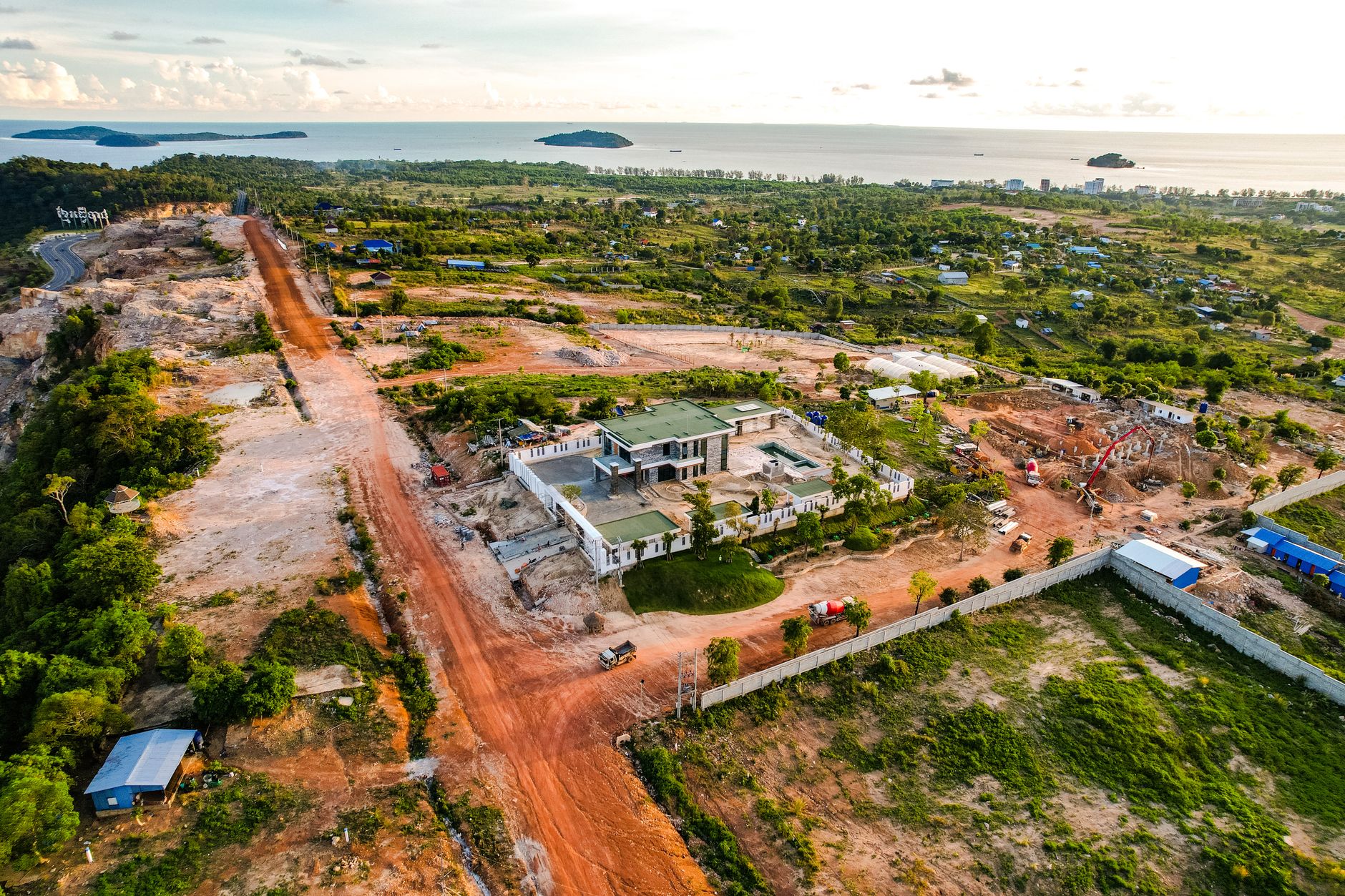
Foreigners cannot own land in Thailand under the Land Code, and a standalone villa sits on land. That is the starting point you need to accept before looking at any other detail. However, several legal structures let you occupy, use, and benefit from a villa long-term - and some give you protection that is close to ownership in practical terms.
This guide explains every structure available to expat buyers in 2026, the real risks of each, and the one structure you should avoid despite how often it is marketed.
Quick answer
- Foreigners cannot own land under Thailand's Land Code, so direct freehold of a villa plot is not possible
- A registered leasehold of up to 30 years (renewable by contract) is the most common legal route for expat villa buyers
- A superficies right (a registered real-property right to own structures on someone else's land) gives you full ownership of the building itself
- A usufruct (a registered right to use and receive income from land for life or up to 30 years) adds a further layer of personal security
- Thai company (nominee) structures for residential villas carry serious legal risk and are not recommended
- A chanote (Nor Sor 4 Jor) title deed - the highest-grade land title in Thailand - is the only title you should accept under a villa lease
- Legal fees for a proper villa structure typically run 50,000 to 150,000 THB (indicative 2026 figures), depending on complexity
Options and scenarios
Can expats ever own a villa freehold in Thailand?
No, not in the standard sense. The Land Code reserves land ownership for Thai nationals and certain Thai-majority juristic persons (legal entities with at least 51% Thai shareholding). A villa is a house on a plot, so the plot itself is always the legal constraint.
The only partial exception is the Thailand Investment Promotion route: the Board of Investment (BOI) has, at various times, allowed high-value investors to hold up to 1 rai (about 1,600 square metres) of residential land under specific schemes. As of 2026, eligibility thresholds and active schemes change periodically, so you must verify current BOI conditions with a licensed Thai lawyer before treating this as a live option.
Option 1: Registered 30-year leasehold
This is the most widely used structure for expat villa buyers. You sign a lease with the landowner - typically a developer or private seller - for a term of 30 years. The lease is registered at the local Land Department office and appears on the chanote title deed. Registration is the critical step: an unregistered lease gives you only a contractual right, not a property right, and it may not survive the death or bankruptcy of the landowner.
What 30 years means in practice: Thai law caps a single lease registration at 30 years. Contracts often include two option periods of 30 years each (for a total of 90 years in the contract wording). However, only the first 30-year term is legally enforceable as a registered right today. The renewal terms are contractual promises, not guaranteed legal rights, and their enforceability has not been uniformly tested in Thai courts. You should treat the guaranteed period as 30 years.
What the lease covers: The lease should specify the land boundaries, the permitted use (residential), the premium paid, any annual rent, and what happens to the structure at lease end. A well-drafted lease will also address subletting, mortgage rights, and what compensation you receive if the landowner breaches the agreement.
Key document: The registered lease notation on the chanote title deed. Ask your lawyer to show you the physical chanote with the lease stamp before you release any payment.
Option 2: Superficies right
A superficies is a registered real-property right defined in the Thai Civil and Commercial Code. It gives you the legal right to own structures (the villa building) on land that belongs to someone else. Unlike a lease, a superficies is a right in rem - it attaches to the land and survives a change in landowner.
Duration: Up to 30 years, or for the lifetime of the holder if structured as a personal right. At the end of the term, you and the landowner agree in advance what happens to the building - you can negotiate the right to remove it or receive compensation.
How it is used in practice: Superficies is almost always combined with a 30-year lease. The lease gives you the right to occupy the land; the superficies gives you legal ownership of the building on it. Together, they create a stronger package than a lease alone.
Registration: Registered at the Land Department, recorded on the chanote. Non-registered superficies agreements are not enforceable as property rights.
Option 3: Usufruct
A usufruct (in Thai: 'สิทธิอาศัย' for residence or 'สิทธิเก็บกิน' for income-bearing usufruct) is another registered real-property right under the Civil and Commercial Code. It gives you the right to use and enjoy property - and in the income-bearing version, to collect rents from it - for up to 30 years or for your lifetime.
Key difference from a lease: A usufruct is a stronger personal right and is not terminated by the death of the landowner. It is also not easily cancelled by the landowner unilaterally, unlike some poorly drafted leases.
Practical limitation: A usufruct cannot be transferred or inherited by your heirs (the personal version ends at your death). If you want to pass the villa benefit to family members, a lease is generally more flexible.
Common use case: Expat buyers often hold a usufruct alongside a lease on the same property. The usufruct protects their personal right to live there; the lease provides a transferable commercial framework.
Option 4: Thai limited company structure
Some agents and developers still market villa purchases through a Thai limited company - a juristic person (a legally registered entity) in which you hold minority shares and Thai nominees hold the majority. The company then buys the land in its name.
This structure is widely used, but it carries serious legal risk for residential property:
- The Land Code and the Department of Special Investigation (DSI) have repeatedly stated that nominee shareholding for the purpose of land ownership by foreigners is illegal
- If the structure is investigated, the company may be required to dispose of the land
- Nominee shareholders can, in theory, act against your interests
- Banks will not mortgage land held in a nominee company to a foreign buyer
A legitimate Thai company that conducts real business and happens to own property is different from a shell company created solely to hold a villa. The line between the two is tested by the Department of Lands and the DSI. For residential use, the risk is not theoretical - there have been enforcement actions.
The THAI.ESTATE Editorial Team does not recommend this structure for expat residential villa purchases.
Option 5: BOI-linked land ownership
The Thai Board of Investment has introduced, and revised, schemes that allow qualifying foreign investors to hold a limited area of residential land (up to 1 rai) subject to maintaining a minimum investment in Thailand - historically set at 40 million THB for a period of at least three years, though exact conditions have changed. As of 2026, you should verify whether the scheme is active and what the current investment criteria are, as these have been adjusted more than once since 2022.
This route is relevant only if you are making a substantial investment in Thailand (infrastructure funds, government bonds, or approved asset classes) and want the additional security of nominal land ownership. For most expat villa buyers, the 30-year lease plus superficies package is more practical.
Title deed quality: why chanote matters
Before any structure is useful, the land must carry a full chanote title (Nor Sor 4 Jor). This is the only title that confirms fully surveyed boundaries registered with the Royal Thai Survey Department. Lower-grade titles (Nor Sor 3, Sor Kor 1, or possession documents) do not give the same boundary certainty and may not be legally useable for registration of leases, superficies, or usufructs. Always instruct your lawyer to verify the title grade before you proceed.
Foreign Exchange Transfer (FET) certificate: why you need it
If you later sell your leasehold interest or receive compensation at lease end, you will want to repatriate the proceeds. To do that legally, you need a FET certificate (also called a Thor Tor 3 form) - a document issued by a Thai commercial bank confirming that funds were transferred into Thailand from abroad in foreign currency and converted to Thai baht. Keep the FET certificate from your original purchase transfer. Without it, repatriation of sale proceeds is complicated and sometimes impossible.
Comparison table
| Structure | Land ownership | Building ownership | Registerable | Max term | Transferable | Risk level |
|---|---|---|---|---|---|---|
| Registered leasehold | No (right to use) | By agreement | Yes | 30 years | Yes (subject to lease terms) | Low - Medium |
| Superficies | No | Yes (right in rem) | Yes | 30 years or lifetime | Limited | Low |
| Usufruct | No | Use right only | Yes | 30 years or lifetime | No (personal right) | Low |
| Lease + Superficies combined | No | Yes | Yes | 30 years | Partial | Low |
| Thai nominee company | Company holds it | Company holds it | Yes (to company) | Indefinite | Yes (share transfer) | High |
| BOI residential land scheme | Yes (up to 1 rai) | Yes | Yes | Freehold | Yes | Low (if compliant) |
Risks and mistakes
Paying before the lease is registered
Some developers ask for full payment at contract signing, before the lease is registered at the Land Department. Do not do this. The Land Department registration is the legal act that creates your property right. If the developer becomes insolvent or the registration is refused (for example, because there is a prior encumbrance on the chanote), you lose your money with only a contractual claim in a court process. Tie all major payments to the completed registration.
Accepting an unregistered renewal option as security
Contracts that promise '30 + 30 + 30 year leases' are common in Phuket, Samui, and Chiang Mai. The first 30-year term can be registered. The second and third terms cannot be pre-registered today. They are contractual promises, and they depend on the cooperation of the landowner (or their heirs) at renewal time. Do not pay a large premium for these unregistered options as though they are guaranteed legal rights.
Skipping due diligence on the landowner
If the landowner is an individual (common in private villa sales), check that they are the registered owner on the chanote, that the land is not mortgaged, and that there are no court orders or tax liens on the title. A title search at the Land Department costs very little and reveals all registered encumbrances. Your lawyer should do this as a baseline step.
Using a nominee company for residential use
As explained above, this structure is illegal in its pure form and has attracted enforcement attention from Thai authorities. Do not let an agent reassure you that 'everyone does it' - that is not a legal defence. Enforcement risk is real, and it falls on you as the foreign party.
Ignoring the sinking fund and juristic person obligations
In a villa development (as distinct from a standalone plot), there is often a juristic person - a management company or owners' committee registered to manage common areas. You will pay a sinking fund contribution (a one-time upfront payment into a reserve fund for major future repairs) and ongoing maintenance fees. Understand these costs before you buy, and check whether the juristic person is properly registered and functional. A poorly managed juristic person can leave you with no legal recourse for common-area problems.
Choosing the wrong land title
Purchasing a leasehold on land with a lower-grade title (not a full chanote) can leave you with a lease that cannot be registered or enforced in the normal way. Always start with the title grade.
Failing to document the FET transfer
Some buyers transfer funds to Thailand in multiple small amounts, through third parties, or via cryptocurrency conversion - and then cannot produce a proper FET certificate at exit. Set up the FET documentation from the first transfer.
FAQ
Can a foreigner own a villa outright in Thailand?
No. Thai law does not allow foreigners to own land, and a villa includes land. The closest legal alternative is a registered 30-year lease combined with a superficies right, which gives you long-term occupancy and building ownership without holding the land title.
What is the maximum lease term for a villa in Thailand?
The maximum term for a single registered lease under Thai law is 30 years. Contracts often include renewal options for two further 30-year periods, but only the first term is a registered legal right. Treat your guaranteed period as 30 years.
What does 'chanote' mean and why does it matter?
A chanote (Nor Sor 4 Jor) is the highest-grade land title in Thailand. It confirms that the land boundaries have been precisely surveyed and registered with the Royal Thai Survey Department. Only land with a chanote title is suitable for registering a lease, superficies, or usufruct. Lower-grade titles carry boundary uncertainty and legal limitations.
Is a Thai company a safe way for a foreigner to own a villa?
Not for residential purposes. A company structure where Thai nominees hold shares on your behalf to allow you to control land is considered illegal under the Land Code. The structure is still common, but enforcement actions have occurred. The legal risk sits with you as the foreign party.
What is a superficies right and how does it help villa buyers?
A superficies is a registered real-property right that gives you legal ownership of the building on someone else's land. It is recorded on the land title and survives a change in landowner. For villa buyers, it means you can legally own the structure even though you cannot own the plot. It is most useful when combined with a registered lease on the same land.
What is an FET certificate and do I need one?
An FET certificate (Foreign Exchange Transfer certificate, also called a Thor Tor 3 form) is issued by a Thai commercial bank to confirm that foreign currency was transferred into Thailand and converted to Thai baht. You need it when you eventually sell your interest or repatriate proceeds. Obtain it for every major inward transfer from the start.
What is a usufruct and how is it different from a lease?
A usufruct is a registered right to use and enjoy property - and sometimes collect income from it - for up to 30 years or for your lifetime. Unlike a lease, a usufruct is a personal right: it cannot be transferred or inherited. It is not cancelled by the death of the landowner. Many expat buyers hold both a lease (for transferability) and a usufruct (for personal security) on the same villa.
How much does it cost to set up a proper legal villa structure in Thailand?
Indicative 2026 figures: lawyer fees for drafting and registering a lease plus superficies typically run from 50,000 to 150,000 THB, depending on the complexity of the deal and the law firm. Land Department registration fees are additional and are set by law based on the declared lease value. These costs are modest relative to the purchase price and should not be skipped.
Can I build a villa on leased land in Thailand?
Yes. A lease combined with a superficies is specifically designed for this scenario. The superficies gives you the right to construct and own a building on land you do not own. The lease gives you the right to occupy the land during the term. Both must be registered at the Land Department before construction begins.
What happens to the villa at the end of a 30-year lease?
It depends on what your contract says. If the lease and superficies are silent, the building may revert to the landowner. A well-drafted agreement will specify either a renewal process, compensation to you for the building's residual value, or the right to remove structures. This clause must be in your contract before you sign, not added later.
Planning a property purchase in Thailand? Send us your requirements - the THAI.ESTATE team will reply with specific options and a safety checklist for your case.