Editorial
Thailand Condo Foreign Quota: How the 49% Rule Works in 2026
By THAI.ESTATE Editorial Team11 min read
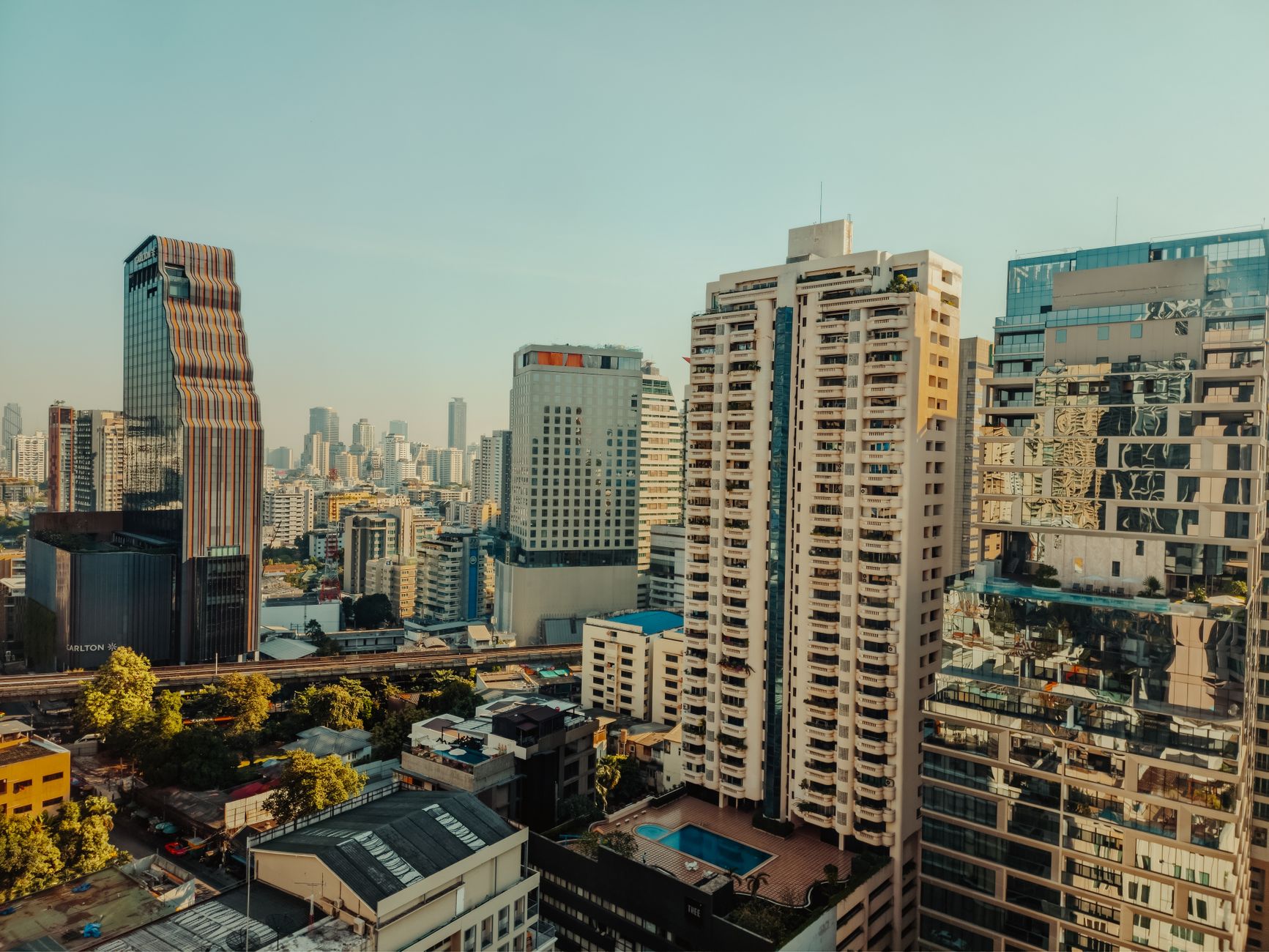
Foreigners can own a condominium in Thailand outright, with freehold title, under the Condominium Act B.E. 2522 (1979, as amended). The one hard limit is the 49% foreign ownership quota: in any registered condominium project, foreign nationals collectively cannot own more than 49% of the total sellable floor area. The remaining 51% must be held by Thai nationals or Thai juristic persons.
This rule has not changed. What changes constantly is the quota status of individual projects - and in 2026, with condo construction permits down approximately 71% year-on-year per reporting from The Nation Thailand (July 2026) and developers offloading existing stock under pressure, verifying quota availability before you commit any funds is more important than ever.
Quick answer
- The law: Condominium Act B.E. 2522 caps foreign ownership at 49% of total floor area per project
- Your ownership right: freehold, registered at the Land Department, recorded on a chanote (the full title deed - the strongest form of land and unit title in Thailand)
- No quota = no freehold: if the foreign quota in a project is exhausted, you cannot buy that unit as a foreigner under freehold, regardless of what a developer or agent tells you
- Checking quota is your job: the developer has no legal obligation to alert you when the quota is nearly full
- 2026 market context: condo permits dropped roughly 71% in early 2026 (per The Nation Thailand, July 2026); developers are selling off existing stock at discounts, which can mask depleted foreign quotas in older projects
- FET required: to register freehold ownership you must show a Foreign Exchange Transaction (FET) certificate - proof that your purchase funds were transferred into Thailand in foreign currency from abroad
Options and scenarios
Scenario 1 - Buying a new-build condo off-plan
Developers of new projects typically track their foreign quota from the first sale. Ask for a written statement of the current foreign-quota percentage sold and the remaining available area in square metres. Get this in writing before paying any reservation fee.
In 2026, developers are under pressure to move inventory. Per The Nation Thailand (July 2026), many firms are prioritising liquidity over new launches, which means the available pool of genuinely fresh projects with full foreign quota is narrower than in previous years. A project marketed as 'new' may carry unsold units from a slower sales period, with quota already partially consumed.
Scenario 2 - Buying a resale condo unit
This is where quota risk is highest and least visible. When a Thai national sells a unit to a foreigner, the unit moves from the Thai quota to the foreign quota. If the project is already at or near 49% foreign ownership, that transfer cannot be registered. The Land Department will reject it.
Before signing any sale and purchase agreement on a resale unit, instruct a lawyer to obtain the current quota certificate from the juristic person (the condominium's elected management body, recognised under Thai law as a legal entity that administers the building) of that project.
Scenario 3 - Distressed project or developer asset sale
This scenario carries the most hidden risk in 2026. When a developer sells assets or entire project blocks to raise cash - as The Nation Thailand reported developers are doing amid weak demand and tight credit (July 2026) - individual units within those blocks may change hands quickly. Foreign quota can shift without public announcement.
If you are buying from a distressed sale, a receivership, or a bulk-purchase resale, verify quota status at the Land Department directly, not just through the seller or their agent.
Scenario 4 - Foreign quota is exhausted, but you still want the unit
You have limited options. You can:
- Wait: if a foreign owner later sells to a Thai buyer, the slot returns to the Thai quota, not the foreign quota. Quota does not 'open up' for other foreigners this way unless a foreign owner sells to another foreign buyer within the same building's remaining foreign quota.
- Lease instead: a registered long-term lease (typically 30 years, renewable by contract though not by law) does not require foreign quota. This gives you security of use but not freehold title.
- Reconsider the project: in a market with declining new supply, other projects with available foreign quota do exist.
Note: some agents suggest a Thai-company nominee structure to hold the unit within the Thai quota. This approach carries real legal risk. The Land Code prohibits using Thai nominees to circumvent foreign ownership restrictions, and authorities have pursued cases against such structures. The THAI.ESTATE Editorial Team does not recommend it for residential property.
Scenario 5 - Buying under the foreign investment pathway
Thailand's Board of Investment (BOI) and certain visa programmes have been linked to property purchase rights in discussion, but as of 2026, the primary freehold route for condominiums remains the Condominium Act quota. The rarely-used Section 96 bis pathway under the Land Code (requiring a 40-million-baht qualifying investment) applies to land, not condominiums, and is seldom granted. Do not rely on it without specific legal advice for your individual situation.
Comparison table
| Parameter | Freehold condo (within quota) | Resale condo (quota check needed) | Leasehold unit (no quota needed) | Thai-company nominee |
|---|---|---|---|---|
| Ownership type | Freehold, chanote title | Freehold, chanote title | Leasehold only, 30-year registered | Indirect; legally risky |
| Quota requirement | Yes, 49% cap applies | Yes, 49% cap applies | No quota required | Bypasses quota; illegal use |
| FET certificate required | Yes | Yes | Typically yes for fund transfer proof | N/A |
| Title security | Highest | High if quota confirmed | Moderate; depends on lease terms | Low to very low |
| Key due-diligence step | Confirm quota before reservation | Obtain quota certificate from juristic person | Review lease registration at Land Dept | Not recommended |
| 2026 risk level | Low if quota is confirmed | Medium to high without verification | Low to medium | High |
Risks and mistakes
Paying a reservation fee before confirming quota
Reservation fees in Thailand are typically non-refundable. Some developers and agents accept a reservation while quota status is unclear. Confirm quota availability in writing before any payment changes hands.
Trusting the developer's verbal assurance
Developers have a commercial interest in completing the sale. Verbal assurances that 'quota is fine' are not legally binding. Request a written quota statement and, for resale units, a certificate from the juristic person. The only definitive confirmation comes from the Land Department records.
Ignoring the FET requirement
To register freehold ownership of a condo as a foreigner, you must present an FET certificate issued by a Thai bank. This document proves that the purchase funds arrived in Thailand as foreign currency from an overseas account and were then converted to Thai baht. If you transfer money within Thailand from a Thai bank account, that does not satisfy the FET requirement. Plan your banking accordingly before you transfer funds.
Assuming discounted stock has clean quota
In 2026, developers are offering aggressive discounts to move inventory, per The Nation Thailand (July 2026). A discounted unit is not a problem in itself. The issue is that bulk or distressed sales sometimes involve units that were previously reserved for Thai buyers or were part of a corporate quota arrangement. Always verify the current status of that specific unit's quota position.
Overlooking the building's juristic person health
The juristic person manages common areas, collects maintenance fees, and holds the building's sinking fund (a reserve fund built up from owner contributions, used for major repairs and capital expenditure). If the juristic person is financially weak or poorly managed, the building's common areas deteriorate and resale value suffers. Request the last two years of financial statements from the juristic person before purchase.
Relying on a lease as equivalent to freehold
A 30-year registered lease gives you the right to use and occupy a unit. It does not give you freehold title. In Thailand, lease renewals are a matter of contract, not law. The initial registered term is enforceable; options to renew depend entirely on the contractual language and the willingness of the future title holder. If you want freehold, only a unit within the foreign quota delivers that.
Miscounting the 49% - floor area, not unit count
The quota applies to floor area, not the number of units. A project with 200 units of varying sizes does not have a simple 'up to 98 units for foreigners' rule. A foreigner buying a large penthouse unit consumes more of the foreign quota (by square metres) than a foreigner buying a small studio. Confirm the available quota in square metres, not just as a unit count.
FAQ
Can a foreigner own 100% of a condominium unit in Thailand?
Yes, one foreigner can own one unit outright with freehold title. The 49% limit applies at the project level (total foreign-owned floor area across all units), not at the individual unit level. You can own your unit 100%. The building as a whole cannot be more than 49% foreign-owned by floor area.
What happens if a project reaches 100% foreign quota?
No further units in that project can be transferred to foreign buyers under freehold. Foreigners wishing to buy into that project would need to wait for a foreign owner to sell to another eligible foreign buyer, or consider a registered leasehold arrangement instead.
What is an FET certificate and how do I get one?
An FET (Foreign Exchange Transaction) certificate is a document issued by a Thai commercial bank confirming that funds were received from abroad in foreign currency and converted to Thai baht in Thailand. You obtain it by wiring the purchase amount from your overseas bank account to your account at a Thai bank and asking the Thai bank to issue the FET form. Without this document, the Land Department will not register the freehold transfer to a foreign buyer.
Does the 49% quota apply to all types of property in Thailand?
No. The 49% foreign quota is specific to registered condominiums under the Condominium Act. Foreigners cannot own land or houses (including villas) in freehold at all under the Land Code - there is no quota for land ownership because land ownership by foreigners is prohibited in most circumstances. For houses and villas, foreigners typically use registered long-term leases or superficies rights (a registered right to use and build on someone else's land for a defined period).
How do I check the current foreign quota status of a specific project?
The definitive source is the Land Department office (sometimes called the Land Office) with jurisdiction over the project's location. Your lawyer can request the quota record. For resale units, the juristic person of the condominium building should also hold a current quota register. Rely on neither the developer's sales office nor the seller's agent for this information without independent verification.
Is the 49% rule likely to change in 2026 or 2027?
As of 2026, the Condominium Act's 49% limit remains unchanged. Discussions about raising the foreign quota ceiling have recurred periodically in Thailand over many years but have not resulted in legislative amendment. Any future change would require an act of parliament. Do not purchase on the assumption that the quota will be raised.
Can a foreigner inherit a condo unit that pushes the project over 49%?
Thailand's Condominium Act contains specific provisions addressing inheritance by foreign heirs. A foreigner can inherit a unit even if it would technically exceed the project's foreign quota, but they are generally required to dispose of the unit within a defined period. This is a complex area; consult a Thai lawyer if you are inheriting or writing inheritance provisions into a will for a Thai condo.
Why does quota matter more in 2026 than in previous years?
Condo construction permits fell approximately 71% year-on-year in early 2026, per The Nation Thailand (July 2026). With fewer genuinely new projects launching, buyers are competing for resale units and developer-held stock in existing projects. In many established projects, the foreign quota has been filling up over years of steady international sales. At the same time, developers under financial pressure are liquidating assets quickly, and the transactional speed of distressed sales creates conditions where quota status may not be communicated clearly. Careful verification is the practical response.
What is a chanote and why does it matter for a condo purchase?
A chanote (also written as 'nor sor 4 jor') is the highest form of land title in Thailand - a full title deed with GPS-surveyed boundaries registered at the Land Department. For condominiums, the building's underlying land should be held on chanote, and your individual unit title (the condominium title deed) is derived from that. Buying into a project where the underlying land has a weaker title document creates legal uncertainty. Always confirm that the project land is on chanote.
What is a sinking fund and should I check it before buying?
A sinking fund is a one-time capital contribution collected from buyers at purchase (and sometimes from resale buyers) to build a financial reserve for the condominium building. It covers major future expenses such as roof repairs, elevator replacement, and common-area renovation. A project with a small or poorly maintained sinking fund may face special assessments (additional charges to owners) in future, or allow common areas to deteriorate. Ask the juristic person for the current sinking fund balance relative to the building's size and age before completing a purchase.
Planning a property purchase in Thailand? Send us your requirements - the THAI.ESTATE team will reply with specific options and a safety checklist for your case.