Editorial
Thailand 49% Foreign Quota for Condos: 2026 Guide
By THAI.ESTATE Editorial Team12 min read
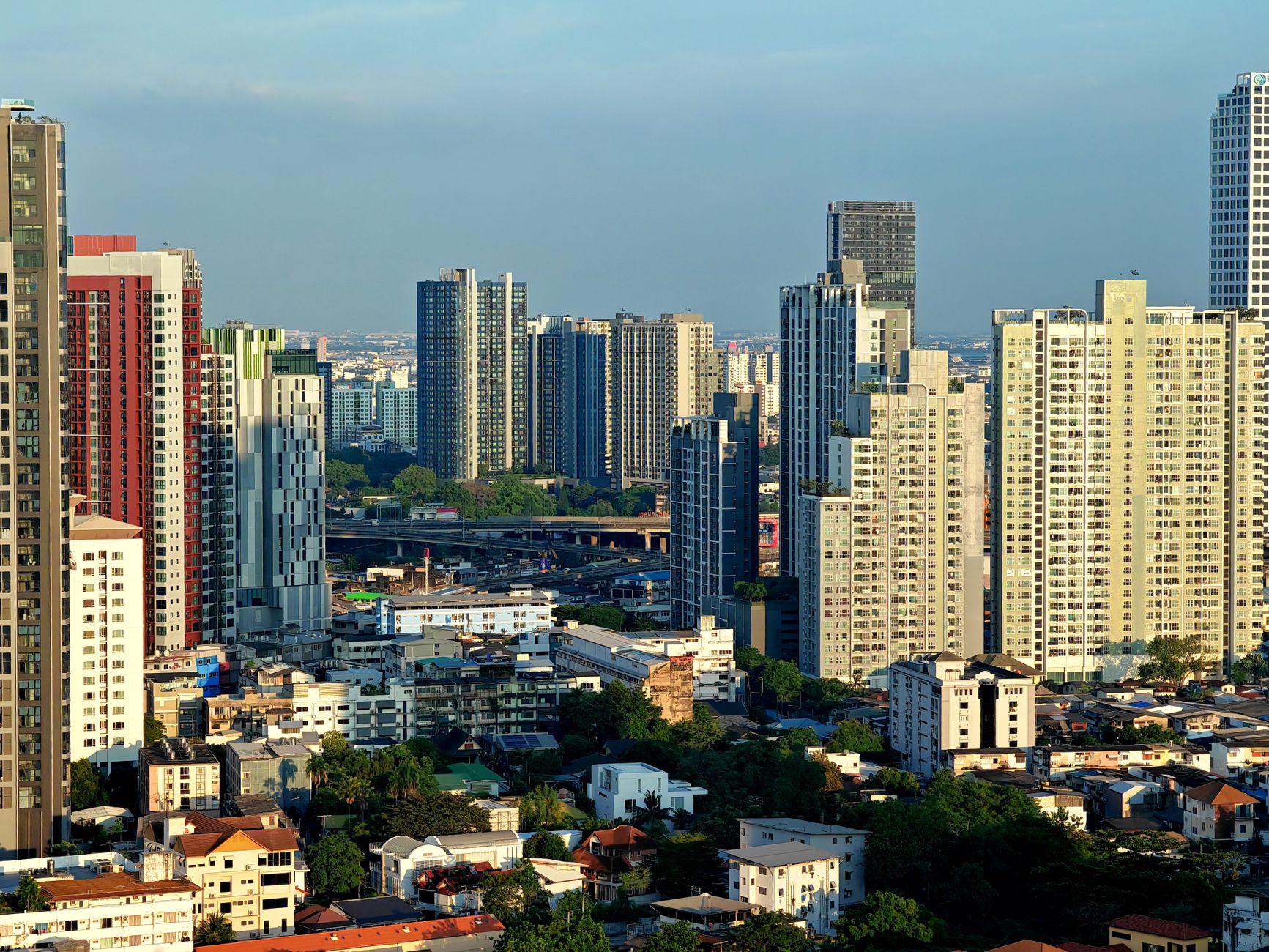
The 49% foreign quota is the legal ceiling on foreign freehold ownership in any Thai condominium building. Under the Condominium Act, foreigners as a group may own no more than 49% of the total sellable floor area in a single registered condominium project. The remaining 51% must stay in Thai hands. This rule is the single most important number you need to understand before buying a condo in Thailand.
If a building's foreign quota is already full, you cannot buy a freehold unit there as a foreigner - regardless of price or negotiation. You either wait for a quota unit to resell, buy leasehold instead, or choose a different project.
Quick answer
- The Condominium Act (Thailand) limits aggregate foreign freehold ownership to 49% of total floor area per registered project
- 'Foreign quota' and 'foreign freehold' are used interchangeably in the market; both refer to this 49% ceiling
- Each unit's title deed (chanote - the strongest form of Thai land title, issued by the Land Department) records whether it sits in the foreign or Thai quota
- When the foreign quota is full, you can still buy leasehold in that building, but you will not hold freehold title
- FET (Foreign Exchange Transaction) documentation - a bank certificate confirming foreign funds were transferred into Thailand in foreign currency - is required to register a foreign-quota purchase
- As of 2026, the 49% rule has not been amended, though periodic proposals to raise it to 75% have surfaced in government discussions without becoming law
Options and scenarios
What does 'foreign quota unit' actually mean?
A foreign-quota unit is a condominium apartment registered under the foreign ownership portion of a project. The Land Department records the nationality and ownership basis at the time of transfer. Once you hold this title, you own the unit outright - no expiry date, no renewal, no Thai partner required.
Ownership is freehold, equivalent in security to what most Western buyers know as full ownership. You can sell, rent, mortgage, or inherit the unit. Thai inheritance law and your home-country will must both be considered for estate planning, but the ownership right itself is durable.
How is the 49% calculated?
The quota is measured by floor area, not by number of units. A developer building 100 units of unequal size cannot simply sell 49 units to foreigners. The calculation is based on the aggregate square metres of all sellable units. A project with 10,000 sq m of sellable space may transfer up to 4,900 sq m into foreign hands.
This means two adjacent units of different sizes count differently toward the quota. Buyers of large penthouses consume more quota than buyers of small studios. Always ask the juristic person (the legally registered management body of a condominium building, responsible for common areas and building administration) for the current foreign quota utilisation figure before signing anything.
What happens when the quota is full?
When 49% of a project's floor area is in foreign hands, the Land Department will not register any further foreign freehold transfers. At that point, your options are:
- Buy leasehold in the same building. A registered long-term lease (typically 30 years, renewable by contract for up to two further 30-year terms, though only the first term is legally guaranteed) gives you secure use rights without freehold title. The lease is registered at the Land Department and appears on the title deed.
- Choose a different project where foreign quota remains available.
- Wait for a quota unit to become available. When an existing foreign-quota owner sells to another foreigner, the quota does not increase - it transfers. The quota count stays the same. Only when a foreign-quota unit is sold to a Thai buyer does the foreign quota 'free up.'
What is FET documentation and why does it matter?
FET (Foreign Exchange Transaction) form - sometimes called a Thor.Tor.3 or bank certificate - is proof that the purchase funds originated outside Thailand, were transferred in a foreign currency, and were converted to Thai baht upon arrival. The Land Department requires this document to register a foreign-quota transfer.
Without a valid FET form, the Land Department will not complete the title transfer into the foreign quota. This requirement exists to enforce capital controls and confirm that the purchase genuinely involves foreign capital.
Practical points:
- Transfer funds from an overseas account, in a foreign currency (USD, EUR, GBP, etc.), directly to a Thai bank account in your name
- The receiving Thai bank issues the FET certificate
- Each transfer must state the purpose as 'property purchase' or 'purchase of condominium'
- The amount transferred must cover the full purchase price; partial transfers complicate the documentation
- Transfers between Thai bank accounts, or from a Thai-baht account, do not qualify
Can you buy from a developer off-plan in the foreign quota?
Yes. Most major condo developers in Thailand pre-allocate foreign-quota units during the sales launch. You reserve a foreign-quota unit, pay a deposit, and sign a sale-and-purchase agreement. The formal title transfer happens only when construction is complete and the building receives its condominium licence from the Land Department.
Key risk: the quota allocation at reservation is a commercial commitment by the developer, not yet a Land Department registration. If the developer goes into financial difficulty before completion, your quota position is a contractual claim, not a registered property right. Due diligence on developer financial health is essential for off-plan purchases.
Do all condominium projects have foreign quota available?
No. Completed buildings in popular areas - central Bangkok, beachfront Phuket, Pattaya seafront - often have zero foreign quota remaining. New project launches typically open foreign-quota units at the same time as Thai-quota units. In the secondary (resale) market, always verify the current quota status directly with the juristic person or at the district Land Department office before making an offer.
Can a foreign company buy in the foreign quota?
A company registered outside Thailand may purchase a foreign-quota unit if it meets the definition of a 'foreign juristic person' under the Condominium Act - broadly, a company incorporated abroad or one where foreigners hold more than 49% of shares. The FET documentation requirement applies in the same way. Thai-registered companies with majority foreign shareholding are also treated as foreign for quota purposes.
What about the Thai company nominee structure?
Some buyers consider forming a Thai company with Thai nominee shareholders to buy land or villas - and sometimes condos in the Thai quota. Using Thai nominee shareholders specifically to circumvent foreign ownership restrictions is illegal under the Land Code and the Foreign Business Act. Authorities have increased scrutiny of such structures since 2022. A nominee arrangement places your investment at real legal risk: fines, forced divestment, and potential criminal liability for the nominees. This guide does not recommend nominee structures for residential property.
Comparison table
| Parameter | Foreign Quota Freehold | Leasehold (condo or villa) | Thai Quota (not available to foreigners directly) |
|---|---|---|---|
| Ownership type | Full freehold title | Registered use right, fixed term | Full freehold, Thai owners only |
| Title document | Chanote in your name | Lease registered on chanote | Chanote in Thai owner's name |
| Term | Indefinite (no expiry) | 30 years (contractual renewal possible) | Indefinite |
| FET form required | Yes | No (for lease registration) | Not applicable |
| Resale flexibility | High - sell to any eligible buyer | Moderate - lease transfer requires consent | Not applicable to foreigners |
| Inheritance | Yes, subject to estate planning | Lease may pass to heirs if contract allows | Not applicable |
| Availability | Limited to 49% of project floor area | Available when foreign quota is full | Closed to foreigners |
| Price premium | Typically 5-15% above Thai-quota price (market estimates) | Usually at or below Thai-quota price | Baseline price |
| Legal risk level | Low, if FET documented correctly | Low, if lease properly registered | Not applicable |
Risks and mistakes
1. Failing to verify current quota utilisation Many buyers assume a project has quota available because the developer or agent says so. Always request a written quota statement from the juristic person or check at the Land Department directly. Quota can fill quickly during a sales campaign.
2. Sending funds from a Thai bank account Funds transferred within Thailand, or already converted to baht, do not produce a valid FET certificate. This is a common mistake. Once the error is made, it is difficult to correct. Send funds from overseas, in foreign currency, before converting.
3. Signing a reservation agreement without checking developer credibility For off-plan projects, your foreign-quota allocation is only as secure as the developer's licence and financial position. Verify that the developer holds the required Environmental Impact Assessment approval (for projects above a certain size), a valid land title, and a construction permit before paying any deposit.
4. Assuming leasehold and freehold are equivalent Leasehold gives you the right to use the property for the lease term. It does not give you ownership of the structure or the land. Only the first 30-year term is guaranteed by registration; contractual renewal clauses in years 31-60 and 61-90 depend on the future willingness of the landowner or their heirs. This is a material difference from freehold.
5. Relying on verbal quota promises Agents sometimes say 'we can sort the quota later' or 'we have connections at the Land Department.' There is no mechanism to override the 49% ceiling. If quota is not available at the time of transfer, the transfer cannot happen. Get the quota confirmation in writing.
6. Overlooking the sinking fund and common area fees A sinking fund is a one-time payment collected at the time of transfer, used for future major building repairs (lifts, roof, structure). It is distinct from monthly maintenance fees. Both are your responsibility as a foreign-quota owner, just as they are for Thai owners. Confirm both figures before signing the sale and purchase agreement.
7. Not using an independent Thai property lawyer Agents act in the interests of the seller or developer. An independent lawyer - paid by you, working only for you - reviews the title deed, checks quota status, drafts or reviews the contract, and accompanies you to the Land Department for the transfer. Legal fees for a standard condo transfer are modest relative to the asset value.
8. Buying leasehold in a project where the developer also owns the land If the land under a leasehold condo is owned by the same developer selling you the lease, and that developer's company fails, your lease may be challenged by creditors or new owners. Structures where the land is held by a separate, stable entity offer better protection.
FAQ
What is the 49% foreign quota in Thailand?
The 49% foreign quota is the legal maximum percentage of a condominium building's total floor area that foreigners may own on a freehold basis. It is set by the Condominium Act. No single building can have more than 49% of its sellable floor area registered to foreign owners at any one time.
How do I check if a condo building has foreign quota available?
Contact the building's juristic person (the management office) and ask for the current foreign quota utilisation in writing. You can also check at the local Land Department office where the project is registered. Do this before making an offer or paying any deposit.
What happens if the foreign quota is full in the building I want?
You have three options: buy a leasehold unit in the same building, choose a different project with available quota, or wait until an existing foreign-quota owner sells to a Thai buyer (which frees one slot). There is no way to override the 49% ceiling.
Do I need an FET form to buy a condo in Thailand as a foreigner?
Yes. To register a foreign-quota freehold transfer at the Land Department, you must present a Foreign Exchange Transaction (FET) certificate issued by a Thai bank. This certificate proves that the purchase funds came from abroad in foreign currency. Without it, the Land Department will not complete the registration.
Can I buy a Thai-quota condo unit as a foreigner?
No. Thai-quota units can only be transferred to Thai nationals or eligible Thai juristic persons. As a foreigner, your freehold purchase must come from within the 49% foreign quota. Attempts to use Thai nominee shareholders to access the Thai quota carry serious legal risks under the Land Code.
Is foreign-quota freehold ownership truly permanent?
Yes. A foreign-quota chanote in your name does not expire. You own the unit indefinitely, and you can sell, rent, mortgage, or bequeath it. The 49% quota limit applies at the building level - it does not affect your individual ownership once the title is transferred to you.
What is the typical price premium for a foreign-quota unit over a Thai-quota unit?
Per market estimates as of 2026, foreign-quota units in popular projects trade at roughly 5% to 15% above comparable Thai-quota units in the same building. The premium varies by location and demand. In some less sought-after projects, there is no meaningful premium.
Can I get a Thai mortgage as a foreigner to buy a foreign-quota unit?
A small number of Thai banks offer mortgage-style lending to foreign buyers for condo purchases, but the conditions are restrictive - typically requiring long-term residence permits, proven income in Thailand, or a substantial deposit. Most foreign buyers fund purchases from overseas transfers. If a mortgage is essential, seek specific legal and banking advice early in your search.
Does the foreign quota apply to all types of property in Thailand?
The 49% quota applies specifically to registered condominium projects under the Condominium Act. It does not apply to landed houses or villas - because foreigners generally cannot own land at all under the Land Code. For houses and villas, the relevant structure is leasehold, superficies (a registered right to own structures on land you do not own), or usufruct (a registered right to use and benefit from land during your lifetime or for a fixed period).
If I sell my foreign-quota unit to another foreigner, does the quota increase?
No. When you sell a foreign-quota unit to another eligible foreigner, the quota used stays the same - it transfers from one foreign owner to another. The total foreign-owned floor area in the building does not change. Only a sale from a foreign owner to a Thai buyer reduces the foreign quota utilisation and potentially frees space for a future foreign buyer.
Planning a property purchase in Thailand? Send us your requirements - the THAI.ESTATE team will reply with specific options and a safety checklist for your case.