Editorial
Thailand 30-Day Visa Rule 2026: What Property Buyers Must Know
By THAI.ESTATE Editorial Team17 min read
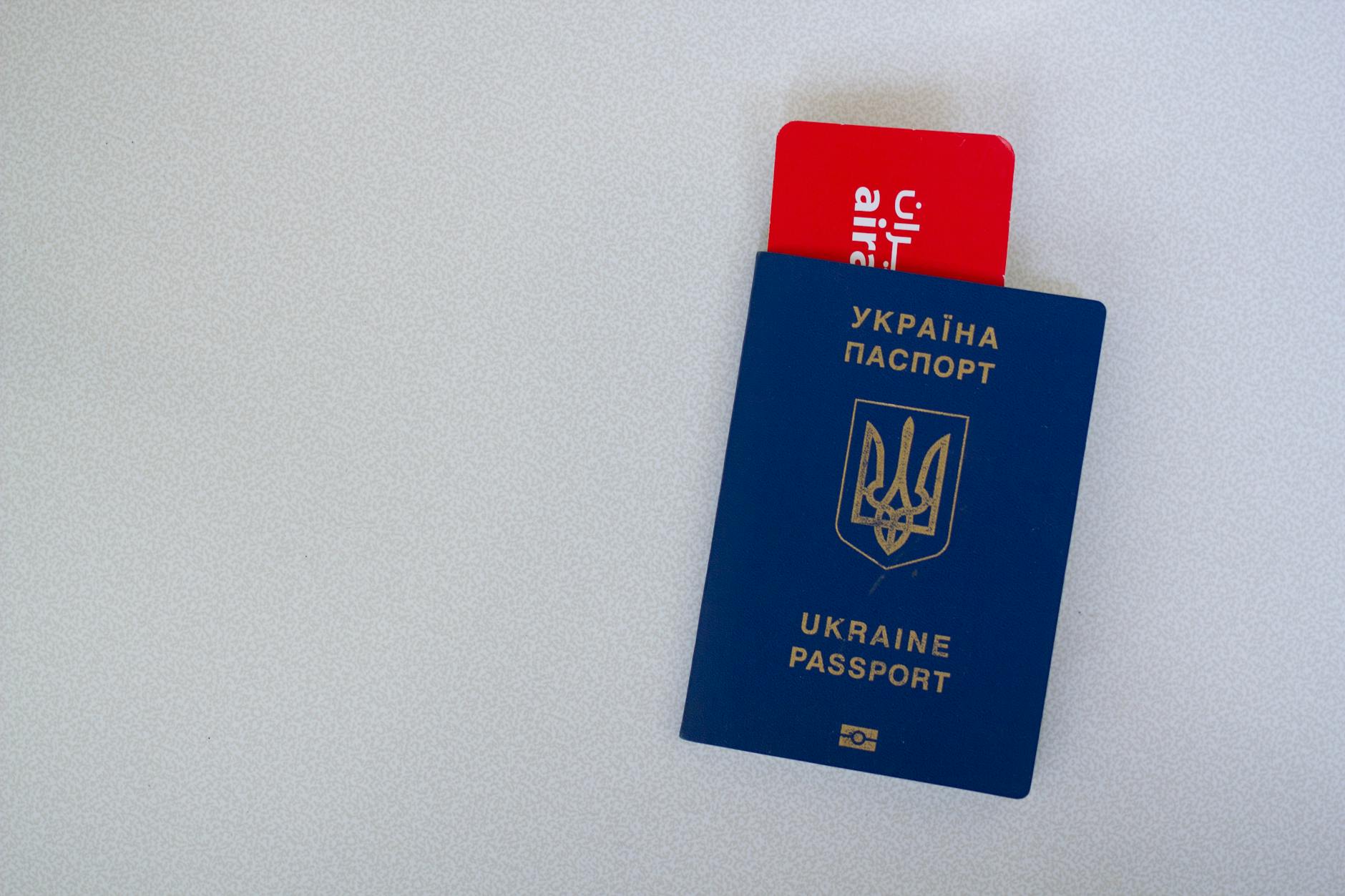
From September 15, 2026, Thailand reduced visa-free stays from 60 days to 30 days for nationals of roughly 60 countries, including the US, UK, Canada and Australia (per Bangkok Post, September 2026). A single 30-day extension is possible with immigration approval, giving a maximum of 60 days per trip. Land-border entries are capped at two per calendar year for most affected nationalities.
If you planned to live in a condo you own by cycling through visa-free entries, that strategy is now broken. The informal 'perpetual tourist' model, where owners entered every 60 days and reset their clock, no longer works at the same pace. This guide maps the hard numbers, your formal alternatives, and what the change means before you sign a purchase agreement.
Quick answer
- 30 days is the new visa-free limit for nationals of roughly 60 countries, effective September 15, 2026 (Royal Gazette, per VisasNews, August 2026)
- A 30-day extension at an immigration office is possible, giving a ceiling of 60 days per single visit
- Land-border entries are capped at two per calendar year for most affected nationalities; air arrivals are not capped at the same rate but are still subject to the 30-day window
- Owning a condo in Thailand gives you zero additional visa rights. Property ownership is not a basis for any visa category under Thai law
- The nationalities most affected include US, UK, Canada, Australia and most of the EU bloc
- Formal long-stay visas (LTR, Retirement, DTV, Thailand Privilege) are now the only reliable paths to comfortable residency for foreign property owners
Options and scenarios
Can I live in Thailand if I buy a condo?
Yes, but only if you hold a valid visa that permits the stay. Buying a freehold condominium unit - which foreign nationals can do up to 49% of a building's total floor area under the Condominium Act - gives you a property right, not a residency right. Thai immigration law treats you as a visitor regardless of what you own. After September 15, 2026, if you arrive on a visa exemption, you have 30 days, with one possible 30-day extension. After that, you must leave.
The old strategy and why it no longer works
Before July 2024, the standard visa-free window for many nationalities was 30 days. In 2024 Thailand temporarily extended this to 60 days for 93 countries. Some foreign property owners used this window by leaving Thailand every 60 days, re-entering, and repeating the cycle indefinitely. From September 2026, the window is back to 30 days, and land-border entries are explicitly capped at two per year. For someone trying to live 9 or 10 months a year in their condo, the math no longer adds up without a formal visa.
Long-Term Resident (LTR) visa
The LTR visa is issued by the Board of Investment and targets wealthy retirees, remote workers with foreign income, and high-net-worth individuals. As of 2026, the visa runs for 10 years (two five-year grants), requires proof of qualifying income or assets, and is issued in several sub-categories.
For wealthy retirees, indicative requirements include at least USD 80,000 in assets or pension income of at least USD 40,000 per year, plus health insurance with a minimum USD 50,000 inpatient coverage. The application fee is around THB 50,000 (market estimates, subject to BOI confirmation).
For remote workers (Work-from-Thailand professionals), the requirement is typically a foreign employer with annual revenues above a qualifying threshold and at least USD 80,000 in personal income over the past two years. Exact thresholds should be verified against the current BOI checklist before applying.
The LTR visa permits a 90-day re-entry multiple permit, a digital work permit for remote workers, and no 90-day reporting at an immigration office (replaced by annual reporting). It is the strongest long-stay option for foreign property owners who qualify.
Destination Thailand Visa (DTV) for digital nomads and remote workers
The DTV was introduced in 2024 and remained active into 2026. It is a five-year multiple-entry visa aimed at digital nomads, remote workers and freelancers who earn income from outside Thailand. Each stay is limited to 180 days per entry, which directly replaces what the old 60-day visa-exemption cycle used to provide for many owners.
Indicative requirements include proof of remote work or freelance activity, evidence of sufficient funds (typically THB 500,000 or equivalent in a foreign account), and health insurance. The application fee is approximately THB 10,000 (indicative). The DTV is applied for at a Thai embassy or consulate abroad, not at the border.
For a property owner who works remotely for a foreign employer or runs an online business, the DTV is likely the most accessible formal option below the LTR visa.
Non-Immigrant O-A (Retirement) visa
The retirement visa (Non-Immigrant O-A or the annual 'retirement extension') suits those aged 50 or above who do not work in Thailand. Key indicative requirements:
- Aged 50 or above
- THB 800,000 deposited in a Thai bank account, OR monthly income of at least THB 65,000, OR a combination
- Health insurance with minimum inpatient coverage (check the current threshold with the issuing embassy or Royal Thai Immigration Bureau, as requirements have been updated multiple times)
- Initial visa applied for at a Thai embassy abroad; annual extensions obtained inside Thailand
The retirement extension gives you 12 months per renewal and requires a 90-day report to immigration (or online). It does not permit employment in Thailand.
Thailand Privilege (formerly Elite) visa
Thailand Privilege is a paid membership scheme that grants long-stay visas for a flat fee. As of 2026, packages run from approximately THB 900,000 for a five-year option to THB 2.5 million for a 20-year option (indicative figures per market estimates; verify on the official Thailand Privilege website before committing).
The visa grants multiple-entry stays and concierge support at airports and immigration. There is no income or asset proof requirement beyond paying the membership fee. It suits buyers who do not meet the income criteria of the LTR but can pay a lump sum for certainty. For a property buyer spending several million baht on a condo, the Privilege fee often represents a small fraction of the purchase cost.
Short-stay coping strategies (not a substitute for formal visas)
For buyers not yet ready to commit to a formal visa, the new reality means:
- Maximum 30 days per air arrival, extendable by 30 days at an immigration office (THB 1,900 fee)
- Two land-border entries per calendar year
- Air entries are not explicitly capped by the new rules per source reporting as of September 2026, but immigration officers can and do refuse re-entry if patterns suggest residency without a visa
Relying on repeated short-stay entries to live in property you own carries legal and practical risk. Immigration officers can refuse entry at their discretion if they assess you as circumventing residency rules.
Renting before you buy
If you are still in the planning phase, renting first is strongly advisable. Renting lets you test a location - its wet season, noise levels, actual journey times to schools or hospitals - before committing capital. It also gives you time to apply for the right visa before purchase rather than after. Rental contracts for condos typically run 6 or 12 months; month-to-month is possible in some buildings at a premium.
Opening a Thai bank account and the FET letter
When a foreign national buys a freehold condo unit, payment must arrive in Thailand as a foreign currency transfer. The receiving Thai bank issues a Foreign Exchange Transaction (FET) form - sometimes called a Thor Tor 3 form - which certifies that funds arrived from abroad in foreign currency. This FET form is mandatory to register condo ownership at the Land Department. You cannot substitute a local Thai transfer for it.
Opening a Thai bank account before purchasing simplifies the FET process. Most major Thai banks require a valid visa (not just a visa exemption stamp) to open an account, which is another reason to secure formal visa status early.
Healthcare and health insurance
Several visa categories (LTR, O-A retirement) require health insurance as a condition. Even where it is not mandatory, private health insurance is strongly advisable. Thailand's private hospital network in Bangkok, Phuket and Chiang Mai is well-regarded, but costs for serious illness without insurance can reach hundreds of thousands of baht. International health plans covering inpatient and outpatient care in Thailand run from approximately THB 60,000 to THB 200,000 per year depending on age and coverage level (market estimates, 2026).
International schools
For families with children, international school fees are a major cost. In Bangkok, annual tuition at established international schools typically ranges from THB 400,000 to THB 1,000,000 per child (market estimates, 2026). Phuket has several international schools with fees in a similar range. Koh Samui has limited international school options. Factor school availability and cost into your location decision before selecting a property area.
Driving licence
A foreign driving licence is valid in Thailand for up to 90 days from the date of entry. After that, you need a Thai driving licence. The process requires a medical certificate from a Thai doctor, an eye test, a reaction test, a theory test (available in English at most Driving Licence Examination Centres), and proof of long-stay visa. Processing takes one day at a Department of Land Transport office. Without a long-stay visa, some centres require additional documentation.
2026 indicative monthly cost of living by area
These are market estimates for a single person or couple in a purchased or rented condo, excluding visa fees, school fees and major one-off purchases.
Bangkok (Sukhumvit, Silom, Sathorn): THB 50,000 to 90,000 per month. Highest costs in the country but also the widest access to international services, healthcare and transport (BTS Skytrain, MRT). Wet season (May to October) brings heavy rain but urban infrastructure copes reasonably well.
Phuket - Patong, Karon, Kata: THB 55,000 to 85,000 per month. Beach proximity raises rental and service costs. Wet season (May to October) is significant: heavy surf closes some beaches, humidity is high, and some restaurants and shops close or reduce hours. The airport connects directly to many international cities.
Phuket - Bang Tao, Laguna, Cherng Talay: THB 60,000 to 100,000 per month. The island's premium residential zone. International schools, hospitals and branded food retailers are clustered here. Less tourism noise than the south. Wet season is similar to the rest of Phuket but the beach is swimmable for more months than Patong.
Koh Samui: THB 45,000 to 75,000 per month. Lower base cost than Phuket but limited international school options and a smaller private hospital network. The island has a wet season that differs from the mainland: the Gulf coast receives heavy rain from October to December. Flight connections are thinner and more expensive than Phuket.
Owning while abroad: property management realities
If you buy to live in, then spend months abroad, the property still needs active management. Key points:
- Juristic person: The condominium juristic person (the legal management entity of the building, funded by owners' monthly fees and a one-time sinking fund) handles building maintenance and common areas. Monthly fees typically run THB 30 to 80 per square metre depending on the building. A sinking fund (one-time upfront payment) covers major capital works.
- Short-term rental compliance: Bangkok and most Thai municipalities require proper licensing for short-term rentals (under 30 days). Many condominium rules explicitly prohibit Airbnb-style lettings. Check the juristic person's house rules before assuming you can offset costs with short-term lets.
- Long-term letting math: If you rent out your unit while abroad at market rates, factor in a property management fee (typically 10 to 15% of rent), plus juristic fees, utilities, and periodic maintenance. Net yield after costs is usually lower than the headline gross yield quoted at the point of sale.
- Tax: Rental income from Thai property is subject to Thai personal income tax for non-residents, and potentially withholding tax depending on the agreement structure. Your home country may also tax foreign rental income. Seek tax advice in both jurisdictions.
- Living in the unit changes the yield calculation entirely: You cannot rent out what you live in. If personal use is the primary purpose, evaluate the purchase on lifestyle and capital value terms, not yield.
Comparison table
| Visa pathway | Maximum stay | Minimum age | Indicative cost (2026) | Best suited to |
|---|---|---|---|---|
| Visa exemption (new rules) | 30 days + 30 day extension | None | THB 1,900 extension fee | Short visits only; not viable for living in property |
| DTV (Digital nomad / remote worker) | 180 days per entry, 5-year visa | None | ~THB 10,000 application fee | Remote workers and freelancers earning abroad |
| Non-Immigrant O-A (Retirement) | 12 months per renewal | 50+ | THB 2,000 visa fee + bank deposit | Retirees with passive income or savings |
| LTR - Wealthy retiree | 10 years (5+5) | None (income/asset threshold) | ~THB 50,000 application fee | High-net-worth retirees with qualifying assets or pension |
| LTR - Remote worker | 10 years (5+5) | None (income threshold) | ~THB 50,000 application fee | Employed remote workers with qualifying foreign employer |
| Thailand Privilege | 5 to 20 years depending on package | None | THB 900,000 to 2,500,000 lump sum | Buyers who prefer simplicity and meet no income threshold |
All fees and thresholds are indicative market estimates as of 2026. Verify with the relevant Thai authority (Board of Investment, Royal Thai Immigration Bureau, Thai embassy) before applying.
Risks and mistakes
Buying before securing a visa pathway. Many buyers purchase a condo and only then discover they do not qualify for the visa they assumed they could get. Assess your visa eligibility before signing a reservation agreement.
Relying on repeated border runs. The two-land-entry-per-year cap eliminates the monthly or bi-monthly land-border run as a strategy. Repeated air entries may still invite immigration scrutiny. Officers can deny entry if they assess you as a de facto resident without a proper visa. A refusal creates a record that complicates future applications.
Assuming the rules will relax. The September 2026 change followed a deliberate cabinet decision to reduce what Thai authorities described as visa-run abuse. The direction of policy is tightening, not loosening. Plan for the current rules, not a hoped-for future reversal.
Not holding an FET letter for the condo purchase. Funds for a freehold condo purchase must arrive as a foreign currency transfer. Without a valid FET letter (Foreign Exchange Transaction form), the Land Department will not register ownership in your name. This is a hard legal requirement, not a technicality.
Underestimating the sinking fund and juristic fees. These are recurring ownership costs. A 60 sqm unit in a well-managed building may cost THB 3,000 to 5,000 per month in juristic fees and require a sinking fund top-up periodically.
Buying in a building that prohibits short-term letting. If you plan to rent the unit when abroad, verify the building's rules before purchase. Many Thai condominium buildings explicitly prohibit rentals under 30 days in their house rules, and the juristic person can enforce this.
Not checking insurance requirements per visa category. The retirement (O-A) visa and the LTR visa both require health insurance with minimum inpatient coverage. Applying without compliant insurance will result in rejection.
Ignoring wet season when choosing a location. Buying in Patong or Kata based on a visit in February, then discovering the west-coast Phuket wet season (May to October) effectively closes your beach access for five months, is a common disappointment. Visit during the wet season before committing.
FAQ
Can I live in Thailand if I buy a condo?
Yes, but the property purchase itself gives you no visa rights. You must hold a valid visa that permits the length of stay you want. After September 15, 2026, a visa exemption gives a maximum of 60 days per trip (30 days plus one 30-day extension). For genuine long-stay living, you need the DTV, a retirement extension, the LTR visa, or Thailand Privilege.
What is the best visa for retiring in Thailand in 2026?
For those aged 50 and above with modest savings, the Non-Immigrant O-A retirement visa is the standard route: it requires THB 800,000 in a Thai bank or equivalent monthly income and is renewable annually. For wealthier retirees, the LTR Wealthy Retiree sub-category offers a 10-year visa with fewer annual compliance steps. Thailand Privilege is the simplest option if you can pay the lump-sum membership fee.
How many times can I enter Thailand visa-free per year after September 2026?
For land-border entries, the new rules cap most affected nationalities at two entries per calendar year. Air entries are not subject to the same two-entry cap per the September 2026 policy as reported, but each air arrival still starts a new 30-day clock. Repeated air entries to live long-term without a formal visa remain legally risky.
Does owning a condo in Thailand help me get a visa?
Not directly. Thai visa categories do not include property ownership as a qualifying criterion. However, owning property demonstrates ties to Thailand, which can support (but not guarantee) visa approval. The LTR, retirement and DTV visas are assessed on income, assets and activity, not on whether you own real estate.
What is an FET form and why does it matter?
An FET (Foreign Exchange Transaction) form, sometimes called a Thor Tor 3, is issued by a Thai bank when foreign currency arrives from abroad. It proves the funds came from outside Thailand in a qualifying foreign currency. The Land Department requires this form to register condo ownership in a foreign national's name. Without it, ownership transfer cannot be completed. This is a legal requirement under the Condominium Act.
Can I rent out my condo when I travel?
You can rent it on a long-term basis (monthly or annual contracts) subject to standard Thai tenancy law. Short-term rentals (under 30 days, such as on online rental platforms) require a hotel licence in most Thai municipalities and are explicitly prohibited in many condominium buildings' house rules. Check the building's juristic person rules and local licensing requirements before assuming short-term letting is viable.
What is the DTV visa and who qualifies?
The Destination Thailand Visa (DTV) is a five-year multiple-entry visa for remote workers, digital nomads and freelancers earning income from outside Thailand. Each stay can be up to 180 days. Indicative requirements include proof of remote work, evidence of sufficient funds (approximately THB 500,000 or equivalent), and health insurance. The DTV must be applied for at a Thai embassy or consulate abroad.
What does 'juristic person' mean in a Thai condo context?
A juristic person is the legally recognised management body of a registered condominium building. It is funded by co-owners through monthly maintenance fees and a one-time sinking fund payment at purchase. The juristic person manages shared facilities, enforces house rules, and handles building repairs. As an owner, you are automatically a member and pay the applicable fees.
How much does it cost to live in Phuket per month?
Indicative monthly costs for a single person or couple in Phuket vary by area: THB 55,000 to 85,000 in the Patong-Karon-Kata zone; THB 60,000 to 100,000 in the Bang Tao-Laguna-Cherng Talay area. These are market estimates for 2026 and exclude school fees, visa costs and major purchases. The west-coast wet season (May to October) affects beach access and some services.
Will the visa rules change again?
Visa policy is set by the Thai cabinet and can change. The September 2026 tightening followed an earlier loosening in 2024, demonstrating that the rules move in both directions. Plan around current confirmed rules and treat any future relaxation as a bonus, not a baseline assumption.
Planning a property purchase in Thailand? Send us your requirements - the THAI.ESTATE team will reply with specific options and a safety checklist for your case.