Editorial
Thailand 30-Day Visa Limit: Which Visa Replaces It for Property Buyers
By THAI.ESTATE Editorial Team20 min read
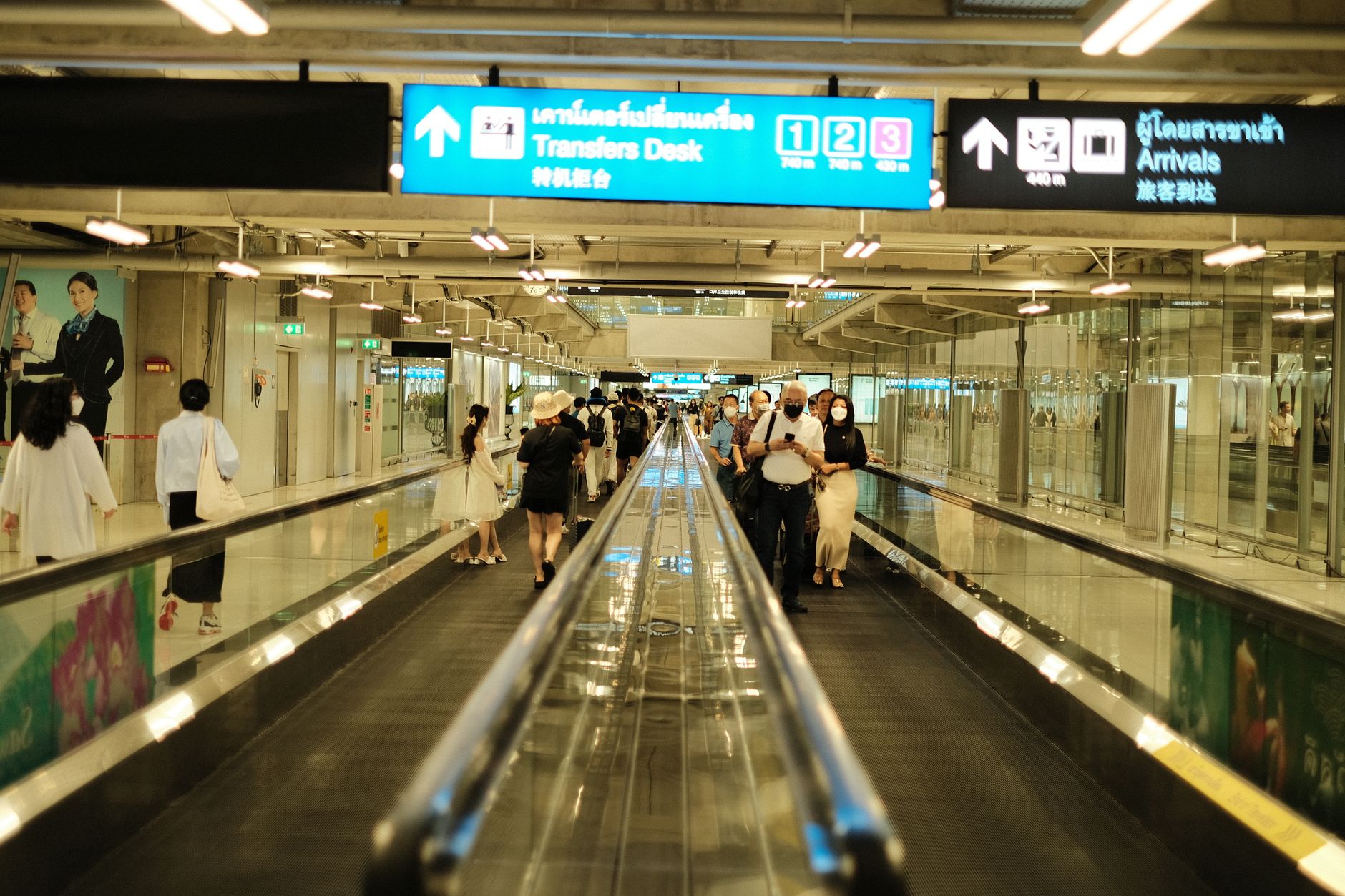
Buying property in Thailand while living on a 30-day visa-free stamp is not a viable long-term plan. As of September 15, 2026, Thailand reduced the visa-free stay for nationals of 60-plus countries - including the US, UK, Canada, and Australia - from 60 days to 30 days, with land-border entries capped at two per calendar year. That change, codified in four Ministry of Interior regulations published in the Royal Gazette on August 31, 2026, is now permanent policy.
If you are planning to buy a condo in Bangkok, Phuket, or Koh Samui and actually live in it for meaningful stretches, you need a formal visa before you sign anything. Property ownership in Thailand grants you zero residence rights on its own. The legal right to stay and the legal right to own are completely separate systems.
The practical replacement for most buyers who want 180-day stays is the Destination Thailand Visa (DTV). This guide explains the 30-day rule in full, walks through every visa option relevant to property buyers in 2026, and tells you honestly what each one costs and who it suits.
Quick answer
- From September 15, 2026, visa-free stays for US, UK, EU, Canadian, and Australian nationals are capped at 30 days per entry, not 60 (per VisasNews, August 2026)
- Land-border visa-exempt entries are limited to two per calendar year under the new rules
- A one-time extension of up to 30 additional days is available at an immigration office, subject to officer discretion
- Owning a condo does not give you the right to stay longer - you need a separate visa
- The Destination Thailand Visa (DTV) allows up to 180 days per entry, with a possible further 180-day extension, making it the most practical option for buyers who want to spend real time in their property
- Other routes worth knowing: the Non-Immigrant OA (retirement visa), the Long-Term Resident (LTR) visa, and the Thailand Privilege (formerly Elite) program
Options and scenarios
Can I live in Thailand if I buy a condo?
Yes, but only if you hold the correct visa. Buying a freehold condominium unit under the Condominium Act (the law that permits foreign nationals to own up to 49 percent of a building's total unit area in their own name) gives you a title deed called a chanote (official full-ownership land document). It does not give you the right to stay longer than your visa allows. Thai immigration law and Thai property law operate independently of each other.
A buyer who purchases a condo and then tries to live in it on back-to-back 30-day visa-exempt entries will quickly find themselves in breach of immigration rules. Under the 2026 changes, land-border 'visa runs' - the practice of crossing to a neighbouring country and re-entering to reset your stay - are now capped at two per calendar year under the visa-exempt category. Air entries are not capped in the same way, but repeated short-stay tourist entries with no verifiable tourism purpose attract scrutiny from immigration officers.
The honest answer: if you plan to spend more than 30 days at a time in your Thai property, apply for the right visa before you complete your purchase.
What is the DTV and who qualifies?
The Destination Thailand Visa (DTV) is a multiple-entry visa introduced by Thailand's government to attract remote workers, freelancers, and long-stay visitors. As of 2026, it remains the most flexible option for buyers who are not yet retirement age or who do not meet the income thresholds for the LTR visa.
Key DTV features (indicative, verify with the Royal Thai Embassy in your country before applying):
- Stay per entry: up to 180 days
- Extension: one further 180-day extension possible inside Thailand, at immigration officer's discretion (per Euronews, September 2026)
- Visa validity: five years (meaning you can re-enter multiple times over five years, each time for up to 180 days)
- Indicative fee: approximately THB 10,000 (roughly USD 275 / EUR 250 at mid-2026 market rates) - confirm current fee with the embassy
- Eligibility: remote workers, freelancers, and certain other categories. You are typically required to show proof of funds or income and evidence of your remote work or freelance status. Exact documentary requirements vary by embassy and are updated periodically
- Work rights: the DTV does not permit you to work for a Thai employer or conduct business with Thai entities. Remote work for a foreign employer or client is the intended use case. If you plan to do business in Thailand, take separate legal advice
The DTV is well-suited to a buyer in their 30s, 40s, or 50s who works remotely, wants to spend five to six months per year at their Thai property, and does not yet qualify for a retirement visa (which in practice requires you to be 50 or older and meet specific financial thresholds).
Best visa for retiring in Thailand in 2026
The Non-Immigrant OA visa (commonly called the retirement visa) is the standard route for retirees aged 50 and above. You must meet financial requirements set by the Thai immigration authorities - as of 2026, the commonly cited figures are a Thai bank deposit of THB 800,000 (roughly USD 22,000 at mid-2026 indicative rates) maintained in a Thai bank account, or a monthly pension/income above a set threshold, or a combination. Verify the current exact figures with the Royal Thai Consulate or a licensed Thai immigration lawyer before applying, as these thresholds are subject to change.
The OA visa is issued for one year and is renewable annually inside Thailand. You must report to immigration every 90 days (a '90-day report') to confirm you remain in the country. Most retirees who own property in Thailand use this route.
A Thai bank account is required to hold the THB 800,000 deposit. Opening that account as a foreigner requires your passport, your visa (a tourist visa or entry stamp is usually sufficient to open a basic account), and sometimes a reference letter from your embassy. Opening a bank account is also important for the Foreign Exchange Transaction (FET) form (sometimes still called a Thor Tor 3 or FET certificate) - the official document from a Thai bank confirming that the purchase funds were remitted from abroad in foreign currency. Without a valid FET form for the full purchase price, a foreign buyer cannot register ownership of a condominium unit at the Land Department.
What is the LTR visa and who is it for?
The Long-Term Resident (LTR) visa is a ten-year visa introduced in 2022 and targeted at wealthy global citizens, retirees with passive income, remote workers employed by foreign companies, and highly skilled professionals. It offers a number of benefits beyond a simple long stay, including a 17 percent flat personal income tax rate on Thai-sourced income for eligible categories, fast-track airport services, and a work permit issued to the primary holder (for the 'skilled professional' category).
Indicative LTR eligibility thresholds (verify all figures officially before applying):
- Wealthy global citizen: assets of USD 1 million or more, and annual income of USD 80,000 or more in the prior two years, plus health insurance of at least USD 50,000 coverage
- Wealthy pensioner: annual income or pension of USD 40,000 or more, plus health insurance
- Work-from-Thailand professional: employed by a listed foreign company with revenue above USD 150 million, or similar qualifying employer, with personal income of USD 40,000 or more annually
- Highly skilled professional: working in a targeted industry for a Thai-registered company or government body, with specific income and qualification criteria
The LTR visa costs approximately THB 50,000 (indicative; confirm with the Board of Investment of Thailand, which administers the program). It is a serious commitment and suits buyers who plan to make Thailand their primary base and who meet the income or asset thresholds comfortably.
What about the Thailand Privilege (formerly Thailand Elite) program?
The Thailand Privilege program (the visa program previously marketed as Thailand Elite) offers long-stay visas of between five and twenty years, depending on the membership tier you purchase. It is not a standard visa - it is a paid membership scheme operated by a government-backed company, and membership grants you a multiple-entry tourist visa with stays of one year at a time.
Indicative membership costs (market estimates, 2026, verify directly with the program):
- Entry-tier membership: approximately THB 900,000 to THB 1,500,000 (roughly USD 25,000 to USD 41,000) for a five-year program
- Premium tiers with longer stays and additional services are priced higher
The Privilege program suits buyers who want the simplest possible long-stay solution, do not want to manage annual visa renewals, and can afford the upfront fee. It does not give you a work permit. It does not convert into permanent residency. But it is a legitimate, well-established route for property owners who want to spend extended time in Thailand without navigating annual bureaucracy.
What if I want to spend only a few months a year at my property?
If you realistically plan to spend one month per visit, the 30-day visa-free entry still works for occasional visits. The problem is that you cannot extend it at a land border more than twice a year, and frequent air entries on a tourist stamp attract scrutiny if you own property and have obvious economic ties to Thailand.
For buyers who plan two to three visits per year of up to 30 days each, a TR visa (Tourist Visa, obtained at a Thai embassy before travel) or the DTV for the flexibility it offers may be more appropriate than relying on visa-exempt entries. The TR visa is typically issued for 60 days and is extendable once by 30 days inside Thailand.
Renting before buying: why it matters for visa planning
Spending three to six months renting in your target area before buying is one of the most important things you can do as a relocating buyer. This is not only about testing the lifestyle - it is about understanding the real cost of living, the wet season (May to October in most of the Gulf Coast; May to November on the Andaman side in Phuket), the local services, and the property management quality of specific developments.
Indicative monthly cost-of-living estimates for 2026 (market estimates, excluding rent or mortgage):
- Bangkok (Sukhumvit or Silom area): THB 40,000 to THB 70,000 per month for a single person living comfortably, including groceries, local transport, dining out regularly, and utilities. This rises with car ownership, private healthcare, and international school fees.
- Phuket (Rawai or Chalong, away from the tourist centre): THB 35,000 to THB 60,000 per month. Bang Tao and Laguna areas run higher due to premium restaurant prices and resort-level services. Electricity bills are notably higher than Bangkok due to air conditioning load in a hot, humid coastal climate.
- Koh Samui: THB 45,000 to THB 75,000 per month. The island has a higher cost base than comparable mainland areas because most goods are shipped. Healthcare options are more limited than in Bangkok or Phuket, which matters for retirees.
Rental costs during a trial stay are separate. A decent one-bedroom apartment in a non-tourist part of Phuket or Bangkok costs THB 15,000 to THB 30,000 per month to rent unfurnished; furnished service apartments in central areas run higher.
During your rental period, you can open a Thai bank account, learn the immigration system from inside the country, engage a licensed Thai lawyer (no names - find one through your country's embassy list or the Lawyers Council of Thailand), and get a realistic picture of property management quality in specific buildings.
Healthcare and insurance
Thailand has strong private hospitals in Bangkok (several are internationally accredited), Phuket, and Chiang Mai. Koh Samui has private hospital facilities but for complex cases, medical evacuation to Bangkok or Singapore is common. This is a real consideration if you are older or have existing health conditions.
As a foreign resident, you are not enrolled in Thailand's Social Security or Universal Coverage schemes unless you work for a Thai employer and pay contributions. You need private health insurance.
For LTR visa applicants, health insurance of at least USD 50,000 coverage is a formal requirement. For DTV and OA visa holders, it is strongly recommended even where not legally mandatory. International health insurance with a Southeast Asia or worldwide plan from a reputable provider typically costs USD 1,500 to USD 5,000 per year depending on your age and coverage level (market estimates, 2026).
International schools
Bangkok has the widest selection of international schools (British, American, IB, and others) with fees ranging from roughly THB 400,000 to THB 900,000 per year per child (market estimates). Phuket has several established international schools concentrated around the Laguna and Thalang areas. Koh Samui's options are more limited. If schooling is a factor, map school locations before choosing a property location - the commute can significantly affect daily life quality.
Driving in Thailand
You can drive in Thailand on an International Driving Permit (IDP) for up to 90 days. After that, or for longer stays, you need a Thai driving licence. Converting a foreign licence to a Thai one requires a medical certificate, a residency document (your visa and a certificate of residence from your embassy or immigration office), and passing a colour-blindness and reaction test at the local Land Transport Office. It is a half-day process in most provinces.
Managing your property when you are abroad
If you spend six months per year in your Thai condo and six months elsewhere, you need a management plan for the other six months. Options include:
- Leaving it vacant: you still pay condo juristic person fees (the monthly maintenance fee charged by the building's management body, typically THB 30 to THB 80 per square metre per month in established buildings), electricity standing charges, and internet subscriptions. A trusted local contact is essential to check the unit periodically.
- Short-term rental (Airbnb-style): legal complexity applies. Renting a residential condo unit on a nightly basis without a hotel licence may breach the Hotel Act. Many buildings also prohibit short-term rentals in their bylaws. Check both the law and the building rules carefully before assuming rental income will offset your costs.
- Long-term rental: renting your unit on a lease of one year or more is simpler legally and more common in practice. A property management company handles finding tenants, collecting rent, and minor maintenance. Typical management fees are 8 to 12 percent of rent collected. Having a unit occupied part of the year and using it yourself the rest means your net rental income is lower than a pure-investment unit, and your unit needs to be available to you on a predictable schedule - this requires clear lease terms.
The honest math: if you plan to live in your condo for four to six months per year, treat it primarily as your home and secondarily as a rental asset. Expecting investment-grade yields from a unit you also use personally leads to frustration.
Comparison table
| Parameter | Visa-Exempt Entry | Destination Thailand Visa (DTV) | Non-Immigrant OA (Retirement) | LTR Visa | Thailand Privilege |
|---|---|---|---|---|---|
| Who it suits | Short visits, occasional owners | Remote workers and freelancers | Retirees aged 50-plus | High-income earners and skilled professionals | Buyers wanting simplicity and long stays |
| Maximum stay per entry | 30 days (from Sep 15, 2026) | 180 days | 1 year (renewable) | 1 year per entry, 10-year visa | 1 year per entry, 5-20 year membership |
| Extension possible | Yes, once, up to 30 days | Yes, one further 180 days | Yes, annually | Yes, annually | Included in membership |
| Indicative cost | Free | Approx. THB 10,000 | Consular fee only (low) | Approx. THB 50,000 | THB 900,000 to THB 1,500,000 plus |
| Key financial requirement | None | Proof of income or funds (varies by embassy) | THB 800,000 in Thai bank or income threshold | USD 40,000 to USD 80,000 annual income (varies by category) | Membership purchase price |
| Work rights | None | Remote work for foreign employer or client only | None | Limited to specific categories | None |
| Land-border limit | 2 entries per calendar year | Not applicable (single-entry visa) | Not applicable | Not applicable | Not applicable |
| Property ownership link | None | None | None | None (but income thresholds often met by property-wealthy buyers) | None |
Risks and mistakes
Assuming your visa-free entry resets if you fly out and back. It does not work that way for land borders under the 2026 rules. Air entries face no explicit annual cap under the current regulations, but immigration officers have discretion to refuse entry if they believe you are using tourist entries as a substitute for residency. A pattern of repeated 30-day entries with a known Thai property address on your immigration card is a red flag.
Buying before sorting your visa. Many buyers sign a reservation agreement or pay a deposit while still on a visa-exempt entry, assuming they will sort the visa 'later'. Later sometimes means after they have committed funds they cannot easily recover. Sort your long-stay visa eligibility first, then sign.
Missing the FET form requirement. Foreign buyers of Thai condominiums must transfer the purchase funds from abroad in foreign currency and obtain a Foreign Exchange Transaction (FET) form from the receiving Thai bank for the full purchase price. Without this document, the Land Department will not register the unit in your name. Wire transfers from an existing Thai bank account funded in Thai baht do not satisfy this requirement. This is one of the most common and costly mistakes foreign buyers make.
Underestimating the sinking fund and juristic person fees. A sinking fund is a one-time capital contribution paid at purchase, held in reserve for major building repairs. It is not refundable on resale. Monthly juristic person fees (building maintenance fees) continue for as long as you own the unit, whether you live there or not. Budget for both from day one.
Assuming a retirement visa is easy to maintain. The annual renewal requires you to maintain the bank balance or income evidence throughout the year, not just at renewal time. Thai banks can provide a letter confirming the balance at any point, and immigration officers may check. Dipping below the threshold between renewals is a compliance risk.
Ignoring healthcare on a remote island. Buying on Koh Samui or a smaller island without factoring in medical access is a genuine risk for older buyers. Evacuation insurance is not a luxury in this context.
Short-term renting without checking building rules and the Hotel Act. Platforms that list nightly rentals in Thai condominiums operate in a legal grey area. Your building's juristic person may fine you or take legal action. Do not assume the previous owner's rental practice was legal.
FAQ
Can I live in Thailand if I buy a condo?
You can, but not because you bought the condo. Owning a condominium in Thailand does not give you the right to stay longer than your visa allows. You need to hold a valid visa - the DTV, a retirement visa, an LTR visa, or another appropriate category - independently of your property ownership. Once you have the right visa, yes, you can live in your condo for the duration your visa permits.
What is the best visa for retiring in Thailand in 2026?
For most retirees aged 50 or above, the Non-Immigrant OA (retirement visa) is the standard route. It requires meeting financial thresholds (commonly cited as THB 800,000 held in a Thai bank account, or an income equivalent - verify current official figures before applying) and is renewable annually. For retirees with higher passive income, the LTR visa offers a ten-year stay with fewer annual requirements.
How does the new 30-day visa-free rule affect property buyers specifically?
It makes relying on visa-free entries for long-stay living in your Thai property impractical. The 2026 change, effective September 15, 2026, reduces the stay from 60 to 30 days and caps land-border entries at two per year. Buyers who want to spend meaningful time in their property - more than 30 consecutive days - need a formal visa category. The DTV is the most relevant new option for working-age buyers.
What is the DTV and how much does it cost?
The Destination Thailand Visa (DTV) is a five-year multiple-entry visa allowing stays of up to 180 days per entry, with a possible further 180-day extension inside Thailand. The indicative application fee is approximately THB 10,000 (roughly USD 275 at mid-2026 rates). It is designed for remote workers, freelancers, and certain other categories. You apply at a Royal Thai Embassy or Consulate in your home country. Exact eligibility documents vary by country - check with the embassy directly.
Do I need a Thai bank account to buy a condo?
You need a Thai bank account to receive a Foreign Exchange Transaction (FET) form on the incoming purchase funds. The FET form is a mandatory document for registering a condo in a foreign buyer's name at the Land Department. Opening a Thai bank account typically requires your passport and a valid visa or entry stamp. For retirement visa holders, the account is also needed to hold the required deposit.
Can I use my condo as a short-term rental when I am not there?
Potentially, but with significant legal caution. Renting a residential condo unit on a nightly basis may breach Thailand's Hotel Act if you do not hold a hotel licence. Many buildings also prohibit short-term rentals in their bylaws. Long-term rentals (one year or more) are legally simpler. If generating rental income is part of your plan, check the building's rules and take legal advice before purchasing.
What happens to my visa-free stay if I was already in Thailand on September 15, 2026?
Per VisasNews (August 2026), travellers already in Thailand under the previous 60-day visa-exempt rule before September 15, 2026 kept their originally granted stay period. The reduction to 30 days applied to new entries from that date onward.
Is the Thailand Privilege program worth the cost for a property buyer?
It depends on your situation. If you want a long-stay solution without annual renewal paperwork, can afford the upfront membership fee (THB 900,000 or more at the entry tier, per market estimates), and do not need work rights, the Privilege program is straightforward. It does not offer permanent residency or work permits. For buyers who meet LTR thresholds, the LTR visa is a more cost-effective and officially structured alternative over a ten-year horizon.
What is a juristic person fee and do I have to pay it?
The juristic person is the legal management body of a condominium building - equivalent to a homeowners association or building management company. The monthly fee it charges is called a common area maintenance fee or juristic person fee, typically calculated per square metre of your unit. It covers building insurance, cleaning, security, pool maintenance, and general upkeep. You pay it every month whether you are in Thailand or not, as long as you own the unit.
Can I get permanent residency in Thailand through property ownership?
No. Property ownership does not contribute toward permanent residency in Thailand. Permanent residency (PR) is a separate application process managed by the Royal Thai Police Immigration Bureau, requires several years of holding a qualifying non-immigrant visa, and has strict annual quotas. It is relatively rare among foreign property owners. Most long-term buyers use renewable visa categories rather than pursuing PR.
Planning a property purchase in Thailand? Send us your requirements - the THAI.ESTATE team will reply with specific options and a safety checklist for your case.