Editorial
Sukhumvit Condo Prices Per Sqm 2026: Buyer's Guide
By THAI.ESTATE Editorial Team14 min read
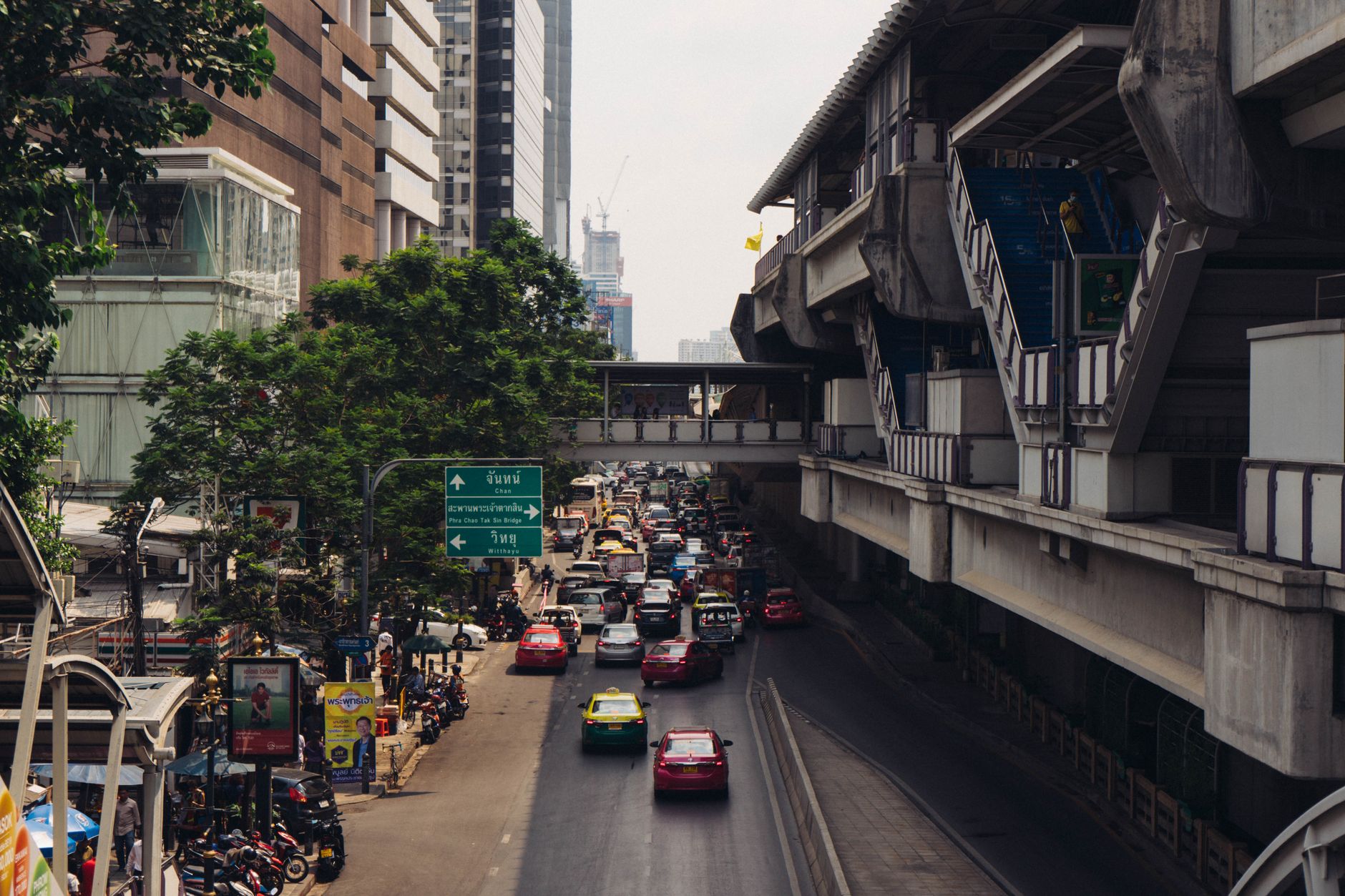
Sukhumvit is Bangkok's most liquid condo market for foreign buyers. As of 2026, market estimates place resale condo prices in Sukhumvit between THB 80,000 and THB 350,000 per square metre, depending on the sub-district (known locally by BTS station names: Nana, Asok, Phrom Phong, Thong Lo, Ekkamai, On Nut, Phra Khanong). New-build launches from established developers sit between THB 120,000 and THB 280,000 per sqm in mid-corridor zones. Ultra-premium towers near Phrom Phong and Thong Lo can exceed THB 300,000 per sqm on the primary market.
Foreign buyers can legally own condominium units outright under the Condominium Act, provided the foreign freehold quota (49% of total floor area in any building) is not already full. That quota check is the first thing you verify before any other step.
Quick answer
- Typical price range (as of 2026, market estimates): THB 80,000 - THB 350,000 per sqm depending on location, building age and finish
- Lower Sukhumvit (Nana to Asok, Soi 1-21): THB 120,000 - THB 200,000 per sqm for mid-grade stock; premium new builds higher
- Mid Sukhumvit (Phrom Phong to Thong Lo, Soi 33-55): THB 150,000 - THB 310,000 per sqm; strongest rental demand from expatriate tenants
- Upper Sukhumvit (Ekkamai to On Nut, Soi 63-77): THB 80,000 - THB 160,000 per sqm; best value per sqm on the corridor, younger renter profile
- Foreign freehold quota must be confirmed in writing from the juristic person (the building's management entity) before you sign any reservation agreement
- Gross rental yields run approximately 4% - 6% per year in mid-corridor; upper Sukhumvit can touch 6% - 7% on smaller units, per market estimates
- Transfer tax and fees at the Land Department total roughly 2% - 6.3% of the registered value, split by negotiation between buyer and seller
Options and scenarios
Who buys in lower Sukhumvit (Nana, Asok, Soi 1-21)?
This stretch runs from the Asok BTS / MRT interchange west toward Nana. It suits buyers who want maximum connectivity: two rail lines, the airport rail link at Makkasan a short taxi ride away, and dense food, co-working and healthcare infrastructure. Bumrungrad International Hospital is within walking distance of Soi 3.
Prices here are firm because supply is constrained by older low-rise buildings that cannot be demolished easily. A 35 sqm studio in a 10-to-15-year-old building might be listed at THB 4.5 million - THB 6 million (roughly THB 130,000 - THB 170,000 per sqm). A new-build one-bedroom of 45 sqm in a post-2020 tower can reach THB 8 million - THB 10 million.
The trade-off is noise. Lower Sukhumvit is a commercial and entertainment zone. Street-level units face constant traffic and, in some sois, nightlife noise until 2 a.m. If you plan to live here rather than rent out, inspect at night.
Who should buy here: Investors targeting short-stay rental demand, buyers who want the strongest resale liquidity, and remote workers who need central Bangkok infrastructure.
Who should not buy here: Retirees seeking quiet, families with school-age children (international schools are a long ride away), buyers on a tight budget.
Is Phrom Phong to Thong Lo good for investment?
Phrom Phong (BTS Phrom Phong, Soi 33-39) and Thong Lo (BTS Thong Lo, Soi 55) are widely regarded as Bangkok's most established expatriate residential sub-districts. The Japanese and Korean expatriate communities are concentrated here, supported by Japanese supermarkets, international clinics and a cluster of international schools reachable by car within 15-20 minutes.
As of 2026, market estimates place resale condos in Phrom Phong at THB 160,000 - THB 250,000 per sqm for 2015-and-newer stock. Thong Lo premium towers run THB 200,000 - THB 310,000 per sqm. Off-plan launches in both zones have pushed asking prices higher, sometimes above THB 300,000 per sqm for branded-residence concepts.
Rental demand is anchored by corporate tenants on 12-month contracts, which gives predictable income. A 55 sqm one-bedroom in Phrom Phong rents for approximately THB 30,000 - THB 50,000 per month depending on building quality and furnishing, per market estimates for 2026.
The risk is oversupply in the luxury segment. Several large towers completed between 2022 and 2025 added significant inventory. Vacancy in some buildings remains elevated, particularly for units above 80 sqm. Buyers should request the building's actual occupancy data from the juristic person before committing.
Who should buy here: Long-term investors targeting stable expatriate tenants, buyers who want to live in Bangkok's most walkable and serviced residential zone, buyers who can afford to hold through vacancy cycles.
Who should not buy here: Buyers expecting rapid capital appreciation on a three-year hold, buyers on a budget below THB 6 million for a usable unit size.
Is upper Sukhumvit (On Nut, Phra Khanong, Ekkamai) good value?
On Nut (BTS On Nut, Soi 77) and Phra Khanong (BTS Phra Khanong) have changed significantly since the BTS extension. They now attract Thai middle-class buyers, younger expatriates and digital nomads priced out of mid-Sukhumvit. Ekkamai (BTS Ekkamai, Soi 63) sits between Thong Lo and On Nut in both geography and price.
As of 2026, market estimates for condos in On Nut run THB 80,000 - THB 130,000 per sqm for 2015-and-older stock, and THB 110,000 - THB 160,000 per sqm for post-2018 completions. Ekkamai sits slightly higher at THB 120,000 - THB 180,000 per sqm for comparable product.
Rental yields here are stronger in percentage terms because entry prices are lower. A 30 sqm studio bought at THB 3 million and rented at THB 15,000 per month produces a gross yield close to 6%. The renter base is mixed: young Thai professionals, freelancers, entry-level expatriates. This means lower average rent in absolute terms but faster unit turnover.
The seasonal dead period is worth noting. Bangkok does not have beach tourism seasons, but the September-to-November wet season brings significant flooding risk in low-lying sois off Sukhumvit. On Nut and Phra Khanong have experienced street flooding in heavy rain years. Ground-floor commercial units are vulnerable; upper-floor residential units are generally unaffected structurally but access can be disrupted.
Who should buy here: First-time buyers in Bangkok with a budget of THB 3 million - THB 6 million, yield-focused investors, buyers who want BTS access but cannot afford mid-corridor prices.
Who should not buy here: Buyers seeking luxury amenities and a premium address, buyers whose tenants require proximity to international schools in the Ekkamai-Sukhumvit 71 corridor (competition is intense).
Bangkok vs Phuket vs Koh Samui: which fits your goals?
If you are choosing between Bangkok's Sukhumvit and resort destinations, the decision turns on your intended use. Sukhumvit offers 12-month rental demand from a working population. Phuket (Bang Tao, Kamala, Rawai) offers higher gross yields in peak season but with a pronounced rental gap during the low season (roughly May to October). Koh Samui (Bophut, Maenam) is a smaller, less liquid market with a narrower buyer pool.
For a yield-focused investor who cannot manage the property actively, a Bangkok condo on a long-term lease is lower risk than a resort villa dependent on short-stay bookings. For a buyer who plans to use the property personally for three to four months a year, a resort location may produce better lifestyle return per baht spent.
Comparison table
| Parameter | Lower Sukhumvit (Nana-Asok) | Mid Sukhumvit (Phrom Phong-Thong Lo) | Upper Sukhumvit (Ekkamai-On Nut) |
|---|---|---|---|
| Price per sqm (as of 2026, est.) | THB 120,000 - THB 200,000 | THB 160,000 - THB 310,000 | THB 80,000 - THB 180,000 |
| Typical 1-bed purchase price | THB 6M - THB 12M | THB 8M - THB 18M | THB 3M - THB 7M |
| Gross rental yield (est.) | 4.5% - 6% | 4% - 5.5% | 5.5% - 7% |
| Primary renter profile | Short-stay, business travellers, young expats | Corporate expats, Japanese/Korean community | Thai professionals, digital nomads |
| BTS/MRT access | Excellent (interchange at Asok) | Good (BTS direct) | Good (BTS On Nut, Phra Khanong) |
| International hospital nearby | Yes (Bumrungrad) | Yes (Samitivej Sukhumvit) | Moderate (travel needed) |
| International school access | Limited walkable | Moderate (15-20 min by car) | Limited (20-30 min by car) |
| Walkability and amenities | High, commercial zone | High, residential-commercial mix | Moderate, improving |
| Flood risk (wet season) | Low (elevated road) | Low | Moderate (some low sois) |
| Oversupply risk | Moderate | High (luxury segment) | Low to moderate |
| Liquidity (resale speed) | High | High | Moderate |
| Noise level | High | Moderate | Low to moderate |
Risks and mistakes
Foreign quota already full
The Condominium Act limits foreign freehold ownership to 49% of a building's total floor area. In popular Sukhumvit buildings, this quota fills permanently. Once it is full, you can only buy on a Thai-name structure (which carries legal risk for a foreigner) or via a leasehold arrangement (typically 30 years, renewable by contract). Always request a written quota confirmation from the building's juristic person. Do not rely on the seller's word alone.
Off-plan risk in oversupplied zones
Several developer projects in mid-Sukhumvit launched between 2021 and 2023 have delivered into a soft luxury market. If you buy off-plan today and the building completes in two to three years, comparable completed stock may be priced lower. Ask for the developer's completion record on previous projects. A developer who has delivered fewer than three projects carries higher completion risk.
FET documentation
Foreign buyers must remit purchase funds from abroad in foreign currency. The receiving Thai bank issues a Foreign Exchange Transaction (FET) certificate - a document confirming that foreign currency was converted to Thai baht for the purpose of buying property. Without a valid FET, the Land Department will not register the transfer to a foreign name. This is not optional paperwork. It is a legal requirement. Confirm with your bank that the transfer description is correct before the wire is sent.
Sinking fund and common area fees
Every condominium charges a sinking fund (a one-time capital reserve paid at purchase, typically THB 500 - THB 700 per sqm) and ongoing common area fees (typically THB 50 - THB 120 per sqm per month, paid annually in advance). In older buildings, sinking funds are sometimes under-reserved, meaning a special levy may be called if major repairs are needed. Ask the juristic person for the current sinking fund balance and any pending special assessments before you sign.
Construction noise corridors
Bangkok's BTS and MRT networks continue to expand. Several Sukhumvit-adjacent stations are under construction or planned for extension as of 2026. Check whether your target building sits within 200 metres of an active construction site. Drilling and concrete work can run from 7 a.m. to 10 p.m. six days a week and directly affect rental desirability.
Registered price vs actual price
Some sellers in older transactions recorded a price lower than the actual sale price at the Land Department, to reduce transfer tax. If you later sell, your capital gain is measured against the registered purchase price, potentially creating a larger taxable gain. Insist on registering at the actual transfer value. The Land Department also has its own appraised value floor, which the registration price cannot go below regardless.
Currency risk
You pay in Thai baht. If your income or savings are in euros, US dollars or British pounds, a strengthening baht increases your effective purchase cost. There is no standard hedging product available to retail buyers for Thai property transactions. Factor in a 5% - 10% currency movement buffer in your budget.
FAQ
What is the average price per sqm for a condo on Sukhumvit in 2026?
As of 2026, market estimates place the range at THB 80,000 - THB 350,000 per sqm across Sukhumvit. The wide range reflects building age, location on the corridor, and finish level. Mid-corridor zones (Phrom Phong, Thong Lo) command the highest prices. Upper Sukhumvit (On Nut, Phra Khanong) offers the lowest entry point.
Can a foreigner buy a freehold condo on Sukhumvit?
Yes, under the Condominium Act, a foreign national can own a unit outright in freehold, provided the building's foreign quota (49% of total floor area) is not already full. You must also remit the purchase funds from abroad and hold a valid FET certificate from your Thai bank. These two conditions are non-negotiable for Land Department registration.
Is Sukhumvit a good area for rental income in Bangkok?
Sukhumvit produces 12-month rental demand, which is its main advantage over resort markets. Gross yields range from approximately 4% to 7% depending on location and unit size (market estimates, 2026). Smaller units (studio to one-bedroom) in upper Sukhumvit tend to produce the highest yields in percentage terms. Mid-corridor one- and two-bedroom units attract corporate tenants on stable contracts but at lower yield percentages due to higher purchase prices.
What additional costs should I budget for when buying a condo on Sukhumvit?
At the Land Department, total transfer-related taxes and fees typically run 2% - 6.3% of the registered value, split by negotiation. Additionally, budget for the sinking fund (approximately THB 500 - THB 700 per sqm, paid once at purchase), a lawyer to review the contract (market rates for a basic review start at around THB 15,000 - THB 30,000), and any furnishing costs if the unit is delivered shell. Common area fees (THB 50 - THB 120 per sqm per month) are an ongoing annual cost.
What is the foreign freehold quota and how do I check it?
The foreign freehold quota is a legal limit under the Condominium Act. No more than 49% of a building's total floor area may be owned by foreign nationals in freehold. To check it, contact the building's juristic person (the management body registered with the Land Department) directly and request a written statement of the current foreign ownership percentage. This takes one to three business days in most buildings.
Is Thong Lo or Phrom Phong better for investment?
Both sub-districts produce stable demand, but they have different risk profiles. Phrom Phong has a more established and diversified tenant base. Thong Lo has seen more luxury supply added in recent years, which has put mild downward pressure on rents in some building segments. For a first investment, Phrom Phong generally offers slightly lower vacancy risk. For a buyer comfortable with a longer hold, Thong Lo's premium positioning may produce stronger capital appreciation over a five-to-ten-year period, though this is not guaranteed.
Should I buy new or resale on Sukhumvit?
New-build off-plan units carry completion risk and a price premium for the developer's marketing margin. Resale units let you inspect the actual unit, verify the building's management quality, and check the FET documentation chain from the previous foreign owner. For a foreign buyer purchasing for the first time in Thailand, a completed resale unit from a well-managed building is lower risk than an off-plan purchase, even if the price per sqm is similar.
How does Sukhumvit compare to Phuket for a foreign buyer in 2026?
Sukhumvit offers lower price volatility, 12-month tenant demand, strong resale liquidity and easier access to healthcare and international schools. Phuket (particularly Bang Tao, Kamala and Rawai) offers lifestyle appeal, a beach setting and potentially higher short-stay yields in peak season (November to April), but with a rental gap in the low season and a smaller resale buyer pool. The right choice depends on whether your primary goal is income stability or personal lifestyle use.
What is an FET certificate and why does it matter for buying a condo in Thailand?
A Foreign Exchange Transaction (FET) certificate is issued by a Thai bank when it receives a foreign currency wire and converts it to Thai baht for the stated purpose of purchasing property. The Land Department requires this document to register a condominium unit in a foreign name. Without it, the transfer cannot legally be completed. The certificate must match the purchase amount in baht. Request the certificate at the time of transfer, not afterward.
Are there any areas of Sukhumvit I should avoid as a buyer?
Avoid buildings within 200 metres of active BTS or infrastructure construction sites unless you are specifically buying for long-term capital appreciation and do not need the unit to be rentable in the near term. Also approach older buildings (pre-2005) with caution unless you have inspected the structural condition and verified the sinking fund reserve is adequate. Some older Sukhumvit buildings have deferred maintenance that will eventually require a special levy from owners.
Planning a property purchase in Thailand? Send us your requirements - the THAI.ESTATE team will reply with specific options and a safety checklist for your case.