Editorial
Sukhumvit Condo Prices Per Sqm 2026: Buyer's Guide
By THAI.ESTATE Editorial Team13 min read
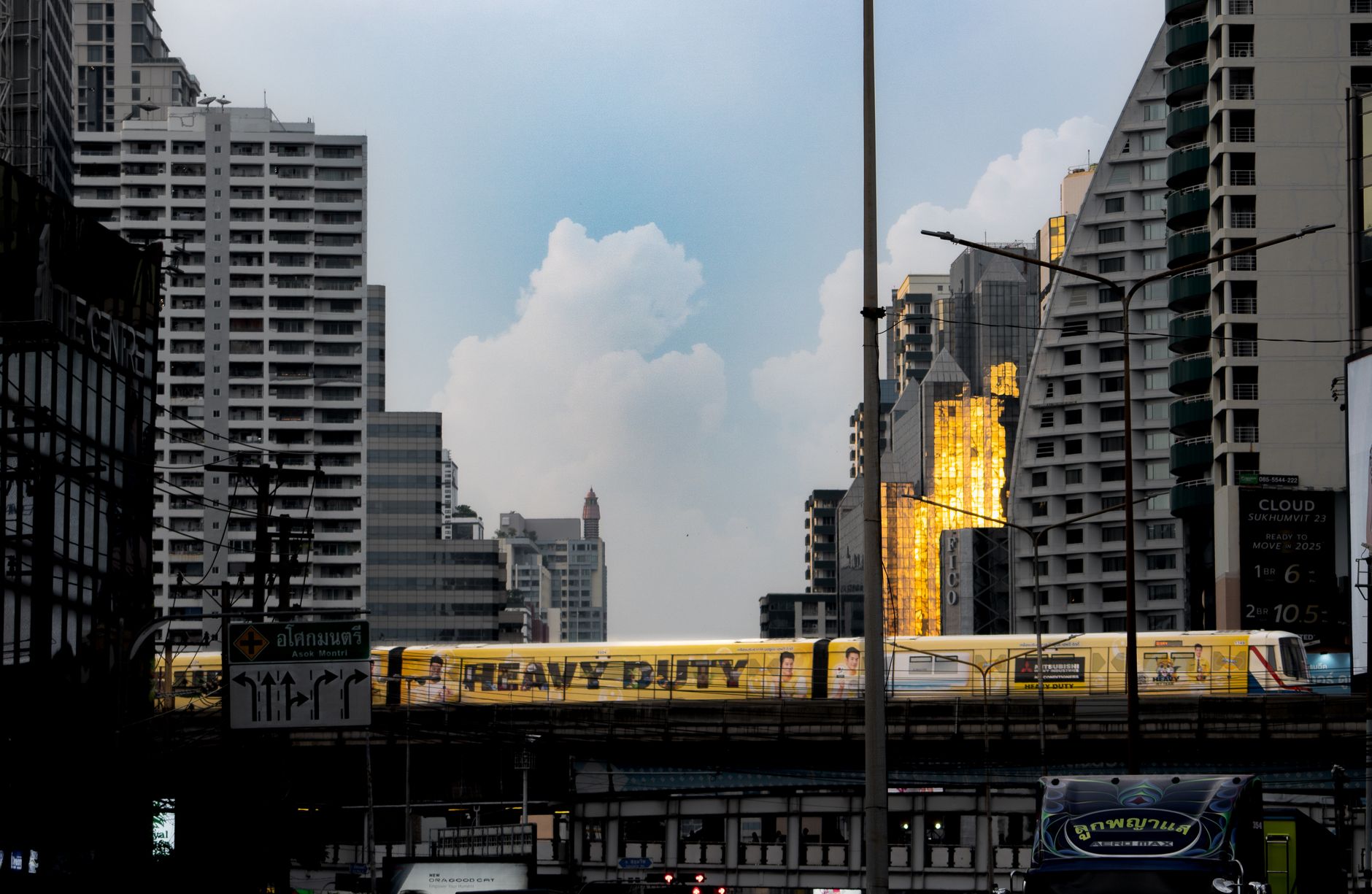
Sukhumvit is Bangkok's most liquid foreign-buyer condo market. As of 2026, market estimates place prices between THB 80,000 and THB 350,000 per square metre, depending on the sub-district (known locally by BTS station name), building age, and finishing level. The spread is wide because Sukhumvit runs for roughly 50 kilometres from Asok (Sukhumvit Soi 21) east to the Bangkok city boundary, and the market inside that corridor is not uniform.
If you want one number to anchor your budget: a mid-range, foreign-quota unit in a completed building near a BTS Skytrain station typically trades at THB 130,000 to THB 200,000 per sqm as of 2026 market estimates. New launches from established developers in the inner corridor (Nana to Thong Lo) open higher, often at THB 200,000 to THB 280,000 per sqm.
This guide breaks Sukhumvit into three zones, gives you indicative price ranges per zone, compares it against the other main Bangkok districts, and tells you directly who should buy here and who should not.
Quick answer
- Inner Sukhumvit (Nana to Asok, BTS Phrom Phong): THB 160,000 to THB 280,000 per sqm as of 2026, market estimates
- Mid Sukhumvit (Thong Lo to Ekkamai, On Nut): THB 110,000 to THB 200,000 per sqm, market estimates 2026
- Outer Sukhumvit (Udom Suk to Bearing and beyond): THB 70,000 to THB 120,000 per sqm, market estimates 2026
- Foreign buyers can legally own a freehold condo unit under the Condominium Act (Thailand), provided the foreign quota in the building does not exceed 49% of total saleable area
- Rental yields in mid Sukhumvit run at roughly 4% to 5.5% gross per year, per market estimates; inner corridor yields are compressed to 3% to 4.5% because purchase prices are higher
- The Foreign Exchange Transaction (FET) form - a document your Thai bank issues when you transfer foreign currency in for a property purchase - is mandatory for freehold title registration as a foreigner
- Bangkok has no rainy-season 'dead month' equivalent to Phuket or Samui; occupancy is more stable year-round, which supports buy-to-let holding
Options and scenarios
Is inner Sukhumvit good for investment in 2026?
The inner zone (roughly Nana, Asok, Phrom Phong, and Thong Lo stations) holds the highest resale liquidity of any Bangkok condo sub-market. Buyers tend to be corporate expats, diplomats, and short-term renters via platforms catering to business travellers. Demand is consistent but so are asking prices, which compresses gross yields.
For capital preservation and resale speed, inner Sukhumvit has a track record. You are unlikely to struggle to find a buyer for a well-located unit if you want to exit. But you are also paying the highest entry price in Bangkok, and net yield after condo management fees (typically THB 40 to THB 80 per sqm per month common area fees, called 'common area maintenance' or CAM fees) and a sinking fund contribution (a one-time payment at purchase, usually THB 400 to THB 800 per sqm) may fall to 2.5% to 3.5% net in premium buildings.
Who should buy here: buyers prioritising resale liquidity and long-term capital stability in a major ASEAN city, with budgets above THB 5 million for a studio or one-bedroom unit.
Who should not: buyers expecting yields above 5% net, or those with budgets under THB 4 million for a unit with BTS walking distance.
Is mid Sukhumvit (Thong Lo to On Nut) better value in 2026?
Thong Lo (Soi 55) and Ekkamai (Soi 63) attract a large Japanese expat community and a growing cohort of digital remote workers. On Nut (Soi 77) has become a practical choice for buyers who want BTS access without inner-corridor prices.
As of 2026, On Nut condos in completed buildings trade at roughly THB 90,000 to THB 140,000 per sqm for older stock (market estimates). New launches in On Nut and Phra Khanong push higher, to THB 130,000 to THB 175,000 per sqm.
Rental demand in mid Sukhumvit skews toward longer stays (6 to 12 months) from expat families and remote workers, which means lower management overhead and more stable occupancy. Gross yields here track 4.5% to 5.5% in market estimates for 2026.
Who should buy here: budget-conscious buyers wanting BTS access and reasonable yields; remote-worker landlords; buyers in the THB 3 million to THB 7 million range.
Who should not: buyers needing very quick resale at premium prices; those wanting luxury finishing at below-market cost.
Is outer Sukhumvit worth considering for foreign buyers?
Beyond Bearing (the current eastern BTS terminus), and in the stretch from Udom Suk to Bang Na, prices drop significantly. Market estimates for 2026 put freehold condo prices in this corridor at THB 60,000 to THB 110,000 per sqm for completed stock.
The trade-off is straightforward: you are further from the business, dining, and healthcare clusters that drive expat and tourist rental demand. Tenants in this zone are primarily Thai nationals and long-term foreign residents who work in the eastern industrial corridor. Gross yields can reach 5% to 6.5% per market estimates, but resale to a foreign buyer is slower because fewer foreign buyers know or want this zone.
Who should buy here: buyers holding for 5 or more years with a buy-to-let focus on the Thai and long-stay expat tenant base.
Who should not: anyone expecting to resell quickly to another foreign buyer, or anyone relying on short-stay tourist rental income.
How does Sukhumvit compare with Sathorn and Ari?
Sathorn (the financial district, running south of Silom) is Bangkok's other prime condo corridor. Prices in Sathorn for comparable grade product track THB 150,000 to THB 260,000 per sqm as of 2026 market estimates. Sathorn has strong demand from financial-sector expats and embassy staff. It is quieter than inner Sukhumvit and has less retail, but the MRT subway connects it efficiently. Yields are similarly compressed to inner Sukhumvit.
Ari (north of the city centre, served by BTS Ari station) is smaller and more residential. Prices run THB 110,000 to THB 180,000 per sqm for condos as of 2026 estimates. It appeals to buyers who prefer a neighbourhood feel, independent cafes, and proximity to international schools in the north Bangkok corridor. Rental demand is narrower: predominantly long-stay expats and Thai professionals. Yields are broadly similar to mid Sukhumvit.
What about Phuket and Koh Samui compared with Sukhumvit?
For context outside Bangkok: freehold condos in Bang Tao, Phuket trade at roughly THB 80,000 to THB 200,000 per sqm as of 2026 estimates, with high seasonal variance in rental demand tied to beach tourism. Koh Samui condos (Bophut, Maenam) run THB 60,000 to THB 130,000 per sqm for most of the market, with a smaller foreign-buyer resale pool.
Sukhumvit's advantage over both resort areas is year-round rental demand and superior resale liquidity for foreign buyers. Phuket and Samui offer higher headline yields in peak months but are exposed to seasonal dead periods (Samui's wet season runs roughly June to October; Phuket's southwest-facing beaches are rough May to October).
Comparison table
| Area | Price per sqm (2026 est.) | Gross yield (est.) | Rental demand profile | Rainy-season risk | Foreign resale liquidity |
|---|---|---|---|---|---|
| Inner Sukhumvit (Asok to Thong Lo) | THB 160,000 to 280,000 | 3% to 4.5% | Corporate expats, business travellers | Low (Bangkok year-round) | High |
| Mid Sukhumvit (Ekkamai to On Nut) | THB 90,000 to 175,000 | 4.5% to 5.5% | Expat families, remote workers | Low | Medium to high |
| Outer Sukhumvit (Udom Suk to Bang Na) | THB 60,000 to 110,000 | 5% to 6.5% | Thai nationals, long-stay expats | Low | Low to medium |
| Sathorn | THB 150,000 to 260,000 | 3% to 4.5% | Finance expats, embassy staff | Low | High |
| Ari | THB 110,000 to 180,000 | 4% to 5% | Long-stay expats, Thai professionals | Low | Medium |
| Bang Tao, Phuket | THB 80,000 to 200,000 | 5% to 7% (seasonal) | Beach tourists, remote workers | Medium (May to Oct) | Medium |
| Bophut, Koh Samui | THB 60,000 to 130,000 | 5% to 7% (seasonal) | Beach tourists, retirees | High (Jun to Oct) | Low to medium |
All figures are market estimates as of 2026. Yields shown are gross before management fees, tax, and vacancy.
Risks and mistakes
Oversupply pockets inside Sukhumvit
Several sub-zones along Sukhumvit, particularly around Asok and Nana, saw large new-supply delivery in 2023 and 2024. As of 2026, some buildings in those corridors carry visible vacancy in the rental market. Before committing, check how many units in your target building are currently listed for rent versus how many are occupied. A building with more than 20% of units listed for rent simultaneously is a warning sign of oversupply pressure.
Construction noise corridors
The Bangkok MRT extension projects and high-rise development sites along Sukhumvit Soi 101 to Soi 115 (outer zone) continue as of 2026. If you are buying in this stretch, verify the construction timeline of adjacent sites. Construction noise can suppress short-term rental rates by 10% to 20% per market estimates.
Foreign quota limits
Under the Condominium Act, a maximum of 49% of a building's total saleable area can be sold to foreign nationals in freehold title. In several popular inner-Sukhumvit buildings, the foreign quota is close to or already at capacity. A unit sold 'over quota' to a foreigner must be held under a Thai company structure or long-term lease, both of which reduce resale flexibility and require separate legal advice.
Always verify the current foreign quota ratio in writing from the juristic person (the building's management entity, which holds the title register) before signing any reservation agreement.
The FET form requirement
As a foreign national buying a freehold condo unit, you must bring the purchase funds from outside Thailand as foreign currency. Your Thai bank converts the funds and issues an FET form (Foreign Exchange Transaction form). This document proves the money entered Thailand legally and in foreign currency, and it is required when you register freehold title at the Land Department. Transferring funds from a Thai bank account denominated in Thai baht, or bringing cash, does not produce an FET form and will block title registration.
Off-plan risk and developer due diligence
Sukhumvit has several smaller developers marketing off-plan condos at below-market teaser prices. Thailand has no state-backed buyer protection scheme equivalent to those in some European markets. If a developer fails before completion, your recourse is through Thai civil courts and is slow and uncertain. For off-plan purchases, review the developer's track record of completed projects (at minimum three delivered buildings), check that the building permit (called an EIA permit for larger projects) has been issued, and verify the land title under the building is a full chanote (the highest grade of Thai land title, formally called 'Nor Sor 4 Jor'), not a lesser document.
Short-term rental regulations
Leasing a condo unit for less than 30 days per stay is regulated under the Thai Hotel Act. Operating an unregistered short-term rental exposes you to fines and can trigger action from the juristic person, which may prohibit short-stay rentals building-wide. Many Sukhumvit buildings explicitly ban sub-30-day rentals in their juristic rules. If your income model depends on short-stay tourists, verify the building's rules before purchase.
Transfer tax and ongoing costs
At transfer, Thailand levies a transfer fee (currently 2% of the appraised value), a specific business tax of 3.3% if the seller has owned the unit for less than five years, or a stamp duty of 0.5% if held longer. The buyer and seller typically negotiate who pays which fee; it is not fixed by law. Budget for these costs in your total acquisition calculation, as they add roughly 3% to 6% to the transaction cost depending on the agreement.
FAQ
What is the average price per sqm for a condo on Sukhumvit in 2026?
As of 2026, market estimates put the average across all Sukhumvit zones at THB 110,000 to THB 160,000 per sqm for completed stock. Inner-zone premium buildings trade at THB 200,000 to THB 280,000 per sqm. Outer-zone older buildings start around THB 60,000 per sqm.
Can a foreign national buy a freehold condo on Sukhumvit?
Yes. Under the Thai Condominium Act, a foreign national can hold freehold title to a condo unit provided the building's foreign quota (49% of total saleable area) is not already full. You must also bring the purchase funds as foreign currency from outside Thailand and obtain an FET form from your Thai bank.
Which part of Sukhumvit gives the best rental yield in 2026?
Mid Sukhumvit (Thong Lo to On Nut) offers the most practical balance of price and yield, with gross yields estimated at 4.5% to 5.5% as of 2026. Outer Sukhumvit shows higher headline yields (5% to 6.5%) but with lower occupancy confidence and slower foreign resale. Inner Sukhumvit yields are compressed by high entry prices.
How does Sukhumvit compare with Phuket for foreign buyers in 2026?
Sukhumvit offers year-round rental demand and higher resale liquidity to foreign buyers. Phuket (Bang Tao, Kamala zones) offers potentially higher peak-season gross yields but with seasonal vacancy risk from May to October on the west coast, and a smaller secondary resale market. Bangkok suits buyers who want stability; Phuket suits buyers who want lifestyle and are comfortable with seasonal income swings.
What is an FET form and why does it matter for buying a condo in Bangkok?
An FET form (Foreign Exchange Transaction form) is a document issued by a Thai commercial bank when foreign currency is converted into Thai baht. For foreign buyers of freehold condos, the Land Department requires this form as proof that purchase funds originated outside Thailand. Without it, the freehold transfer cannot be registered in your name.
Is it safe to buy off-plan on Sukhumvit?
Off-plan purchases carry developer completion risk. Thailand has no state guarantee scheme for off-plan buyers. Limit off-plan risk by choosing developers with at least three delivered buildings in Bangkok, confirming the project holds a valid EIA permit and a chanote title on the land, and having a Thai property lawyer review all contracts before you sign or pay any deposit.
What are the typical ongoing costs for a Sukhumvit condo?
Expect common area maintenance fees (CAM fees) of THB 40 to THB 80 per sqm per month, billed by the juristic person. A one-time sinking fund payment (THB 400 to THB 800 per sqm, market estimates) is due at purchase. If you rent the unit out, rental income is subject to Thai personal income tax or corporate tax depending on your structure; a flat withholding approach is possible through a Thai tax agent.
Should I buy in Sukhumvit or Sathorn as a foreign buyer in 2026?
Both areas offer similar price ranges and yield profiles. The practical difference is that Sukhumvit has more retail, restaurants, and international infrastructure (hospitals, international schools within walking or short BTS distance), making it easier to attract expat tenants without a car. Sathorn is quieter and better for finance-sector tenants. If you plan to use the unit yourself part-time, Sukhumvit's walkability is a clear advantage.
What is a juristic person in Thai condo ownership?
A juristic person is the legally recognised management entity of a condo building in Thailand, created under the Condominium Act. It collects common area fees, maintains the building, and keeps the title records for individual units. When verifying foreign quota availability, you request a certificate from the juristic person, not from the Land Department directly.
What is the minimum budget to buy a freehold condo on Sukhumvit in 2026?
For a studio unit (25 to 30 sqm) in a mid-zone completed building with BTS access, budget a minimum of THB 2.5 million to THB 3.5 million as of 2026. Inner-zone studios in new or premium buildings rarely appear below THB 4 million to THB 5 million. These figures are market estimates and exclude transfer taxes and legal fees.
Planning a property purchase in Thailand? Send us your requirements - the THAI.ESTATE team will reply with specific options and a safety checklist for your case.