Editorial
Russia Up, China Down: What It Means for Your Thai Condo Yield in 2026
By THAI.ESTATE Editorial Team13 min read
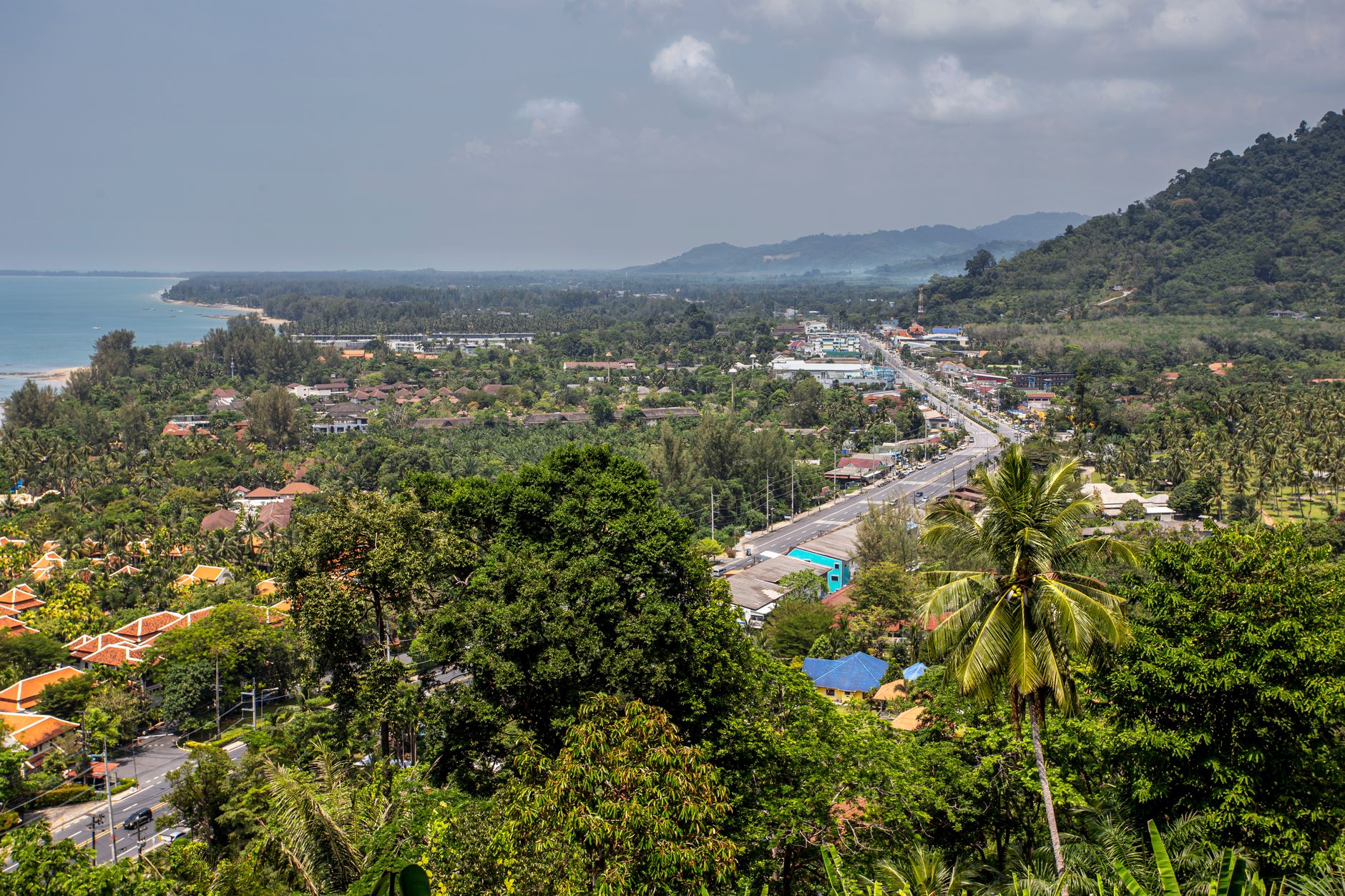
Foreign buyer demand in Thai resort condos is not what it was two years ago. The Chinese-buyer wave that defined Phuket and Pattaya sales floors from 2018 to 2023 has pulled back sharply. In its place, Russian buyers have surged to levels that now reshape rental demand, peak-season calendars, and resale liquidity across the same markets.
If you own, or plan to buy, a resort condo in Phuket or Chonburi and are counting on rental income to justify the purchase, you need to understand which buyer and renter pool actually dominates your micro-market today - and how that changes every number in your yield calculation.
The honest headline: realistic net rental yields on Thai resort condos in 2026 sit in the 4% to 7% gross range, depending on location and letting strategy. After all costs, net yields typically fall to 2.5% to 4.5%. The nationality shift described in this guide affects both ends of that range.
Quick answer
- Per Thai Newsroom, August 2026: condo transfers to foreigners fell 8.8% in volume in H1 2026, and Chinese buyer value dropped 27.7%, while Russian buyer value surged 75.9% to 3.603 billion baht, concentrated in Phuket and Chonburi.
- This shift changes the peak rental season profile: Chinese tourists peak around Chinese New Year (January to February) and Golden Week (October); Russian tourists concentrate in November to April, with a different spend pattern.
- Gross yields advertised by developers typically run 6% to 10% - these figures exclude management fees, OTA (online travel agency) commissions, vacancy, and maintenance.
- Realistic net yields after all costs: 2.5% to 4.5% for professionally managed short-term lets; 3.5% to 5% for stable long-term lets to expatriates or resident foreigners.
- Guaranteed rental programs (common in Phuket new builds) typically return 5% to 7% gross for a fixed term, but the guarantee is funded by the developer, not by real rental income. When the guarantee period ends, yields often reset lower.
- Resale liquidity is now tied to the Russian buyer pool in Phuket micro-markets. Properties positioned for Chinese buyers (certain building styles, amenities, proximity to Chinese-oriented commercial streets) may face a slower resale path.
Options and scenarios
Scenario 1: You own in a Phuket market now dominated by Russian demand
Bangla Road, Patong, and parts of Bang Tao and Rawai have seen the strongest Russian buyer and renter concentration, per market observation as of 2026. If your unit sits in one of these pockets, your peak occupancy window is November to April. High season rates are achievable, but May to October occupancy drops sharply - 30% to 50% vacancy in the low season is a realistic range for short-term lets in these areas, per operator estimates.
The practical implication: do not model your yield on a high-season rate applied to 12 months. A unit renting for 2,500 baht per night in January might achieve an effective average of 1,100 to 1,400 baht per night across the full year once vacancy is accounted for.
For owners in this position, the question is whether to pursue short-term lets (higher peak rates, higher vacancy, higher management cost) or long-term lets to Russian expatriates and digital workers (lower per-night rate, lower vacancy, lower management overhead). The second option has become more viable as longer-stay Russian residents have settled in Phuket.
Scenario 2: You own in Chonburi (Pattaya area) with mixed Chinese and Russian demand
Chonburi registered both Russian growth and continued Chinese buyer presence in H1 2026, per Thai Newsroom, August 2026. The rental market here is more segmented: Jomtien and Pratumnak attract longer-stay retirees (European and Russian), while central Pattaya attracts shorter-stay visitors.
For yield purposes, Chonburi units face a different licensing constraint: buildings that host daily rentals without a Hotel Act license are operating in a legal grey area. If your juristic person (the building's management company, registered under Thai law to manage common property) does not permit short-term letting, you are legally restricted to monthly leases. Many Chonburi buildings have moved to enforce this rule more strictly since 2024.
Monthly leases to long-stay Russian or European renters in Chonburi: typical gross yields of 4% to 6% on units priced at 2 to 5 million baht, per market estimates. Net yields after building fees and vacancy: 3% to 4.5%.
Scenario 3: You are evaluating a new purchase and the developer quotes a guaranteed rental return
Guaranteed rental programs are common in Phuket resort projects aimed at foreign buyers. The developer (or a linked management company) promises a fixed return - often 5%, 6%, or 7% gross - for a defined period, typically 3 to 5 years. The unit is placed in a rental pool managed by the developer.
What the sales brochure does not state clearly:
- The guarantee is typically funded from a portion of your purchase price held as a reserve, not from actual rental income generated.
- You usually surrender control of the unit during the guarantee period - you cannot use it freely or appoint your own manager.
- After the guarantee period, returns depend on real occupancy. If underlying demand is weak (as it may be in a project that over-relied on Chinese buyer traffic that has now declined), net returns can fall to 2% to 3% or below.
- The management fee retained by the operator inside guaranteed programs is often 30% to 50% of gross rental revenue, which is why the 'pass-through' to owners after guarantees expire can disappoint.
If you are evaluating such a program in 2026, ask the developer to show you actual occupancy data from the rental pool for the past 12 months - not forecasts. If they cannot or will not, treat the guarantee as a marketing tool rather than a financial instrument.
Scenario 4: Long-term letting to the expatriate and digital-nomad segment
The growth of longer-stay residents - remote workers, retirees, and semi-permanent foreign residents - has strengthened the long-term rental market in Phuket and Chiang Mai in particular. Leases of 6 to 12 months reduce vacancy risk and eliminate OTA commission costs entirely.
For a well-located 1-bedroom condo in a quality Phuket building priced at 4 to 6 million baht, a 12-month lease at 20,000 to 30,000 baht per month produces a gross yield of 4% to 6%. Subtract common-area fees (typically 40 to 60 baht per square metre per month), annual sinking fund contributions (a capital reserve for major building repairs, typically 500 to 700 baht per square metre paid as a one-off at transfer and as periodic levies), and occasional repairs: net yield lands in the 3.5% to 5% range. This is often more stable and more legally straightforward than short-term letting.
Comparison table
| Parameter | Short-term let (licensed) | Long-term let (12+ months) | Guaranteed program (developer-run) |
|---|---|---|---|
| Typical gross yield | 6% to 10% (peak season dependent) | 4% to 6% | 5% to 7% (during guarantee period) |
| Realistic net yield | 2.5% to 4.5% | 3.5% to 5% | 2% to 4% (post-guarantee) |
| Vacancy exposure | High (30% to 50% low season) | Low (1 to 2 months between tenants) | Managed by operator |
| Management fee | 20% to 35% of revenue | 8% to 15% of revenue | 30% to 50% built into pool |
| OTA commission | 15% to 20% per booking | None | None (handled by operator) |
| Hotel licensing required | Yes, if daily lets in most buildings | No | Depends on building |
| Owner use of unit | Possible in gaps | Restricted by lease | Usually restricted |
| Nationality demand driver | High sensitivity to Russian/Chinese mix | Lower sensitivity | Determined by operator |
| Resale liquidity risk | Linked to tourist-buyer pool nationality | Linked to end-user buyer pool | Depends on building reputation |
Risks and mistakes
Modelling yield on gross figures from a sales deck
Developer brochures in Phuket and Pattaya routinely show 7% to 10% gross yields. These figures are calculated on optimistic occupancy, peak-season rates, and no deductions. Before you accept any number, build the full chain yourself: purchase price, gross rental income at realistic occupancy, minus management fee, minus OTA commission, minus common-area charges (juristic person fees), minus sinking fund levies, minus utilities not recovered from tenants, minus repairs and refurbishment. The gap between the brochure number and the real number is typically 40% to 60%.
Ignoring the Hotel Act licensing question
Under Thailand's Hotel Act, a building that offers accommodation for less than 30 consecutive days is legally classified as a hotel and requires a hotel license. Most residential condominiums do not hold this license. If your building's juristic person prohibits short-term letting (which many now do, partly to protect their own legal standing), you cannot legally operate daily or weekly lets. Violations can result in fines for the unit owner. Confirm the building's policy and its legal status before purchasing on a short-term rental strategy.
Assuming the Chinese buyer pool will return at the same scale
Chinese condo buyer value in Thailand fell 27.7% in H1 2026, per Thai Newsroom, August 2026. This is not a one-quarter anomaly - it reflects a structural shift driven by Chinese domestic property market conditions, capital outflow restrictions, and changed travel patterns. A resort condo purchase premised on Chinese tourist rental demand or Chinese buyer resale liquidity carries more execution risk in 2026 than it did in 2021.
Conflating Russian buyer surge with permanent, deep demand
The Russian surge is real: transfers to Russian buyers reached 3.603 billion baht in H1 2026, per Thai Newsroom, August 2026, a 75.9% increase. But this pool is concentrated geographically (Phuket, Chonburi) and is sensitive to geopolitical and currency conditions outside Thailand's control. Do not price a 10-year yield model on the assumption that this growth rate continues indefinitely.
Underestimating the vacancy gap between high and low season
Phuket's low season (May to October) sees significantly lower tourist arrivals. In certain micro-markets, short-term occupancy can fall below 40% during these months. If your break-even yield requires 70% annual occupancy, and you achieve 85% in high season but 35% in low season, you may be running below break-even for five months of the year.
Relying on a guaranteed return without reading the contract
Guaranteed return contracts contain conditions - force majeure clauses, renovation periods where income is suspended, and early-exit penalties. Some contracts allow the management company to renegotiate terms after the initial period. Read the full contract before signing. If the contract is only in Thai, commission a certified translation.
Neglecting FET documentation for resale
Foreign Exchange Transaction (FET) documentation - the record issued by a Thai bank confirming that foreign currency was converted to baht to fund a condo purchase - is required to repatriate sale proceeds when you sell. If you cannot produce FET records, you may not be able to move the proceeds offshore. Keep every FET record from the initial purchase and from any subsequent capital improvements paid from overseas funds.
FAQ
What are realistic net rental yields for resort condos in Phuket in 2026?
Realistic net yields after management fees, vacancy, OTA commissions, building charges, and repairs typically fall in the 2.5% to 4.5% range for short-term lets and 3.5% to 5% for 12-month leases. Gross figures of 7% to 10% shown in sales materials do not account for these deductions.
How has the fall in Chinese buyers affected rental income for condo owners?
Chinese tourist rental demand is seasonal (peaking around Chinese New Year and October Golden Week) and in some Phuket and Pattaya micro-markets represented a significant share of short-stay bookings. With Chinese buyer value down 27.7% in H1 2026 per Thai Newsroom, August 2026, owners who built their occupancy model on Chinese visitor traffic should reassess both rental demand and the size of the resale buyer pool for their unit.
Does the Russian buyer surge translate into higher rental income?
It can, particularly in Phuket areas with strong Russian renter and resident concentration. Russian tenants often prefer longer stays (1 to 6 months), which reduces transaction costs but also reduces per-night rates. Peak occupancy for this segment runs November to April. Low-season occupancy remains a challenge regardless of the dominant nationality.
What is a guaranteed rental program and is it reliable?
A guaranteed rental program is an arrangement where the developer or a linked operator promises a fixed annual return (commonly 5% to 7%) for a set period. The guarantee is typically funded from a developer-held reserve, not from real booking revenue. After the guarantee period ends, your return depends on actual occupancy. In buildings where underlying demand is weak, post-guarantee yields have dropped to 2% to 3% in comparable markets. Treat the guarantee as a temporary subsidy, not a long-term income forecast.
Is short-term (daily or weekly) letting legal in Thai condominiums?
Not always. Thailand's Hotel Act requires a hotel license for accommodation let for periods under 30 days. Most residential condo buildings do not hold this license. If the juristic person - the building's registered management body - prohibits short-term letting, operating daily rentals is both a breach of building rules and potentially a legal violation. Confirm the building's policy and licensing status before committing to a short-term rental strategy.
How do I calculate the real yield on a Thai resort condo?
Start with annual gross rental income at realistic occupancy (not peak-season rates applied to 12 months). Deduct: management fee (typically 20% to 35% of revenue for short-term lets), OTA commission (15% to 20% per booking), annual common-area fee (juristic person fee, typically 40 to 60 baht per square metre per month), sinking fund levies, estimated annual repairs (budget 1% to 1.5% of purchase price), and income lost to vacancy. Divide the result by your total purchase cost (including transfer fees and furnishing). That is your net yield.
What is a sinking fund and does it affect my yield calculation?
A sinking fund is a capital reserve collected from all unit owners to pay for major building repairs - lifts, roofing, plumbing, common-area refurbishment. In Thailand, a one-off sinking fund contribution is paid at purchase (typically 500 to 700 baht per square metre). Ongoing levies may be collected periodically. These are costs of ownership and should appear in your yield calculation. Buildings with low sinking fund reserves carry higher risk of special levies (one-time charges to all owners for urgent repairs).
Will the Thai government fee reductions affect my purchase decision in 2026?
The Thai government extended reduced transfer fees and mortgage registration fees to June 30, 2027, per Thai Newsroom, August 2026 and REIC data. For a foreign buyer purchasing a freehold condo (the legal structure under the Condominium Act that allows foreigners to hold up to 49% of a building's total floor area), the transfer fee reduction lowers your upfront transaction cost. This is a genuine short-term saving, not a yield driver, but it improves your entry cost and slightly improves break-even occupancy.
Which Phuket areas are now dominated by Russian buyers rather than Chinese buyers?
Per market observation as of 2026, Russian buyer and renter concentration is strongest in parts of Patong, Bang Tao, Rawai, and Kata. Chinese buyer activity remains more visible in certain Phuket Town-adjacent projects and in Chonburi (Pattaya) buildings that were originally marketed to Chinese buyers. The micro-market split matters for both rental demand and resale liquidity, so ask for building-level transfer data, not just district-level data, before purchasing.
What FET documentation do I need and why does it matter?
FET stands for Foreign Exchange Transaction. When you bring money from overseas to buy a Thai condo, your Thai bank issues an FET record confirming the currency conversion from foreign currency to Thai baht. This document is required by Thai law to repatriate sale proceeds when you eventually sell. Without FET records, the Bank of Thailand will not permit the proceeds to leave Thailand in foreign currency. Keep originals and certified copies of every FET record for the life of your ownership.
Planning a property purchase in Thailand? Send us your requirements - the THAI.ESTATE team will reply with specific options and a safety checklist for your case.