Editorial
Phuket West Coast Property Guide for Foreign Buyers 2026
By THAI.ESTATE Editorial Team16 min read
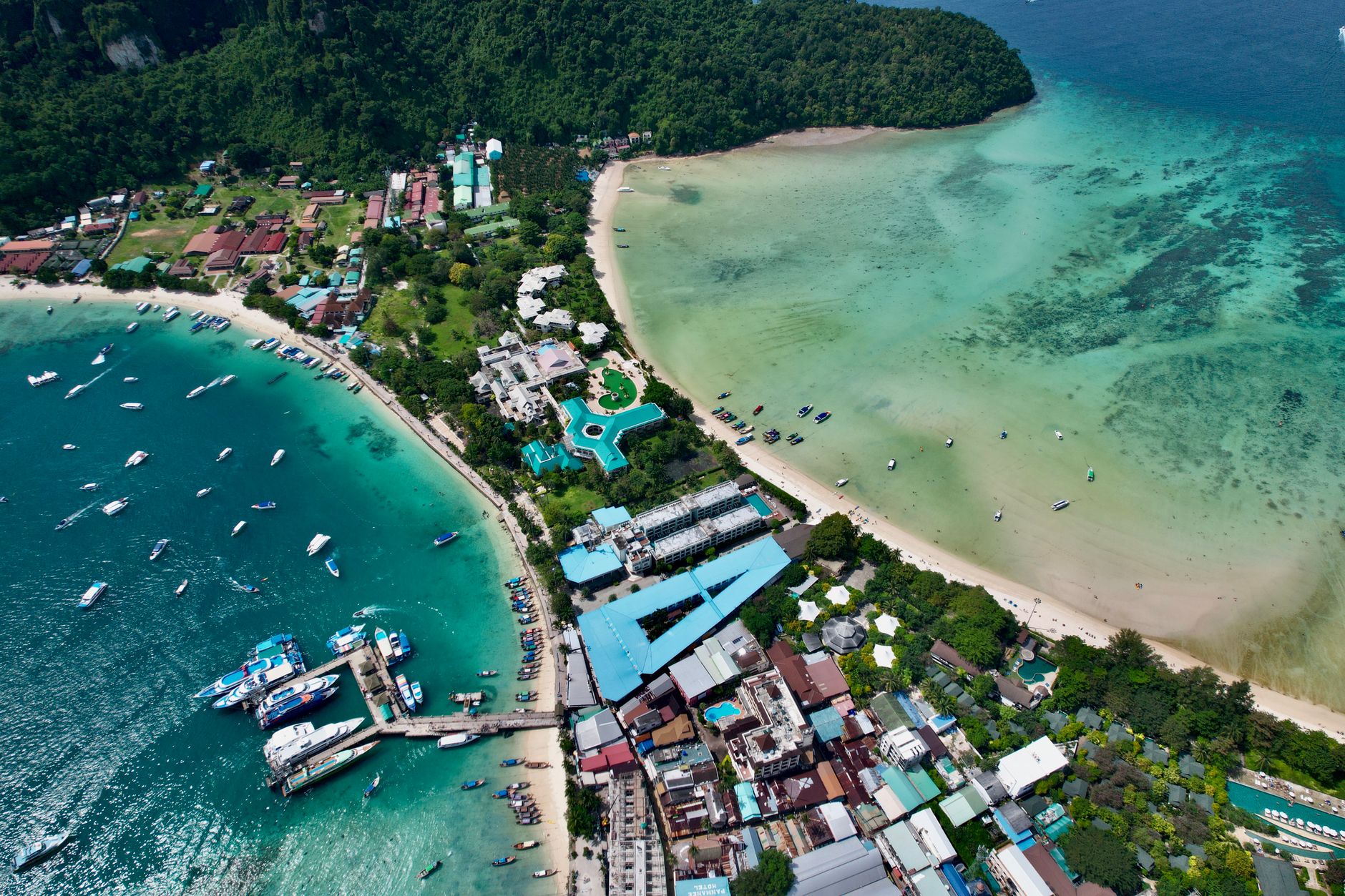
The Phuket west coast is where most foreign buyers spend their search time - and for good reason. The beaches face the Andaman Sea and catch the sunset, tourist infrastructure is the strongest on the island, and rental demand from holidaymakers is consistent across most of the year. The west coast runs roughly from the northern tip at Layan down through Bang Tao, Surin, Kamala, and Patong, then south to Karon and Kata.
If you are deciding where to buy on this coast, the short answer is this: Bang Tao and Layan suit buyers who want a balance of upscale living and rental income. Kamala suits buyers who want quieter surroundings without sacrificing beach access. Surin is a prestige address with thin inventory. Karon and Kata offer lower entry prices and a more mixed rental profile. Patong is the island's commercial centre - high occupancy but not a lifestyle choice for most foreign residents.
This guide walks through each district with indicative prices (market estimates, as of 2026), rental profiles, risks, and a direct fit/no-fit verdict for each area.
Quick answer
- Bang Tao and Layan are the dominant areas for foreign condo and villa investment on the west coast, with the broadest supply and strongest rental management infrastructure
- Surin carries the island's highest per-square-metre prices in some segments - indicative villa prices reach THB 80,000-120,000+ per sqm (market estimates, 2026) - but has very limited new stock
- Kamala offers mid-range entry points around THB 60,000-90,000 per sqm for condos (market estimates, 2026) and attracts long-stay and remote-worker tenants
- Karon has the lowest west coast condo entry price among established beach areas, with indicative figures from THB 45,000-70,000 per sqm (market estimates, 2026)
- Foreign nationals can legally own a condominium freehold under the Condominium Act, provided that no more than 49% of a building's total floor area is foreign-owned
- Villa and land ownership is generally not possible freehold for foreigners; long-term leasehold (30 years, commonly renewable by agreement) is the standard legal structure for land-based properties
- Rental yields on the west coast range from roughly 4% to 8% gross depending on location, unit type, and management quality (indicative range, 2026)
Options and scenarios
Is Bang Tao good for investment?
Bang Tao is the most active foreign-buyer market on the Phuket west coast as of 2026. The area covers a wide bay with a long, relatively uncrowded beach. Laguna Phuket, a large integrated resort complex on the northern end of the bay, anchors premium pricing and provides a self-contained lifestyle with hotels, a golf course, a water park, and retail. Outside Laguna, a dense cluster of branded-residence condominiums and mid-scale projects has formed along the canal roads inland from the beach.
Who should buy in Bang Tao:
- Buyers who want a holiday rental property and need an established rental management ecosystem
- Buyers who plan to retire or spend extended periods in Phuket and want walkable access to restaurants, cafes, and beach clubs
- Buyers with a budget of THB 4M to THB 20M+ for condos, or THB 15M to THB 80M+ for pool villas (market estimates, 2026)
Who should not buy in Bang Tao:
- Buyers who want quiet surroundings: construction activity along the back roads of Bang Tao has been continuous for several years, with several large projects still in progress as of 2026
- Buyers on a tight budget: the area's popularity has compressed yields in oversupplied condo segments, particularly in large branded-residence developments that sell many units at once
- Buyers who want guaranteed land title: always verify that the plot under a villa development carries a chanote (full title deed, the strongest form of land title in Thailand). Some developments in outer Bang Tao use lesser title types. Instruct an independent Thai property lawyer to confirm title before any deposit
Indicative Bang Tao prices (market estimates, as of 2026): Condos: THB 70,000-130,000 per sqm. Pool villas: THB 60,000-100,000 per sqm (land plus structure).
What is Layan like for foreign buyers?
Layan sits just north of Bang Tao, separated by a lagoon and mangrove estuary. It is quieter and greener than the Bang Tao strip, and access to the beach requires a short drive or cycling distance. The buyer profile skews toward families and long-stay residents who want seclusion. The area has a small cluster of high-end villa estates and a handful of boutique condo projects.
Construction noise is lower than Bang Tao. Rainy season (May to October) brings heavy swells that make the beach unsafe for swimming, and the area feels quieter during this period. Rental demand during low season is softer than in Bang Tao, which affects annual yield calculations.
Who should buy in Layan:
- Buyers who prioritize privacy and greenery over beach-club proximity
- Long-stay families: Layan is within 20 minutes of international schools in the Laguna corridor
- Buyers comfortable with a longer hold period
Who should not buy in Layan:
- Buyers who expect strong short-term rental income year-round: low-season occupancy is thinner than in Bang Tao
- Buyers who do not own or plan to rent a car: Layan has no walkable retail or dining outside resort properties
Is Kamala right for you?
Kamala is a quieter bay town roughly halfway down the west coast, between Surin to the north and Patong to the south. It has a functional village centre with local markets, pharmacies, cafes, and restaurants. The beach is calmer than Patong and more central than Bang Tao for buyers who want to drive to multiple areas.
Kamala has attracted a growing number of remote workers and retirees as of 2025-2026, partly because internet infrastructure improved and partly because accommodation is cheaper than Bang Tao for equivalent space. Monthly rents for a one-bedroom apartment or studio run roughly THB 20,000-40,000 (market estimates, 2026) for longer stays.
Who should buy in Kamala:
- Remote workers or early retirees who want a liveable, lower-intensity base with beach access
- Buyers with a mid-range budget who want a condo or villa for personal use with occasional rental
- Buyers who value proximity to Patong for services but do not want to live there
Who should not buy in Kamala:
- Buyers who depend entirely on short-term holiday rentals for return: Kamala does not have the same volume of nightly tourism as Bang Tao or Karon
- Buyers who need a healthcare facility nearby: the nearest hospital with international services is in Patong or further north
What should you know about Surin?
Surin is a small, upmarket beach with a reputation as Phuket's 'millionaire's row', though this branding overstates the uniformity of the area. The beach is beautiful, narrow at high tide, and has historically attracted high-end villas and boutique hotels. New supply is limited because developable plots are scarce and planning restrictions affect hillside land.
Indicative villa prices in Surin range from THB 20M to THB 150M+ (market estimates, 2026), with oceanfront or ocean-view plots carrying the highest premiums. Condo supply is thin. Rental yield data is limited because many Surin villas are held by private owners and not actively marketed on short-term platforms.
Who should buy in Surin:
- High-net-worth buyers who want a prestige address and low-density surroundings
- Buyers who are comfortable with lower liquidity (a limited number of buyers at this price point)
Who should not buy in Surin:
- Buyers who need reliable rental income: the market is too thin to guarantee occupancy at a level that supports a yield-based investment case
- First-time Thailand property buyers: the complexity of hillside land title and the absence of professional rental management infrastructure in Surin means the due diligence burden is higher
Is Karon suitable for investment in 2026?
Karon is a long, wide beach south of Patong. The area is more affordable than the north and mid-coast, with established tourist infrastructure including hotels, restaurants, and dive shops. The buyer demographic on the rental side is younger holidaymakers and budget-conscious tourists.
Condo supply in Karon is older on average than Bang Tao, and some buildings were constructed before quality standards improved. New projects are fewer. This creates a resale market rather than a new-development market. Resale condos can offer better value per square metre but require more careful due diligence on building condition, juristic person (the management body responsible for common areas and maintenance fund) health, and sinking fund (a capital reserve for major repairs) adequacy.
Who should buy in Karon:
- Buyers with a limited budget (from approximately THB 2M to THB 5M for a condo, market estimates, 2026)
- Buyers who accept a more modest quality of finish in exchange for lower entry cost
- Buyers who are willing to manage a holiday rental actively or through a local agent
Who should not buy in Karon:
- Buyers who want a premium lifestyle address
- Buyers who are not prepared to assess building age and maintenance history carefully
Comparison table
| Parameter | Bang Tao / Layan | Kamala | Surin | Karon / Kata |
|---|---|---|---|---|
| Indicative condo price per sqm (2026 estimate) | THB 70,000-130,000 | THB 60,000-90,000 | Limited supply | THB 45,000-70,000 |
| Indicative villa price range (2026 estimate) | THB 15M-80M+ | THB 10M-40M | THB 20M-150M+ | THB 8M-30M |
| Primary rental demand | Holidaymakers, families | Remote workers, long-stay | Private owners, limited rental | Holidaymakers, budget tourism |
| Indicative gross rental yield | 5%-8% (managed) | 4%-6% | Not reliably quoted | 4%-6% |
| Beach access (walk from typical condo) | 5-20 min walk | 5-15 min walk | 5-15 min drive or walk | 5-10 min walk |
| Airport distance | 25-35 min drive | 35-45 min drive | 35-45 min drive | 45-55 min drive |
| International healthcare nearby | Yes (north Phuket corridor) | Patong (15 min drive) | Patong (20 min drive) | Patong (10-15 min drive) |
| International schools nearby | Yes (Laguna corridor) | 20-30 min drive | 20-30 min drive | 30-40 min drive |
| Construction noise risk | High (ongoing activity) | Low-moderate | Low | Low |
| Foreign freehold condo available | Yes | Yes | Limited | Yes |
| Leasehold villa available | Yes | Yes | Yes | Yes |
| Walkability for daily needs | Moderate | Good | Low | Good |
| Rainy-season character | Quieter, beach unsafe for swimming | Quieter, some local life | Very quiet | Active, local market |
Risks and mistakes
1. Buying off-plan from an undercapitalized developer Off-plan purchases dominate the Phuket west coast market. A developer who pre-sells units to fund construction is exposed to cash-flow risk. If sales slow, construction can stall. There is no escrow protection for foreign buyers in Thailand in the traditional sense. Before signing an off-plan contract, instruct an independent Thai lawyer to review the developer's background, land title, and construction permit. Check the developer's track record: have they completed previous projects on schedule?
2. Ignoring the foreign quota Under the Condominium Act, foreign nationals may own up to 49% of a building's total floor area. Buildings in popular areas sometimes reach this quota. Buying beyond the quota is not legally possible as freehold; some developers offer quota-exceeding units as leasehold only. Confirm which quota applies to your specific unit before signing anything.
3. Conflating leasehold with freehold A 30-year leasehold is the most common legal structure for foreign villa buyers. It is a legally valid arrangement in Thailand, but it is not the same as ownership. You hold a right to use the property for the lease term. Renewal is by agreement, not automatic. Ensure the lease is registered at the Land Department and that renewal terms are clearly written in the lease agreement.
4. Overlooking the transfer fee and taxes At transfer, the main costs are: a transfer fee of 2% of the registered value, a specific business tax of 3.3% (applies if the seller has held the property for less than 5 years), or stamp duty of 0.5% (if specific business tax does not apply). Withholding tax is also deducted from the seller's proceeds. Buyers should not assume these costs are negligible: on a THB 10M purchase, transfer and tax costs can reach THB 500,000 to THB 1M+ depending on the transaction structure.
5. Not using a Foreign Exchange Transfer (FET) certificate To own a condominium freehold as a foreigner, you must demonstrate that the purchase funds were transferred into Thailand from abroad in foreign currency. The receiving Thai bank issues a Foreign Exchange Transfer certificate (sometimes called a Thor.Tor.3 form). Keep this document: it is required at the Land Department and it is also needed when you later remit sale proceeds out of Thailand.
6. Underestimating the rainy season impact on rental income The Andaman coast rainy season runs from approximately May to October. West-facing beaches receive heavy swells. Occupancy rates for holiday rentals drop sharply. A rental income projection based only on high-season months will overstate your annual return. Ask for monthly occupancy data, not annual averages.
7. Buying near construction corridors without time-horizon awareness Bang Tao in particular has active construction along several road corridors. If you plan to use the property personally or rent it immediately after purchase, confirm what is being built nearby and when it is expected to complete. Noise and dust from adjacent sites affect both lifestyle and short-term rental ratings.
8. Accepting verbal guarantees on rental returns Some developers offer guaranteed rental return programs (for example, 6% or 7% per year for 2-3 years). These guarantees are typically paid from your own purchase funds or from other buyers' funds - they are not backed by actual rental income. Treat them as a marketing structure, not a true investment return.
FAQ
Can a foreigner buy property on the Phuket west coast?
Yes, with restrictions. You can buy a condominium unit freehold under the Condominium Act if the building's foreign quota (49% of total floor area) has not been reached. You can hold a villa or house on a registered 30-year leasehold. You cannot own land freehold as an individual foreign national under Thai law.
What is the cheapest area on the Phuket west coast for foreign buyers?
Karon and Kata offer the lowest indicative entry prices among established west-coast beach areas, with condo resale units available from approximately THB 2M to THB 5M (market estimates, 2026). Quality and building age vary, so due diligence on the specific building is essential.
Is Bang Tao oversupplied?
In some segments, yes. The branded-residence condo category in Bang Tao has seen heavy supply additions over the past several years. Investors in large developments with many identical units compete directly against each other on short-term rental platforms, which can suppress nightly rates and occupancy. Boutique projects and well-located villas in Bang Tao have shown more resilient demand, but the area as a whole is not undersupplied.
Phuket or Koh Samui for retirement?
Phuket has stronger infrastructure for foreign retirees: international hospitals (including facilities with Joint Commission International accreditation), a broader choice of international schools for families, more direct international flight connections, and a larger foreign-resident community. Koh Samui has a more relaxed pace, lower property prices in some segments, and a smaller but established expat community. For retirees who prioritize healthcare access and connectivity, Phuket's west coast is the stronger choice. For those who want lower costs and a quieter lifestyle and are comfortable with island logistics, Samui is worth comparing.
What does 'chanote' mean and why does it matter?
A chanote (full title deed, formally called Nor Sor 4 Jor) is the strongest form of land title in Thailand. It is GPS-surveyed and registered with the Land Department. For villa buyers, you want the land under the property to carry a chanote. Lesser title types (such as Nor Sor 3 Gor or Sor Por Gor) restrict what you can do with the land and may complicate resale or financing. Always instruct a Thai lawyer to verify land title before signing a purchase agreement.
How do I transfer money to Thailand for a condo purchase?
You must transfer the purchase funds from your overseas bank account in foreign currency directly to a Thai bank account in your name. The Thai bank then issues a Foreign Exchange Transfer certificate (FET, or Thor.Tor.3 form). This certificate proves the funds originated abroad and in foreign currency - a requirement for foreign condo freehold ownership and for remitting sale proceeds out of Thailand in the future. Do not pay in Thai baht from a local account if you want freehold title.
What fees should I budget for beyond the purchase price?
Budget approximately 2%-6% of the purchase price for transaction costs, depending on the seller's holding period and the registered value. Main items: transfer fee (2% of registered value), specific business tax (3.3%, applies in most new-purchase or short-hold scenarios) or stamp duty (0.5%), and withholding tax (deducted from seller's side but can affect price negotiation). Add lawyer's fees (typically THB 30,000-80,000 for a standard transaction) and a building inspection fee if buying resale.
Is a rental guarantee from a Phuket developer trustworthy?
Treat rental guarantees with caution. A developer offering a fixed annual return for a set period is typically not guaranteeing rental performance - they are structuring a payment from a pool that includes your own purchase funds or other buyers' contributions. Once the guarantee period ends, actual rental income depends entirely on occupancy and nightly rates. Ask for audited occupancy data from completed similar projects before relying on a guarantee figure.
What are the risks during Phuket's rainy season?
The Andaman coast wet season runs from approximately May to October. Beaches on the west coast (Bang Tao, Kamala, Surin, Karon) are subject to red-flag closures due to strong surf. Tourism volumes drop significantly. Holiday rental occupancy can fall below 30% in some months. This is not a reason to avoid the west coast, but any yield calculation must use full-year occupancy data, not peak-season figures only.
Should I use a Thai company structure to buy a villa?
Some buyers are advised to purchase land-based property through a Thai limited company, which can hold land title. This is a legal structure but carries real risks: Thai law requires that a majority of company shareholders be Thai nationals, and using nominee shareholders (Thai nationals who hold shares on your behalf without genuine investment) is illegal. The Land Department has increased scrutiny of company structures used by foreigners. If you are considering this route, obtain independent legal advice. Leasehold is generally the safer and more transparent structure for most foreign villa buyers.
Planning a property purchase in Thailand? Send us your requirements - the THAI.ESTATE team will reply with specific options and a safety checklist for your case.