Editorial
Phuket Rental Yields: Why 6-10% Is Real and Where to Find It
By THAI.ESTATE Editorial Team15 min read
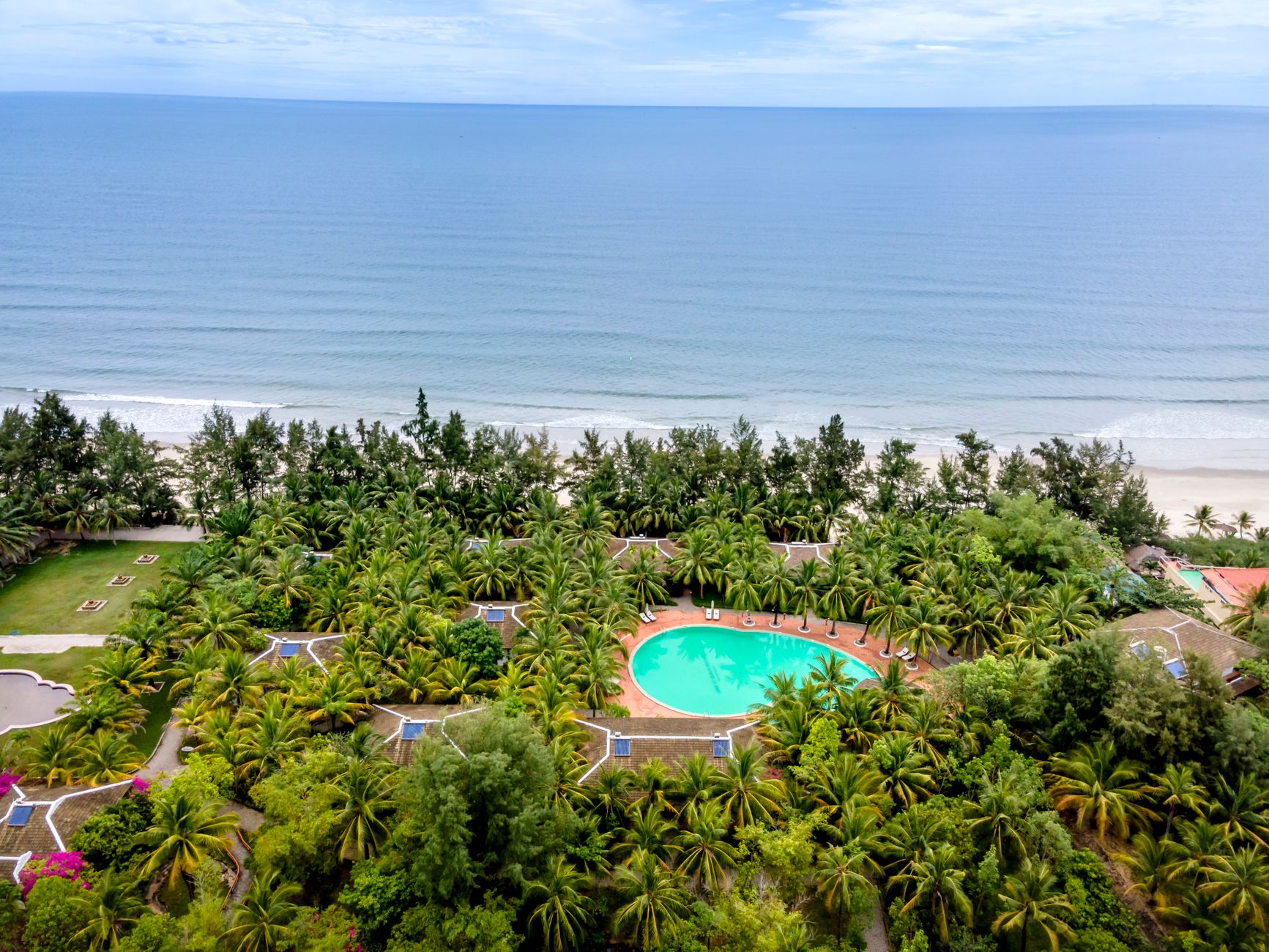
Phuket rental yields in beachfront and sea-view zones genuinely reach 6% to 10% per year on a gross basis, per market reporting from mid-2026. That range is not marketing fiction, but it applies to specific districts, specific property types, and specific letting strategies. Before you buy, you need to know the net number, not the gross one. Net yields, after all operating costs, typically land 2 to 4 percentage points below the advertised gross figure.
This guide shows you the full cost chain from purchase price to net cash in hand, identifies which Phuket districts are producing the strongest returns in 2026, and explains the structural forces that make those yields more durable than comparable markets elsewhere in Southeast Asia.
Quick answer
- Gross rental yields in high-occupancy Phuket zones average 6% to 10% annually as of 2026, with short-term holiday rentals outperforming long-term leases during peak tourist windows (roughly November to April)
- Net yields, after management fees, platform commissions, maintenance, sinking fund contributions, common-area fees, and vacancy periods, typically range 4% to 7% for well-run short-term units and 3% to 5% for long-term lets
- Supply is structurally constrained: mountainous topography and zoning rules limit how much new beachfront or sea-view stock can be built, which protects resale prices and rental pricing power
- Bang Tao and Kamala are the leading condominium yield districts in 2026; Rawai and Nai Harn are the leading villa yield zones; Layan and Natai (just north of the island) are the districts now opening to yield-seeking buyers on the back of airport and road improvements
- Guaranteed-rental programs advertised at 7% or 8% often mask underlying demand weakness - you need to read the contract carefully before trusting the headline number
- Foreign buyers can legally own a condominium unit in freehold (chanote title, meaning full registered ownership) if foreign ownership in the building stays within the 49% quota set by Thailand's Condominium Act
Options and scenarios
Short-term holiday letting in Bang Tao and Kamala
Bang Tao covers the long sandy beach on Phuket's northwest coast. Kamala sits just south of it. Both districts have established condominium stock with legitimate short-term letting infrastructure: juristic persons (the legally registered building management entities required under Thai condominium law) that allow owners to enter rental pools, and proximity to the Boat Avenue and Porto de Phuket retail corridors that attract repeat visitors.
A mid-range condominium in Bang Tao priced at THB 4 to 7 million (indicative figures, market estimates 2026) can generate gross annual rental income of roughly THB 350,000 to 600,000 at strong occupancy. That implies a gross yield of approximately 7% to 9%. Deduct the following to reach the net figure:
- Management fee: 15% to 25% of gross revenue if you use a professional operator
- OTA (online travel agency) commission: 15% to 20% on top of the management fee when bookings come via major booking platforms
- Common-area maintenance fee (CAM): typically THB 40 to 80 per square metre per month, collected by the juristic person
- Sinking fund top-ups: a sinking fund is a capital reserve fund for major building repairs; contributions are called irregularly but average THB 500 to 2,000 per square metre over a 5-year cycle
- Repairs and furnishing replacement: budget 1% to 2% of purchase price per year for a furnished short-let unit
- Vacancy: even in Bang Tao, expect 10 to 15 weeks of effective vacancy when combining the April-to-June low season with owner use or gap weeks between bookings
After these deductions, a realistic net yield for a well-located Bang Tao condominium on short-term letting is 4.5% to 6.5% in a good year.
Long-term monthly letting
Long-term leases (one month or longer) remove OTA commissions and reduce vacancy risk, but compress the rental rate significantly. A unit that earns THB 45,000 per month short-term during peak season might only command THB 25,000 to 32,000 per month on a 12-month lease.
Long-term yields in Bang Tao and Surin typically settle at 3.5% to 5% net. The advantage is predictability. You also avoid the hotel licensing question entirely (see the Risks section), which matters if your building is not legally set up for daily or weekly rentals.
Long-term letting is more common in Rawai, Nai Harn, and Chalong, which attract resident expats and digital nomads rather than holiday tourists. These districts have lower purchase prices, which can partially offset the lower rental rates.
Villas in Rawai, Kamala, and Patong hillsides
Villa yields in Phuket are more variable than condominium yields. A three-bedroom pool villa in Rawai priced at THB 12 to 20 million (market estimates, 2026) rented short-term through a professional manager can produce gross yields of 7% to 10% during peak season. But villas carry higher fixed costs: pool maintenance, gardener, security, and periodic structural maintenance all add up. Net yields on villas rarely exceed 5% to 7% for self-managed short-term rental, and fall to 3% to 5% under a full-service management contract.
The villa segment also faces a tighter supply of legally compliant short-term rental properties. Many villas operate in a grey zone, accepting bookings without the hotel licence required under Thai hotel law for properties offering short-stay accommodation to the public. That legal exposure is a real risk (detailed below).
Northern districts: Layan, Natai, and the airport corridor
The districts north of Bang Tao and extending into Phang Nga province (Natai in particular) are receiving new attention in 2026. Road improvements along the northern corridor and the phased expansion of Phuket International Airport are reducing travel times and improving connectivity. Per market reporting from August 2026, infrastructure upgrades in northern Phuket are expanding investment appeal to previously overlooked districts.
Prices in Layan and Natai remain 20% to 40% below equivalent Bang Tao product (market estimates). Yields at the entry price point can look attractive on paper, but liquidity at resale is thinner, management infrastructure is less developed, and occupancy data is still limited. These districts suit buyers with a longer horizon who are willing to wait for the infrastructure dividend to fully arrive.
Patong: high footfall, mixed investment quality
Patong is Phuket's most visited area. Occupancy rates for properly licensed short-term accommodation are among the highest on the island. However, purchase prices are also high relative to rental rates, and the building stock is older on average. Net yields in Patong condominiums typically run 4% to 6%, and resale liquidity is uneven because the buyer profile is more tourist-driven than investment-driven. Patong is not the strongest yield district in 2026, but it offers volume and occupancy reliability.
Comparison table
| Parameter | Bang Tao / Surin condos | Rawai / Nai Harn villas | Patong condos | Layan / Natai (emerging) |
|---|---|---|---|---|
| Typical purchase price range | THB 4M - 10M | THB 12M - 25M | THB 3M - 8M | THB 3M - 9M |
| Gross yield range (2026 estimates) | 7% - 9% | 7% - 10% | 5% - 8% | 6% - 9% (projected) |
| Realistic net yield | 4.5% - 6.5% | 3.5% - 6% | 3.5% - 5.5% | 4% - 6% (early stage) |
| Primary letting strategy | Short-term holiday | Short-term holiday | Short-term holiday | Mixed |
| Peak season occupancy | High (70% - 85%) | High (65% - 80%) | Very high (75% - 90%) | Moderate (55% - 70%) |
| Low season risk | Moderate | Moderate to high | Lower (volume market) | Higher |
| Freehold condo quota availability | Good (multiple buildings) | Limited condo stock | Good | Limited |
| Resale liquidity | Strong | Moderate | Moderate | Thin |
| Infrastructure outlook | Stable and mature | Stable | Stable | Improving actively |
Risks and mistakes
Hotel licensing and the legality of short-term rentals
This is the most commonly overlooked risk in the Phuket market. Thai hotel law requires any property offering short-stay accommodation (typically defined as stays of less than 30 days) to hold a valid hotel licence. A condominium building that is not licensed as a hotel cannot legally offer daily or weekly rentals to the public.
Many buildings operate without this licence, and many units are advertised on major booking platforms without it. If authorities enforce the rules (enforcement has been periodically applied in Phuket, with fines and listing removals), you could lose rental income with no legal recourse against the operator.
Before you buy with a short-term rental strategy, verify that the building's juristic person holds or is pursuing hotel licensing. If it does not, price in the risk of being limited to monthly leases, which will reduce your yield by 2 to 4 percentage points.
Guaranteed-rental programs: what you are actually buying
Some developers offer guaranteed-rental programs at fixed rates, often 7% or 8% gross for 3 to 5 years. These programs are common in Phuket's new-development segment. The mechanism works as follows: the developer or an affiliated operator pools your unit with others, rents them out, and pays you a fixed percentage regardless of actual occupancy.
The risks are structural:
- The guarantee is only as strong as the guarantor. If the developer or operator faces financial difficulty, the guarantee can stop. There is no regulatory authority that enforces these guarantees in the way a bank deposit would be protected.
- The guaranteed rate often includes the developer's margin, meaning the purchase price may have been inflated to fund the guaranteed payments. You are effectively pre-paying your own rental income.
- After the guarantee period ends, the underlying market rate applies. If the program masked weak real demand, yields can drop sharply.
- Contract terms often restrict your use of the unit, limit your resale options, or require you to remain in the program for the full term.
A guaranteed program is not automatically bad, but you must model the scenario where it ends and the property must stand on its own market rate. Ask the operator for actual verified occupancy data (not projected figures) for comparable units in the same building.
The gross-to-net gap in sales materials
Sales decks routinely show gross yields: annual rental income divided by purchase price, before all operating costs. A 9% gross yield on a THB 6 million unit means THB 540,000 in annual rental income. It says nothing about the THB 120,000 to 200,000 that may leave as management fees, OTA commissions, CAM fees, and maintenance. The net yield on the same unit could be 5.5% to 6.5% in a strong year, and lower in a weaker one.
Always build your own cost model. Request 12 months of actual booking history from the seller or operator, not a projection. If the unit has not been rented before, use conservative occupancy assumptions: 55% to 65% annual occupancy is a more honest baseline than the 75% to 80% figures sometimes used in projections.
Low season occupancy on Phuket
Phuket has a pronounced seasonal pattern. The high season runs roughly from November through April, driven by European and Middle Eastern tourist arrivals. The low season, May through October, overlaps with the monsoon and sees significantly lower hotel and villa occupancy. Some operators report low-season occupancy rates of 30% to 45% for holiday accommodation. Annual yield calculations must reflect this average, not just peak-season rates.
Koh Samui has a different weather pattern (its east coast catches the November-December northeast monsoon) and is not covered in depth here, but buyers comparing islands should account for the different seasonal timing.
Foreign ownership limits and title types
Foreign buyers can own a condominium unit in freehold under the Condominium Act, but only up to 49% of the total floor area in any one building can be foreign-owned. Check the current foreign quota status of any building you are considering. If the foreign quota is full, you would need to hold the unit via a leasehold structure (a registered long-term lease, typically 30 years with contractual renewal options) rather than freehold.
For land and villas, foreign individuals cannot hold freehold land title under the Land Code. Common structures include leasehold (30 years registered, with renewal options in the contract), or ownership via a Thai limited company. Each structure has distinct legal, tax, and inheritance implications. Take independent legal advice before committing.
Currency and transfer risk
All rental income in Phuket is earned in Thai baht. If your home currency is euro, US dollar, or British pound, your effective return fluctuates with exchange rates. Over a 10-year holding period, currency movement can add or subtract the equivalent of 1 to 2 percentage points of annualised return.
Additionally, Thailand's Foreign Exchange Transaction (FET) rules - regulations governing the transfer of foreign currency into and out of Thailand - require that foreign funds brought into Thailand for property purchase be documented. When you sell and repatriate funds, you will need to show the original FET records to your bank. Without proper documentation, repatriation can be difficult.
FAQ
What is a realistic net rental yield in Phuket in 2026?
For a well-located condominium in Bang Tao or Kamala operated short-term through a professional manager, a realistic net yield is 4.5% to 6.5% per year after all costs. For villas, the range is 3.5% to 6%. Long-term monthly lets typically produce 3% to 5% net. Gross figures advertised by sellers are typically 2 to 4 percentage points higher than the net number you will actually receive.
Which Phuket district produces the highest rental yields?
Bang Tao and Kamala produce the strongest and most consistent condominium yields, supported by high tourist footfall, established management infrastructure, and constrained supply of beachfront land. Rawai and Nai Harn offer competitive villa yields at lower entry prices. Layan and the Natai corridor are emerging, with infrastructure improvement driving projected yield improvement over the next 3 to 5 years.
Can a foreign buyer legally own a rental property in Phuket?
Yes, with important limits. Foreign buyers can own a condominium unit in freehold under Thailand's Condominium Act, subject to the 49% foreign ownership quota per building. For villas and land, foreign individuals must use leasehold or a Thai company structure, both of which have different legal and tax profiles. Independent legal advice specific to your situation is necessary before you sign anything.
Are guaranteed-rental programs safe?
Guaranteed-rental programs offer fixed income for a set period, typically 3 to 5 years, and are common in Phuket's new-development segment. They carry real risks: the guarantee depends on the financial health of the developer or operator, the purchase price may be inflated to fund the payments, and occupancy after the guarantee period may not support the same return. Treat any guarantee as a temporary subsidy and model the yield on real market rates before deciding.
What costs reduce my gross rental yield?
The main cost categories are: professional management fees (15% to 25% of gross revenue), OTA platform commissions (15% to 20% of booking revenue), common-area maintenance fees charged by the building's juristic person (typically THB 40 to 80 per square metre per month), sinking fund contributions (irregular, averaged over a 5-year cycle), repairs and furnishing replacement (budget 1% to 2% of purchase price per year for a furnished holiday unit), and vacancy (10 to 15 weeks per year is a realistic baseline for most Phuket districts).
Is it legal to rent out a condominium short-term in Phuket?
Only if the building holds the relevant hotel licence under Thai hotel law. Many buildings operate without this licence and still accept short-term bookings via major platforms. If enforcement actions occur, unlicensed operators can face fines and listing removals. Before you buy with a short-term rental plan, confirm the building's licensing status in writing. If it is unlicensed, assume you are limited to monthly leases.
How does Phuket's airport expansion affect rental yields?
Phuket International Airport capacity improvements and road upgrades in the northern part of the island are reducing travel times to previously less-accessible districts. Per market reporting in August 2026, these infrastructure changes are expanding investment interest to areas north of Bang Tao and into Phang Nga province. Lower purchase prices in these zones mean higher initial gross yields, but occupancy and resale liquidity data are still building up.
Why are supply constraints in Phuket important for yield sustainability?
Phuket's mountainous interior and coastal zoning rules severely restrict the amount of new beachfront or sea-view land that can be developed. This means supply of premium holiday accommodation grows slowly relative to tourist demand. Constrained supply supports both rental pricing power and resale values over time. This structural feature distinguishes Phuket from flat, easily developed coastal markets where yield compression follows new supply quickly.
What is the difference between a chanote and a leasehold title?
A chanote is a full land ownership title registered with the Thai Land Department, the highest-quality title available in Thailand. Foreign individuals can hold a chanote for condominium units within the 49% foreign quota. For land and villas, a leasehold is a registered long-term lease (typically 30 years) that gives the foreign holder the right to use the property but not outright ownership of the land. Both can be used to generate rental income, but they have different legal and resale implications.
What exchange rate and currency risks should I plan for?
All Phuket rental income is paid in Thai baht. If you live and spend in euros, US dollars, or British pounds, your effective return moves with exchange rates over time. Currency fluctuation over a 10-year holding period can shift your annualised return by 1 to 2 percentage points in either direction. Also keep your FET (Foreign Exchange Transaction) documentation when you bring funds into Thailand, as you will need it to repatriate sale proceeds later.
Planning a property purchase in Thailand? Send us your requirements - the THAI.ESTATE team will reply with specific options and a safety checklist for your case.