Editorial
Phuket Luxury vs Lower-Tier Condos: Yield and Exit Strategy in 2026
By THAI.ESTATE Editorial Team15 min read
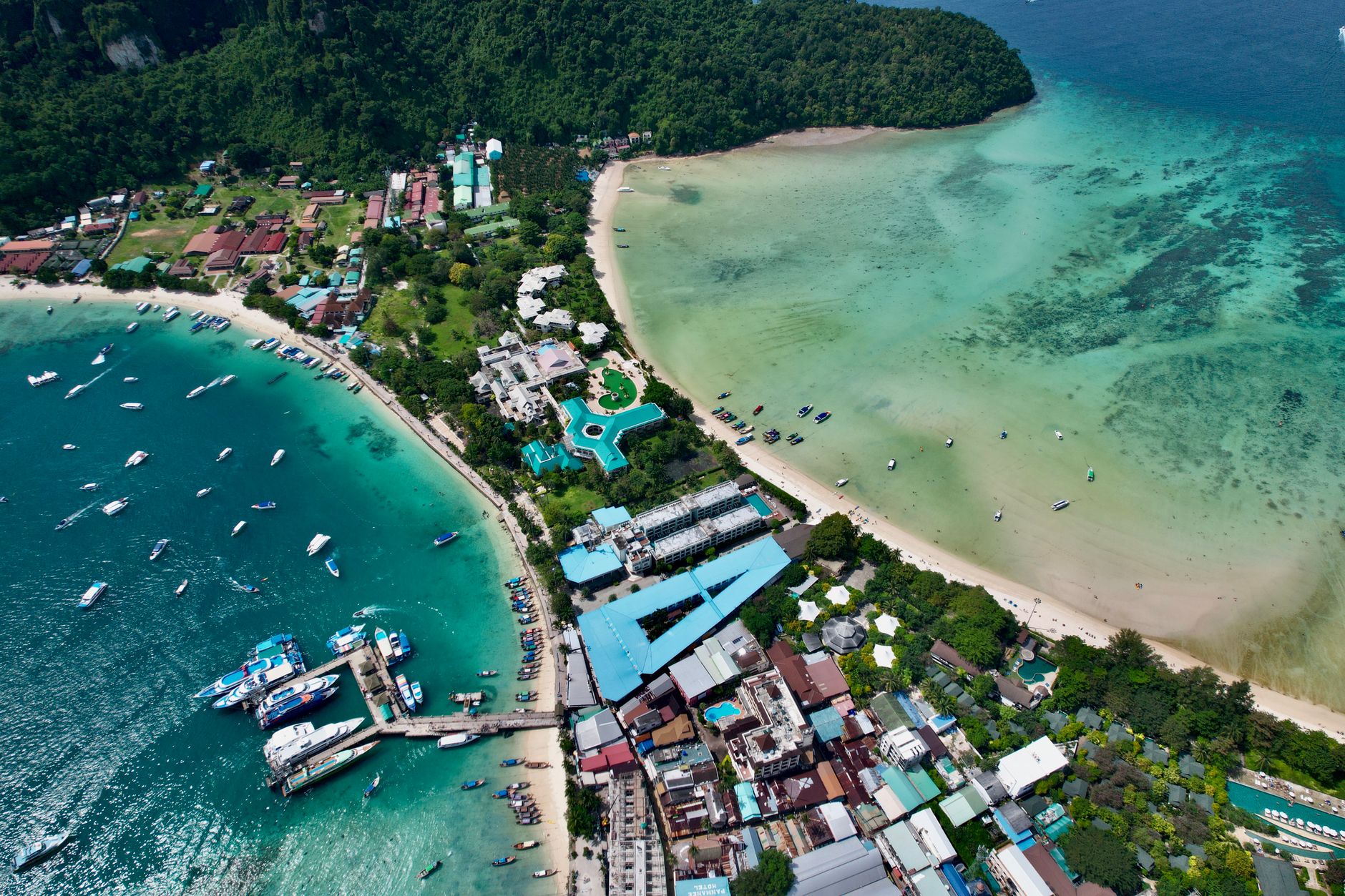
In 2026, Phuket's condo market runs at two distinct speeds. Luxury projects in prime locations are generating strong buyer interest and rising values. Lower-tier, investment-driven supply is growing faster than demand can absorb it. If you are a foreign buyer choosing between these two tiers, the tier you choose will determine your rental yield ceiling, your ownership structure, and ultimately how and when you can exit.
The honest answer on net rental yield: after all costs, luxury condos in established Phuket locations typically return 4-6% net on a well-managed long-term or premium short-term lease. Lower-tier condos, especially in oversupplied corridors, often deliver 3-4% net or less once vacancy, commissions, and management costs are counted. Guaranteed-rental programs can inflate the headline figure while masking weak underlying occupancy.
Quick answer
- The Phuket market is bifurcating in 2026: luxury projects in prime areas report strong sales while lower-tier investment-driven supply is becoming oversupplied, per reporting from September 2026
- Luxury sales value rose 900% year-on-year at one major Bangtao-area development, signalling where international capital is concentrating
- Ownership structure is now a tier-specific issue: at one ready-to-move project as of September 2026, the foreign freehold quota (49% of units, per the Thai Condominium Act) is fully exhausted - new foreign buyers must choose between a registered lease from ฿21.93M or a freehold resale unit from ฿13.5M
- Net yield on lower-tier condos is being compressed by oversupply, rising vacancy, and OTA (online travel agency) commission costs of 15-20% of gross revenue on short-term lets
- Exit liquidity differs sharply by tier: luxury units with freehold title and genuine lifestyle demand attract both local upgraders and international buyers; lower-tier units with exhausted foreign quotas face a structurally smaller resale pool
- Guaranteed-rental programs at lower-tier projects often reflect developer need to move units rather than strong market demand - read the guarantee structure before accepting the headline rate
Options and scenarios
Scenario 1: Luxury freehold condo in a prime Phuket location
The Bangtao and Laguna Phuket corridor is the clearest current example of this tier. Projects here benefit from beach access, established international communities, branded hospitality management, wellness facilities, and international schools nearby. These are the attributes that draw European, Middle Eastern, and Asian wealth-preservation buyers - not pure yield hunters.
For a luxury unit priced at ฿15M-฿40M, the ownership structure available to you as a foreigner typically includes genuine freehold title within the 49% foreign quota permitted under the Thai Condominium Act. When that quota fills - as it has at some completed projects - freehold resale units change hands between foreigners, preserving the quota slot. This is exactly the dynamic reported at one Phuket project in September 2026, where foreign quota resale units were available from ฿13.5M while the developer's new leasehold-only units started from ฿21.93M.
The yield picture at this tier: gross short-term rental yields of 6-8% are achievable in high season (November to April), but high season is roughly 5-6 months. Low season occupancy in Phuket can fall below 40%. A realistic blended gross yield across 12 months sits at 5-7% for a well-located luxury unit under professional branded management. After management fees (typically 30-40% of gross revenue for a hotel-program model), sinking fund contributions (at one 2026 project, ฿500 per m2 one-time at transfer), common area fees (around ฿80 per m2 per month at a comparable project), and minor repairs, net yield falls to 4-6%.
The exit story is stronger at this tier. A liquid resale market of international buyers competing for a fixed pool of freehold quota units creates genuine price support. Capital appreciation is more defensible here than in commoditised corridors.
Scenario 2: Mid-market or lower-tier investment condo
This tier covers the majority of units currently being marketed to foreign buyers at price points of ฿3M-฿10M, typically in areas further from the beach, in buildings without a branded operator, and with a developer-managed rental pool.
Oversupply is the central risk here in 2026. When many similar units compete for the same short-term rental guest, nightly rates fall. OTA (online travel agency) platforms charge 15-20% commission per booking. Add a local property manager at 10-15% of gross income, and you have already lost 25-35% of gross revenue before you account for vacancy, utilities, or repairs.
On a ฿5M unit generating a gross yield of 7% (฿350,000 per year), the cost waterfall looks like this:
- Gross rental income: ฿350,000
- OTA commissions at 18%: -฿63,000
- Property management at 12%: -฿42,000
- Common area fees at ฿60/m2/month for a 35m2 unit: -฿25,200
- Repairs and consumables (market estimate): -฿15,000
- Vacancy loss at 25% (low season blended, market estimate): already embedded in gross above if developer uses net occupied nights
- Net income: approximately ฿204,800
- Net yield: approximately 4.1%
If the developer offers an 8% guaranteed rental return, you should ask where that money comes from. In many cases, it is funded partly from your purchase price, or it applies only during a fixed guarantee period (typically 2-5 years) after which you are exposed to market rates. Always read whether the guarantee covers gross or net income, and who bears utility and maintenance costs.
The exit is harder at this tier. When foreign quota is exhausted, new foreign buyers cannot take freehold title. If the only new-buyer entry point is leasehold - which is a 30-year registered lease under the Civil and Commercial Code, not ownership of the land or structure - your resale pool shrinks to buyers who accept that structure. Leasehold units typically trade at a discount to freehold comparables in the same building.
Scenario 3: Leasehold-only entry at a project with exhausted foreign quota
This is the structural reality at some ready-to-occupy Phuket projects right now. As a foreign buyer, you cannot acquire freehold title in a building where the 49% foreign quota under the Condominium Act is already allocated. You can either:
- Buy a freehold resale unit from a foreign seller who already holds quota title - the quota slot transfers with the unit
- Enter on a registered lease - a long-term lease registered at the Land Office, typically 30 years, sometimes with contractual renewal options (note: renewal is a contractual right against the current landowner, not a property right enforceable against future owners)
At a specific Phuket project where foreign quota was reported as full in September 2026, the leasehold entry price started at ฿21.93M while freehold resale units were available from ฿13.5M. That gap - roughly ฿8.4M for the same building - reflects both scarcity premium and the structural difference in title. Paying more for less secure title is the worst-case scenario for a foreign buyer. If you face this situation, the freehold resale unit at ฿13.5M is almost certainly the more rational choice, assuming the unit's condition and location are comparable.
Leasehold yield arithmetic changes too. A lease is a depreciating asset by nature. Each year that passes, the remaining term shortens. A resale buyer in year 10 of your lease is buying only 20 years of remaining term. Lenders (Thai banks and international mortgage providers) treat leasehold property with shorter remaining terms as poor collateral. This limits your buyer pool at exit.
The hotel licensing constraint
Daily short-term rentals in Thailand (stays under 30 days) require the building or operator to hold a hotel license under the Hotel Act. Many Phuket condominiums marketed as 'investment rental' properties do not have this license. In practice, many operate anyway, but the legal exposure is real: fines, prohibition orders, and reputational damage to the rental program.
Buildings with a licensed hotel operator attached - common in branded luxury projects - can legally offer daily rentals and access OTA distribution. Buildings without a license are confined, in strict legal terms, to monthly leases or longer. Monthly rentals in Phuket generate lower gross income than daily rates but carry no OTA commission, lower vacancy risk, and significantly simpler management. For many lower-tier condos, a compliant long-term rental strategy is not only legally safer but yields a more predictable net figure.
Comparison table
| Parameter | Luxury freehold (prime area) | Lower-tier investment condo | Leasehold entry (quota-full building) |
|---|---|---|---|
| Typical price range | ฿15M - ฿40M+ | ฿3M - ฿10M | ฿15M - ฿25M (new from developer) |
| Ownership structure | Freehold (Condominium Act, 49% quota) | Freehold or leasehold depending on quota | 30-year registered lease |
| Gross yield estimate | 6-8% (market estimates, 2026) | 6-9% advertised, 5-7% realistic | 5-7% advertised |
| Net yield estimate | 4-6% after all costs | 3-4.5% after all costs | 3-4% after all costs + lease depreciation |
| Vacancy risk | Lower - branded management, lifestyle demand | Higher - commoditised supply, oversupply pressure | Moderate to higher |
| Hotel licensing | Typically licensed via branded operator | Often unlicensed - daily rental legally restricted | Varies by building |
| OTA commission exposure | Absorbed in operator model (check contract) | 15-20% of gross per booking | 15-20% if self-managed short-term |
| Resale liquidity | High - international buyer pool, freehold title | Moderate to low - quota constraints limit buyers | Low - shrinking lease term, limited lender appetite |
| Capital appreciation potential | Moderate to good - scarcity, brand, location | Low to negative - oversupply risk | Low - depreciating asset by structure |
| Guaranteed rental programs | Less common; operator revenue-share more typical | Common - scrutinise source of funds and term | Common - often developer-subsidised |
| Minimum Foreign Transfer evidence (FET) | Required for freehold purchase if using foreign funds | Required for freehold purchase | Required if purchase funds originate abroad |
FET (Foreign Exchange Transaction form): a document from a Thai bank confirming that funds arrived from abroad in foreign currency, required to register freehold condo ownership and to repatriate sale proceeds later.
Risks and mistakes
Accepting gross yield as the real number. Sales decks in Phuket regularly show 7-9% yields. These are almost always gross, pre-cost figures calculated on optimistic high-season occupancy. The net yield after management fees, OTA commissions, common area fees, sinking fund, repairs, and realistic vacancy is typically 30-50% lower. Always build the full cost waterfall before making a purchase decision.
Ignoring the hotel licensing question. Before you commit to a short-term rental strategy, confirm whether the building holds a hotel license under Thailand's Hotel Act. If it does not, daily rentals are legally non-compliant. The risk falls on the unit owner as well as the operator. Ask for written confirmation from the juristic person (the legal entity that manages a condominium building's common areas and administration) before signing.
Paying leasehold prices near freehold prices. The September 2026 case of a Phuket project where new leasehold units started at ฿21.93M while freehold resale units were available from ฿13.5M in the same building illustrates the danger clearly. A leasehold is a time-limited right, not ownership. Paying a premium over freehold for a structurally inferior title is a compounding error.
Treating a guaranteed rental as risk-free income. Developer guarantee programs typically run for 2-5 years. After the guarantee period, you are exposed to market rates. If the building is in an oversupplied corridor with weak independent demand, the guaranteed rate and the post-guarantee market rate can differ sharply. Ask how the guarantee is funded, whether it is backed by an independent account, and what happens if the developer entity is wound up.
Underestimating low season in Phuket and Koh Samui. High season in Phuket runs roughly November to April. Koh Samui has a different weather pattern, with a secondary shoulder season, but also experiences significant low-season drops. Occupancy below 40% is common in lower-tier Phuket properties during May to October. Any yield projection that uses a single annual occupancy rate above 70% without distinguishing seasonal variation is optimistic.
Neglecting the FET trail. To register freehold condominium ownership as a foreigner, Thai law requires that the purchase funds originate from abroad and are converted to Thai baht in Thailand. The bank issues an FET form confirming this. Without FET documentation, the Land Department will not register your name on the title. Equally, when you sell, you need FET records to repatriate the proceeds. Keep every FET document permanently.
Choosing a building based on price alone. In a bifurcating market, the cheapest entry point often represents the weakest resale liquidity and the most exposed yield position. The decision framework should rank: ownership structure first, location and demand fundamentals second, operator quality third, and price fourth.
Ignoring the juristic person's financial health. The juristic person collects common area fees and manages the sinking fund (a one-time capital reserve collected at transfer, for example ฿500 per m2 at a 2026 Phuket project). A poorly managed or underfunded juristic person leads to deferred maintenance, deteriorating common areas, and falling rental appeal. Request audited accounts of the sinking fund and common fee collection rates before purchase.
FAQ
What is the realistic net rental yield on a Phuket condo in 2026?
For a well-located luxury condo under professional hotel-program management, realistic net yield after all costs sits at approximately 4-6% per year, based on market estimates as of 2026. For lower-tier investment condos in oversupplied corridors, net yield is more typically 3-4.5% once OTA commissions, property management fees, common area fees, and realistic vacancy are deducted from gross income.
What does the 49% foreign quota mean and why does it matter for yield and exit?
The Thai Condominium Act limits freehold ownership by foreigners to a maximum of 49% of a building's total unit area. When this quota is full, new foreign buyers cannot take freehold title in that building. They must either buy a freehold resale unit from a foreign seller (the quota slot transfers with the unit) or enter on a registered leasehold. A full foreign quota shrinks your future resale pool because new foreign buyers in the same building face the same structural constraint. This directly affects how quickly you can exit and at what price.
How does a registered leasehold differ from freehold for a foreign buyer?
A freehold title under the Thai Condominium Act gives you ownership of the unit area in perpetuity, with your name on the condominium title deed (chanote: the highest-grade land title in Thailand, indicating fully surveyed, individually demarcated ownership). A registered leasehold gives you a contractual right to occupy for a fixed term - typically 30 years - registered at the Land Office. Leasehold does not give you ownership of the unit. The asset depreciates as the lease term shortens, lenders treat it as weaker collateral, and future buyers face a smaller usable term. This structural difference typically produces a price discount at resale.
Are guaranteed rental programs reliable?
Not automatically. Developer guarantee programs provide a fixed return for a defined period, commonly 2-5 years. The key questions are: how is the guarantee funded (from escrow-style reserves, from ongoing rental income, or effectively from your own purchase price built into the developer's margin), what happens when the guarantee period ends, and who manages the rental after that. In an oversupplied market segment, a guarantee can obscure weak independent demand. The post-guarantee yield is the number that determines your long-term return.
Can a building without a hotel license legally offer short-term rentals?
In strict legal terms, no. Thailand's Hotel Act requires a hotel license for accommodation offered to the public for stays under 30 nights. Many condo buildings operate short-term rentals without this license, but the legal exposure is real and falls on the building operator and, potentially, the unit owner. Before committing to a short-term rental strategy, confirm the building's licensing status in writing from the juristic person.
What is an FET form and why must I keep it?
FET stands for Foreign Exchange Transaction. It is a document issued by a Thai bank confirming that foreign currency was remitted to Thailand from abroad and converted to Thai baht. You need FET documentation to register freehold condominium ownership as a foreigner. You also need it to legally repatriate your sale proceeds when you exit. Without FET records, both the purchase registration and future repatriation become significantly more difficult. Keep every FET document for the full duration of your ownership.
Why is the Bangtao and Laguna Phuket area more liquid than other Phuket corridors?
The Bangtao and Laguna Phuket area has an established international community, beach access, branded hospitality, international schools, wellness infrastructure, and dining. These amenities create genuine lifestyle demand that sustains both rental occupancy and resale interest independently of pure investment sentiment. Corridors that lack these fundamentals depend more heavily on investor-to-investor resale, which is less liquid and more sensitive to market cycles.
What should I look for in the juristic person's accounts before buying?
Check the sinking fund balance against the building's age and maintenance needs, the percentage of common area fee collection (anything below 80% collection rate indicates arrears problems), and whether there are outstanding legal disputes. A well-funded juristic person preserves building quality, which directly supports rental appeal and resale value.
How does Phuket's seasonal occupancy affect yield projections?
High season in Phuket runs approximately November to April, when occupancy in well-managed properties can reach 80-90%. Low season (May to October) sees occupancy fall to 40% or below at many lower-tier properties. An annual yield projection built on a single occupancy rate above 70% without acknowledging seasonal variation is likely to disappoint. Ask any developer or operator to show you month-by-month occupancy data, not just an annual average.
What is the sinking fund and how does it affect my purchase cost?
A sinking fund is a one-time capital reserve payment collected from the buyer at the point of transfer. It contributes to future major repair costs for the building - lifts, roofing, pool systems. At one Phuket project in 2026, the sinking fund was set at ฿500 per square metre, meaning a 40m2 unit carries a ฿20,000 sinking fund payment at transfer. This is in addition to common area fees (ongoing monthly costs for shared facilities management). Both reduce your net return and should be factored into your total acquisition cost.
Planning a property purchase in Thailand? Send us your requirements - the THAI.ESTATE team will reply with specific options and a safety checklist for your case.