Editorial
Phuket Developer Expansion: 7 Supply Risk Checks for Foreign Buyers in 2026
By THAI.ESTATE Editorial Team13 min read
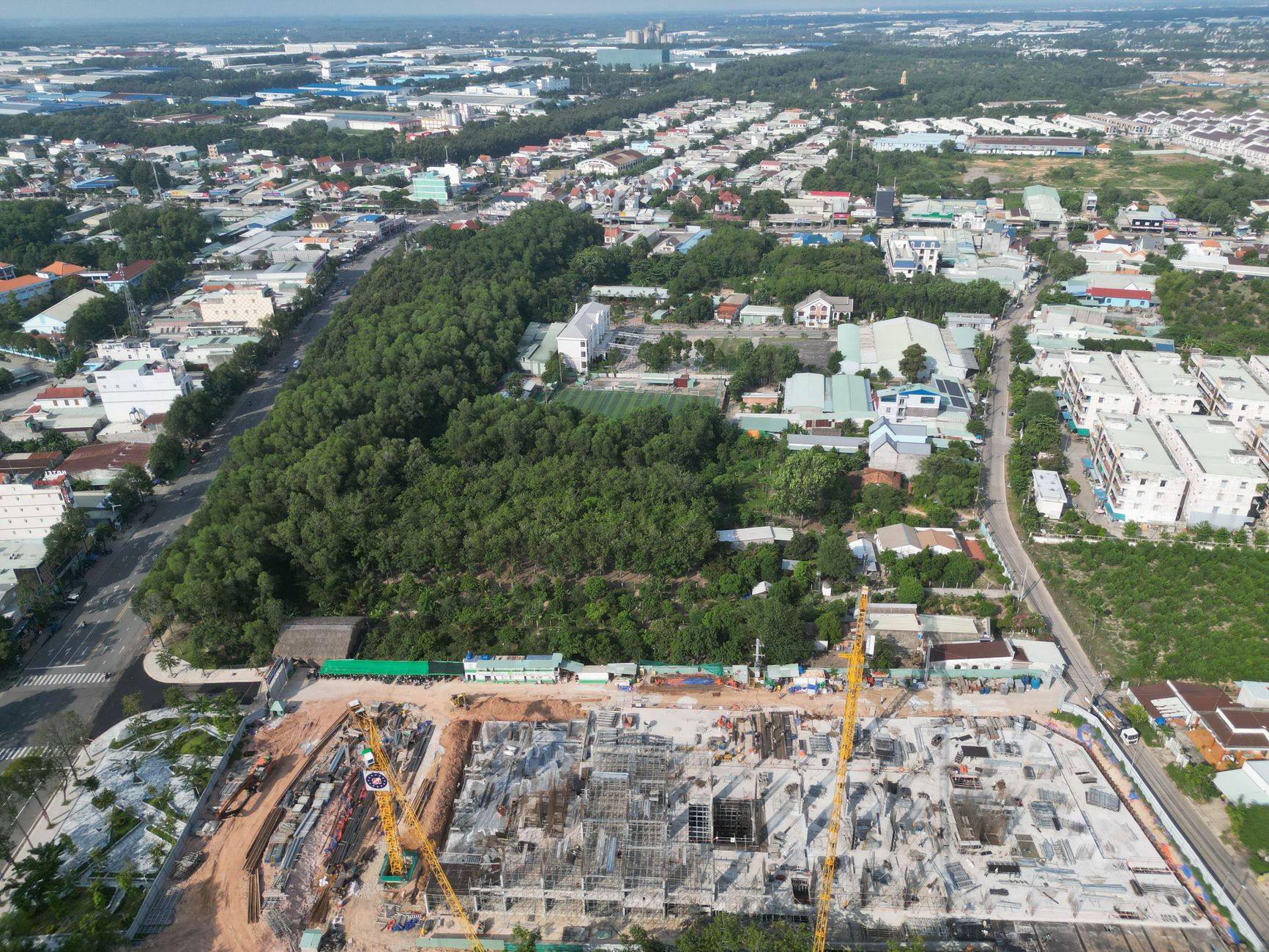
Two of Thailand's largest listed developers are concentrating capital in Phuket at a scale that should change how you evaluate any project there. Sansiri has allocated 36% of its 2026 new-project value to Phuket, per Money and Banking Magazine, August 2026. Origin Group has announced a 30-billion-baht Phuket portfolio target through 2028, per the same publication, August 2026. That is not a coincidence. It is a structural signal: both companies see Phuket as a demand story driven by foreign buyers and tourism recovery. For you as a foreign buyer, the same signal carries a second meaning - accelerating supply in specific segments and locations can compress resale values and rental yields if absorption does not keep pace.
This guide gives you a practical pipeline-analysis method. Use it before you pay any reservation fee, regardless of which developer or project you are considering.
Quick answer
- Sansiri plans 9 new H2 2026 project launches across Thailand, with Phuket representing 36% of new-project value (per Money and Banking Magazine, August 2026); this is a single developer's exposure, not total market supply
- Origin Group targets a 30-billion-baht Phuket portfolio by 2028, starting from a current base of roughly 15.65 billion baht across 8 condominium and villa projects totalling 3,937 units (per Money and Banking Magazine, August 2026)
- Bangkok is running a record-low launch environment in 2026, driven by tighter mortgage lending and slow domestic absorption; developers are redirecting capital to Phuket, where foreign buyers are less affected by Thai bank lending restrictions
- Concentrated capital from multiple major developers in the same market window creates localized oversupply risk, particularly in the mid-range condominium segment in high-activity corridors such as Cherng Talay and Bang Tao
- The foreign buyer quota under the Condominium Act is 49% of total unit area per building; when multiple projects launch in one corridor simultaneously, quota fill rates slow, which can affect resale liquidity
- Your five most important pre-purchase checks: developer track record, land title class (chanote), building permit status, construction financing source, and contractual delay penalties
- Online research covers roughly 40% of the verification work; the remaining 60% requires a licensed Thai lawyer with physical access to the Land Office and project site
Options and scenarios
Scenario A: Buying from a major listed developer with a completed Phuket track record
Listed developers - those trading on the Stock Exchange of Thailand - file quarterly financial disclosures and have audited project histories. You can cross-reference their published project pipeline against actual completion dates on the SET disclosure portal (set.or.th). If a developer shows a pattern of 12-18 month delivery delays across previous projects, that pattern is likely to repeat.
With Sansiri and Origin Group both accelerating Phuket launches simultaneously, the construction supply chain - labour, materials, project management bandwidth - faces pressure. A developer managing 5 concurrent Phuket projects has divided attention across all of them. Ask your lawyer to confirm which specific projects your target developer has delivered on time in Phuket in the past three years, and at what completion quality.
Payment schedules for off-plan units from major listed developers typically require 10-20% on reservation, a further 10-20% on contract signing, and then construction-milestone payments tied to structural progress. The final 20-30% is due on transfer of title. This structure is your primary financial protection - it limits your capital exposure to early construction stages. Insist on it in writing before signing anything.
Scenario B: Buying from a mid-size or regional developer riding the Phuket wave
When large developers move aggressively into a market, smaller operators follow. These second-tier projects often carry higher risk: less transparent financing, less track record, and in some cases no confirmed building permit at the point of sales launch.
In Phuket as of 2026, per market estimates, a meaningful share of off-plan projects are marketed to foreign buyers before Environmental Impact Assessment (EIA) approval and building permits are issued. Buying at that stage is legal - but it transfers construction-commencement risk entirely to you. If the EIA is rejected or revised, the project timeline shifts and your reservation funds may be difficult to recover.
For projects in this category, your lawyer must confirm three documents exist before you pay anything: a valid land title in chanote (full freehold title, as opposed to Nor Sor 3 Gor or lower classifications), a current EIA approval certificate from the Office of Natural Resources and Environmental Policy and Planning, and an issued building permit from the Phuket Provincial Administrative Office.
Scenario C: Buying a ready-to-move unit in a completed Phuket project
Sansiri's H2 2026 plan includes 7 ready-to-move (RTM) project launches valued at 18.6 billion baht, per Money and Banking Magazine, August 2026. Buying a completed unit eliminates construction risk entirely. You inspect the physical unit, verify the condominium juristic person (the legal management body for the building) is operational, and review the building's maintenance fund - specifically the sinking fund (a one-time capital reserve paid at transfer, typically 400-600 baht per square metre, indicative figures) and monthly common-area fees.
The trade-off is price. RTM units in high-demand Phuket corridors carry a premium of roughly 10-20% over equivalent off-plan pricing at launch, per market estimates. You also lose the capital appreciation upside that comes when a project sells out during construction. But you gain certainty, and certainty has real value in a market where off-plan delivery risks are elevated by a high concurrent launch volume.
Comparison table
| Verification check | Online (self-service) | Lawyer on the ground | Risk if skipped |
|---|---|---|---|
| Developer SET filings and project history | Yes - SET portal, annual reports | Useful but not required | Miss delivery delays, debt ratios |
| Land title class (chanote vs lower grade) | Partial - Land Office online lookup available but incomplete | Required for full confirmation | Title defect voids your ownership rights |
| EIA approval status | Yes - ONEP public database | Recommended to verify certificate authenticity | Project halt post-payment, no refund guarantee |
| Building permit issuance | Yes - Phuket PAO public records, partial | Required for certified copy | Project cannot legally commence construction |
| Construction financing source | Partial - developer IR disclosures | Required for contract-stage confirmation | Buyer-funded construction fails if sales slow |
| Condominium foreign quota fill rate | Partial - juristic person may share data | Required for precise figure | Resale to foreigners blocked if quota full |
| Litigation history | Partial - Civil Court online search | Required for comprehensive search | Buy into an asset under legal dispute |
| Contractual delay penalties | No - contract review only | Required - lawyer must negotiate terms | No remedy if developer delivers 2 years late |
Risks and mistakes
Ignoring pipeline concentration in your target corridor
When Sansiri, Origin Group, and multiple smaller developers launch condominium projects in the same Phuket corridor within 12-18 months, the rental market in that corridor absorbs competing supply simultaneously. Indicative gross rental yields in high-supply Phuket corridors have compressed from around 6-7% in 2022-2023 to 4-6% in 2026, per market estimates. If you are buying for rental income, model your yield at the lower end of that range and stress-test it further.
Paying an aggressive early-stage reservation without a permit in place
A red flag threshold: if a developer asks for more than 20% of the purchase price before a building permit is issued, that payment schedule is misaligned with construction progress. You are financing the developer's land acquisition and permit costs, not construction milestones. The financial exposure if permits are delayed or denied is the full amount paid with limited contractual recourse.
The cost of ignoring this: in past Thai condominium disputes, foreign buyers who paid 30-40% before permit issuance recovered less than 50% of their funds through civil litigation when projects stalled, per published court outcome summaries. Litigation in Thailand takes 3-7 years.
Accepting a contract with no delay penalty clause
A construction contract without a penalty for late delivery has no enforcement mechanism. Standard market practice in Thailand is a delay penalty of 0.01-0.02% of the purchase price per day after the contractual handover date, subject to negotiation. This figure is indicative; your lawyer should push for the highest rate the developer will accept. Without this clause, a 2-year delay costs you nothing contractually and nets the developer free use of your funds.
Treating 'Foreign Safe Zone' marketing as due diligence
Origin Group's materials describe Phuket as a 'Global Safe Zone' for foreign investment, and Russian buyers represent approximately 46.6% of their Phuket foreign buyer mix, per Money and Banking Magazine, August 2026. That buyer concentration in a single nationality is a secondary risk factor for resale liquidity: if that buyer group's demand shifts for geopolitical or currency reasons, resale options in certain projects narrow materially. Diversified foreign buyer demand across nationalities is a more stable base for resale.
Not verifying construction financing at the bank level
Projects financed primarily through buyer instalments rather than a bank construction loan carry higher failure risk. If early-phase sales slow - which is plausible in a high-supply environment - a buyer-funded project may stall at the construction stage where your money sits. Ask your lawyer to obtain written confirmation of the developer's construction credit facility for the specific project. A Thai commercial bank construction loan signals that an independent lender has assessed project viability. Its absence does not mean the project will fail, but it elevates your risk.
Conflating brand recognition with project-level safety
Sansiri and Origin Group are large, publicly listed companies with audited financials. That reduces - but does not eliminate - project-level risk. Each project is a separate legal entity (a juristic person or a subsidiary company). The parent company's financial strength does not automatically guarantee a specific project's completion if that project's sales performance or financing structure is weak. Verify each project individually.
FAQ
Why are major Thai developers concentrating in Phuket in 2026 rather than Bangkok?
Bangkok faces tighter domestic mortgage lending in 2026 and elevated unsold inventory in the mid-range condominium segment. Developers are redirecting capital to Phuket because foreign buyers - who are not subject to Thai bank mortgage restrictions - represent a stable demand base, and tourism recovery supports short-term rental demand. Sansiri's 36% Phuket value weighting and Origin Group's 30-billion-baht pipeline through 2028 both reflect this pivot, per Money and Banking Magazine, August 2026.
What is a chanote title and why does it matter for my purchase?
A chanote (full title deed, formally 'Nor Sor 4 Jor') is the highest class of Thai land title. It gives the holder legally surveyed, GPS-referenced ownership rights. Lower-grade titles such as Nor Sor 3 Gor carry ownership rights but have survey limitations and are harder to develop or sell. For a condominium purchase, the land beneath the building must carry a chanote title. Your lawyer must verify this at the Land Office before you pay anything beyond a refundable reservation.
How do I check a Thai developer's track record on project delivery?
For listed developers, start with the SET portal (set.or.th) and the developer's investor relations section. Annual reports list project completions with scheduled and actual handover dates. Cross-reference with Thai real estate forums (search in English and Thai) for buyer experience accounts. For unlisted developers, your lawyer can search the Department of Business Development database for company registration details, paid-up capital, and any registered legal disputes.
What does EIA approval mean and how do I verify it?
An Environmental Impact Assessment (EIA) is a mandatory review for condominium projects above certain size thresholds (typically buildings above 8 storeys or with more than 80 units in protected coastal areas such as Phuket). The Office of Natural Resources and Environmental Policy and Planning (ONEP) publishes approved EIAs in a public database. Your lawyer can pull the certificate number and verify it against the ONEP register. No EIA, no legal construction commencement - if a developer is selling before EIA approval, delivery timelines are uncertain.
Is the 49% foreign quota per building a real constraint in Phuket?
Yes. Under the Condominium Act (B.E. 2522, as amended), foreign nationals can collectively own no more than 49% of the total unit area in any registered condominium building. In high-demand Phuket buildings targeted heavily at foreign buyers, this quota can fill during the sales period, before or shortly after completion. Once the quota is full, a foreign buyer cannot take freehold title and must use a long-term leasehold structure (typically 30 years, renewable by contract). Ask the developer's sales team for the current foreign quota fill percentage in writing, then have your lawyer verify it independently with the condominium juristic person.
What contractual protections replace escrow for a foreign buyer in Thailand?
There are no escrow accounts for foreign real estate buyers in Thailand in the traditional sense. Your protection comes from three contract-level mechanisms: payment schedules tied explicitly to construction milestones (foundation, structure, envelope, fit-out, handover), a written delay penalty clause (typically 0.01-0.02% of purchase price per day, indicative), and the developer's verified project-completion history. A Thai lawyer must negotiate and review these terms before you sign.
How does Origin Group's foreign buyer mix affect resale risk?
Origin Group's Phuket projects draw approximately 46.6% of foreign buyers from Russia, followed by Poland and China, per Money and Banking Magazine, August 2026. High concentration in any single buyer nationality means resale demand can shift sharply if that group's purchasing power or travel access changes. When evaluating a project's resale outlook, ask the developer for a full nationality breakdown of current buyers and assess whether demand is diversified enough to sustain resale liquidity.
What is a sinking fund and do I have to pay it?
A sinking fund is a one-time capital reserve payment made by each unit buyer at the point of title transfer. It funds major future building repairs - roof replacement, lift overhaul, facade work. In Phuket, sinking fund rates typically range from 400 to 600 baht per square metre (indicative, 2026 market estimates). It is a one-time payment, not a monthly fee. The monthly fee for shared facilities (pool, lobby, security, landscaping) is a separate charge, typically 40-80 baht per square metre per month (indicative). Both must be factored into your total cost calculation.
Can I verify a building permit online before visiting Phuket?
Partially. The Phuket Provincial Administrative Office maintains some public records on construction permits, but the database coverage is inconsistent. Your lawyer can submit a formal records request and obtain a certified copy of the permit - or confirm its absence. Do not rely on a developer's verbal assurance or a copy provided by the sales team without independent verification. The permit number and issue date should match the project's marketed construction timeline.
What is the practical risk if I buy in a corridor where 5 projects launch simultaneously?
Rental yield compression is the most direct near-term effect. Five projects in one corridor adding several hundred units each to the rental pool over 24-36 months creates supply that local and tourist demand may not absorb at current rental rates. A project that pencilled at 6% gross yield at launch may generate 4-4.5% once comparable supply is available within walking distance. For resale, corridor oversupply also keeps unit prices flat or under pressure until absorption catches up, which in Phuket coastal markets has historically taken 3-5 years after a supply peak, per market estimates.
Planning a property purchase in Thailand? Send us your requirements - the THAI.ESTATE team will reply with specific options and a safety checklist for your case.