Editorial
Koh Samui Villa Investment 2026: Risks, Rewards, Legal Paths
By THAI.ESTATE Editorial Team14 min read
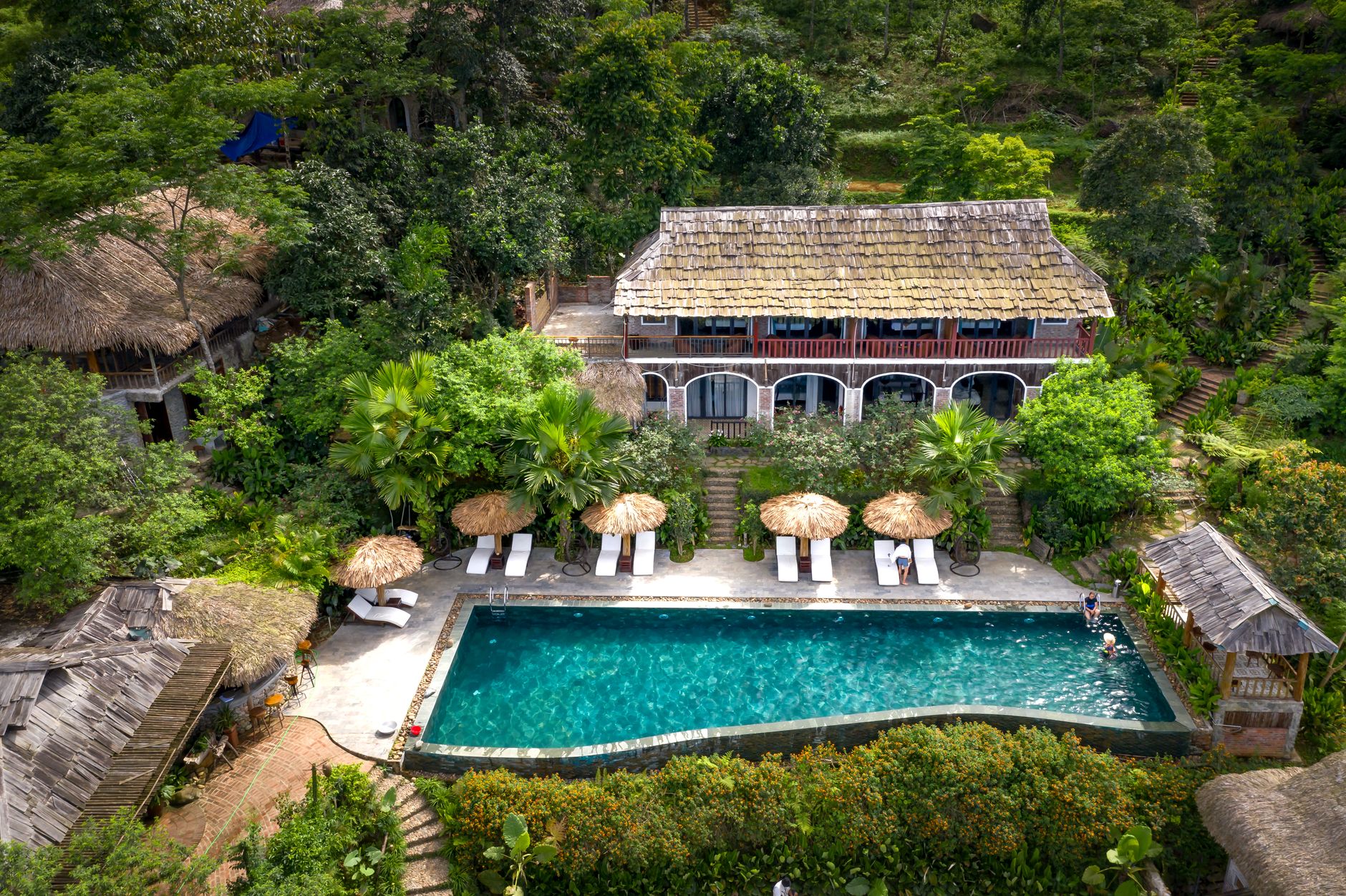
Koh Samui offers foreign buyers real villa investment opportunities, but the island entered 2026 with a supply surge that changes the risk calculation significantly. Before you commit capital, you need to understand what you can legally own, what rental yields actually look like after costs, and why nominee structures that once seemed routine are now under active criminal investigation.
This guide gives you the honest picture: the legal structures available to foreign buyers, the supply and demand data, the fee flows, and the red flags to check before signing anything.
Quick answer
- 800+ new villas across 70-80 projects launched in Koh Samui in H1 2026 alone, per The Nation Thailand, July 2026 - the largest single-period supply addition in the island's recorded history
- Gross rental yields are often quoted at 8-10% per year by sellers and agents; real net yields after management fees, vacancy, and maintenance are typically 4-6% by market estimates
- Foreigners cannot own land in Thailand under the Land Code; villa ownership is therefore always indirect - via leasehold, a Thai Limited Company, or a condominium title
- Thai authorities are actively investigating nominee land structures tied specifically to Koh Samui and Koh Phangan, per The Nation Thailand, July 2026
- Only three compliant paths exist for foreign villa participation: long-term leasehold, a properly structured Thai company where you are not the controlling force over land, or a condominium unit in a villa-style development
- Koh Samui has one international hospital (Bangkok Hospital Samui) and limited international schooling - a real constraint for families considering relocation
Options and scenarios
Leasehold villa: the most common foreign-buyer route
A registered leasehold gives you the contractual right to occupy and sublease a villa for a fixed term. Thai law caps a single registered lease at 30 years. Many developers offer a 30-year lease with a contractual option to renew for a further 30 years written into the agreement.
The critical word is 'contractual'. The renewal option is enforceable as a civil contract, but it cannot be pre-registered on the chanote (the full title deed, Thailand's highest-grade land document) for the future term. When the original 30 years expire, you must negotiate renewal with whoever owns the land at that time. If the landowner has changed, or if the developer company has been dissolved, your renewal option may be difficult to enforce in practice.
For investment purposes, leasehold villas are the structure that most international buyers in Koh Samui actually use as of 2026. The risks are real but manageable if the lease is properly drafted, registered at the local Land Office, and reviewed by a qualified Thai property lawyer - not the developer's in-house legal team.
What to check in a leasehold agreement:
- The lease is registered on the chanote at the Land Office, not just held as a private contract
- Subletting rights are explicitly granted in writing
- Renewal terms describe a process, not just an intention
- The land has a genuine chanote title, not a lower-grade document such as Nor Sor 3 Gor or Sor Por Gor 4-01
Thai Limited Company: legitimate use versus nominee risk
A Thai company can own land. Foreign nationals can hold up to 49% of shares in a standard Thai Limited Company. Thai nationals must hold at least 51%. This structure is legal when the Thai shareholders are genuine investors with real capital at risk.
It becomes a nominee arrangement - and a criminal offence under the Land Code and the Foreign Business Act - when the Thai shareholders are paid nominees who have no real stake, when the foreign buyer holds disproportionate voting power through preferred shares, or when side agreements give the foreigner effective control over the land-owning company.
As of July 2026, Thai authorities have widened a probe into 34 companies suspected of using nominee shareholders to circumvent foreign ownership restrictions, including firms tied to land acquisition in Koh Samui and Koh Phangan, per The Nation Thailand. Investigators are examining fund sources, actual control structures, and whether Thai shareholders made genuine investments. The probe extends to legal advisers who facilitated such arrangements.
If you purchased or are considering purchasing via a Thai company, you need independent legal review of the shareholding structure before completing the transaction. The risk is not theoretical in 2026 - it is active enforcement.
A legitimate Thai company structure for villa ownership requires:
- Thai shareholders who have genuinely contributed capital
- Voting rights proportional to shareholding (no preference share engineering to give foreigners majority control)
- No side agreements transferring effective land control to the foreign shareholder
- Annual company accounts filed and tax paid
- A clear business purpose for the company beyond holding one asset
Condominium freehold in a villa-style project
The Condominium Act allows foreigners to own up to 49% of the total floor area of a registered condominium development in freehold (full ownership), with the title registered directly in their name on a nor sor 4 jor document. Some developers build villa-style units within a legally registered condominium framework. You own your unit outright. The land beneath the common areas is owned by the juristic person (the condominium's management body, representing all unit owners collectively).
This is the only route to freehold for a foreign individual on a villa-style product in Thailand. It is rare in Koh Samui because the island's villa market is predominantly landed product, but it exists. Verify that the project holds a full condominium licence before purchasing, and confirm the foreign quota (49%) has not already been sold out.
Buy-to-let villa: does the rental income case hold?
The 8-10% annual return figure quoted widely in 2026 marketing material refers to gross rental yield calculated on purchase price, per the data reported by The Nation Thailand in July 2026. The net figure after deducting property management fees (typically 20-30% of rental revenue in Koh Samui), maintenance reserves, utilities during vacancy, insurance, and annual company costs where applicable brings realistic net yield to approximately 4-6% for well-located mid-range villas, by market estimates.
Koh Samui's rental season peaks from November to April. The monsoon period - roughly May to October - brings heavy rain on the east and north coasts. Occupancy in the off-season can fall sharply for properties not on the sheltered west side of the island. A villa that achieves 80% occupancy in peak season and 20% in low season averages roughly 50% annual occupancy, which is the baseline for realistic yield modelling.
The 2026 supply surge complicates this further. When 800+ new villas enter the rental market within a single six-month window, competition for bookings increases, nightly rates face downward pressure, and operators offering guaranteed rental programmes need to be assessed carefully for the sustainability of that guarantee.
Comparison table
| Parameter | Leasehold Villa | Thai Company (Freehold via Company) | Condo Unit (Freehold) |
|---|---|---|---|
| Foreign ownership of land | No - contractual right only | No - company owns land | No - building unit only |
| Title in your name | No | No (company name) | Yes (nor sor 4 jor) |
| Term | Up to 30 years registered, option to renew | Indefinite while company operates | Permanent freehold |
| Nominee risk | Low if lease is properly drafted | High if structure is abused | None |
| Resale market | Moderate - leasehold resales are slower | Moderate - share transfer required | Most liquid foreign-buyer product |
| Indicative price per sq m (as of 2026, market estimates) | THB 60,000-120,000 for mid-range | THB 60,000-130,000 for mid-range | THB 80,000-150,000 for villa-style condo |
| Gross yield estimate (2026 market estimates) | 6-10% quoted; 4-6% net realistic | 6-10% quoted; 4-6% net realistic | 4-7% gross; 3-5% net realistic |
| Ongoing cost complexity | Low to medium | Medium to high (annual accounts, tax) | Low (juristic person fees) |
| Legal enforcement clarity | Good if registered at Land Office | Depends on structure scrutiny | Strongest for foreign buyers |
| Suitable for pure investment | Yes, with risks noted | Risky in current enforcement climate | Yes, most straightforward |
| Suitable for residential use | Yes | Yes | Yes, with unit size limitations |
Risks and mistakes
Oversupply absorption risk in 2026
The addition of 800+ villas in a single six-month period, per The Nation Thailand, July 2026, is historically large for an island market. Koh Samui's permanent population is roughly 60,000-70,000 people by estimates; the island's hotel and villa rental market depends on tourist arrivals that are seasonal and subject to external shocks. When supply grows faster than arrival numbers, vacancy rises, nightly rates soften, and developers competing for the same tourist pool increase incentive spending.
If you are buying on a guaranteed rental yield programme, ask the developer for audited accounts from existing properties, not projected figures. Ask what happens to your guaranteed return if the developer faces financial difficulty. There is no escrow protection mechanism for buyers in Thai property transactions in the way some other markets provide.
Nominee structures under active investigation
If a developer, agent, or legal adviser proposes a structure involving Thai nominees - meaning Thai individuals who hold shares or land without genuine investment - you face criminal and civil exposure. The Land Code makes nominee land holding illegal. The Foreign Business Act creates additional liability. Thai authorities are currently examining nominee arrangements tied to Koh Samui and Koh Phangan specifically, per The Nation Thailand, July 2026. An offending structure can result in forced divestment, fines, and in serious cases prosecution.
The practical consequence for buyers: if you purchased a villa via a Thai company structure in the past five years and have not had it independently reviewed, do so now. If you are currently evaluating a villa sold via a Thai company, require full disclosure of all shareholders, their capital contributions, and voting rights before signing.
Title due diligence shortcuts
Not all land in Koh Samui has a chanote (full Nor Sor 4 Jor title). Some plots carry Nor Sor 3 Gor (confirmed right, not full ownership) or weaker documents. Some areas near the coast or on hillsides fall within forest reserve or national park boundaries. Development on such land is illegal regardless of what private contracts say. Always instruct a lawyer to check the chanote at the Land Office directly, not accept a photocopy from the developer.
Hidden costs that erode yield
Buyers regularly underestimate total acquisition costs. In a leasehold transaction, you pay stamp duty of 0.1% of the registered lease value. Transfer fees and taxes for a company share transfer are different and depend on structure. Ongoing costs in a villa include:
- Property management: 20-30% of gross rental revenue
- Maintenance reserve: 1-2% of property value per year by market estimates
- Pool and garden service
- Annual Thai company costs (accounting, audit, tax filing) if using a company structure
- Sinking fund (a one-time capital reserve paid at purchase in many condominium projects, covering future major repairs to common areas)
Infrastructure constraints
Koh Samui is an island. Construction materials, contractors, and skilled tradespeople all cost more and take longer to mobilise than on the mainland. Off-plan delivery delays of 6-18 months beyond contracted completion are common in the Samui villa market by historical experience. Factor this into any financing or tax planning timeline.
Airport connectivity
Koh Samui Airport is a private airport operated by Bangkok Airways. Flight options are more limited and more expensive than Phuket or Bangkok. Direct international connections are few. Buyers who need frequent international travel will find Phuket or Bangkok significantly more convenient. This also affects the rental market: Samui's higher access costs can deter shorter-stay tourists comparing value against Phuket.
FAQ
Can a foreigner own a villa on Koh Samui outright?
No. Thai law prohibits foreign individuals from owning land. You can hold a registered leasehold (up to 30 years per term), own shares in a Thai company that owns land (with compliance requirements), or own a unit in a registered condominium project. None of these is equivalent to freehold land ownership in your name.
Is Koh Samui a good investment in 2026?
It depends on the specific property, location, and structure. The island has genuine rental demand from international tourists and long-stay visitors. However, the 2026 supply surge - 800+ new villas in H1 2026 alone - increases competition for rentals and creates short-term absorption uncertainty. A well-located, legally clean leasehold villa with proven rental history is a different risk profile from an off-plan villa in a new project entering a saturated market.
What rental yield can I realistically expect from a Koh Samui villa?
Agents and developers commonly quote 8-10% gross annual yield. After property management fees (20-30% of revenue), maintenance, vacancy, and running costs, realistic net yield for mid-range villas is approximately 4-6% per year, by market estimates as of 2026. Yields are higher for well-managed, luxury properties on the west coast with year-round demand, lower for east-coast properties exposed to the wet season.
What areas of Koh Samui are best for investment?
Bophut and Maenam on the north coast offer a balance of accessibility, established rental infrastructure, and relative price moderation. The west coast (near Nathon) is more sheltered from the monsoon. Chaweng and Lamai are high-traffic tourist areas with strong short-term rental demand but more noise, higher competition, and more development pressure. Chaweng commands higher nightly rates but also higher acquisition costs. Bophut suits buyers targeting longer-stay renters and retirees; Chaweng suits those targeting package-holiday turnover.
Are guaranteed rental returns on Koh Samui villas reliable?
Guaranteed rental return programmes depend entirely on the financial health of the developer or management company making the guarantee. They are contractual commitments, not regulated financial products. Before accepting a guarantee, verify the guarantor has audited revenue from existing managed properties, review the contract terms for what triggers suspension of payments, and assess whether the guaranteed yield rate is realistic against current market occupancy data.
What is a nominee structure and why is it dangerous in Koh Samui right now?
A nominee structure is one where Thai nationals hold shares or land title on behalf of a foreign buyer without genuine investment, giving the foreigner effective control. This is illegal under the Land Code and the Foreign Business Act. As of July 2026, Thai authorities are actively investigating such arrangements tied to land deals in Koh Samui and Koh Phangan, per The Nation Thailand. Buyers involved in such structures risk forced divestment and legal proceedings.
Who should buy a villa in Koh Samui and who should not?
Koh Samui suits buyers who: want a lifestyle asset with rental income on a long-stay basis, are comfortable with leasehold ownership, have patience for island logistics, and plan to hold for 10 years or more. It is not suitable for buyers who: need high liquidity (resale is slower than Bangkok or Phuket), require frequent international flights (airport is limited), have families needing international schools (very limited on Samui), or want to maximise net yield without personal oversight of the property.
How do I check if a villa's land title is genuine?
Instruct a Thai property lawyer - independent from the developer - to conduct a title search directly at the Koh Samui Land Office. The lawyer should confirm the document grade (chanote is the highest grade), verify there are no encumbrances or mortgages registered on the title, check boundary markers, and confirm the land is not within a forest reserve or national park boundary. Do not rely on photocopies provided by the seller.
What is a sinking fund in the context of Thai property?
A sinking fund is a one-time capital payment collected from buyers at the time of transfer, held by the juristic person (the management body of a condominium or villa project), and reserved for future major repairs to common areas such as roofs, swimming pools, and elevators. It is separate from monthly maintenance fees. The amount varies by project but is typically THB 400-700 per square metre of unit area, paid once at purchase, by market estimates.
Phuket or Koh Samui: which is better for a villa investment?
Phuket offers more liquidity, more international flight connections, a larger pool of comparable sales data, and a more established management infrastructure. Koh Samui offers a smaller market with potentially less competition in specific niches and a different rental demographic. For a first Thailand villa investment, Phuket's larger market and better connectivity reduce execution risk. Koh Samui is more appropriate for buyers who already understand the Thai market and have a specific reason to target the island.
Planning a property purchase in Thailand? Send us your requirements - the THAI.ESTATE team will reply with specific options and a safety checklist for your case.