Editorial
How to Vet a Thai Property Developer: 7 Checks for 2026
By THAI.ESTATE Editorial Team16 min read
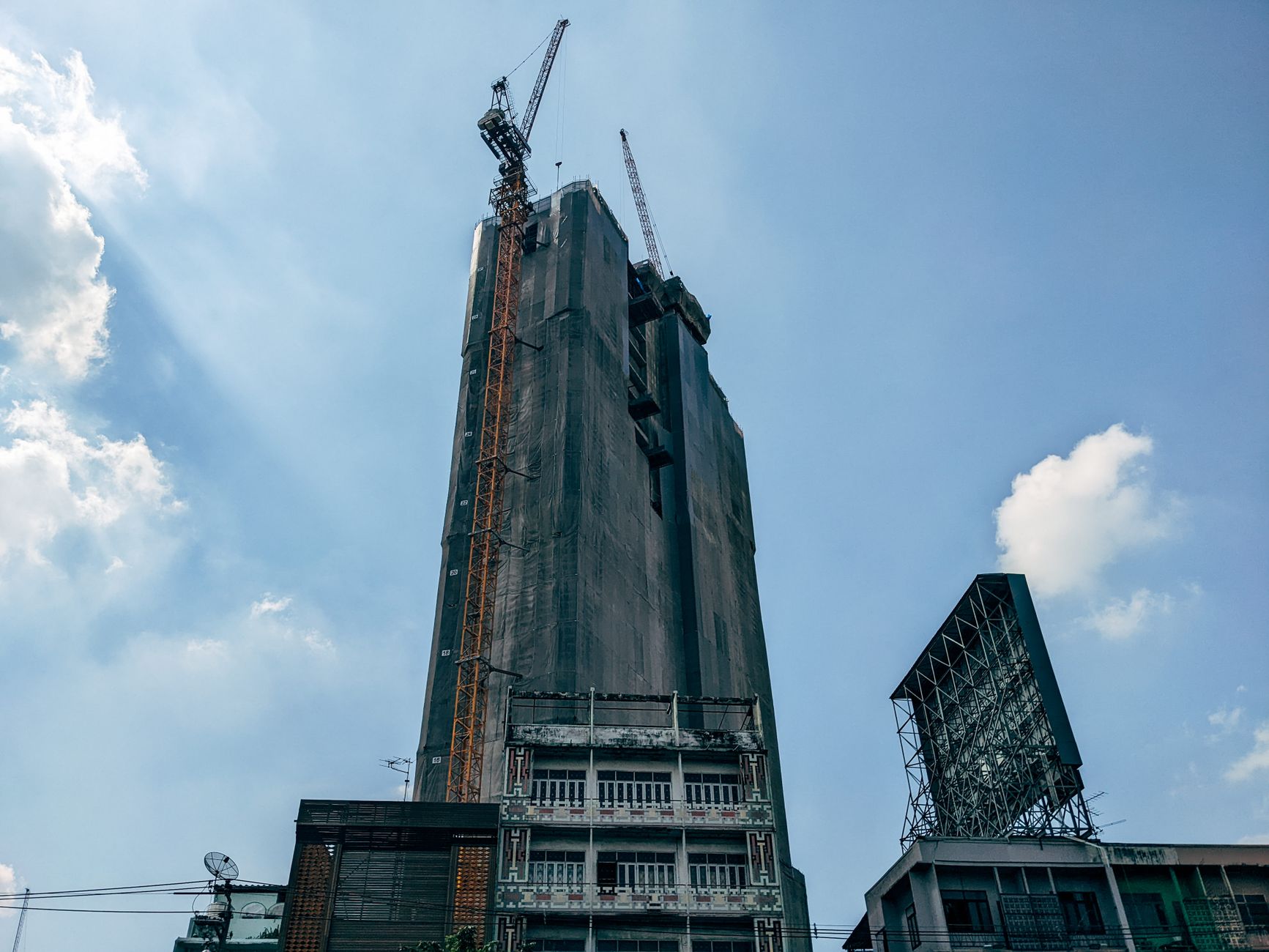
Vetting a Thai property developer before you pay anything is the single most important step in a foreign buyer's due diligence process. Thailand has no buyer-protection fund, no deposit insurance, and no escrow system for residential purchases. If a developer fails mid-construction, your money is gone unless your contract contains specific protections and you verified the developer's standing before signing.
This guide gives you a practical, step-by-step verification playbook for 2026. It tells you what you can check online from abroad, what requires a lawyer on the ground in Thailand, and what each red flag costs when you ignore it.
Quick answer
- Complete at least 7 checks before paying any booking fee: land title class, building permit, EIA approval (where required), developer's company registration, completed-project track record, construction financing source, and litigation history.
- Chanote title (full ownership title deed, Nor Sor 4 Jor in Thai) is the only land title class you should accept behind a condominium or villa project. Any lower class - Nor Sor 3, Sor Por Kor, or land without title - is a red flag.
- Building permit and EIA approval must exist before any construction starts. Renders sold before permits are issued are a structural risk, not a sales tactic.
- Construction financing should come from a bank credit facility, not solely from buyer instalments. Ask for the name of the financing bank and the credit line amount. If the developer cannot answer, walk away.
- Payment schedule tied to construction milestones is your primary contractual protection. Never pay more than 2 percent of the purchase price as a booking fee, and never pay the next instalment before the agreed construction milestone is visibly reached.
- Online checks cover roughly 40 percent of the verification work. The remaining 60 percent requires a licensed Thai lawyer with access to the Land Department database, the court records system, and the Department of Business Development (DBD) portal.
- Delay penalties in the contract should be at least 0.01 percent of the contract value per day of delay. If the developer resists this clause, treat it as a material red flag.
Options and scenarios
How do I check a Thai developer's completed-project track record?
Start with the developer's completed projects, not their pipeline. Ask for a list of finished buildings with addresses. Then cross-check each address against satellite imagery (Google Maps or similar tools show construction progress across years) and against owner reviews on international property forums. A developer who has delivered five or more completed buildings on schedule in the past eight years presents a materially lower risk than one whose only track record is a current presale.
For projects in Phuket, Chiang Mai, Pattaya, or Bangkok, you can physically visit completed buildings and speak with the juristic person (the legal entity that manages a completed condominium building on behalf of unit owners). The juristic person's management office holds delivery records and common-area maintenance history. These are public-facing offices and you or your representative can walk in and ask questions.
If you are buying from abroad, instruct your Thai lawyer to obtain the developer's company registration from the DBD portal (data.creden.co or the DBD's own public search at dbd.go.th) and check the registered share capital, director history, and financial statements. As of 2026, all Thai limited companies must file annual financial statements with the DBD. A developer whose financials show consistent losses in the two years before your purchase date deserves additional scrutiny.
How do I verify the land title behind a Thai project?
The chanote (also written as Nor Sor 4 Jor) is a full ownership title registered at the Land Department. It carries GPS coordinates, precise boundaries, and a clean chain of title. It is the only land title class you should accept behind a residential project marketed to foreign buyers.
To verify the chanote, your lawyer submits a request to the local Land Department office (Land Office, or Samnak Ngan Thi Din in Thai) with the title deed number and the plot number. The Land Office search confirms who holds the title, whether the land is mortgaged to a bank (which is normal for development financing but must be disclosed), and whether any disputes or encumbrances are registered. This check cannot be done remotely by you alone. It requires a Thai lawyer or a licensed land agent with a signed authorization letter.
If the developer says 'the land is in process' or 'the chanote is pending', this means the title is not yet clean. Do not pay any money until the chanote is confirmed in the developer's name, free of encumbrances that would affect your unit, or with a disclosed mortgage from a named commercial bank.
How do I check if a Thai project has its building permit and EIA approval?
A building permit (Bai Anuyat Kor Sang in Thai) is issued by the local municipality or district office (Tesaban or Amphoe). The permit number and date are public information. Ask the developer for a copy of the permit. Your lawyer can verify the permit at the issuing office.
An Environmental Impact Assessment (EIA) is required for condominium projects above a certain threshold: as a general rule, residential buildings of eight floors or more, or with more than 80 units, require EIA approval from Thailand's Office of Natural Resources and Environmental Policy and Planning (ONEP). EIA approval is separate from the building permit and must precede it. If the developer is selling units before the EIA is approved, they are collecting money against an uncertain regulatory outcome. This is legal in Thailand but carries real project-cancellation risk.
Ask specifically: 'Has your EIA been approved? Can you share the approval reference number?' A legitimate developer will answer immediately. Evasion or a vague 'it is in process' answer requires you to pause all payments.
How do I find out how a Thai developer is financing construction?
Construction financed primarily by buyer instalments rather than a bank credit facility is the most common structural risk in Thai property development. If the developer relies on your 30 percent instalment to pour the next floor's concrete, any slowdown in sales directly threatens construction completion.
A developer with a bank construction loan has passed the bank's own creditworthiness assessment and has an independent source of funds. Ask the developer for the name of the financing bank and the approximate credit line. Reputable developers will answer. Some will show you a signed bank commitment letter as part of their sales documentation.
If the developer cannot or will not disclose construction financing, assume there is none. This does not automatically mean the project will fail, but it means your payment schedule becomes the project's cash flow. In that scenario, your contractual milestone protections and delay penalties are even more critical.
How do I check a Thai developer's litigation history?
Court records in Thailand are not fully public online. Your lawyer can run a litigation check through the Thai Court's case management system (e-filing.coj.go.th) by searching on the company's registered name and tax ID number. This search reveals pending civil cases filed against the developer, including cases brought by previous buyers.
A developer with multiple civil suits from buyers in completed or ongoing projects is a serious risk. Even one unresolved case alleging construction defects or delayed delivery warrants a detailed explanation from the developer before you proceed.
You can also search Thai-language property owner communities on Facebook and Line (Thailand's dominant messaging platform). Search the developer's name in Thai script. Complaints from previous buyers in these communities are often more current than court records, because many buyers settle or give up rather than litigating.
What payment schedule protects a foreign buyer in Thailand?
Because Thailand has no deposit protection system for residential buyers, your primary financial protection is a payment schedule tied directly to visible construction milestones. A safe structure for an off-plan condominium purchase looks like this (indicative, not universal):
- Booking fee: 1 to 2 percent of purchase price, paid to reserve the unit
- Contract signing: 10 to 15 percent, paid within 14 to 30 days of booking, after your lawyer has reviewed the contract
- Foundation completion: 10 percent
- Structure completion (frame, floors): 15 percent
- Shell completion (walls, roof): 15 percent
- Fit-out and systems: 15 percent
- Transfer of ownership at Land Office: 30 to 35 percent (the final payment, made simultaneously with title transfer)
If the developer asks for 30 to 40 percent at contract signing on an unbuilt project, this is an aggressive early-stage payment schedule and a documented red flag. It transfers maximum risk to you at the moment of maximum uncertainty.
The contract should specify delay penalties of at least 0.01 percent of the contract value per day for any delay beyond the agreed completion date, and a buyer's right to terminate and receive a full refund if delay exceeds a defined period (commonly 12 to 24 months).
What can I verify online from abroad versus what requires a lawyer in Thailand?
This is the most practical question for an international buyer. The table below sets out the division clearly.
Comparison table
| Verification check | Can you do it remotely (online)? | Requires Thai lawyer on the ground? | Approximate cost (indicative 2026) |
|---|---|---|---|
| Developer company registration and directors | Yes - DBD public portal | No (but lawyer can do deeper search) | Free (DIY) / THB 500-2,000 (lawyer) |
| Developer's financial statements (DBD) | Yes - DBD portal, filed annually | No (reading Thai financials may need translation) | Free (DIY) / THB 1,000-3,000 |
| Completed project track record (satellite, forums) | Partially - satellite imagery and forum search | No | Free |
| Land title (chanote) verification at Land Office | No | Yes | THB 3,000-8,000 per plot |
| Building permit verification | No | Yes | Included in lawyer's due diligence fee |
| EIA approval status | Partially - ONEP website lists some approvals | Yes for full verification | Included in due diligence fee |
| Construction financing disclosure | No - must ask developer directly | Lawyer can request documentation | Included in due diligence fee |
| Litigation history (court records) | No | Yes - requires court system access | THB 2,000-5,000 |
| Contract review and milestone negotiation | No | Yes | THB 15,000-50,000 (varies by firm) |
| Full due diligence package (all of the above) | N/A | Yes | THB 30,000-80,000 total (indicative) |
Indicative figures only. Lawyer fees vary significantly by firm, project complexity, and location. Budget THB 30,000 to THB 80,000 for a full pre-purchase due diligence engagement as of 2026.
Risks and mistakes
Paying a booking fee before any checks are done
Developers in Thailand often request a booking fee at the sales gallery, sometimes the same day you view a project. Once paid, booking fees are rarely refunded. A booking fee of THB 50,000 to THB 200,000 (per market estimates for mid-range Phuket or Bangkok projects in 2026) is not trivial. Pay it only after you have at least confirmed the developer's company registration and done a preliminary online check. Make refundability a condition before you pay.
Accepting renders as proof of project viability
Rendering software produces images faster than permits are issued. A project can have sophisticated marketing materials, a sales gallery, and an active website while having no building permit and no approved EIA. If you pay based on renders alone, you are funding the developer's permit application, not a real building. The cost of this mistake ranges from a full loss of your instalment payments (if the permit is ultimately refused) to a multi-year delay.
Ignoring the chanote class
A developer who has land under a Nor Sor 3 title or a Sor Por Kor title (agricultural reform land, which is legally non-transferable to anyone except qualifying Thai farmers) cannot legally sell you a unit over that land. Condominium ownership is registered on a per-unit basis, but the underlying land title affects the building permit, the juristic person registration, and ultimately your ability to resell or obtain financing. Ignoring the land title class has cost buyers their entire investment in past Thai property failures.
Accepting a payment schedule front-loaded before milestones
If 40 to 50 percent of the price is due before construction starts, the developer's incentive to complete the project is structurally weakened. You are, in effect, providing interest-free construction financing with no security. In the event of project failure at this stage, recovery through Thai civil courts typically takes three to seven years and often yields partial recovery at best.
Not having the contract reviewed by an independent lawyer
Developers supply their own contracts. Standard developer contracts in Thailand are written to protect the developer. Clauses that limit your rights on delay, restrict your ability to resell before completion, or waive your right to penalty interest are common. An independent Thai lawyer will identify these clauses and negotiate amendments before you sign. Skipping this step to save THB 15,000 to THB 50,000 in legal fees is a poor trade against a purchase price of THB 3 million or more.
Assuming a foreign name or international marketing implies international standards
Some developers market heavily to foreign buyers using international-sounding branding, English-language websites, and European imagery. None of this indicates that the developer has cleared Thai regulatory requirements, holds a chanote, or has a bank construction loan. Verify the Thai legal entity behind the brand, not the brand itself.
FAQ
How do I check a Thai developer's registration online?
Go to the Department of Business Development portal at dbd.go.th and search by the company's Thai registered name or tax ID number. The search is free and public. It shows the registration date, registered share capital, director names, and whether the company has filed annual financial statements. A company that has not filed financial statements for two or more consecutive years is in breach of Thai corporate law and should be treated as a risk.
What is a chanote and why does it matter for my purchase?
A chanote (Nor Sor 4 Jor) is a full ownership title deed registered at the Thai Land Department. It is the highest class of land title in Thailand, with GPS-surveyed boundaries and a registered ownership chain. For a condominium project, the building must stand on chanote land for the units to be legally registered and transferred to buyers at the Land Office. Lower-class titles cannot support valid condominium title registration.
Is it normal for a Thai developer to ask for payment before a building permit?
It is common but risky. Thai law does not prohibit presales before permits are issued. However, if the permit is refused or the EIA is rejected, you have no building and a difficult legal path to recover your money. Always ask for the permit number before making any instalment payment beyond the initial booking fee, and make permit confirmation a written condition in your contract.
What does 'construction financing from buyers' mean and why is it a red flag?
It means the developer has no independent bank loan and is using your instalment payments as the cash flow to build. If unit sales slow down, construction slows down. This model has produced the majority of stalled or abandoned projects in Thai property history. A bank-financed project has passed an independent creditworthiness review and has a committed drawdown schedule. Always ask which bank is financing construction and request a written confirmation.
How much should I budget for legal due diligence in Thailand?
Budget THB 30,000 to THB 80,000 for a full pre-purchase due diligence package from an independent Thai law firm as of 2026, depending on project complexity and location. This covers company and financial checks, land title verification, building permit and EIA review, litigation search, and contract review with negotiation. This is indicative; fees vary by firm. Do not use the developer's recommended lawyer - that creates a conflict of interest.
Can I verify the land title from outside Thailand?
No. Land title verification requires a physical visit to the local Land Office by a licensed Thai lawyer holding an authorization letter. The Land Department does not operate a publicly accessible remote title search for foreigners. Your lawyer submits the search request, reviews the result, and reports to you. Allow five to ten business days for this step.
What is a juristic person in the context of Thai condominiums?
The juristic person (niti bukhon in Thai law) is the legal management entity that operates a completed condominium building on behalf of unit owners. It manages common areas, collects maintenance fees, and holds the sinking fund (a reserve fund for major repairs, separate from monthly fees). Before buying in a completed building, ask the juristic person for the current maintenance fee rate, the sinking fund balance, and any outstanding major repairs. This information is a practical indicator of how well the previous developer handed over the project.
What is a sinking fund and how much should it be?
A sinking fund is a one-time reserve fund paid by buyers at the time of ownership transfer. It is held by the juristic person and used for major capital repairs such as roof replacement, elevator overhaul, or facade work. Per market estimates in 2026, sinking fund contributions in Thai condominiums range from THB 400 to THB 800 per square metre of unit area, paid once at transfer. The amount should be disclosed in the sales contract and is separate from monthly common-area fees.
What delay penalty should I insist on in a Thai property contract?
Insist on at least 0.01 percent of the contract value per day of delay beyond the agreed completion date, with no cap below 10 percent of the contract value total. Also negotiate a right to terminate and receive a full refund if delay exceeds 12 to 24 months. Developers who refuse any delay penalty clause are signaling that they do not intend to be held to a delivery schedule.
What happens if a Thai developer goes bankrupt before completing my project?
You become an unsecured creditor in Thai bankruptcy proceedings. Recovery is uncertain and typically slow, measured in years rather than months. This is why front-loaded payment schedules are dangerous: the more you have paid before completion, the larger your unsecured claim and the longer you wait. The practical prevention is a milestone-based payment schedule that ensures you never pay significantly ahead of the construction stage you can physically verify.
Planning a property purchase in Thailand? Send us your requirements - the THAI.ESTATE team will reply with specific options and a safety checklist for your case.