Editorial
Foreign-Linked Companies Owning Thai Condos: Ownership Verification Risk in 2026
By THAI.ESTATE Editorial Team15 min read
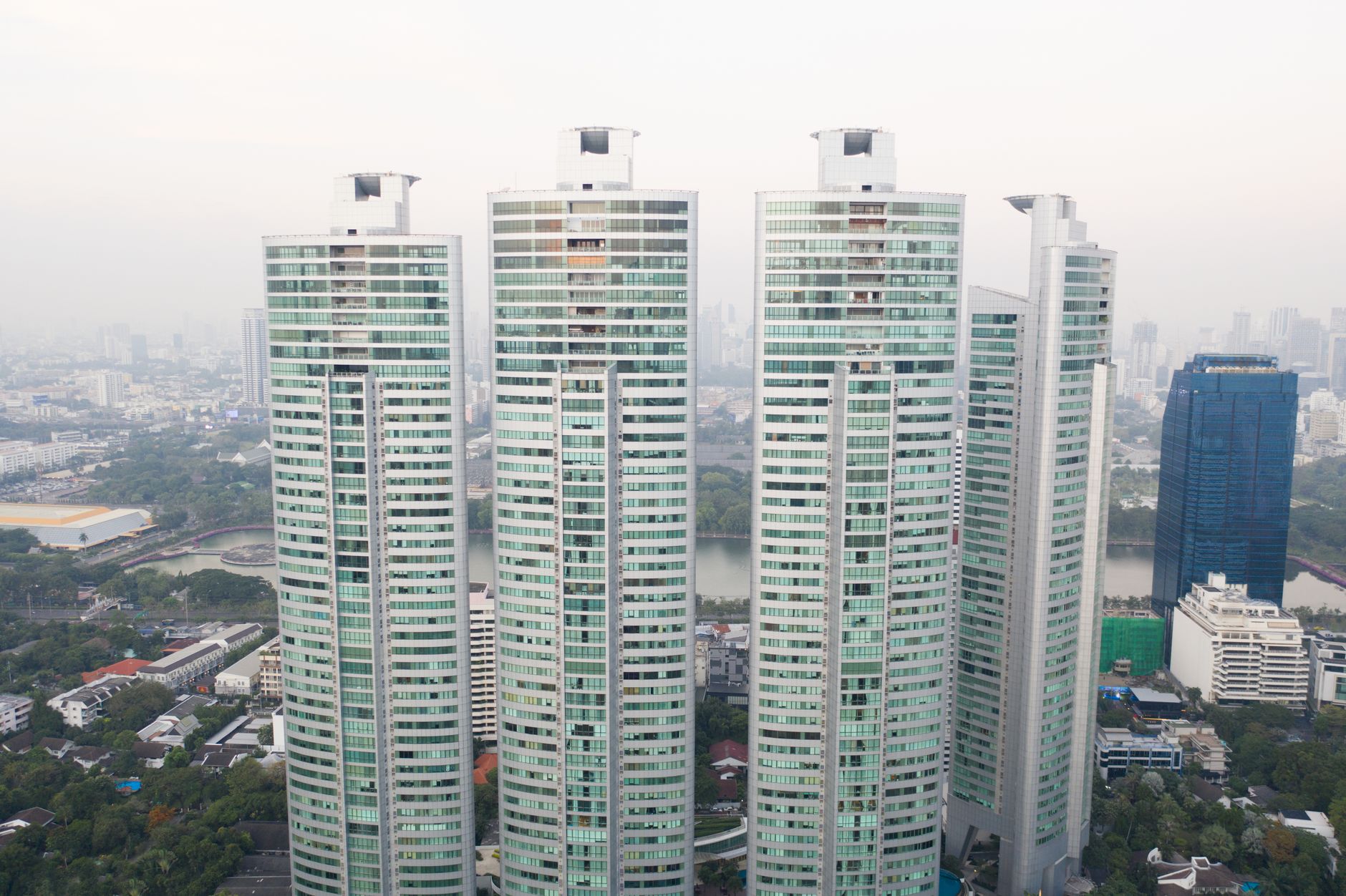
Foreign buyers who hold Thai condo units through a company structure face a specific and growing legal risk in 2026: authorities are now verifying not just who owns shares today, but who owned them in the past, where the capital came from, and whether the structure has real economic substance. This is not a theoretical risk. Per data cited by the Department of Business Development (DBD) and reported by Thai Examiner in September 2026, 7,082 foreign-linked companies hold 76,840 condo units across 14,878 condo-owning entities. Investigators are now tracing past shareholders, past directors, and historical capital flows, not only current registration records.
If you are evaluating a second-hand condo unit held by a company, or if you already own one through a corporate structure, the following guide explains which verification triggers now apply, what documentation proves legitimate ownership, and why direct personal freehold title under the Condominium Act is treated differently by regulators.
Quick answer
- 76,840 condo units held by foreign-linked companies are under active DBD scrutiny as of September 2026, per Thai Examiner and The Phuket News reporting
- The 49 percent foreign quota under the Condominium Act applies to individual direct ownership; corporate ownership of condo units is a separate legal pathway and is now being examined for nominee structures
- Investigators are checking past shareholders, past directors, capital sources, and investment histories - not just the current company registration
- A company structure that was registered as majority Thai-owned can still be flagged if the capital, control, or economic benefit flows to a foreign person
- Legitimate joint ventures with real Thai equity participation and documented capital sources are treated differently from nominee arrangements
- If a corporate-held condo unit is found to involve a nominee structure, the unit can be subject to legal action under the Land Code and related statutes, and the DSI and anti-money laundering authorities are involved in enforcement
Options and scenarios
Scenario 1: Direct personal freehold ownership under the Condominium Act
A foreign national buys a condo unit directly in their own name. The Condominium Act permits foreigners to hold freehold title to units up to 49 percent of the total floor area in any one condominium building. The title deed (chanote - a full-strength, government-issued freehold land certificate) is registered at the Land Department in the buyer's personal name. A Foreign Exchange Transaction (FET) document - the official bank record proving funds were transferred into Thailand in foreign currency and converted to Thai baht - must be obtained to support the registration.
This is the only structure that regulators treat as straightforwardly compliant. There is no corporate layer to audit. The verification question is simple: is the unit within the 49 percent quota, and was the FET document obtained correctly?
Scenario 2: A Thai-majority company holds the condo unit, with a foreign minority shareholder
A company registered in Thailand with, for example, 51 percent Thai shareholding and 49 percent foreign shareholding buys a condo unit. On paper, the company is Thai. In practice, investigators now examine whether the Thai shareholders contributed real capital, whether they exercise real control, and whether the economic benefit of ownership flows to the Thai or foreign party. A shareholder agreement that gives a foreign person veto rights, preferential dividends, or the practical ability to sell the unit overrides the nominal share split.
Per the DBD data reported in September 2026, most foreign-invested entities hold between 0.01 percent and 49 percent foreign shares. This range is now the primary focus of the nominee probe, because it is exactly the range used to create the appearance of Thai majority control.
Scenario 3: A company with historical foreign majority or 100 percent foreign ownership
A smaller group of the 7,082 flagged entities holds 49.01 percent to 100 percent foreign investment. These companies face the most direct scrutiny. Under Thai law, a company with majority foreign ownership is classified as a foreign juristic person (a legal entity treated as foreign under the Foreign Business Act). Such an entity cannot own certain categories of property. Where one of these companies holds a condo unit, investigators are examining whether the unit falls outside the legal pathway that permitted the purchase, and whether nominee arrangements were used to misrepresent the company's character at the time of registration.
Scenario 4: Purchasing a second-hand unit currently held by a company
This is where the risk becomes most immediate for a buyer in 2026. You may be considering buying a condo unit from a seller who is not an individual but a Thai-registered company. The unit transfer would require the company to dissolve or transfer ownership. Before proceeding, you need to understand the full ownership history of that company: who the shareholders were at the time of purchase, where the purchase capital originated, and whether the unit was acquired in a way that is now under investigation. If the company is flagged by the DBD, a transfer may be frozen or contested.
Comparison table
| Parameter | Direct personal freehold | Thai-majority company (compliant) | Thai-majority company (nominee risk) | Foreign-majority company |
|---|---|---|---|---|
| Legal basis | Condominium Act, personal title | Companies Act, Thai capital dominant | Companies Act, Thai capital is nominal | Foreign Business Act applies |
| DBD scrutiny level | Low - individual title, no corporate layer | Medium - capital source and control checked | High - nominee indicators present | Very high - foreign juristic person rules |
| FET document required | Yes, for the buyer directly | Yes, for the company's foreign capital | Yes, but origin may be disputed | Yes, but structure itself may be invalid |
| Past-shareholder audit risk | None | Moderate | High | Very high |
| Transferability to new buyer | Straightforward at Land Department | Requires company due diligence | May be frozen during investigation | May be blocked |
| Enforcement bodies involved | Land Department only | DBD, Land Department | DBD, DSI, anti-money laundering | DBD, DSI, police, anti-money laundering |
| Recommended action in 2026 | Verify quota and FET only | Full corporate audit before transfer | Independent legal review, do not proceed without clearance | Do not proceed without specialist legal opinion |
Risks and mistakes
Mistake 1: Assuming the 49 percent quota is the only legal test
The Condominium Act's 49 percent foreign quota applies to individual direct ownership. It limits how much of a building's total floor area can be registered to foreign nationals in their personal names. Corporate ownership is a separate legal question governed by company law, the Foreign Business Act, and anti-nominee provisions in the Land Code.
A company with 51 percent Thai shareholding is not automatically compliant. The deeper question is whether those Thai shareholders are genuine investors with real capital and real control. Investigators in 2026 are applying an economic substance test: does the Thai shareholding reflect actual Thai investment, or does it exist only to satisfy a registration requirement?
The cost of this mistake: if a nominee structure is found, the company can be prosecuted, the directors face criminal liability, and the condo unit can be subject to forced divestment proceedings. The foreign party loses both the unit and the purchase price paid, with limited legal recourse.
Mistake 2: Not requesting the full shareholder and director history before buying a corporate-held unit
When you buy a second-hand condo unit that is registered to a company, you are not just buying the unit. You are, in effect, acquiring the company's history. If that company was registered with nominee Thai shareholders at any point in the past, the DBD's current probe traces that history. A clean current registration does not erase a problematic past registration.
Warning signs visible before purchase: the company was incorporated within a short time before the condo was purchased, the Thai shareholders made no capital contribution documented in audited accounts, the original purchase price appears in the accounts as a loan from the foreign party rather than as equity, or there is a usufruct (a registered right to use and benefit from property for a defined period) or power of attorney that gives the foreign party full control.
The cost: a buyer who completes the transfer and later finds the unit is under investigation inherits a legally contested asset. The transfer itself may be challenged.
Prevention: require a full certified copy of the company's shareholder register going back to the date of the original condo purchase, audited financial statements for each year the company held the unit, and a written legal opinion from an independent Thai lawyer confirming there are no nominee indicators.
Mistake 3: Relying on a corporate structure to bypass the foreign quota rather than as a genuine business vehicle
Some buyers in the past used a Thai company purely as a vehicle to hold a residential condo unit, with no genuine business activity. The company existed only on paper. This is the definition of a nominee arrangement when the Thai shareholders did not contribute real capital.
The DBD's September 2026 data shows that 47.6 percent of all condo-owning entities have foreign investment. This concentration is itself a trigger for scrutiny. Investigators are not required to prove intent. They examine capital flows, director decisions, and whether the company conducted any business other than holding the unit.
Warning signs: no business activity in company accounts, no employees, no commercial transactions other than paying the condo management fee, a foreign director holding full executive authority, and Thai directors who are the same individuals named in multiple similar structures.
The cost: criminal exposure for the foreign and Thai parties involved, forced sale of the unit, and fines under the Land Code and Foreign Business Act. These are not civil penalties only - criminal prosecution is a stated outcome of the current probe.
Mistake 4: Failing to obtain a proper FET document for the foreign capital contribution
Whether you buy a condo unit directly or contribute capital to a company that holds a condo unit, the source of funds must be documented by a Foreign Exchange Transaction (FET) document - a certificate issued by a Thai bank confirming that foreign currency was remitted into Thailand and converted to Thai baht. Without a correctly issued FET document, you cannot register freehold title in your personal name, and you cannot demonstrate to investigators that the company's foreign capital had a clean, legal, cross-border origin.
A common error is wiring funds in a way that does not generate the FET document: for example, transferring funds that are already held in a Thai baht account, or using funds already in Thailand from another source. The transfer must originate from outside Thailand, in a foreign currency, in an amount consistent with the purchase or investment.
The cost: without a valid FET document, a personal freehold registration may be refused at the Land Department. For a corporate structure, the absence of FET documentation for the foreign capital contribution is itself an indicator of a nominee arrangement in the current probe framework.
Mistake 5: Accepting verbal assurances from a developer or agent that the corporate structure is 'approved' or 'standard'
No government authority in Thailand issues advance approval for nominee company structures used to hold residential property. If a developer, agent, or promoter tells you that a specific company structure has been 'approved', 'used for years without problems', or is 'standard practice', that statement has no legal value. It does not protect you from enforcement.
The fact that 7,082 foreign-linked companies were able to register condo unit ownership in the past does not mean those structures were lawful. The current DBD probe is precisely targeting structures that appeared in the registration records but lacked economic substance.
Warning signs: the same agent or developer promotes the structure to multiple foreign buyers, the Thai shareholders are the same individuals across multiple companies, and no independent Thai lawyer has reviewed the structure specifically for nominee risk.
The cost: full loss of the investment if the structure is found to be a nominee arrangement, with no legal protection from the verbal assurance.
Risks and mistakes summary
The five mistakes above share a common root: they each involve treating a corporate structure as a reliable substitute for direct personal freehold ownership. Corporate ownership of condo units is not inherently illegal, but it requires genuine Thai equity participation, documented capital sources, real economic substance, and a complete audit trail that can withstand retrospective investigation.
In 2026, with cross-agency cooperation between the DBD, the Department of Land, the DSI, and anti-money laundering authorities (per Thai Examiner, September 2026), the audit trail must cover not just today's registration but the full history of the company since its incorporation.
FAQ
Is it legal for a company to own a condo unit in Thailand?
Yes, a Thai-registered company can own a condo unit. The Condominium Act does not prohibit corporate ownership. However, if the company has foreign shareholders or directors, investigators apply the anti-nominee framework from the Land Code and the Foreign Business Act. The company must demonstrate genuine Thai majority control with real capital, real management, and real economic substance. A company that exists only to hold a residential unit for a foreign person is treated as a nominee arrangement.
What does 'economic substance' mean in this context?
Economic substance means that the company conducts real business activity, that its Thai shareholders contributed actual capital (documented in audited accounts), that its directors make real management decisions, and that the financial benefit of owning the unit is not exclusively directed to the foreign party. A company with no revenue, no employees, and no transactions other than paying a condo management fee is likely to fail an economic substance test.
How far back will the DBD trace the ownership history?
Based on the September 2026 reporting from The Phuket News and Thai Examiner, investigators are tracing past shareholders, past directors, and historical capital sources. There is no publicly stated limitation period for the probe. You should assume that the full registered history of the company from incorporation is subject to review.
Does the 49 percent foreign quota protect a corporate structure from scrutiny?
No. The 49 percent quota under the Condominium Act applies to individual direct ownership and limits the portion of a building's floor area that can be registered to foreign nationals personally. It does not govern corporate ownership. A company with 49 percent foreign shares can still be found to be a nominee structure if the Thai shareholders did not contribute real capital or exercise real control.
What documents should you request before buying a company-held condo unit?
You should request: the full certified shareholder register from the date of company incorporation to the present, audited financial statements for every year the company has held the unit, the original purchase contract and payment records including FET documentation for any foreign capital, a record of all past directors and their nationalities, any shareholder agreements or side agreements affecting control or profit distribution, and an independent legal opinion on nominee risk from a Thai lawyer who has no connection to the seller or the original transaction.
Can you convert a company-held condo unit to personal freehold ownership?
In principle, the company can sell the unit to a foreign individual buyer who then registers personal freehold title, provided the 49 percent foreign quota in the building is not exceeded and a valid FET document is obtained. However, if the company or its ownership history is under investigation, a transfer may be delayed or blocked by the Land Department. Legal advice specific to the unit and building is required before attempting this conversion in 2026.
What enforcement actions can follow a finding of a nominee structure?
Enforcement can include criminal prosecution of Thai and foreign directors and shareholders under the Land Code, forced divestment of the property, fines, and referral to anti-money laundering authorities for asset investigation. The DBD, DSI, and police are named as cooperating agencies in the current probe. Civil and criminal penalties apply to both the Thai nominee shareholders and the foreign beneficiary.
Is a usufruct or power of attorney a red flag for investigators?
Yes. A usufruct (a registered right giving a person the use and benefit of a property for a defined period, which can be registered at the Land Department) held by the foreign party over a company-owned condo unit, or a broad power of attorney giving the foreign party authority over the company's property decisions, are both indicators that the nominal Thai majority ownership does not reflect real control. Investigators treat these instruments as evidence of a nominee arrangement.
What is the FET document and why does it matter for corporate structures?
A Foreign Exchange Transaction (FET) document is a certificate issued by a Thai commercial bank confirming that foreign currency was remitted into Thailand from abroad and converted to Thai baht. For a company that holds a condo unit and has foreign shareholders, the FET document is evidence that the foreign capital contribution was a real cross-border transfer. Without it, investigators cannot verify the source of the foreign equity, which is itself a nominee indicator. The FET document must be obtained at the time of the original transfer - it cannot be reconstructed later.
Should you avoid all corporate structures for condo ownership in 2026?
Not necessarily, but you should approach them with full information. A company with genuine Thai majority equity, documented capital, real business activity, and a clean historical record is in a different position from a shell company created to hold a single residential unit. What you must avoid is any structure where the Thai shareholding is nominal, the capital is not documented, or control effectively rests with the foreign party. If you are considering such a purchase, an independent legal review of the company's full history is not optional - it is the minimum standard of due diligence.
Planning a property purchase in Thailand? Send us your requirements - the THAI.ESTATE team will reply with specific options and a safety checklist for your case.