Editorial
Foreign Freehold Ownership in Thailand: 2026 Guide
By THAI.ESTATE Editorial Team13 min read
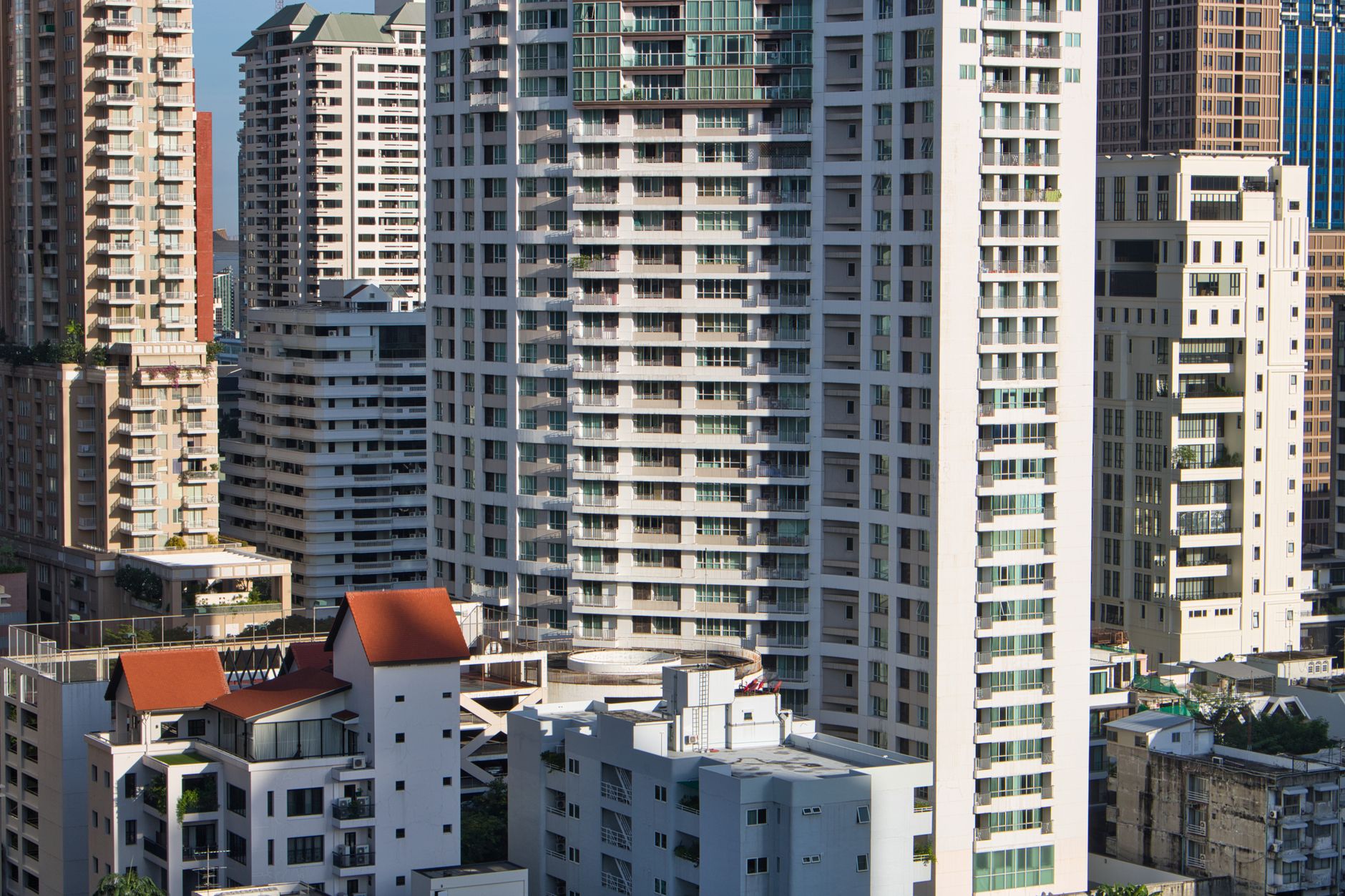
Foreign freehold ownership in Thailand is legally available for condominiums only. If you want to own a house or land outright, Thai law does not allow it - your realistic alternatives are long-term leasehold, usufruct, or superficies rights.
This guide explains every legal ownership structure open to you as a foreign buyer in 2026, the conditions you must meet, the risks you must weigh, and the mistakes that cost buyers significant money.
Quick answer
- Condominiums only: foreigners can hold freehold (outright ownership) in a condominium unit under the Thai Condominium Act, provided the building's foreign quota - the share of total floor area that can be foreign-owned - does not exceed 49%.
- Land is off-limits: the Thai Land Code prohibits foreigners from owning land. No workaround changes this fundamental rule.
- Leasehold for villas and houses: you can register a lease of up to 30 years at the local Land Office. One contractual renewal of 30 years is common in practice, but only the first term is legally guaranteed by registration.
- Usufruct and superficies: these are registered rights that sit on top of a Thai land title and can give you long-term use of a property without owning the land itself.
- Thai company structures: using a Thai-majority company as a nominee to hold land for a foreign buyer is explicitly prohibited by the Land Code and carries criminal risk.
- Foreign Exchange Transfer (FET) certificate: to register freehold condo ownership you must show that the purchase funds were transferred from abroad in a foreign currency. Keep every FET record.
Options and scenarios
Can foreigners own a condominium freehold in Thailand?
Yes. The Thai Condominium Act is the only law that gives a foreigner direct, registered title to real property in Thailand. You receive a chanote - the highest-grade Thai land title, which in a condominium context is issued as a unit title deed - recorded in your personal name at the Land Office.
Two conditions must be satisfied:
1. The 49% foreign quota. Across all units in the building, no more than 49% of total floor area can be registered to foreign owners. The remaining 51% or more must be Thai-owned. Before you sign anything, ask the juristic person - the building's registered management entity - for a written statement of the current foreign quota usage. In popular buildings in Bangkok, Phuket and Pattaya, this quota fills quickly and resale units are sometimes the only route in.
2. Foreign Exchange Transfer (FET) documentation. You must transfer the purchase price from outside Thailand in a foreign currency. Your Thai bank converts the funds and issues a transaction record. As of 2026, the standard document is a Foreign Exchange Transaction Form (sometimes called a Thor Tor 3 form for amounts above USD 50,000, though the exact threshold and form name can change - confirm with your bank). Keep every slip. Without proof of inward remittance in foreign currency, the Land Office will not register the transfer into your name.
There is no minimum or maximum purchase price set by law for the foreign quota channel, but the funds must demonstrably arrive from abroad.
What does freehold actually mean in practice?
Freehold means permanent, inheritable ownership with no expiry date. You can sell, mortgage, gift, or bequest the unit. Thai law allows foreigners to inherit condominium units within the quota as well. If the foreign quota is already at 49% when you inherit, you have one year to sell the unit to a qualifying buyer - you are not simply stripped of the asset.
Why can foreigners not own land freehold?
The Land Code (the main statute governing land in Thailand) reserves land ownership for Thai nationals. This is not a technicality or an oversight - it is a deliberate policy that successive governments have maintained. Some amendments have been discussed over the years, and in 2022 a draft proposal to allow foreigners to purchase up to one rai (1,600 square metres) of land for residential use attracted attention, but as of 2026 no such right has been enacted into law. Check with a qualified Thai lawyer for any updates at the time of your purchase.
What is registered leasehold and how long does it last?
A registered leasehold is a contract between you (the lessee) and the Thai landowner (the lessor) that is filed at the Land Office. Registration gives the lease legal effect against third parties, meaning a new landowner who buys the land is still bound by your lease.
Thai law caps a single registered lease at 30 years. Developers routinely include a clause promising one or two renewal periods of 30 years each in the private contract, giving an effective 60 or 90-year horizon. However, only the first 30-year term has statutory protection. A renewal depends on the landowner at the time - if the land changes hands or the company is restructured, enforcing a renewal clause may require litigation. Your lawyer should review this carefully.
Despite this limitation, registered leasehold is the standard and widely accepted structure for villa ownership on plots of land in Thailand.
What are usufruct and superficies rights?
Usufruct (Thai: 'sithi kep kin') is a registered right that allows you to occupy and use a property - and collect income from it - for your lifetime or for a fixed period up to 30 years. It is registered on the title deed at the Land Office. A usufruct does not allow you to sell or mortgage the underlying land.
Superficies (Thai: 'sithi pokkhrong') is a registered right that separates the ownership of a building from the ownership of the land beneath it. You can build on and own the structure while the land remains in Thai ownership. Superficies can be registered for up to 30 years and is renewable by agreement.
Both rights provide more security than an unregistered private agreement, because they appear on the land title itself. They are often used alongside a long-term lease to give a foreign buyer multiple layers of documented rights.
What about Thai company structures?
Some advisers in the past suggested that a foreign buyer could use a Thai-majority company - where Thai nominees hold shares - to purchase land, with the foreigner controlling the company and effectively controlling the land.
The Land Code prohibits foreigners from using nominees to hold land on their behalf. The Foreign Business Act also restricts foreign-controlled entities in many sectors. Thai authorities have pursued enforcement actions against nominee structures, and the risk of asset forfeiture exists. If you are already in such a structure, take independent legal advice. This guide does not treat nominee structures as a viable ownership route.
A legitimately Thai-owned and operated company with genuine Thai shareholders and business activity is a different matter, but it does not give you personal freehold ownership as a foreigner.
What about the BOI or EEC special investment channels?
The Thai Board of Investment (BOI) and the Eastern Economic Corridor (EEC) programme have at various times offered long-term land use rights (not freehold land ownership) to qualifying foreign investors who meet substantial investment thresholds - as of late 2025 typically THB 40 million or more invested in approved assets. These channels give you rights to use a defined plot of land, not a chanote in your personal name for residential land. They are relevant for a small number of high-net-worth buyers and require specialist legal advice. They are not a general freehold route.
Comparison table
| Parameter | Condo freehold | Registered leasehold | Usufruct | Superficies |
|---|---|---|---|---|
| Legal basis | Condominium Act | Civil and Commercial Code | Civil and Commercial Code | Civil and Commercial Code |
| Applies to | Condo units only | Land and structures | Land and structures | Land (structure separately owned) |
| Maximum term | Permanent (no expiry) | 30 years per registration | Lifetime or 30 years | 30 years |
| Registered at Land Office | Yes - unit title deed | Yes | Yes | Yes |
| Inheritable by foreigner | Yes (within quota rules) | Generally no (lease ends) | No (usufruct ends at death) | Depends on agreement |
| Sellable/transferable | Yes | Subject to lease terms | No | Subject to agreement |
| Foreign quota limit | 49% of total floor area | Not applicable | Not applicable | Not applicable |
| Inward remittance proof required | Yes (FET documentation) | Not mandated by law | Not mandated by law | Not mandated by law |
| Practical security level | High | Medium-high (first term) | Medium | Medium |
| Common use case | City apartments, resort condos | Villa on land, houses | Long-term residence rights | Owner-built villa on leased land |
Risks and mistakes
Buying a condo unit above the foreign quota
If you buy a unit in a building where the foreign quota is already at or near 49%, the Land Office will refuse to register ownership in your name. You will have purchased a unit you cannot legally title. Always get written confirmation of the current quota usage before signing the reservation agreement or paying a deposit.
Missing or incomplete FET documentation
Funds transferred within Thailand - for example from a Thai bank account funded by a previous domestic sale - do not qualify as fresh inward foreign currency remittance for the condo freehold registration. You must send money from a bank outside Thailand. Send the full purchase amount, not partial payments, in one or clearly documented tranches, each with a corresponding transaction record.
Relying on an unregistered lease or verbal renewal promises
An unregistered lease is not enforceable against a new landowner. If a developer sells the land during your lease, a new owner with no notice of your unregistered agreement is not legally bound by it. Always register the lease at the Land Office. The cost is a small percentage of the annual rent and is worth every baht.
Assuming a 30-plus-30 lease is legally guaranteed
The second and third 30-year renewal periods in a villa lease contract are private contractual promises, not statutory rights. They are only as reliable as the counterparty. Analyse who holds the land, whether that entity has continuity, and whether your contract gives you any recourse - ideally a registered right to extend.
Using a nominee Thai company structure
This is the highest-risk mistake. If discovered, the asset can be subject to forfeiture under the Land Code. You may also face criminal liability. The risk has increased in recent years as enforcement has become more active. Buyers who already hold property this way should seek legal advice on restructuring, typically by converting to a long-term lease.
Not conducting due diligence on the land title
Not all land in Thailand carries a full chanote. Lower-grade documents - Nor Sor 3, Sor Por Kor - carry restrictions and less legal certainty. Before purchasing any property, a qualified Thai lawyer should check the title at the Land Office, verify there are no mortgages or encumbrances registered, confirm the actual boundary against the cadastral survey, and confirm the land has not been allocated from protected or forest reserve areas.
Paying before contracts are reviewed
Some developers ask for a reservation deposit before the sale and purchase agreement is drafted. Once paid, this deposit is often non-refundable. Do not pay any amount - even a small 'booking fee' - before you have reviewed the draft agreement with your own lawyer. The developer's standard agreement will favour the developer.
FAQ
Can a foreigner own a house in Thailand outright?
No. Thai law does not allow foreigners to own land or houses built on land in freehold. You can own a condominium unit in freehold. For a house on land, the standard legal structure is a registered 30-year leasehold, sometimes paired with usufruct or superficies rights.
How do I verify that a condominium still has foreign quota available?
Ask the building's juristic person - the registered management entity - for a written statement showing the current ratio of foreign-owned floor area to total floor area. Your lawyer can also check with the Land Office. Do this before signing any agreement or paying any deposit.
What is the Foreign Exchange Transaction (FET) form and why does it matter?
The FET form (sometimes called a Thor Tor 3 record) is issued by your Thai bank when you receive a foreign currency transfer from abroad. It proves that the funds used to buy your condo came from outside Thailand in foreign currency. Without it, the Land Office will not register a freehold condo transfer in a foreign name. Keep every FET record permanently - you will need it if you ever sell.
Is a 30-year lease safe for a villa purchase in Thailand?
A registered 30-year lease is legally enforceable against any future landowner for its full term. The risk lies in what happens at expiry. Renewal clauses in the private contract are common but not backed by statute. The security of your renewal depends on who holds the land and whether they honour the contract. A registered usufruct or superficies in addition to the lease adds a layer of documented rights.
Can a foreign-owned Thai company hold land legally?
Only if the company has genuine Thai majority ownership with real shareholders who are not nominees. Even then, the company - not you personally - owns the land, and you control it only through your shareholding and directorship. Thai authorities scrutinise foreign-controlled companies that hold residential land. Nominee structures specifically set up for this purpose breach the Land Code.
What happens to my condo if I die - can my family inherit it?
Yes. A condominium unit owned freehold by a foreigner can be inherited by foreign heirs, subject to the foreign quota rules. If the foreign quota is already full at the time of inheritance, the heir has one year to sell the unit to a qualifying buyer. Inheritance does not trigger immediate forfeiture.
Do I need a Thai bank account to buy property in Thailand?
For condo freehold, you need a Thai bank account to receive the inward foreign currency transfer and generate the FET documentation. For leasehold or other structures, a Thai bank account is not strictly required by law, but it makes the practical process much easier. Many banks offer accounts to foreigners with a valid passport and visa.
What title deed should a freehold condo unit have?
The gold standard is a chanote (Nor Sor 4 Jor) - a title deed based on a precise GPS-surveyed boundary. In a condominium, the unit title deed is derived from the chanote of the underlying land. Always check that the underlying land has a chanote, not a lower-grade document.
Are there any plans to allow foreigners to own land freehold in Thailand?
As of 2026, no law allowing general foreign freehold land ownership has been enacted. A proposal discussed in 2022 did not become law. Monitor official announcements from the Thai government and verify with a qualified Thai lawyer at the time of your purchase. This guide reflects the legal position in 2026.
What professional help do I need to buy property in Thailand as a foreigner?
You need an independent Thai lawyer - not the developer's lawyer or the agent's recommended lawyer - to conduct title due diligence, review all contracts, confirm quota availability, and advise on the optimal ownership structure for your situation. For significant purchases, a tax adviser familiar with both Thai property law and your home country's tax rules is also prudent.
Planning a property purchase in Thailand? Send us your requirements - the THAI.ESTATE team will reply with specific options and a safety checklist for your case.