Editorial
Foreign Buyer Nationalities Driving Thai Luxury Condo Demand in 2026
By THAI.ESTATE Editorial Team13 min read
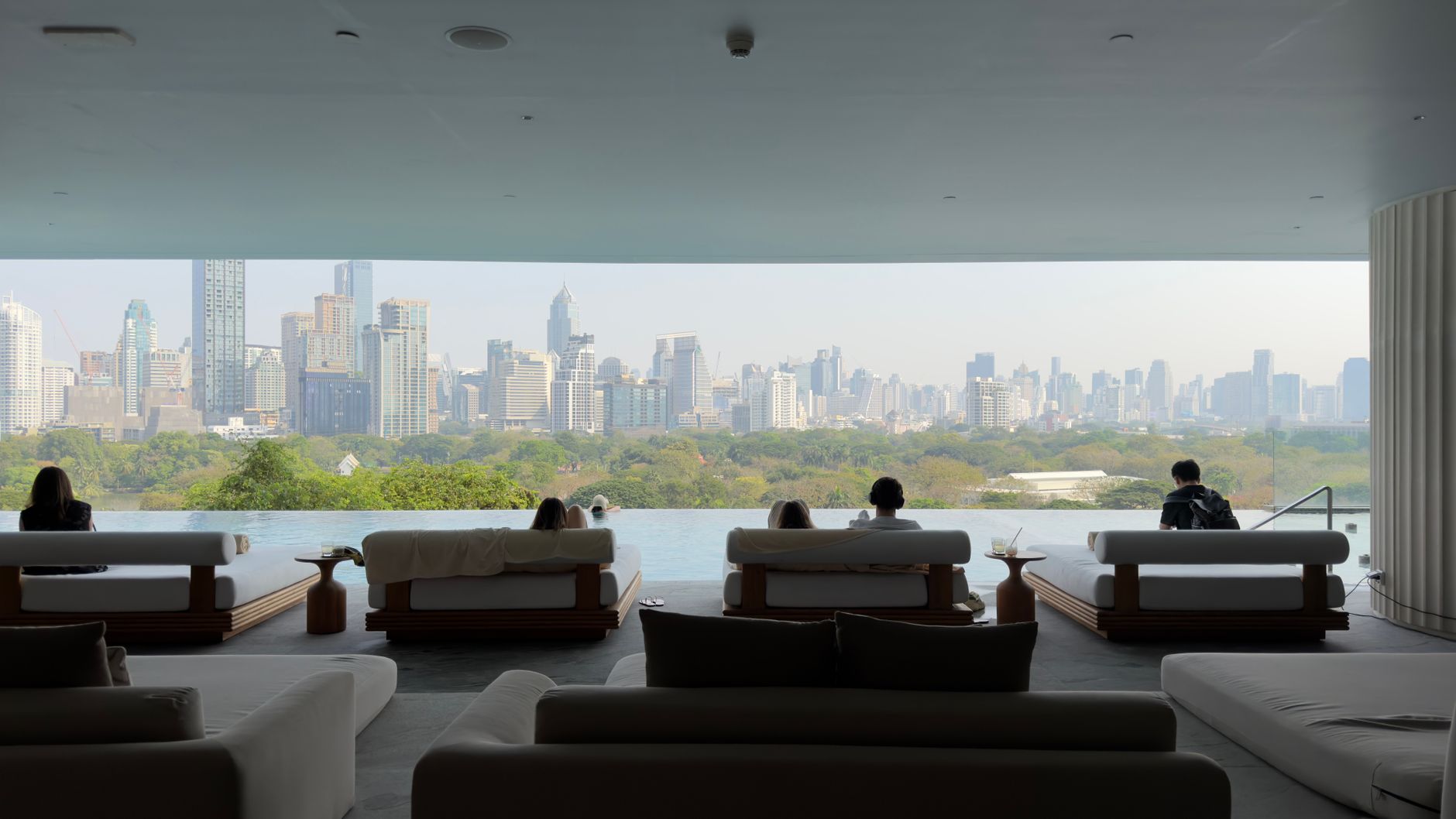
Middle Eastern, Japanese, and Russian buyers are currently the three dominant foreign groups purchasing luxury and super-luxury condominiums in Bangkok, per CBRE Thailand data from H1 2026. If you are a rental investor choosing a unit type, floor plan, or location tier, knowing which nationalities are active - and what they actually want to rent - is one of the most reliable filters you can apply.
The picture matters beyond simple demand numbers. Thailand's 2026 nominee crackdown is simultaneously reducing the supply of cheaply-held investor stock, which has direct consequences for rental premiums and resale liquidity. Both signals together shape which segments carry durable rental income potential and which carry quiet risk.
Quick answer
- Middle Eastern, Japanese, and Russian buyers are named by CBRE Thailand (H1 2026) as the dominant forces in Bangkok luxury and super-luxury condo launches
- Super-luxury units (above THB 20 million per unit, market estimates) are seeing the strongest foreign absorption; mid-range stock is comparatively slower
- The nominee crackdown (enforced under the Foreign Business Act, 2026) is removing a layer of cheaply-held investor inventory, tightening supply in some segments and raising compliance risk in others
- Rental investors who target the same nationalities buying in a building face a natural tenant pool from short-term business visitors, relocating families, and lifestyle tenants - but only if unit size and specification match those preferences
- Gross yields in Bangkok luxury condos are typically quoted at 5-7% in sales materials; realistic net yields after all costs run 3-4.5%, per market estimates as of 2026
- Location, floor plan, and nationality alignment are more predictive of sustained rental income than headline yield figures alone
Options and scenarios
Scenario 1: Buying in a building with strong Middle Eastern buyer concentration
Middle Eastern purchasers tend to prioritize large floor plans (80 sq m and above), high-floor units with unobstructed views, proximity to international schools, and buildings with hotel-grade amenities. Concentrations of this buyer group are visible in Bangkok's central districts, particularly Sukhumvit and the CBD fringe, where recent super-luxury launches have been clustered.
For a rental investor, a building with significant Middle Eastern ownership can produce a tenant pool of corporate relocatees, families on multi-year leases, and short-stay visitors connected to Gulf-based business networks. Monthly lease terms (minimum one month, which avoids the hotel licensing requirement under Thailand's Hotel Act) are the practical format in most condominiums. If you are targeting this pool, unit specification matters more than price point: large living areas, dedicated study or prayer space, and proximity to halal dining and international schools are concrete decision factors.
The rental premium in well-specified units here is real. Market estimates for 2026 put monthly rents for 2-3 bedroom units in top-tier Bangkok buildings at THB 80,000-180,000 per month, depending on floor and finish. That range is wide, and the gap between units that achieve it and those that do not comes down to specification and building brand.
Scenario 2: Buying in a building with strong Japanese buyer concentration
Japanese buyers are a structurally stable demand group. Japanese corporations have maintained a large Bangkok presence for decades, and expatriate housing budgets from Japanese companies are well-documented in the relocation market. Japanese tenants typically want: smaller to mid-size units (45-75 sq m), high management standards, quiet buildings, proximity to BTS Skytrain, and Japanese-speaking juristic staff where available (a juristic person is the management entity registered under the Condominium Act to run a building's common areas).
A building with Japanese buyer concentration tends to attract Japanese corporate tenants - which means longer lease terms (often 12-24 months), reliable payment, and lower vacancy. The rental yield story here is quieter but more consistent. Gross yields of 5-6% are achievable in the right districts; net yields of 3-4% are realistic after management fees, common-area fees (the monthly charge collected by the juristic person for shared facility upkeep), sinking fund contributions (a one-time or periodic reserve payment for long-term building repairs), and vacancy.
Scenario 3: Buying in a building with Russian buyer concentration
Russian buyers have been a significant force in both Bangkok and resort markets (Phuket, Pattaya, Koh Samui) since 2022. Their profile in Bangkok skews toward luxury units in the THB 10-25 million range, with a preference for brand-name buildings in Sukhumvit and Silom. In resort markets, Russian demand for short-stay rentals is higher, though the Hotel Act constraint applies equally: any condominium unit offered for daily or nightly rental to the public must comply with hotel licensing rules, which in practice most individual condominium units cannot meet. Monthly minimums are the legal and practical default for most investor-owners.
For rental investors in resort markets targeting Russian tenants, the seasonal concentration is a real factor. High season (November through April in Phuket and Koh Samui) can see strong occupancy, but low season (May through October) occupancy rates can fall sharply, affecting annual yield calculations significantly.
Scenario 4: The nominee crackdown and its effect on investor supply
Thailand's 2026 enforcement push under the Foreign Business Act is materially relevant to rental investors. Approximately 50,000 foreign-linked firms are under scrutiny using AI-assisted cross-database checks, per reporting in mid-2026. On Koh Samui and Koh Phangan, a large share of registered entities show foreign links, though not all are in violation.
The practical effect for rental investors: some nominee-held units that were previously available as rental stock are being unwound or placed under legal uncertainty. This tightens supply in some sub-markets, which is a mild positive for compliant landlords already holding legal title. For foreign buyers, the two main legal routes remain the condominium freehold (up to 49% of a building's total floor area can be foreign-owned under the Condominium Act) and long-term leasehold structures. Nominee arrangements for land or villa ownership carry direct legal risk in 2026 and beyond.
Scenario 5: Guaranteed-rental programs tied to nationality-driven projects
Several Bangkok luxury launches marketed to Middle Eastern and Russian buyers include guaranteed-rental programs: the developer or an affiliated operator promises a fixed return (typically 5-7% gross per year) for 2-5 years. The guarantee is paid from developer reserves or sales proceeds, not from actual rental income. When the guarantee period ends, the actual occupancy and market rent determine the real yield.
If the building's real demand does not support the guaranteed rate, you will see yields compress sharply after year two or three. Before accepting a guarantee, ask for the building's actual occupancy rate data and the rental rates being achieved on comparable completed buildings from the same developer. If those numbers are not available or are not audited, the guarantee is pricing in development risk, not rental market strength.
Comparison table
| Parameter | Middle Eastern buyer buildings | Japanese buyer buildings | Russian buyer buildings | Mixed / General market |
|---|---|---|---|---|
| Typical unit size targeted | 80-200 sq m | 45-75 sq m | 50-120 sq m | 35-80 sq m |
| Likely tenant type | Corporate families, lifestyle tenants | Japanese expat employees | Seasonal tourists, short-term residents | Mixed expat, local professional |
| Realistic lease format | Monthly minimum | 12-24 month leases | Monthly minimum | Monthly or annual |
| Gross yield (sales deck) | 5-7% | 5-6% | 6-8% (resort) | 5-7% |
| Realistic net yield (2026 est.) | 3.5-4.5% | 3-4% | 2.5-4% (after low season) | 3-4% |
| Vacancy risk | Low to moderate | Low | Moderate to high (seasonal) | Moderate |
| Nominee crackdown exposure | Low (freehold condo buyers) | Low | Moderate (resort villa structures) | Varies |
| OTA / management cost drag | Low (longer leases) | Low (corporate leases) | High (short-term OTA model) | Moderate |
Risks and mistakes
Treating gross yield as the real return
Sales materials for Bangkok luxury condos routinely advertise 6-7% gross yields. The gross figure is calculated before management fees (typically 8-12% of rental income for a professional operator), common-area fees paid to the juristic person (market estimates: THB 50-120 per sq m per month depending on building grade), sinking fund contributions, vacancy periods, OTA platform commissions (15-20% of booking value on short-stay platforms), utilities, and minor repairs. When you subtract all of these, net yields on a well-occupied luxury unit in Bangkok typically fall to 3-4.5% in 2026. That is a reasonable return for a low-leverage position in a stable building, but it is not 7%.
Assuming short-term rental is legally available
Thailand's Hotel Act requires a hotel license for any accommodation offered to the public for less than 30 days, with individual room lettings. Most condominium buildings do not hold this license and their building regulations explicitly prohibit daily or nightly rentals by individual unit owners. Offering your unit on short-stay platforms without the correct licensing exposes you to fines and potential juristic-person enforcement action. Monthly minimum leases are the safe and common model for individual condo investors.
Ignoring seasonal occupancy in resort markets
For Phuket and Koh Samui, high season (November to April) can support strong occupancy. Low season occupancy in the same buildings can drop to 30-50%, per market estimates. An annual average occupancy of 55-65% is a more honest planning figure for many resort condo buildings than the peak-season rates cited in marketing. Any yield calculation you build should use annual average occupancy, not high-season numbers.
Confusing buyer nationality with tenant nationality
A building popular with Middle Eastern buyers does not automatically fill with Middle Eastern tenants. Buyer and tenant pools overlap but are not identical. Verify the actual rental demand in the building's submarket by checking comparable completed projects, not the developer's pipeline.
Relying on guaranteed-rental returns beyond the guarantee period
As described above, guaranteed programs typically run 2-5 years. The post-guarantee yield depends entirely on market conditions. If the building sits in a location with weak local rental demand, the yield drop after year three can be severe. Check audited occupancy data from comparable completed buildings, not projections.
Underestimating nominee crackdown exposure
If you are considering a villa or landed property acquisition through a Thai company structure, 2026 is a high-risk year to hold that structure. Authorities are using AI-assisted cross-database checks on approximately 50,000 foreign-linked firms, per mid-2026 reporting. Legal title through the condominium freehold quota or a properly documented long-term leasehold is the lower-risk path. Get independent legal advice before committing funds to any company-held structure.
Selecting floor plan for buyer appeal rather than tenant appeal
A 150 sq m penthouse-floor unit may attract a foreign buyer willing to pay a premium, but the rental tenant pool for that unit at the corresponding rent is narrow. Rental yield is a volume game at each price tier: the larger and more expensive the unit, the smaller the qualifying tenant pool and the longer potential vacancy periods between tenants.
FAQ
Which foreign nationalities are buying luxury condos in Bangkok in 2026?
Per CBRE Thailand data from H1 2026, Middle Eastern, Japanese, and Russian buyers are the three dominant foreign groups in Bangkok's luxury and super-luxury condo segment. Chinese buyers remain active across the broader market but are less concentrated in the super-luxury tier than in previous years, per market observation.
Does nationality of the buyer affect rental yield for an investor?
Indirectly, yes. The nationality profile of buyers in a building shapes the building's management culture, common-area standards, and the tenant network that forms around it. A building with heavy Japanese buyer concentration tends to attract Japanese corporate tenants with reliable payment histories. A building targeting Middle Eastern buyers often has larger units that command higher monthly rents but require a specific specification to attract that tenant pool.
Can a foreign buyer rent out a Thai condo on a short-stay platform legally?
In most cases, no. Thailand's Hotel Act requires a hotel license for rentals under 30 days offered to the public. Individual condominium units in standard buildings do not hold this license, and many buildings' internal rules prohibit daily lettings. Monthly minimum leases are the legally safe and common model for individual condo investors in 2026.
What is a realistic net rental yield on a Bangkok luxury condo in 2026?
Market estimates for 2026 put net yields at 3-4.5% per year on luxury condos in Bangkok, after management fees (8-12% of income), common-area fees, sinking fund contributions, vacancy, and minor repairs. Sales materials typically advertise gross yields of 5-7%, which do not reflect these deductions.
How does the 2026 nominee crackdown affect rental investors?
Thailand's authorities are scrutinizing approximately 50,000 foreign-linked companies under the Foreign Business Act, using AI-assisted checks. For rental investors, the main risk is if you hold or are considering holding property through a Thai company with nominee shareholders. Legal condominium freehold ownership (within the 49% foreign quota under the Condominium Act) or a properly documented leasehold avoids this exposure. Company-held structures warrant independent legal review in 2026.
What is the condominium foreign ownership quota and how does it affect availability?
Under Thailand's Condominium Act, foreign nationals can hold freehold title to units representing up to 49% of a building's total floor area. When this quota is full in a popular building, foreign buyers must either purchase on leasehold terms or look at other buildings. In buildings with concentrated Middle Eastern or Japanese demand, the foreign quota can fill quickly in new launches.
What is a sinking fund and do I have to pay it as a landlord?
A sinking fund is a one-time or periodic reserve payment made by unit owners to cover major future building repairs - lifts, roof, facade, and similar capital items. It is administered by the juristic person (the management body registered under the Condominium Act). As an owner, you pay into the sinking fund regardless of whether you are renting the unit out. It is a cost that reduces your net yield and should be factored into any purchase calculation.
Are guaranteed-rental programs safe for foreign investors?
Guaranteed-rental programs, which promise a fixed return for 2-5 years, are common in developer-led launches marketed to foreign buyers. The guarantee is paid from developer reserves, not from verified rental income. Once the guarantee period ends, actual market occupancy determines your return. If the building's location has weak standalone rental demand, post-guarantee yields can fall significantly. Evaluate any guarantee by requesting audited occupancy and rental data from the developer's comparable completed projects.
How do I estimate annual occupancy for a resort condo in Phuket or Koh Samui?
Use annual average occupancy as your planning figure, not high-season numbers. Per market estimates as of 2026, many resort condo buildings in Phuket and Koh Samui average 55-65% annual occupancy. High season (November to April) can run 75-85% in well-located buildings, but low season (May to October) can drop to 30-50%. Build your yield model on the annual average.
What unit size gives the best balance of rental yield and tenant pool depth in Bangkok?
Per market estimates for 2026, 1-bedroom units of 45-65 sq m and 2-bedroom units of 70-90 sq m offer the widest tenant pools in Bangkok's established expat districts. Super-large units (above 120 sq m) command higher rents but have narrower tenant pools and longer potential vacancy periods. For investors prioritizing yield consistency over maximum rent, mid-size units in buildings with strong management and good BTS or MRT access are the more durable choice.
Planning a property purchase in Thailand? Send us your requirements - the THAI.ESTATE team will reply with specific options and a safety checklist for your case.