Editorial
End-User Demand Now Drives Thai Condo Values: What It Means for Rental Investors in 2026
By THAI.ESTATE Editorial Team14 min read
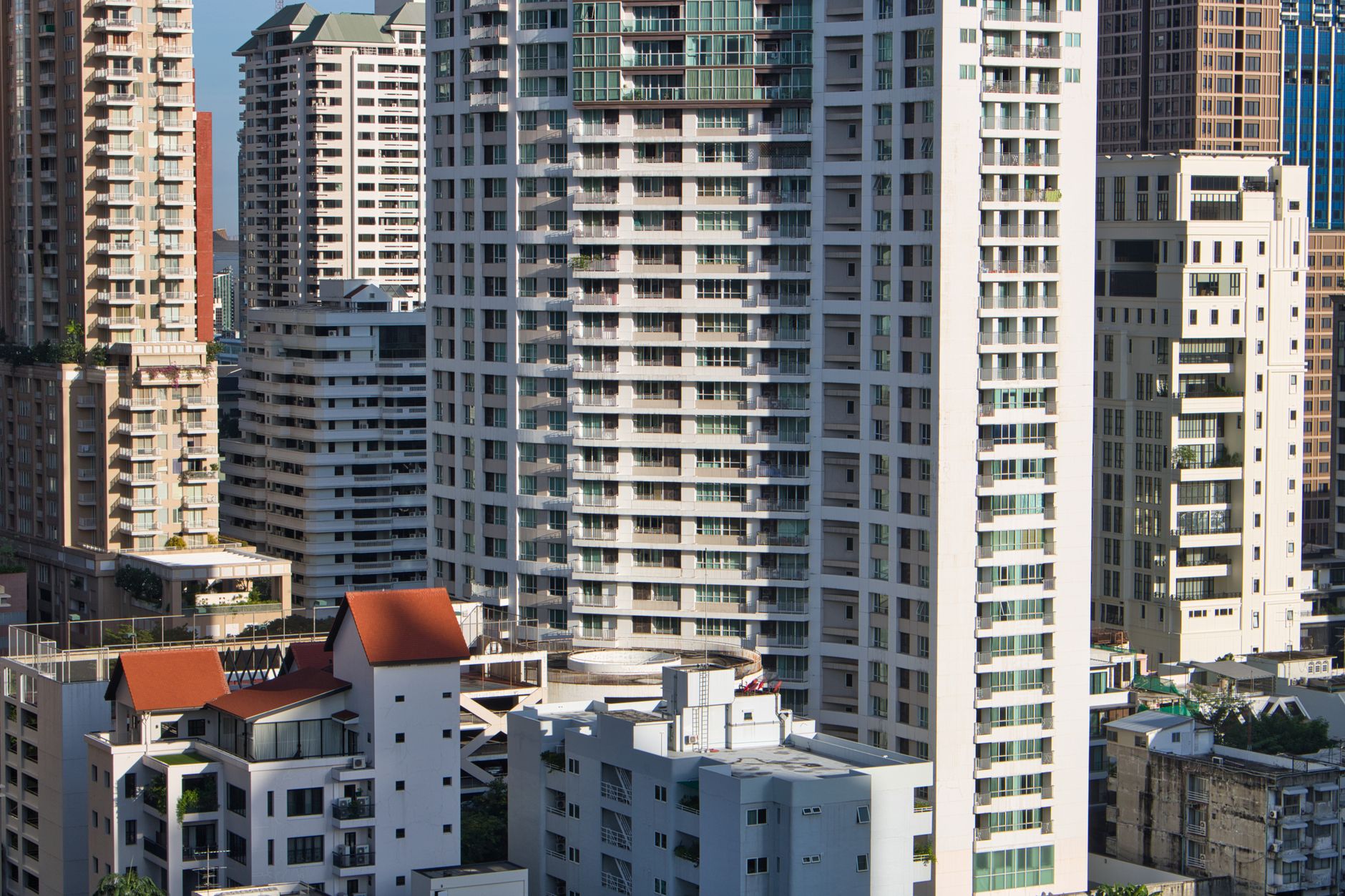
Thai condominium buyers are no longer primarily speculators flipping units for a quick profit. As of 2026, end-users - people who plan to live in the property or hold it for stable long-term rental income - account for more than 80% of condo purchases in Thailand, per Money and Banking Magazine, August 2026. Short-term speculators have shrunk to roughly 20% of the market. This structural shift changes how you should evaluate a Thai condo as a rental investment, which locations to prioritise, and what occupancy forecasts you can realistically defend.
The short version: an end-user-dominated market tends to produce more stable asking rents and lower vacancy rates in well-located buildings, but it also compresses resale upside and makes micro-location far more important than headline city-level data. If you are buying for yield rather than personal use, you need to know which pockets of the market still have genuine rental demand - and which are being propped up by developer guarantees that mask thin occupancy.
Quick answer
- End-users now represent 80%+ of Thai condo buyers (market-wide, ex-Phuket), per Money and Banking Magazine, August 2026. Speculation has structurally collapsed.
- Phuket is the exception: foreign investment and purchase demand there still reaches roughly 80%, making it a different market with different risk and yield dynamics.
- Campus-oriented condos and Bangkok CBD micro-markets (Sukhumvit through Ratchadaphisek and Ladprao) are absorbing stock fastest, per Sansiri market commentary, 2026.
- Gross rental yields in Bangkok typically run 4%-6% per year (indicative figures, as of 2026). Net yield after all costs realistically lands at 2.5%-4%, depending on management model and vacancy.
- Visa tightening is a real demand-side risk: Thailand's Cabinet voted in May 2026 to end the 60-day visa-free entry for most non-ASEAN nationalities, reverting to a 30-day cap with a two-entry-per-year ceiling. This affects the pool of short-stay foreign tenants you can serve legally.
- Guaranteed-rental programs offered by developers often mask weak underlying occupancy. Always calculate yield on the open-market rent, not the guarantee figure.
Options and scenarios
Scenario 1: Bangkok CBD and campus corridor condos
The fastest-absorbing micro-markets in Bangkok in 2026 are units close to universities and established employment corridors - Sukhumvit, Ratchadaphisek, and Ladprao, per Sansiri data cited in Money and Banking Magazine, August 2026. End-user demand in these corridors is genuine: buyers are young professionals, students, and domestic upgraders who also rent during transitions. This is good news for landlords because tenant demand tracks resident demand. When locals are buying to live, they are also renting to live, which means vacancy is structurally lower than in a resort or tourist-only market.
Indicative gross yield in prime Sukhumvit: 4%-5.5% per year on a long-term 12-month lease. Net yield after a 10% management fee, maintenance reserve (roughly 1%-2% of asset value per year), and two to four weeks of vacancy allowance: approximately 2.8%-3.8%.
Scenario 2: Phuket short-term rental
Phuket operates on different economics. Foreign investment demand remains high - around 80% of buyers in some projects are non-residents seeking yield or lifestyle, per the same August 2026 source. This sustains developer pipelines and keeps launch prices elevated relative to rental income. High-season occupancy (roughly November to April) can reach 75%-85% in well-managed buildings, but low season (May to October) frequently falls to 30%-50%, per market estimates.
Gross yield on paper: 6%-8% (common in developer sales decks). Actual net yield after OTA (online travel agency) commissions of 15%-20%, a professional property management fee of 20%-30% of revenue, cleaning costs, minor repairs, and seasonal vacancy: typically 3%-5%, and sometimes below 3% in lower-demand units.
Separate legal issue: short-term daily or weekly rentals in a condominium building require hotel licensing under Thai law. If the juristic person - the building's management entity elected by unit owners - does not hold or support a hotel licence, you are legally limited to monthly leases. Most condominium buildings in Phuket do not hold hotel licences. This constraint alone is enough to push many Phuket condo investors into the long-stay monthly market, where yields are closer to Bangkok numbers.
Scenario 3: Koh Samui and secondary resort markets
Koh Samui offers higher-headline gross yields (sometimes 7%-9% in developer materials) but carries concentrated risk: single-airport access, a smaller long-stay tenant pool, and more pronounced high/low season swings than Phuket. Net yields after full cost accounting rarely exceed 4%, per market estimates. The tenant pool for monthly leases is also narrower, which means vacancy can drag for two to three consecutive months in a slow season.
Scenario 4: Older inventory versus current projects
Older projects - those five or more years from completion - increasingly struggle to compete on rent with newer buildings that offer modern common areas and contemporary fitouts, per Sansiri commentary cited in Money and Banking Magazine, August 2026. If you are evaluating a resale unit, factor in the sinking fund balance (a reserve maintained by the juristic person for major capital expenditure such as lift replacement or facade repairs), the common-area fee (a monthly charge per square metre covering building operations), and the likely cost of unit renovation before re-letting. Gross yield looks different when you add THB 200,000-400,000 in renovation costs to your purchase price.
How visa changes affect your occupancy model
Thailand's Cabinet voted in May 2026 to replace the 60-day visa-free entry with a 30-day exemption capped at two entries per year for most non-ASEAN nationalities, per Thailand Starter Kit, August 2026. The change takes effect after Royal Gazette publication, which had not occurred at the time of that reporting.
For rental investors, the practical effect is this: the pool of 'long short-stay' tenants - foreign nationals who previously stayed 60 days on a free visa, then border-ran for another 60 days repeatedly - is structurally smaller under the new rules. These tenants were a meaningful demand source for furnished monthly rentals in Phuket, Chiang Mai, and Bangkok's digital-nomad corridors. You should not project occupancy on the assumption that this tenant category remains unchanged.
The Destination Thailand Visa (DTV) offers a replacement route for committed long-stay foreigners: a five-year multiple-entry visa with up to 180 days per stay (extendable once to 360 consecutive days per cycle), per Thailand Starter Kit, August 2026. However, the DTV requires THB 500,000 held in a bank account for at least three months and proof of employment or qualifying activities outside Thailand, and applicants must apply from outside the country. The DTV attracts a more financially stable tenant profile, but the pool is smaller than the old visa-run demographic. Price your occupancy assumptions accordingly.
Comparison table
| Parameter | Bangkok CBD long-term let | Phuket short-term let | Phuket monthly let | Koh Samui short-term let |
|---|---|---|---|---|
| Typical gross yield | 4%-5.5% | 6%-8% | 4%-5.5% | 7%-9% |
| Realistic net yield | 2.8%-3.8% | 3%-5% | 2.5%-3.8% | 2.5%-4% |
| Occupancy risk | Low to medium | High seasonal swing | Medium | High seasonal swing |
| Hotel licence required | No (monthly leases) | Yes (daily/weekly lets) | No (monthly leases) | Yes (daily/weekly lets) |
| Visa tightening impact | Medium | High | High | High |
| Tenant profile | Domestic professional, expat | Tourist, short-stay visitor | Long-stay expat, DTV holder | Tourist, short-stay visitor |
| Management model | Self-managed or local agent | OTA plus operator | Local agent | OTA plus operator |
| Typical management fee | 8%-12% of annual rent | 20%-30% of revenue | 10%-15% of annual rent | 20%-30% of revenue |
| End-user buyer share (market) | 80%+ (supports rent) | ~20% (investor-heavy) | ~20% (investor-heavy) | Investor-heavy |
Risks and mistakes
Accepting gross yield as the real number
Sales presentations routinely show 6%-8% gross yield. This figure is calculated as annual rental income divided by purchase price, before any deduction for costs. The full chain looks like this:
Purchase price (e.g. THB 5,000,000) Gross annual rent (e.g. THB 300,000 = 6.0% gross yield) Minus management fee at 10%: THB 30,000 Minus common-area fee at THB 60 per sqm per month on 35 sqm: THB 25,200 per year Minus sinking fund contribution (typically a one-time payment at purchase, but top-ups occur): THB 5,000-10,000 estimated annual allocation Minus repairs and replacement: THB 10,000-20,000 per year (indicative) Minus vacancy allowance (two to four weeks on a 12-month lease): THB 12,000-23,000 Net rental income: approximately THB 185,000-215,000 Net yield: 3.7%-4.3% on this illustrative example
If this is a Phuket short-term rental, add OTA commissions of 15%-20% of gross revenue and operator fees of 20%-30%. Net yield can fall to 2.5%-3.5%.
Trusting developer guaranteed-rental programs without reading the terms
Many developers offer a rental guarantee - typically 5%-7% per year for three to five years - to make a launch price palatable. What the guarantee actually costs you:
- The guarantee is funded partly by inflating the purchase price above market value at launch. When the guarantee period ends, resale value often corrects toward actual market comparables.
- During the guarantee period, the developer controls the unit, sets rental prices, and retains any upside above the guaranteed rate. If the market performs well, you do not participate.
- After the guarantee period, you inherit a unit in a building where the developer has controlled all tenant relationships. You have no established rental history or direct tenant contacts.
- Some guarantees are funded from a sinking fund created by the developer at launch, not from actual rental revenue. If occupancy is weak throughout, the reserve depletes and guarantees can lapse.
Always model the post-guarantee yield on open-market rents for that specific building and floor level before committing.
Ignoring the end-user shift in your location selection
In an end-user-dominated market, the buildings that hold value and attract tenants are the ones end-users want to live in: good build quality, reputable juristic-person management, proximity to transport and employment. Investor-grade stock built for the speculative era - small units in secondary locations sold primarily to overseas buyers - now competes in a market where the domestic buyer, who has real price sensitivity and direct site access, sets the tone. If the building is not good enough for a domestic end-user to want to live in, it will struggle to attract a tenant who has the same choices.
Underestimating the hotel-licensing constraint
If you plan to list a condo unit on short-stay platforms, confirm with the juristic person whether the building holds a hotel licence before purchase. Most condominium buildings in Thailand do not. Operating short-stay rentals without a hotel licence exposes you to fines and potential tenant eviction by building management. The practical consequence is that you are limited to leases of 30 days or more - which changes your occupancy model, your pricing, and your platform choices entirely.
Projecting pre-2026 visa-run occupancy into future forecasts
If your financial model assumes a steady supply of tenants who cycle through on 60-day visa-free entries, that assumption is now structurally challenged. The Cabinet decision of May 2026 to cap non-ASEAN visa-free stays at 30 days with a two-entry-per-year limit shrinks that tenant category. Build your occupancy model around tenants with proper long-stay visas (DTV, retirement visa, employment visa) or domestic Thai tenants. This typically produces a more conservative but more defensible occupancy rate.
FAQ
What does 'end-user demand' mean in the Thai condo market and why does it matter for investors?
End-user demand means buyers are purchasing to live in the property or hold it for genuine rental income, rather than to flip it quickly for a capital gain. When more than 80% of buyers are end-users, as is the case in Thailand in 2026, price formation is driven by what people can actually afford to pay and choose to live in, not by speculative momentum. For a rental investor, this matters because it means the buildings that hold value and attract tenants are those that real residents want to occupy - not just those with the best sales brochures.
Which Bangkok neighbourhoods are seeing the strongest rental absorption in 2026?
Per Sansiri market data cited in Money and Banking Magazine, August 2026, the fastest-absorbing stock is in campus-oriented corridors and the Bangkok CBD belt running from Sukhumvit through Ratchadaphisek and Ladprao. These areas benefit from both genuine end-user buying pressure and a reliable pool of professional and student tenants.
Is Phuket still a good market for rental investment?
Phuket remains active, with foreign investment demand still representing roughly 80% of some project sales, per August 2026 market data. However, this investor concentration means supply risk is higher than in Bangkok. Short-term rental yields are attractive on paper but compress significantly once OTA commissions, operator fees, seasonal vacancy, and the hotel-licensing constraint are accounted for. Net yields of 3%-5% are realistic for well-managed short-stay units; long-stay monthly lets tend to land lower, at 2.5%-3.8%. Phuket suits investors who understand resort market cycles and hold for five or more years.
How does the 2026 visa change affect my rental income forecast?
Thailand's Cabinet voted in May 2026 to replace the 60-day visa-free entry with a 30-day exemption, capped at two entries per year for non-ASEAN nationals, per Thailand Starter Kit, August 2026. This reduces the supply of tenants who previously stayed on rolling 60-day entries. If your rental model depends on this tenant type - common in Phuket, Chiang Mai, and Bangkok nomad districts - revise occupancy assumptions downward. Tenants holding the Destination Thailand Visa (DTV) or formal long-stay visas are a more stable replacement, but the pool is smaller and has higher qualification requirements.
What is a realistic net rental yield for a Thai condo in 2026?
For Bangkok long-term lets, realistic net yield after management fees, common-area fees, sinking fund contributions, vacancy, and repairs is approximately 2.8%-3.8% per year (indicative figures, as of 2026). For Phuket short-term lets managed via OTA platforms and a professional operator, net yield typically lands at 3%-5% but can fall below 3% in weaker-demand units. Koh Samui and secondary resort markets carry similar or lower net yields with higher seasonal risk.
What is a sinking fund and do I pay it as a buyer?
A sinking fund is a capital reserve held by the juristic person - the building's elected management body - to cover major future expenditures such as lift replacement, facade repairs, or roof work. You pay an initial sinking fund contribution at purchase (typically THB 400-600 per sqm as a one-time payment, though amounts vary). Ongoing top-ups may be levied by the juristic person via special resolutions. Factor this into your total acquisition cost and ongoing hold cost.
What is the common-area fee and how does it affect yield?
The common-area fee (also called the maintenance fee) is a monthly charge per square metre of your unit, collected by the juristic person to fund day-to-day building operations: security, cleaning, pool and gym maintenance, and management. Rates in Bangkok typically run THB 40-80 per sqm per month (indicative, 2026 market estimates). On a 35 sqm unit at THB 60 per sqm, that is THB 25,200 per year - a cost you carry whether the unit is occupied or not. This is one of the most frequently omitted costs in gross yield calculations.
Should I use a guaranteed-rental program or rent the unit myself?
A guaranteed-rental program provides income certainty for a fixed period, typically three to five years, and removes day-to-day management responsibility. But the guarantee is often partially priced into an inflated purchase price, the developer captures any upside above the fixed rate, and you enter the open market with no established tenant history when the guarantee ends. Renting independently gives you market-rate income and direct tenant relationships, but requires active management or a reliable local agent. If the open-market net yield on a building is sound without the guarantee, the guarantee adds little except false certainty.
Can a foreigner legally own a Thai condominium outright?
Yes. Under the Condominium Act, foreign nationals may own up to 49% of the total floor area of any single condominium building in freehold, held in their own name on a chanote (the highest-grade Thai land title document). No nominee structure or leasehold is needed for this foreign quota. Purchases must typically be funded from overseas and supported by a Foreign Exchange Transaction (FET) certificate - a bank document showing that the purchase funds were remitted from abroad in foreign currency - to be eligible for foreign quota registration and future repatriation of funds.
What makes a condo building perform better for rental in an end-user market?
In a market where end-users set the standard, buildings that attract tenants share these features: competent juristic-person management, well-maintained common areas, reliable building systems (lifts, water, electrics), proximity to BTS or MRT stations or a major university, and a tenant mix that is primarily residential rather than transient. Older buildings with deferred maintenance, high common-area fees relative to services delivered, or a reputation for poor management consistently underperform on both occupancy and achievable rent.
Planning a property purchase in Thailand? Send us your requirements - the THAI.ESTATE team will reply with specific options and a safety checklist for your case.