Editorial
EECiti Pattaya Corridor: 7 Things Foreign Buyers Must Know in 2026
By THAI.ESTATE Editorial Team12 min read
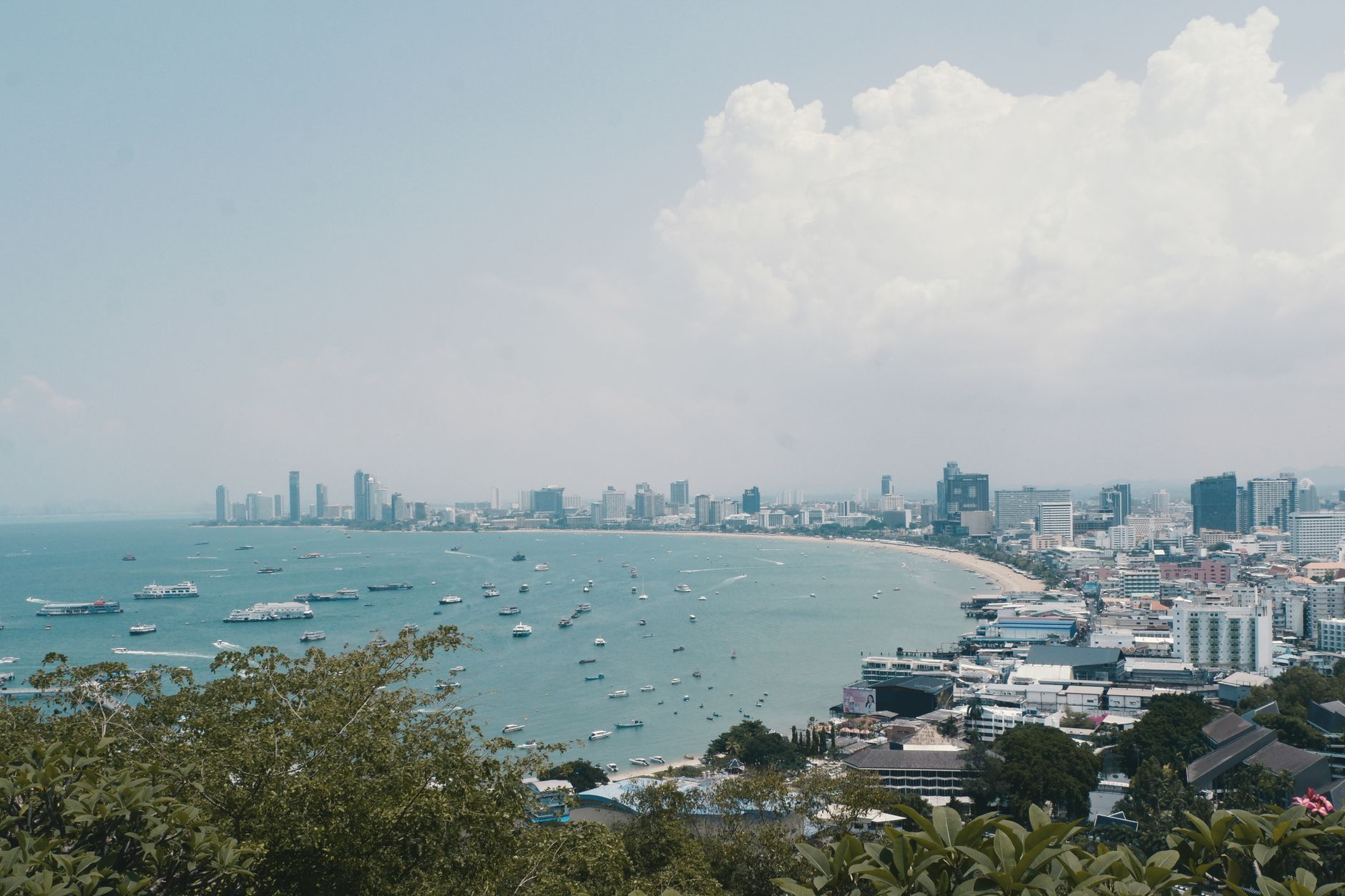
Foreign buyers researching property near Pattaya in 2026 will find EECiti on almost every developer's pitch deck. The project is real, government-backed, and at an early but measurable stage. Whether it justifies buying a condo or land in the corridor right now depends on your risk tolerance, your timeline, and a clear understanding of what has actually happened versus what is still planned.
This guide gives you the honest picture: what EECiti is, where it sits legally and physically, what foreign ownership rules apply, and what the risks are for a buyer making a decision today.
Quick answer
- EECiti is Thailand's planned 'capital city' for the Eastern Economic Corridor (EEC), located in Huay Yai, Bang Lamung district, Chonburi province - roughly between central Pattaya and U-Tapao International Airport.
- As of mid-2026, approximately 6,168 rai of land has been cleared for development within a special economic promotion zone, per Thailand Business News, August 2026.
- The master plan covers around 14,619 rai in phase one, including a central business district (CBD), government offices, medical centres, residential zones, and a sports and entertainment complex.
- A large public-private partnership (PPP) covering ten infrastructure sectors - electricity, water, roads, a central rail system, digital networks, and green spaces - structures how development is financed and delivered.
- A market sounding in July 2026 drew more than 100 private-sector parties, signalling real commercial interest but not confirmed investment commitments.
- Foreign buyers can own condominium units in the EECiti corridor under the same Condominium Act rules that apply across Thailand: up to 49% of the total floor area in any one building. EECiti's special economic promotion zone status does not by itself create new foreign freehold land rights.
Options and scenarios
As a foreign buyer looking at the EECiti corridor in 2026, you have three realistic entry points, each with a different risk and reward profile.
Scenario 1: Off-plan condominium in the Pattaya-Huay Yai corridor
This is the most common option marketed to foreign buyers today. Developers are launching projects in Bang Lamung and the Huay Yai area ahead of EECiti infrastructure being operational. You buy under the Condominium Act, with title held as a chanote - a full-title land document - for the building plot, and your unit registered on the condo title. The foreign quota (49% of saleable floor area per building) is your ceiling.
Prices in the wider Pattaya/Bang Lamung area range from roughly 50,000 to 100,000 THB per square metre for mid-range condos, rising above that for branded or beachfront projects, per market estimates as of 2026. EECiti-adjacent projects carry a speculation premium that is not yet supported by completed infrastructure.
Rental demand in this sub-market currently comes from Thai workers, budget holidaymakers, and a modest retiree segment. The remote-worker and medical-tourism tenant profiles that EECiti's CBD and medical centres are meant to generate are a future projection, not a current reality.
Scenario 2: Leasehold land or villa in the corridor
Foreigners cannot own land freehold in Thailand under the Land Code. A leasehold of up to 30 years (renewable by private agreement, though legal enforceability of renewal clauses is debated) is the standard workaround for house or villa purchases. Some developers structure a 30+30+30 option, but Thai courts have not consistently upheld the second and third terms as binding on future landowners.
Leasehold villas in the Bang Lamung and Huay Yai area are available from around 3 million to 15 million THB at the entry-to-mid level, per market estimates as of 2026. The EECiti special economic promotion zone does not override the Land Code ban on foreign freehold ownership. Always confirm this with an independent Thai lawyer before signing.
Scenario 3: Wait-and-monitor
This is a legitimate choice and arguably the most prudent one for a buyer without an urgent need to deploy capital into this specific market. EECiti's infrastructure PPP was at the market-sounding stage in July 2026. Actual construction timelines for roads, the central rail link, and utility networks are not publicly confirmed as of the time of writing. Buying before that infrastructure is contracted carries meaningful timeline risk.
A buyer who waits 18 to 36 months will have much better data: PPP contracts signed or not, the first CBD buildings rising or not, and a clearer picture of whether rental demand is materialising.
Comparison table
The table below compares the EECiti corridor with established foreign-buyer markets in Thailand. All figures are market estimates as of 2026 unless noted.
| Parameter | EECiti Corridor (Huay Yai/Bang Lamung) | Phuket (Bang Tao/Kamala) | Bangkok (Sukhumvit/Sathorn) | Koh Samui (Bophut/Maenam) |
|---|---|---|---|---|
| Foreign condo ownership | 49% quota, Condominium Act | 49% quota, Condominium Act | 49% quota, Condominium Act | 49% quota, Condominium Act |
| Entry price per sqm (est. 2026) | 50,000 - 90,000 THB | 80,000 - 180,000 THB | 100,000 - 250,000 THB | 70,000 - 140,000 THB |
| Current rental demand profile | Low to moderate (speculative) | High (tourists, retirees, remote workers) | High (expats, corporate, long-stay) | Moderate (seasonal tourists, retirees) |
| Infrastructure maturity | Very early stage (2026) | Developed | Fully developed | Moderate |
| Airport access | U-Tapao (30-40 min, expanding) | Phuket International (30-60 min by area) | Suvarnabhumi/Don Mueang (30-60 min) | Koh Samui Airport (on island) |
| Healthcare | Planned (medical centres in EECiti master plan) | Bangkok Hospital Phuket, Vachira | Bangkok's full hospital network | Limited - Bangkok Hospital Samui |
| International schools | None confirmed near EECiti as of 2026 | Several established options | Wide choice | Very limited |
| Rainy season impact | May-October, manageable | May-October, some disruption | Year-round city, low disruption | October-December worst months |
| Primary risk | Delivery delay, oversupply, speculation premium | Condo oversupply pockets, road traffic | Leasehold complexity in older buildings | Seasonality, limited liquidity |
| Who it suits best | Patient speculative buyer, 5-10 yr horizon | Holiday-home and rental yield buyer | Lifestyle and long-term capital buyer | Retiree and long-stay buyer |
Risks and mistakes
The infrastructure timeline is not guaranteed
EECiti's PPP covers ten sectors and is a large, complex procurement. A market sounding in July 2026 attracted more than 100 interested parties, which is encouraging, but market soundings are not signed contracts. Infrastructure projects of this scale in Thailand and elsewhere have routinely taken longer than initial timelines suggested. A buyer pricing a 2028 or 2029 rental income stream from an EECiti-adjacent condo should stress-test that assumption hard.
Speculation premiums can evaporate
Developers marketing near EECiti are pricing in a future that has not arrived. If the PPP procurement stalls, if the rail link is delayed, or if phase-one delivery slips by several years, properties bought at a 'capital city premium' in 2026 may take a decade to justify that price on actual fundamentals. This is not a reason to avoid the market entirely, but it is a reason to buy at a price that works even without the EECiti catalyst.
The foreign quota is a hard ceiling
In any one condominium building, foreigners collectively cannot own more than 49% of total saleable floor area under the Thai Condominium Act. In buildings where developer sales have already filled the foreign quota, you have no legal path to foreign-name freehold ownership. Before paying a deposit on any off-plan project in the corridor, confirm in writing the current foreign quota percentage remaining. Get this from the juristic person (the building's legal management entity) or from the Land Department, not only from the developer's sales team.
The EECiti special zone does not create new land rights for foreigners
This is one of the most common misunderstandings in the market. EECiti's special economic promotion zone status provides tax incentives and streamlined business licensing for companies operating within it. It does not amend the Land Code. A foreigner still cannot own land (rai, ngan, or talang wa - Thai area units) freehold. Leasehold and condo freehold remain the two realistic routes. Be cautious of any sales pitch suggesting otherwise without a specific royal decree or legislation to cite.
Oversupply risk in the wider Pattaya area
Pattaya already has a documented history of condo oversupply. Vacancy rates in lower-grade buildings remain elevated as of 2026, per market observations. EECiti adds new supply pressure to an area where rental absorption is already mixed. Higher-quality projects in well-connected locations will likely outperform, but the floor of the market carries real vacancy risk during the years before EECiti's own population arrives.
FET requirements for foreign buyers
If you are buying a condo as a foreigner, you must bring purchase funds into Thailand as a foreign currency and convert them to Thai baht through a Thai bank. The bank issues a Foreign Exchange Transaction (FET) form - sometimes still called a Thor Tor 3 form. This document is mandatory for the Land Department registration of a foreign-name condo unit. Without an FET form for the full purchase price, you cannot legally register the unit in your name. Confirm this process with your lawyer before transferring any funds.
Construction noise and incomplete surroundings
Buying near an EECiti-adjacent project in 2026 means living or renting near a construction zone for potentially a decade. This is a material quality-of-life and rental-yield consideration. Tenants who could afford to pay a premium rent will generally prefer established, quiet surroundings over active construction sites.
FAQ
What is EECiti and where exactly is it located?
EECiti is Thailand's planned administrative and commercial city for the Eastern Economic Corridor. It sits in the Huay Yai area of Bang Lamung district, Chonburi province, between central Pattaya to the northwest and U-Tapao International Airport to the southeast. The site covers approximately 14,619 rai in its phase-one master plan, with around 6,168 rai cleared for development within a special economic promotion zone as of mid-2026, per Thailand Business News, August 2026.
Can foreigners own property freehold in EECiti?
Foreigners can own a condominium unit freehold under the Thai Condominium Act, subject to the 49% foreign quota per building. EECiti's special economic promotion zone status does not grant foreign freehold land ownership. The Land Code ban on foreign land ownership applies in the EECiti corridor as it does elsewhere in Thailand.
What does the EECiti special economic promotion zone status mean for a condo buyer?
For a residential condo buyer, the zone status is largely indirect. It is designed to attract businesses and employers, which over time could generate tenant demand for nearby residential properties. It does not change condo ownership rules, transfer taxes, or land rights for individual foreign buyers.
What infrastructure is planned and when will it be ready?
The EECiti PPP framework covers electricity, water supply, wastewater, digital and telecoms networks, roads and public transport, a central rail system, waste management, firefighting systems, and green spaces. As of mid-2026, the project was at the market-sounding and procurement stage. Confirmed construction start dates for most components were not publicly announced at the time of writing. Treat any developer timeline projections as estimates, not guarantees.
Is U-Tapao airport already operational for international flights?
U-Tapao International Airport already handles a mix of flights including some international routes and charter traffic as of 2026. Expansion plans under the EEC programme aim to significantly increase capacity. The airport is approximately 30 to 40 minutes by road from the core EECiti site under normal traffic conditions, per market estimates.
What rental yield can I expect from an EECiti-corridor condo in 2026?
Current gross rental yields in the broader Pattaya and Bang Lamung area range from roughly 4% to 7% per year for well-managed condos, per market estimates as of 2026. Properties marketed specifically on the EECiti narrative have not yet demonstrated whether they can achieve or sustain the upper end of that range, because the office workers, medical staff, and CBD employees who would rent them have not yet arrived in meaningful numbers. Use the lower end of market estimates for planning purposes.
How do I transfer money into Thailand to buy a condo?
You must transfer the full purchase price from abroad in foreign currency (USD, EUR, GBP, SGD, and other major currencies are all accepted). Your Thai bank will convert the funds to baht and issue an FET form documenting the inward transfer. Keep this document - you will need it at the Land Department to register the unit in your name, and you will need it again if you later sell and wish to repatriate the proceeds.
Who should buy in the EECiti corridor and who should not?
You are a reasonable candidate if you have a 7 to 10 year investment horizon, you can absorb a scenario where EECiti delivery slips by 3 to 5 years without that undermining your finances, and you are buying a condo at a price that makes sense on current Pattaya market fundamentals rather than solely on the EECiti premium. You should not buy here if you need rental income within 2 to 3 years to justify the purchase, if you cannot afford the unit without that income, or if you are expecting short-term capital appreciation driven by EECiti news flow.
Are there international schools near EECiti?
As of 2026, there are no confirmed international schools within or immediately adjacent to the EECiti development zone. Families with school-age children would need to commute to established schools in the broader Pattaya area, which has several international school options. This is a meaningful consideration for long-stay families evaluating the corridor against Phuket or Bangkok, both of which have wider school choice.
What are the main costs of buying a condo in Thailand as a foreigner?
At the Land Department, the main costs are transfer fee (typically 2% of the appraised value, sometimes split between buyer and seller by agreement), specific business tax (3.3% if the seller has owned for fewer than 5 years, or stamp duty of 0.5% if exempt), and withholding tax paid by the seller but sometimes factored into negotiation. As a buyer, your out-of-pocket costs at transfer are typically 1% to 2% of the appraised value plus any agreed cost-sharing. Add lawyer fees and a sinking fund contribution - the sinking fund is a one-time payment into a building reserve for major repairs, typically 500 to 700 THB per square metre for standard projects.
Planning a property purchase in Thailand? Send us your requirements - the THAI.ESTATE team will reply with specific options and a safety checklist for your case.