Editorial
EEC Smart City and Port Expansion: Buying Land or Condos Near Pattaya in 2026
By THAI.ESTATE Editorial Team14 min read
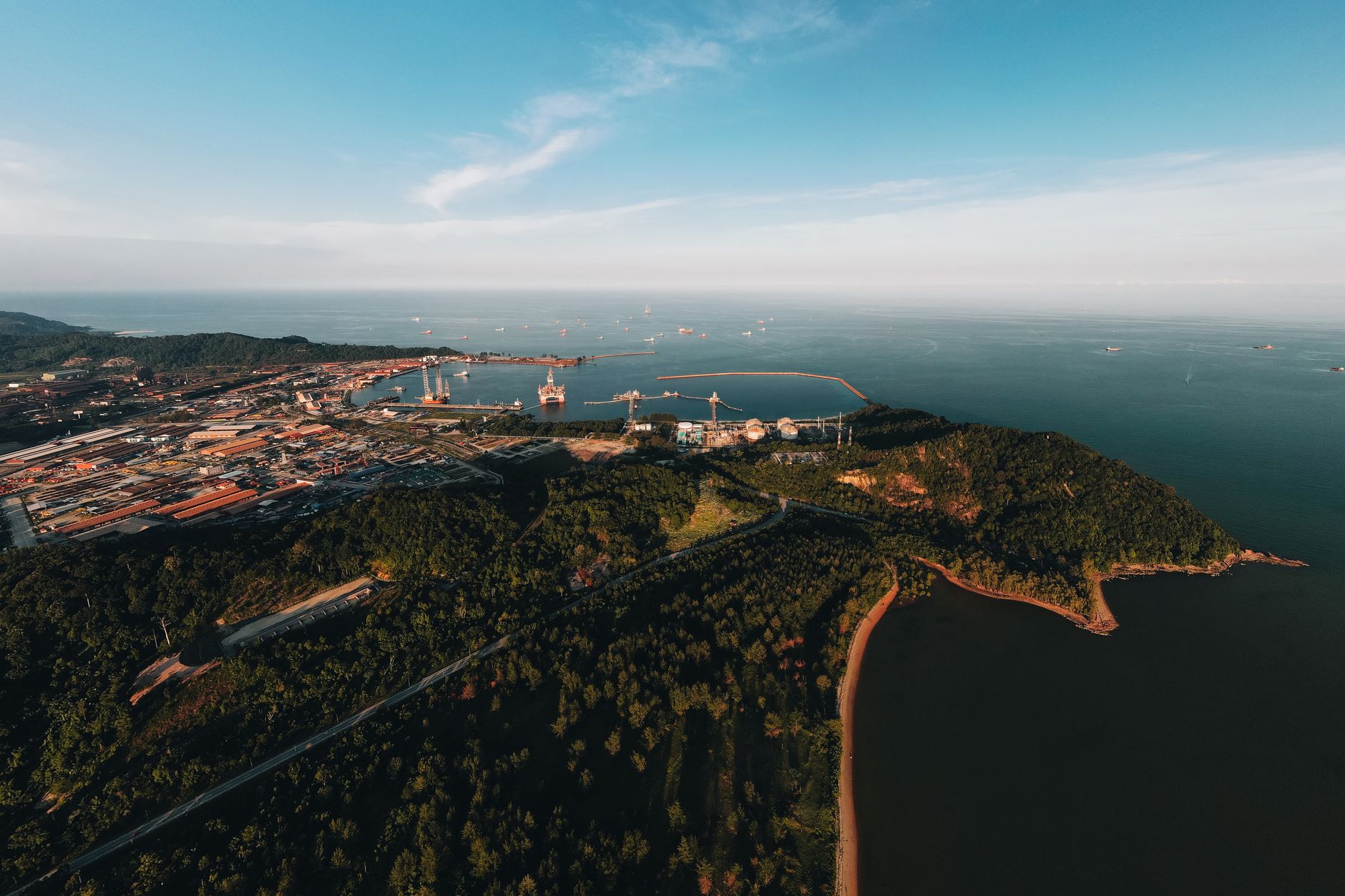
The Eastern Economic Corridor (EEC) is reshaping the residential property market along a roughly 80-kilometre stretch of Thailand's eastern seaboard, from Laem Chabang south to U-Tapao airport. If you are considering buying land or a condominium near Pattaya, the infrastructure milestones described below define your investment horizon, your location choices, and the risks you carry in the interim years.
The honest answer first: most of the transformative infrastructure is still years away. Laem Chabang Port Phase 3 and Map Ta Phut Port Phase 3 are scheduled for completion in 2029, per Pattaya Mail reporting from September 2026. The EECiti smart city in Huai Yai, a 15,000-rai (approximately 24 square kilometres) planned community, targets its first development phase to begin in 2028 and run for about five years after that. The high-speed rail link connecting Don Mueang, Suvarnabhumi, and U-Tapao is still subject to national policy decisions as of late 2026. Buying today means buying into a long-horizon story, not a near-term catalyst.
At the same time, a current land glut is handing negotiating power to buyers. Vacant plots are flooding the market as owners raise liquidity, and some sites have seen asking price reductions of 30 to 50 percent, per Pattaya Mail, September 2026. For a foreign buyer who understands the legal constraints on land ownership in Thailand and can take a patient view, this combination of discounted supply and confirmed infrastructure spending creates a specific, time-bounded entry window.
Quick answer
- EECiti smart city covers approximately 15,000 rai in Huai Yai (Laem Chabang district). First construction phase targeted for 2028, with development running roughly five years from that point.
- Laem Chabang Port Phase 3 and Map Ta Phut Port Phase 3 are both slated for completion in 2029, adding industrial and logistics workforce demand along the corridor.
- A land price glut exists right now: some plots near Pattaya are being offered at 30 to 50 percent below prior asking prices (per Pattaya Mail, September 2026), giving buyers real negotiating room.
- Foreign nationals cannot own land directly in Thailand under the Land Code. Your main options are a long-term lease (up to 30 years, extendable by agreement), a Thai company structure (which carries legal and compliance risk), or a condominium unit in freehold under the Condominium Act (foreigners may own up to 49 percent of a building's floor area).
- The high-speed rail link (Don Mueang - Suvarnabhumi - U-Tapao) remains pending policy decisions; access to the corridor currently relies on motorways 7 and 331.
- Who benefits most: patient buyers with a 7 to 15-year horizon, who want to capture infrastructure-driven appreciation rather than near-term rental yield.
Options and scenarios
Option 1: Condominium in central Pattaya or Jomtien now
This is the most legally straightforward route for a foreign buyer. Under the Condominium Act, you can own a unit in freehold (called a chanote title - the highest-grade land title in Thailand) as long as the foreign quota in that building has not been filled. Central Pattaya and Jomtien Beach have a large supply of condominiums, which keeps prices competitive but also limits short-term capital growth. As of 2026, market estimates put entry-level condominiums in Jomtien at roughly 60,000 to 90,000 baht per square metre, with beachfront or well-managed projects reaching 120,000 baht and above.
Rental demand here is primarily short-stay tourism (30 to 90 day visitors) and a growing segment of remote workers and retirees. Rental yields in Jomtien are market-estimated at 5 to 7 percent gross annually, though net figures after management fees, common-area fees (called sinking fund contributions and monthly maintenance), and vacancy periods are lower. The EEC smart city is not a direct demand driver for this sub-market in the near term; its relevance is longer-dated.
Trade-off: Pattaya has a well-documented oversupply of condominiums. New supply continues to be added. Without EEC workers actually moving to the area in numbers (which happens after 2028 at the earliest), absorption of this supply depends on tourism and retiree demand alone.
Option 2: Condominium or land lease in the Laem Chabang to Huai Yai corridor
This is the area most directly shaped by the EECiti project and port expansions. Huai Yai sub-district sits between Laem Chabang and the Pattaya urban area. Land prices here vary widely depending on road access, chanote title quality, and proximity to the designated EECiti zone. The current glut means motivated sellers exist, but due diligence on title is essential: not all plots in the corridor have clean chanote title, and some carry encumbrances or are classified as agricultural land that restricts development.
For a foreign buyer, a 30-year lease (registered at the Land Department, not just a private agreement) over a plot in this area, with a house or small commercial structure built on it, is one practical structure. The lease gives you use-rights but not ownership; renewal beyond 30 years depends on the landowner. Always have a Thai-qualified lawyer register the lease at the Land Department.
Condominium supply in this specific sub-corridor is thinner than in Pattaya city. What exists tends to be purpose-built for industrial workers and is not well-suited to foreign residential buyers. New residential projects targeting EEC workers are under planning by several developers, and those are likely to begin pre-sales closer to 2027 to 2028 as EECiti bidding (expected mid-2027 per Pattaya Mail, September 2026) clarifies scale.
Trade-off: You are buying ahead of demand. Rental income in the interim period will be limited. Construction noise corridors will be significant from 2028 onward.
Option 3: Land (via Thai company) in a buffer zone between Pattaya and U-Tapao
Some buyers use a Thai limited company to hold land title. This allows formal land ownership but introduces company governance risk, nominee-shareholder scrutiny by Thai authorities, and ongoing compliance costs. Thai law is clear that using Thai shareholders as nominees to circumvent the Land Code is illegal. This guide does not recommend this structure without independent legal advice specific to your situation. It is mentioned here because it is common in practice and you will encounter it.
The southernmost part of the corridor, near U-Tapao airport (in Rayong province), is where the MRO facility and runway expansion are active. Runway 1 at U-Tapao was reported at 13.8 percent completion as of September 2026 per Pattaya Mail. Residential demand near U-Tapao is currently very thin for non-industrial buyers.
Option 4: Wait and buy after 2027 to 2028 milestones
This is a legitimate strategy. The EECiti operator selection (2028) and port completions (2029) are defined milestones. Once they are confirmed, residential demand evidence will be clearer and lenders, developers, and governments will have made commitments that reduce uncertainty. The downside is that prices in the best-positioned sub-areas will likely have recovered from current discounted levels by then. The 30 to 50 percent price reductions visible now are a feature of the current uncertainty window.
Comparison table
| Parameter | Central Pattaya / Jomtien condo | Laem Chabang - Huai Yai corridor | U-Tapao south corridor |
|---|---|---|---|
| Foreign ownership route | Freehold condo (Condominium Act) | 30-year registered lease; condo where available | 30-year lease; Thai company (risk) |
| Indicative price per sqm (2026 estimate) | 60,000 - 120,000 baht | 40,000 - 70,000 baht (condo); land 5,000 - 30,000 baht/sqm | Land 3,000 - 15,000 baht/sqm; minimal condo supply |
| Current rental demand | Tourism, retirees, remote workers | Very limited; industrial workers | Near-zero for residential |
| EEC impact timeline | Indirect; post-2029 | Direct; first effects 2028 to 2030 | Direct; post-2028 airport expansion |
| Oversupply risk | High (condo glut now) | Low supply, but low demand too | Very low supply; demand unproven |
| Healthcare access | Bangkok Pattaya Hospital (private, international-standard) | 20 to 35 min drive to Pattaya hospitals | 30 to 50 min drive to Pattaya or Rayong |
| International schools | Several options within Pattaya city | Limited; commute required | Very limited |
| Walkability | Moderate (Beach Road area) | Low | Very low |
| Rainy season character (May-Oct) | Functional; tourism drops, fewer noise issues | Heavy rain, limited services | Heavy rain, very limited services |
| Who should buy here | Retirees, holiday-home buyers, yield-seekers | Long-horizon investors, land speculators with legal advice | Industrial-sector investors; not general residential buyers |
Risks and mistakes
Risk 1: Confusing the promise with the timeline. EECiti is real and funded at 72 billion baht for utilities and infrastructure alone per Pattaya Mail, September 2026. But the operator has not yet been selected (bidding expected mid-2027). A project of this scale takes a decade to generate residential population density. Buyers who expect rental income within three to five years from EEC-adjacent properties will likely be disappointed.
Risk 2: Title quality on discounted land. The current land glut includes plots being offloaded by owners under financial pressure. Some of these plots carry problems: chanote title with encumbrances, Nor Sor 3 Kor title (a lower-grade document that lacks full survey precision), land classified as agricultural or protected forest that restricts construction, or plots inside EEC special planning zones with use restrictions. Always verify title at the relevant Land Department office before any purchase agreement is signed.
Risk 3: The high-speed rail timeline is not confirmed. The rail link between Don Mueang, Suvarnabhumi, and U-Tapao is one of the most-cited reasons buyers pay premiums near this corridor. As of late 2026, it remains subject to national policy decisions. Do not base a purchase price on rail-corridor logic until a concession contract is signed.
Risk 4: Foreign quota fill-rate in condominiums. In popular Pattaya and Jomtien buildings, the foreign freehold quota (49 percent of total floor area) is sometimes already filled. A developer or agent may offer you a unit in the Thai quota, meaning you would hold it under a Thai company name rather than in your own name. This is a materially different legal position. Always verify the foreign quota status with the juristic person (the building management entity, legally constituted under the Condominium Act) before committing funds.
Risk 5: Buying before EECiti zoning is finalised. EECiti covers 15,000 rai and involves PPP utilities managed across 10 services. Exact sub-zone designations - which areas are residential, commercial, industrial, or green buffer - will become clearer once the operator is selected in 2028. Plots you buy today in or adjacent to the zone could fall inside a use classification that limits or prohibits residential development.
Risk 6: Transferring money incorrectly. For a foreign buyer purchasing a condominium in freehold, Thai law requires that funds are transferred from abroad in foreign currency and that a Foreign Exchange Transaction (FET) form - also called a Thor Tor 3 form - is issued by the receiving Thai bank. Without this document, you cannot register foreign ownership of the unit at the Land Department. Always transfer from your overseas account, never from a Thai bank account, for the amount covering the purchase price.
Risk 7: Construction noise corridors from 2028 onward. If you buy in or near the Huai Yai EECiti zone before construction begins, plan for a years-long period of heavy construction activity once the 2028 first phase starts. Properties within one to two kilometres of active construction sites will have noise, dust, and disrupted road access. This directly affects resale values and rental appeal during that window.
FAQ
What is EECiti and where exactly is it located?
EECiti is a planned smart city covering approximately 15,000 rai (about 24 square kilometres) in Huai Yai sub-district, in the Laem Chabang area of Chonburi province. It sits between the industrial port zone of Laem Chabang and greater Pattaya. The first development phase is targeted to begin in 2028 and is planned to run for approximately five years. Infrastructure and utilities (worth 72 billion baht) will be managed under a public-private partnership. Operator bidding is expected mid-2027 and selection in 2028.
Can a foreign national buy land near Pattaya or in the EEC zone?
Foreign nationals cannot own land directly under Thailand's Land Code. Your main legal options are: a registered 30-year lease at the Land Department (giving use rights but not ownership), a condominium unit in freehold under the Condominium Act, or structures involving a Thai company (which carries legal risk and requires independent legal advice). The EEC zone does not create a special foreign land-ownership exception for residential buyers.
Is now a good time to buy land near the EEC corridor given the price drops?
The current buyer-favorable conditions are real. Some plots are being offered at 30 to 50 percent below prior asking prices as owners sell to raise liquidity, per Pattaya Mail, September 2026. However, discounted pricing does not automatically equal good value. Title quality, use-zone classification, EECiti sub-zone designations (not yet finalised), and your ability to hold the asset through a 7 to 12-year development horizon all matter more than the headline discount.
When will the Laem Chabang and Map Ta Phut port expansions be completed?
Both Laem Chabang Port Phase 3 and Map Ta Phut Port Phase 3 are slated for completion in 2029, per Pattaya Mail, September 2026. These expansions will increase logistics and industrial workforce numbers along the eastern seaboard corridor, which is the primary residential demand driver the EEC generates.
What is a chanote title and why does it matter for buyers?
A chanote (full title deed, Nor Sor 4 Jor) is the highest-grade land title in Thailand. It is precisely surveyed using GPS coordinates and registered with the Land Department. A chanote plot can be sold, mortgaged, or leased with full legal standing. Lower-grade titles such as Nor Sor 3 Kor carry survey uncertainty and may not be usable as loan collateral. Always insist on chanote title for any land or condo unit purchase.
What is a FET form and why do I need one for a condo purchase?
A Foreign Exchange Transaction (FET) form, sometimes called a Thor Tor 3, is issued by a Thai bank when it receives an inbound wire transfer in foreign currency that is then converted to baht. For foreign freehold ownership of a condominium, you must present this form at the Land Department to prove funds came from abroad. Without it, the Land Department will not register you as the foreign freehold owner. Transfer the purchase price from your overseas account directly to the developer's Thai bank account, and request the FET form from the receiving bank.
What rental demand should I expect near the EEC corridor today versus after 2029?
Today, rental demand along the Laem Chabang to Huai Yai corridor is thin. The industrial workforce that exists tends to use employer-arranged housing or low-cost local rentals. After 2029, when port expansions complete and EECiti first-phase construction begins attracting contractors, engineers, and eventually residents, demand for mid-range and quality residential units should increase. Central Pattaya and Jomtien have established rental markets now, oriented toward tourism, retirees, and remote workers.
Is the high-speed rail link confirmed for the EEC corridor?
As of late 2026, the high-speed rail connecting Don Mueang, Suvarnabhumi, and U-Tapao airports remains subject to national policy decisions and does not yet have a signed concession contract. Current road access to the corridor uses motorways 7 and 331. Do not factor rail connectivity into your purchase logic until a contract is publicly confirmed.
Who should not buy property in the EEC corridor right now?
Buyers who need rental income within one to three years should avoid the Laem Chabang to U-Tapao corridor outside of Pattaya city itself. Buyers who cannot hold an asset through construction disruption from 2028 onward should avoid plots adjacent to the EECiti zone. Buyers unfamiliar with Thai land title classifications and legal structures should not attempt land purchases without a qualified, independent Thai property lawyer.
What due diligence steps are essential before buying near EEC?
First, verify the land title at the Land Department: confirm it is chanote grade and free of encumbrances. Second, check the land-use classification under the Chonburi City Plan and the EEC Special Zone regulations to confirm your intended use is permitted. Third, if buying a condominium, verify the foreign quota availability with the building's juristic person. Fourth, confirm that your purchase funds will be transferred from abroad in foreign currency so a FET form can be issued. Fifth, hire an independent Thai-qualified lawyer (not the developer's lawyer) to review all contracts before you sign.
Planning a property purchase in Thailand? Send us your requirements - the THAI.ESTATE team will reply with specific options and a safety checklist for your case.