Editorial
Eastern Bangkok Land Surge: What It Means for Foreign Condo Buyers in 2026
By THAI.ESTATE Editorial Team14 min read
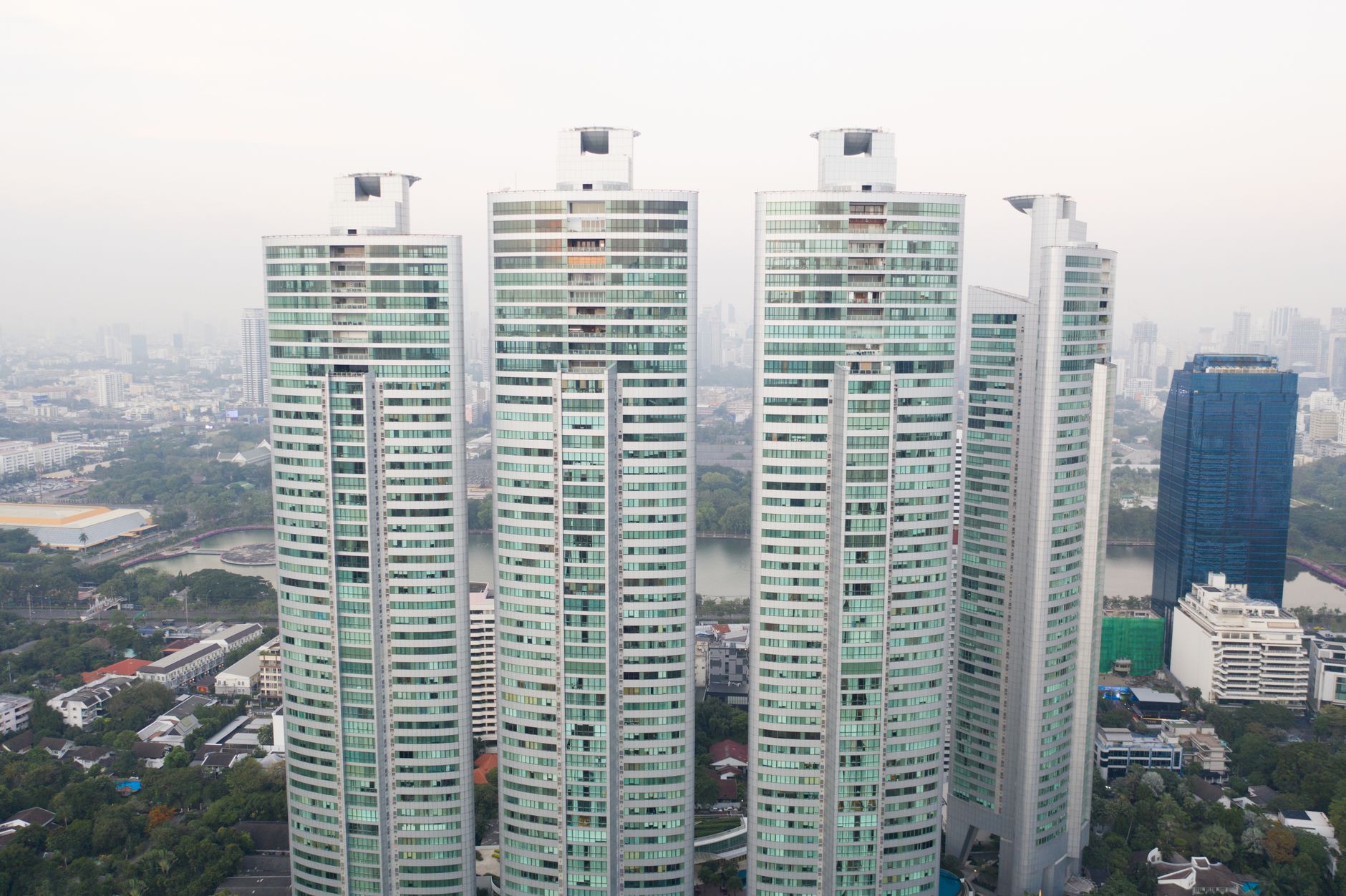
Foreign condo buyers in Bangkok are watching a specific number: 39% year-on-year land price growth in the Phra Khanong - Bang Na - Suan Luang - Prawet corridor, recorded in Q3 2026 (per Bangkok Post, October 2026). That figure is the fastest land price rise in Greater Bangkok. It changes the math on entry costs, yield expectations, and timing for anyone considering a condo purchase in eastern Bangkok.
This guide explains what a land price surge in one urban corridor actually means for a foreign buyer, how it filters through to condo prices, where genuine demand comes from, and how to read the signals before the market reprices again.
Quick answer
- Land prices in the Phra Khanong - Bang Na - Suan Luang - Prawet corridor rose 39% year-on-year in Q3 2026, the sharpest increase in Greater Bangkok (Bangkok Post, October 2026)
- The surge is driven by two forces: improved transport links (BTS extensions, expressway upgrades) and large-scale mixed-use developments already under construction
- The Eastern Economic Corridor (EEC) - Thailand's flagship industrial and tech investment zone east of Bangkok - is generating structural demand that is expected to run for multiple decades, not just one property cycle
- CBRE confirmed strong upper-market activity in H1 2026, with luxury and super-luxury sales accounting for 62% of total market activity in the segments they track (CBRE, October 2026)
- Rising land costs compress developer margins and push launch prices up: buyers who enter before the next wave of mixed-use supply is priced into the market face lower entry costs than buyers who wait
- Foreign buyers in Thailand can legally own a condo unit (under the Condominium Act) if the building's foreign quota - maximum 49% of total floor area - is available
Options and scenarios
What is the Phra Khanong - Bang Na - Suan Luang - Prawet corridor?
This corridor stretches south-east from central Bangkok along Sukhumvit Road and its extensions, ending near the Bang Na expressway junction and beyond. It connects the BTS Sukhumvit line's outer stations (On Nut, Bang Na, Udom Suk, Bearing) with areas previously considered mid-fringe. As of 2026, several large mixed-use projects - combining offices, retail, and residential towers - are under construction or in the planning stage along this belt.
The area sits between two magnets: the inner city (Sukhumvit, Asok) to the north-west, and the EEC industrial and logistics hub (Chonburi, Rayong) to the east. This geographic position is the primary reason land here is re-rating faster than elsewhere.
Why do land prices matter to a condo buyer?
A foreign buyer buying a finished condo unit does not purchase land directly. Under Thai law, a condo buyer acquires freehold ownership of a specific unit and a proportional share of common areas - not the land title (chanote) beneath the building. The land title (a chanote is the highest-grade Thai land document, confirming full ownership) stays with the juristic person - the condominium's legal management body.
However, land cost is the largest single variable in developer pricing. When land in a corridor rises 39% in one year, developers launching new projects must either absorb lower margins or increase launch prices. Both outcomes affect you:
- If developers absorb the cost: supply may shrink, as fewer projects become viable. Less supply with stable demand supports resale values on existing units you already own.
- If developers raise launch prices: new condo units in the corridor cost more per square metre at launch. Buyers who purchased one or two years earlier see paper gains. Buyers entering now pay higher prices.
Who is generating demand in eastern Bangkok?
Demand in this corridor comes from three distinct groups:
EEC-linked professionals. The Eastern Economic Corridor covers three provinces east of Bangkok (Chachoengsao, Chonburi, Rayong) and has attracted manufacturing, logistics, aviation MRO (maintenance, repair and overhaul), and digital economy investment. Executives and technical workers based in EEC facilities commute through or reside in eastern Bangkok. As of 2026, this is a multi-year pattern, not a temporary spike.
Bangkok upgraders seeking new mixed-use nodes. Thai and expatriate households priced out of Thonglor and Ekkamai are moving to Phra Khanong and On Nut, where BTS access is direct and rents are lower. Demand here is urban residential, not purely speculative.
Foreign investors targeting the luxury and branded segment. CBRE reported in October 2026 that it expects continued growth in Thailand's luxury and super-luxury segment through 2027, with prime central Bangkok, Phuket, and Pattaya as the main markets. While luxury condo supply in eastern Bangkok skews lower-priced than the prime central Sathorn and Lumpini districts, branded and upper-mid projects in the Bang Na area are actively attracting regional buyers from China, Hong Kong, Singapore, and the Middle East.
Is this the right time to enter, or has the window closed?
This is the practical question. The 39% land price jump is a lagging signal - it tells you where prices were in Q3 2026, not where they will be in Q1 2027. Entry timing in a corridor undergoing infrastructure-led repricing depends on three factors:
- Where new supply is in its launch cycle. When a large mixed-use development announces a residential tower, launch prices are typically set before full construction cost is clear. Early-release units in a pre-sale phase can price below where the secondary market lands at handover. If the corridor's next wave of projects has not yet formally launched, an entry window may still exist.
- Yield compression versus capital growth trade-off. Rising land and launch prices compress gross rental yield (annual rent divided by purchase price). A condo that yielded 5-6% (market estimate, 2024-2025) in Phra Khanong at lower base prices may yield 4-4.5% (market estimate, 2026) if purchase prices have risen faster than rents. Capital growth expectations must compensate. If you are a yield-first buyer, higher entry prices in a surging corridor require a harder look at the numbers.
- Remaining foreign quota. In buildings where foreign demand is strong, the 49% foreign quota fills faster. Once full, foreign buyers can only purchase units from other foreign sellers on the secondary market, often at a premium. Check quota availability before committing.
Phra Khanong versus Bang Na versus Suan Luang: sub-area differences
Phra Khanong (BTS On Nut to BTS Phra Khanong) is the most walkable part of the corridor. Direct BTS access, a concentration of cafes, co-working spaces, and international supermarkets have made it a preferred address for remote workers and young expatriate families. Condo prices as of 2026 range from approximately 90,000 to 150,000 THB per square metre for newer freehold units (market estimates, 2026). Rental demand is consistent year-round.
Bang Na (along the Bang Na expressway axis) is more car-dependent but hosts larger land parcels suitable for mixed-use. This is where the biggest new developments are planned. Entry prices for newer projects sit at approximately 70,000 to 120,000 THB per square metre (market estimates, 2026), lower than Phra Khanong because BTS access requires a short transfer. The trade-off: more upside if the planned infrastructure delivers.
Suan Luang and Prawet are the outer fringe of the corridor. BTS access is limited as of 2026, with extensions planned but not yet operational. Prices are lower - approximately 50,000 to 80,000 THB per square metre (market estimates, 2026) - but so is current rental demand. This is the highest-risk, highest-potential-upside sub-area. Investors here are making a pure infrastructure bet.
Comparison table
| Parameter | Phra Khanong | Bang Na | Suan Luang - Prawet |
|---|---|---|---|
| BTS access (2026) | Direct (On Nut, Phra Khanong stations) | Partial (Bang Na station; some areas car-only) | Limited (extensions planned, not operational) |
| Indicative price per sqm (2026, market estimates) | 90,000 - 150,000 THB | 70,000 - 120,000 THB | 50,000 - 80,000 THB |
| Rental demand profile | Remote workers, young expats, Thai upgraders | EEC commuters, Thai families, logistics workers | Speculative; limited current tenant pool |
| Walkability | High | Low to medium | Low |
| Land price growth driver | Mixed-use supply, BTS proximity | Large-scale developments, expressway access | Infrastructure pipeline bets |
| Foreign quota competition | High in established buildings | Medium | Low |
| Risk level for foreign buyer | Medium | Medium-high | High |
| Who should buy here | Yield-focused, risk-aware investors; long-stay residents | Capital-growth investors; EEC-sector buyers | Investors with 5-10 year horizon; high risk tolerance |
| Who should not buy here | Buyers needing immediate high yield at 2026 prices | Buyers needing walkability or immediate rental income | Buyers needing liquidity or short hold periods |
Risks and mistakes
Confusing land price growth with condo price certainty
Land prices rising 39% in one year (Bangkok Post, Q3 2026) does not guarantee finished condo unit prices rise by the same percentage. Developers set launch prices at their discretion. Oversupply in a specific building typology (small studios, for example) can hold unit prices flat even as land underneath reprices. Treat land price data as a directional signal, not a guarantee of unit-level returns.
Buying off-plan without understanding Thailand's payment structure
Thailand does not operate a traditional escrow system for foreign real estate buyers. Off-plan payments are made directly to the developer in stages, with no independent third-party holding funds on your behalf. If a developer faces financial difficulty, recovering staged payments is difficult and slow. Mitigate this by checking the developer's track record - specifically, how many projects they have delivered on time - before committing a deposit.
Overestimating yield after fees
Gross rental yield (the number most often quoted) ignores management fees, common area fees (juristic person fees, typically 40-80 THB per sqm per month in mid-market buildings), property tax under the Land and Buildings Tax Act (0.02% of appraised value for residential properties used by owners; higher for rental), and vacancy periods. Net yield in eastern Bangkok as of 2026 is likely 2-4% for most new units at current entry prices (market estimate). If you need more than that from rental income alone, this corridor - at 2026 prices - may not meet your target.
Ignoring the foreign quota rule
The Condominium Act caps foreign ownership at 49% of a building's total floor area. In buildings in Phra Khanong with established foreign tenant bases, this quota is often already significantly used. Buying a resale unit where the quota is nearly full means your eventual buyer pool for resale is also restricted to foreigners (or Thai buyers willing to buy in their own name). This limits liquidity. Always verify the current foreign ownership percentage with the juristic person's office before signing.
Missing the FET transfer requirement
A Foreign Exchange Transaction (FET) certificate - a document issued by a Thai bank confirming that foreign currency was converted to Thai baht and transferred into Thailand for the specific purpose of purchasing property - is mandatory for a foreigner to register condo ownership at the land office. If you transfer funds in the wrong structure (for example, from a Thai bank account that received baht directly without an FET record), you may not be able to complete the title transfer. Set up this documentation before any funds move.
Assuming mixed-use development always benefits nearby condo owners
Large mixed-use projects bring construction noise and dust for 3-5 years during the build phase. If you purchase a unit adjacent to a planned development to benefit from future foot traffic and amenity, you will also live through - or rent through - the construction period. Rental demand in affected buildings can soften temporarily. Price this in.
FAQ
How much did land prices rise in eastern Bangkok in 2026?
In Q3 2026, land prices in the Phra Khanong - Bang Na - Suan Luang - Prawet corridor rose 39% year-on-year, the fastest increase in Greater Bangkok, driven by transport links and large-scale mixed-use developments (Bangkok Post, October 2026).
Can a foreigner buy a condo in the Phra Khanong or Bang Na area?
Yes. Under Thailand's Condominium Act, a foreign national can own a condo unit in freehold, provided the building's foreign ownership quota is not exceeded. The quota caps foreign ownership at 49% of total floor area in any registered condominium building. You must also obtain a Foreign Exchange Transaction (FET) certificate from a Thai bank confirming that funds were transferred into Thailand in foreign currency and converted to Thai baht for the property purchase.
What is the EEC and why does it affect Bangkok condo demand?
The Eastern Economic Corridor (EEC) is a government-designated special investment zone covering three provinces east of Bangkok: Chachoengsao, Chonburi, and Rayong. It targets industries including automotive, aviation, digital, and medical. EEC-linked businesses generate demand for residential accommodation along Bangkok's eastern corridors, because executives and technical staff working in EEC facilities often prefer to live in Bangkok and commute. This demand is structural, tied to multi-decade investment commitments, not a short-term trend.
What rental yield can a foreign buyer expect in eastern Bangkok in 2026?
At current entry prices (2026), gross rental yields in Phra Khanong and Bang Na are approximately 4-6% for well-located units (market estimate). After accounting for management fees, common area charges, property tax, and vacancy, net yields are likely 2-4% (market estimate, 2026). Rising land and launch prices have compressed yields compared to three to four years ago. Capital growth expectations now carry more of the investment case than income alone.
What does the luxury property data mean for eastern Bangkok specifically?
CBRE reported in October 2026 that luxury and super-luxury sales accounted for 62% of total tracked market activity in H1 2026, with growth expected through 2027 in prime Bangkok, Phuket, and Pattaya. Eastern Bangkok is not the luxury epicentre - that remains Sathorn, Lumpini, and Thonglor. However, branded and upper-mid projects in Bang Na and Phra Khanong benefit from the same foreign-buyer confidence driving the luxury segment, as buyers seeking lower absolute price points move east.
Is Bang Na good for investment in 2026?
Bang Na offers lower entry prices than Phra Khanong and higher potential for capital growth if planned infrastructure and mixed-use developments deliver. The trade-offs are lower walkability, partial BTS coverage as of 2026, and a smaller current tenant pool. It suits capital-growth investors with a medium to long hold period (five years or more) who can tolerate slower rental income in the early years.
What does a 39% land price surge mean for the timing of a condo purchase?
A 39% annual land price jump signals that the market is mid-repricing, not at the start of a cycle. Buyers who entered the corridor in 2024-2025 captured lower land-cost conditions. Buyers entering in late 2026 or 2027 face higher embedded costs in new launches. The question is whether remaining upside - driven by EEC demand, infrastructure completion, and mixed-use amenity - justifies the higher entry price. This is not a simple yes or no; it depends on your hold period, yield requirements, and specific unit choice.
What is the sinking fund and should a foreign buyer care about it?
A sinking fund is a one-time payment made when you purchase a condo unit, held in reserve by the juristic person (the condominium's legal management body) for major future repairs such as roof replacement, lift overhaul, or facade work. It is typically 500-1,000 THB per square metre at purchase (market estimates). If the building's sinking fund is underfunded - a common problem in older Thai condominiums - future special assessments can be levied on all unit owners. Ask for the sinking fund balance before you buy.
Phuket or eastern Bangkok: which is better for a foreign buyer in 2026?
These serve different buyer profiles. Eastern Bangkok suits buyers who want an urban residential or rental product, year-round tenant demand, BTS accessibility, and exposure to EEC-driven structural growth. Phuket suits buyers who want a resort or lifestyle product, seasonal holiday rental income, and a different liquidity profile. Neither is universally better. Bangkok's eastern corridor offers lower absolute prices per unit than Phuket's established beach zones, and stronger year-round rental demand. Phuket offers lifestyle value and strong short-term rental returns in peak season. Choose based on your hold strategy and income needs, not on which market is growing faster at a specific moment.
What legal documents should a foreign buyer check before purchasing in this corridor?
The four documents that matter most are: the title deed (chanote) for the land under the building; the condominium registration certificate confirming the building is legally registered under the Condominium Act; the foreign ownership percentage certificate from the juristic person confirming available quota; and your own FET certificate confirming funds were properly transferred from abroad. A Thai property lawyer - engaged by you, not by the developer - should verify all four before you sign any purchase agreement.
Planning a property purchase in Thailand? Send us your requirements - the THAI.ESTATE team will reply with specific options and a safety checklist for your case.