Editorial
Can Foreigners Buy a Freehold Condo in Thailand? 2026 Guide
By THAI.ESTATE Editorial Team15 min read
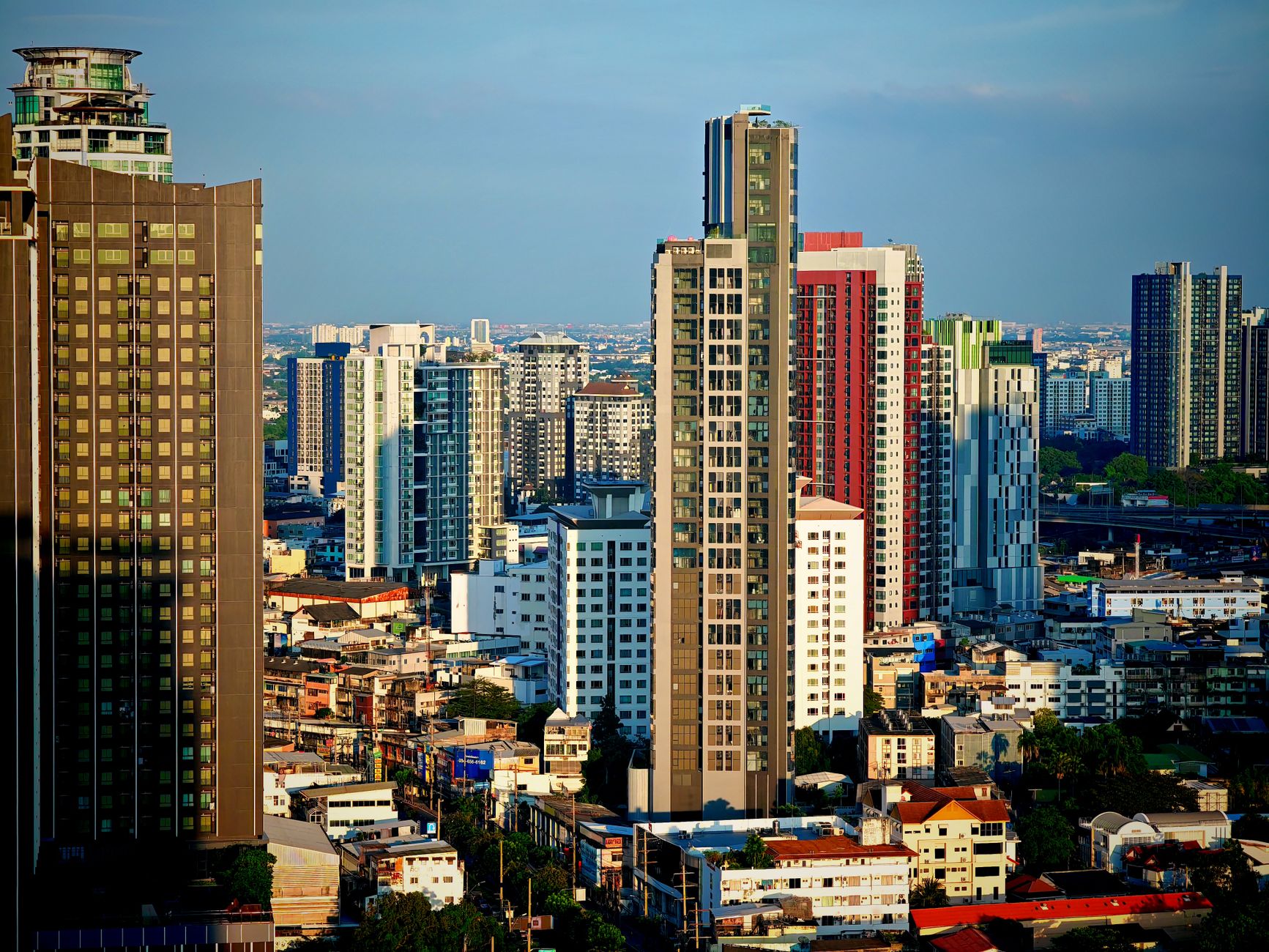
Yes, foreigners can buy freehold condominium units in Thailand under the Condominium Act. This is the only property type where Thai law gives a non-resident full, registered ownership of real estate in their own name. However, strict quota rules apply, and getting the purchase wrong can cost you both the unit and your money.
This guide explains exactly how the freehold condo route works, what the quota means in practice, how it compares to a leasehold purchase, and which buyer profiles each path suits best.
Quick answer
- Yes, foreigners can own a freehold condo unit in Thailand under the Condominium Act (B.E. 2522, 1979, as amended)
- The foreign quota limits foreign freehold ownership to 49% of a building's total sellable floor area - not 49% of units by number
- You must bring purchase funds from outside Thailand in a foreign currency and obtain a Foreign Exchange Transaction (FET) certificate from the receiving Thai bank - this document is mandatory for title transfer and future resale proceeds repatriation
- Ownership is registered on the chanote (the highest-grade Thai title deed, also called Nor Sor 4 Jor), which gives you full legal title
- Freehold condo ownership can be inherited and sold freely - no renewal clauses, no landlord consent
- As of 2026, leasehold condos and leasehold land-and-villa packages are the only realistic alternative for foreign buyers who cannot use the freehold quota
- Transfer fees and taxes at the Land Office total roughly 2-6.3% of the registered price, depending on the seller's holding period and whether the property is new or resale
Options and scenarios
Option 1: Freehold condo purchase (Condominium Act, Section 19)
This is the direct, legally clean route. You buy a unit in a registered condominium building, and your name appears on the chanote as the sole owner.
How the 49% quota works in practice
The Condominium Act caps total foreign freehold ownership at 49% of the building's total floor area, not the number of units. In practice, developers track this by floor area. Before you reserve a unit, ask the juristic person (the building's management company, which acts as the legal administrator of the common areas and building affairs) for a written confirmation that quota is available for your specific unit.
Quota is checked at the time of title transfer at the Land Office, not at the time of reservation or contract signing. If quota fills up between your reservation and your transfer date, the Land Office will refuse the transfer. Developers typically manage this risk by issuing a quota reservation letter, but its legal force depends on the wording. Get this confirmed in writing.
The FET certificate requirement
FET stands for Foreign Exchange Transaction certificate. When you send money from abroad to buy a Thai condo, the receiving Thai bank issues an FET document that records the incoming foreign currency amount, the equivalent baht amount, and your name as the recipient. You need this document to:
- Complete the title transfer at the Land Office
- Prove the source of funds for foreign ownership purposes
- Repatriate sale proceeds when you sell
Each FET must match the purchase price. If you transfer money in multiple tranches (for a payment schedule on a new-build), you need an FET for each tranche. Keep all FET documents permanently - you cannot easily recreate them.
Funds held in a Thai bank account that were originally transferred from abroad may still qualify, but you must be able to trace the foreign origin. Cash deposited locally, Thai salary (unless you have a work permit and income tax records), or money borrowed in Thailand does not qualify for FET purposes.
Costs at transfer
As of 2026, the standard costs at the Land Office for a condo transfer are:
- Transfer fee: 2% of the appraised value (the Land Department's assessed value, which is usually lower than the market price)
- Stamp duty: 0.5% of the registered sale price or appraised value, whichever is higher - payable only if the seller has held the property for more than 5 years or if the unit is sold below the threshold that triggers specific business tax
- Specific Business Tax (SBT): 3.3% of the registered or appraised price (whichever is higher) if the seller has held the property for 5 years or less
- Withholding tax: calculated on a sliding scale based on the seller's holding period and the appraised value; for a company seller, it is a flat 1% of the registered or appraised price
Transfer fee is typically split 50/50 between buyer and seller by market convention, but this is negotiable. Everything else is technically the seller's liability, though developers often pass some costs to the buyer in new-build contracts. Read the contract carefully.
Option 2: Leasehold condo or leasehold villa
If the freehold quota is exhausted - which happens regularly in popular buildings in Phuket, Pattaya and Bangkok's central districts - developers and resale sellers offer leasehold units instead.
What a registered 30-year lease gives you
A leasehold agreement registered at the Land Office under the Civil and Commercial Code gives you the right to occupy and use the property for the registered term (maximum 30 years per registration under Thai law). This is a contractual right, not ownership. Your name does not appear on the chanote as owner.
A registered lease binds the current landowner. If the land is sold to a new owner, Thai law (Civil and Commercial Code, Section 569) provides that a registered lease transfers with the land - meaning the new owner must honor your lease. This is genuine legal protection, not marketing.
What the '90-year lease' marketing pitch actually is
Developers frequently advertise '90-year leases' by structuring three consecutive 30-year terms. The first 30 years is a registered lease. The second and third 30-year periods are written as contractual renewal rights in the lease agreement.
Here is the critical legal distinction: only the first 30 years is a registered interest at the Land Office. The renewal clauses are contractual promises between you and the original landlord. If the landlord dies, the company dissolves, or the land is sold, the new party may or may not honor the renewal. Thai courts have generally upheld renewal obligations where they are clearly worded and the lease is properly registered, but enforcement requires legal action and outcomes are not guaranteed.
Ask the seller's lawyer to confirm in writing: who specifically has the legal obligation to execute the renewal? Is that obligation binding on heirs and assignees? Is there a penalty clause if renewal is refused? If the answers are vague, treat the second and third 30-year periods as aspirational, not contractual certainty.
Inheritance and transfer of leasehold
A registered lease is inheritable in Thailand - your heirs can continue your remaining lease term. However, leaseholds are generally harder to transfer or sell than freehold units, because buyers face a shorter remaining term with each passing year and cannot obtain FET-backed freehold title. Resale pools for leasehold units are smaller, and pricing typically reflects this.
Option 3: Thai company structure for land or villa (use with caution)
Some foreign buyers have historically purchased land or villa freehold by setting up a Thai limited company (which can own land) and holding shares in that company. Thai law prohibits foreign nationals from using nominee shareholders (Thai nationals who hold shares on behalf of a foreigner) specifically to evade land ownership restrictions. The Land Code and the Foreign Business Act make this practice illegal.
Authorities have investigated and prosecuted nominee structures. As of 2026, this route carries significant legal risk, including potential land confiscation. The THAI.ESTATE Editorial Team does not recommend nominee company structures and flags this route as a legal risk, not a viable alternative.
A legitimately operating Thai company - one with real Thai shareholders who contribute capital and participate in the business - can own land, but that is a different scenario requiring corporate legal advice specific to your situation.
Comparison table
| Parameter | Freehold condo (foreign quota) | Leasehold condo or villa (30-year registered) | Thai company land ownership |
|---|---|---|---|
| Legal ownership | Full title on chanote in your name | Contractual right to occupy; not on chanote as owner | Company owns; you hold shares |
| Maximum term | Indefinite (you own it) | 30 years registered; renewals are contractual only | Indefinite if company is valid |
| Foreign quota limit | 49% of building floor area | No quota limit for leasehold | No quota issue |
| FET certificate required | Yes, mandatory for transfer | No, but advisable for repatriation | Not applicable |
| Inheritance | Straightforward; heirs inherit title | Remaining lease term is inheritable | Shares in company are inheritable |
| Resale liquidity | Higher; larger buyer pool | Lower; diminishing term reduces appeal | Low; complex and legally risky |
| Financing (Thai bank mortgage) | Very limited for foreigners as of 2026 | Very limited; lenders rarely lend on leasehold | Limited; depends on company profile |
| Renovation rights | Full rights as owner | Subject to lease terms and landlord approval | Subject to land law and company structure |
| Legal risk level | Low if quota and FET are correct | Medium; renewal clauses may not be enforceable | High; nominee structures are illegal |
| Transfer costs at exit | ~2-6.3% of registered price | Lease assignment fee (negotiable; often 1-2%) | Legal and corporate restructuring costs |
| Ideal buyer profile | Long-term holder, yield investor, family relocating | Holiday-home buyer, short-term horizon, budget buyer | Not recommended for foreign buyers |
Risks and mistakes
Risk 1: Buying when quota is already full
If a developer's or resale seller's building has already reached 49% foreign freehold ownership by floor area, the Land Office will refuse to register a freehold transfer to you. Always request a written quota confirmation letter from the juristic person before signing any contract or paying any deposit. A verbal assurance is not sufficient.
Risk 2: Wrong FET documentation
Buyers who transfer money from a joint account, transfer via a third party, or transfer in Thai baht (rather than a foreign currency) often find that the receiving bank cannot issue a proper FET certificate. Without an FET, the Land Office will not complete the transfer. Structure your payments correctly from the start - transfer in a foreign currency, from your own account, directly to the seller's account at a Thai bank, or to the developer's designated account.
Risk 3: Trusting the '90-year lease' label without reading the contract
As explained above, only the first 30 years is registered. The second and third periods depend entirely on contractual language and the willingness (and existence) of the original landlord or their successors. Read the full lease agreement, not just the marketing brochure. Have a Thai lawyer review the renewal clauses before you sign.
Risk 4: Off-plan contracts with weak buyer protections
For new-build condos, your rights during construction depend on the sale-and-purchase agreement, not on any title document (which does not exist until the building is complete and registered). Weak contracts may allow the developer to change unit specifications, delay completion without penalty, or withhold refunds if you cancel. Check: what are the completion guarantees? What penalties apply for developer delays? What is the refund clause if the building is never registered as a condominium?
Risk 5: Underestimating recurring ownership costs
Freehold condo ownership comes with annual costs beyond the purchase price. These include:
- Common area maintenance fee (CAM fee): charged per square meter per month by the juristic person, typically in a range of 40-80 baht per square meter per month as of 2026, though rates vary widely
- Sinking fund: a one-time payment at transfer, typically 500-700 baht per square meter, held by the juristic person for major future repairs; this is not refundable when you sell
- Land and building tax: Thailand introduced an annual land and building tax in 2020; residential property is taxed at 0.02-0.1% of appraised value per year, with exemptions for primary residences; foreign owners who do not reside in Thailand are unlikely to qualify for the primary residence exemption
Risk 6: Assuming a Thai bank mortgage is available
As of 2026, Thai banks generally do not offer mortgage financing to foreign buyers without Thai income or a Thai co-borrower. A small number of banks offer limited products for foreigners with long-term work permits or demonstrated Thai income, but these are exceptions. Budget for full cash purchase unless you have confirmed pre-approval in writing from a Thai bank.
Risk 7: Signing a reservation agreement without legal review
Reservation agreements ('booking forms') are binding contracts in Thailand. Signing one and then finding a problem with the quota, the FET structure, or the contract terms can result in losing your reservation deposit. Have a lawyer review any document before you sign, not after.
FAQ
Can a foreigner own a condo in Thailand outright?
Yes. Under the Condominium Act, a foreign national can own a freehold condo unit in their own name, with full title registered on the chanote (the highest-grade Thai title deed). The building must have a condominium license, and your unit must be within the 49% foreign quota by floor area.
What is the 49% foreign quota rule for Thai condos?
The Condominium Act limits total foreign freehold ownership in any registered condominium building to 49% of the building's total sellable floor area. The remaining 51% or more must be owned by Thai nationals or Thai entities. This is measured by floor area, not by number of units.
Do I need to bring money from outside Thailand to buy a condo?
Yes, for a freehold purchase. The funds must originate outside Thailand and be transferred in a foreign currency to a Thai bank. The Thai bank then issues a Foreign Exchange Transaction (FET) certificate. This document is required at the Land Office to complete the title transfer and is also needed when you want to repatriate sale proceeds in the future.
What does a 90-year leasehold in Thailand actually mean legally?
In Thai law, a lease can only be registered for a maximum of 30 years at the Land Office. A '90-year lease' consists of one registered 30-year term plus two contractual renewal rights for 30 years each. Only the first 30 years is a registered, legally protected interest. The renewal periods are contractual obligations of the original landlord and may not automatically bind future owners or successors. Always have a lawyer review the specific renewal clauses before purchasing.
Can foreigners buy a house or land in Thailand?
Generally, no. Thai law (the Land Code) prohibits foreign nationals from owning land freehold. Foreign buyers can lease land for up to 30 years (renewable by contract), purchase a freehold condo unit, or hold a majority interest in a legitimately operating Thai company that owns land. Nominee company structures - where Thai shareholders hold shares on behalf of a foreigner to evade land ownership rules - are illegal.
Can I inherit a Thai condo if I am a foreigner?
Yes. A foreign national can inherit a freehold condo unit in Thailand. The heir has one year to either keep the unit (if the foreign quota allows) or sell it. If keeping the unit would exceed the foreign quota in that building, the heir must sell within the legally allowed period. Consult a Thai lawyer on the specific inheritance process and timeline.
Are there annual property taxes on a condo in Thailand?
Yes. Thailand's Land and Building Tax (introduced in 2020) applies to condo units. For residential property, the rate ranges from 0.02% to 0.1% of the official appraised value per year as of 2026. Primary residences may qualify for lower rates or partial exemptions, but foreign owners who are not Thai residents are unlikely to qualify for the primary residence exemption. In most cases, the annual tax on a mid-range condo is modest in absolute terms.
What questions must I ask before reserving a condo in Thailand?
Before signing any document or paying any deposit, ask: (1) Is freehold foreign quota available for this specific unit, confirmed in writing by the juristic person? (2) Is the building fully registered as a condominium under the Condominium Act? (3) What are the FET transfer instructions, and does my payment method qualify? (4) What are the exact transfer costs and who pays each item? (5) What are the monthly common area maintenance fees and the sinking fund amount? (6) For new-build: what is the completion guarantee, and what happens if the building is delayed or never registered?
Can a foreign-owned Thai condo be rented out short-term?
Ownership rights allow you to rent out your unit. However, short-term rental (typically defined as less than 30 consecutive days) in a residential condominium building may violate the Hotel Act if you do not have a hotel license. As of 2026, enforcement of the Hotel Act against short-term rentals in residential condos has increased. Check the building's juristic person rules and Thai law before assuming short-term rental income is available.
Is buying a leasehold condo in Thailand safe?
A leasehold condo can be a reasonable purchase if the lease is properly registered at the Land Office, the renewal clauses are clearly worded and binding on successors, the price reflects the leasehold (not freehold) value, and you understand that resale liquidity is lower than for freehold. The risk is not zero, but it is manageable with proper legal due diligence. Do not rely on verbal assurances or marketing materials alone.
Planning a property purchase in Thailand? Send us your requirements - the THAI.ESTATE team will reply with specific options and a safety checklist for your case.