Editorial
Branded Residences in Phuket: Real Costs and Returns for Foreign Buyers in 2026
By THAI.ESTATE Editorial Team15 min read
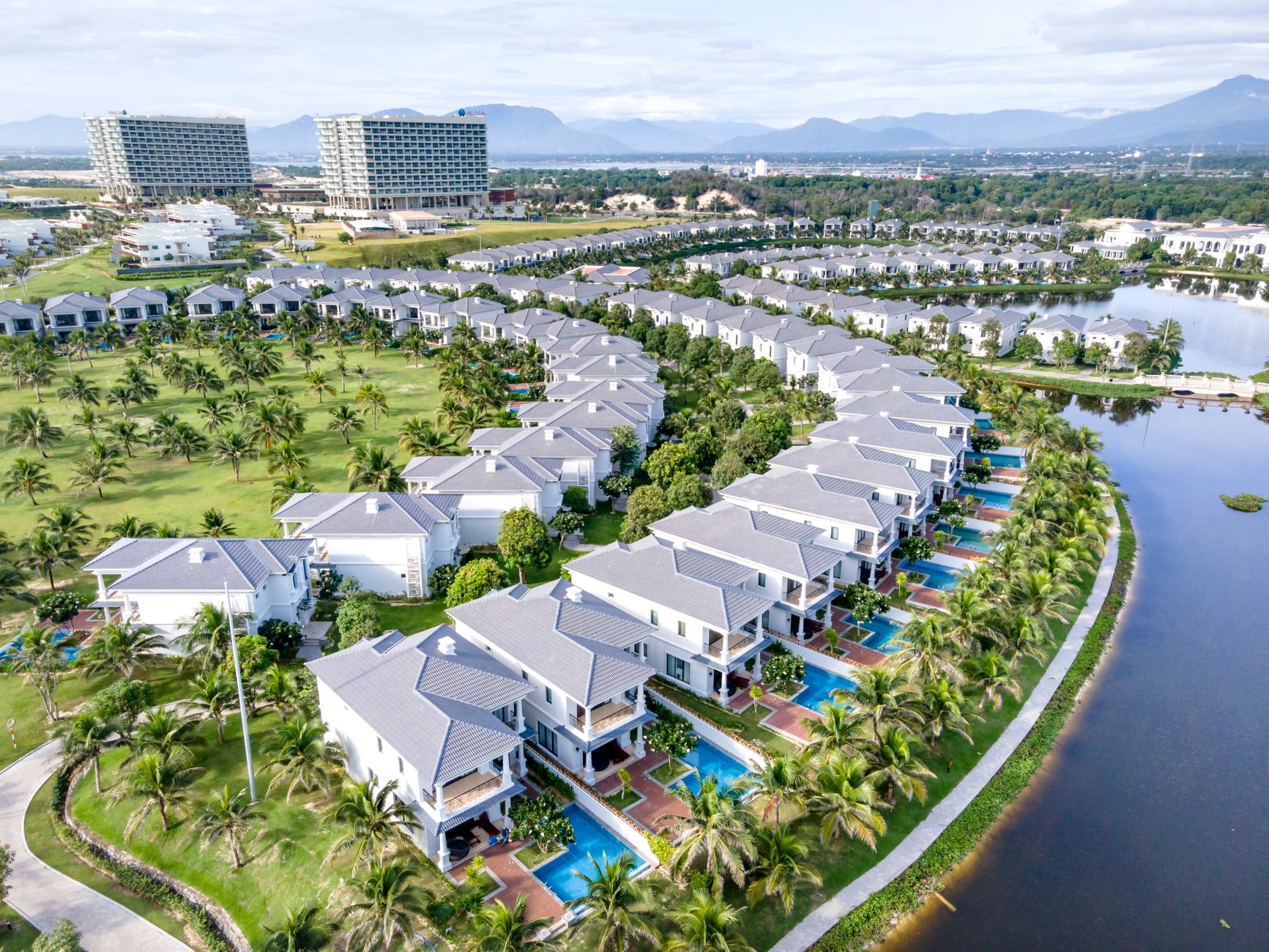
Branded residences in Phuket carry a price premium of 30% to 50% above comparable non-branded condominiums in the same area, per market estimates as of 2026. After operator management fees, sinking fund contributions, OTA commissions, and typical vacancy, realistic net rental yields for foreign-owned branded units in Phuket sit in the range of 3% to 5% per year - well below the gross figures of 6% to 8% that sales materials often quote. Whether the brand premium is justified depends entirely on your priorities: lifestyle value, capital appreciation expectations, or income.
This guide breaks down every cost layer a foreign buyer faces, shows you the gap between gross and net yield, and explains what the Thai government's 2026 fee stimulus does - and does not - change for buyers of premium branded units.
Quick answer
- Entry price premium: Branded residences in Phuket typically cost 30% to 50% more per square metre than non-branded condos in the same area, per market estimates in 2026.
- Market scale: Phuket's branded-residential supply now exceeds USD 2.3 billion (approximately THB 80 billion), making it the world's largest leisure-branded real estate market, per Travel Daily News, September 2026.
- Gross yield advertised: Sales decks commonly show 6% to 8% gross yield on branded units.
- Net yield reality: Once all costs are counted, net yield for most foreign buyers falls to 3% to 5% per year, and often lower in weak occupancy years.
- Fee stimulus: Thailand's 2026 government measure cuts transfer and mortgage registration fees to 0.01% through 30 June 2027, reducing transaction costs - but the saving is modest relative to a branded unit's premium purchase price.
- 100% LTV: Thai banks now offer 100% loan-to-value lending for one year per the 2026 stimulus (per The Phuket News, September 2026), though this primarily helps Thai-resident borrowers; foreign buyers face stricter bank financing conditions.
Options and scenarios
Scenario 1: Freehold condominium unit in a branded resort (foreign quota)
Foreign buyers can legally own condominium units in Thailand outright under the Condominium Act, provided the building's foreign ownership quota (49% of total floor area) is not already filled. Branded resort condominiums in Phuket - hotel-branded towers in Bangtao, Kamala, or Patong - are the most common entry point.
A typical unit in 2026 might be priced at THB 8 million to THB 25 million (roughly USD 220,000 to USD 680,000 at indicative exchange rates) for 35 to 80 square metres. The brand premium sits on top of land cost, construction cost, and the operator's reputation fee.
At purchase, you pay:
- Transfer fee: Normally 2% of registered value, reduced to 0.01% through June 2027 under the current stimulus.
- Mortgage registration fee: Normally 1%, also reduced to 0.01% through June 2027 if you borrow.
- Specific Business Tax (SBT) or stamp duty: Applies depending on holding period; if the seller held for fewer than five years, SBT of 3.3% applies to the seller - confirm in your contract who bears this.
- Due-diligence and legal fees: Typically THB 30,000 to THB 80,000 for a straightforward condominium transfer.
- Sinking fund (reserve fund): A one-time payment on purchase, usually THB 400 to THB 700 per square metre for branded projects. On a 50 sqm unit this is THB 20,000 to THB 35,000.
To transfer money into Thailand as a foreign buyer, you need a Foreign Exchange Transaction (FET) form - a bank document proving that funds came from abroad in foreign currency and were converted to Thai baht in Thailand. This document is essential for repatriating sale proceeds later.
Scenario 2: Participating in the operator rental pool
Most branded-residence developers offer an operator rental pool arrangement. You place your unit with the hotel operator, who rents it out to guests, collects revenue, deducts management fees and operating costs, and remits your share.
The typical structure in 2026:
- Gross revenue split: 60/40 or 70/30 in the owner's favour before costs, or a net split after the operator deducts costs first.
- Management fee: Operators charge 30% to 40% of gross rental revenue as their management fee. Some structures charge a base management fee plus a performance fee.
- Common-area maintenance fee (CAM fee): Typically THB 60 to THB 120 per square metre per month for branded projects - higher than standard condos, reflecting hotel-grade common areas, pools, gyms, and landscaping.
- Sinking fund (ongoing): An annual contribution, often THB 50 to THB 100 per square metre per year, to fund future major repairs.
- OTA commissions: When your unit is booked through an online travel agency (Booking.com, Expedia, Airbnb), the platform takes 15% to 20% of the room rate. This comes out before your split in most operator arrangements.
- Vacancy: Phuket's high season runs from approximately November to April. Low season (May to October) sees occupancy drop sharply, sometimes to 40% or below in some locations. Blended annual occupancy for branded resort units in Phuket typically runs at 55% to 70% per market estimates, depending on location and brand strength.
- Repairs and unit upkeep: The operator may charge periodic refurbishment costs to maintain brand standards. Budget THB 30,000 to THB 80,000 every three to five years for soft furnishing replacements.
Scenario 3: Guaranteed rental return programs
Many branded-residence developers in Phuket offer a guaranteed rental return (GRR) - a fixed annual yield (commonly 5% to 7% of purchase price) for a defined period, typically five to ten years.
What the guarantee actually means:
- The guaranteed return is almost always paid from a ring-fenced fund built into the purchase price. You are, in effect, pre-paying your own returns.
- After the guarantee period ends, your unit enters the standard rental pool with no income floor.
- If the underlying demand is weak - meaning the building genuinely does not attract enough bookings - the developer draws down the fund faster, and there is no guarantee the pool will be solvent at year ten.
- Developers use GRR schemes to accelerate pre-sales in new projects. Strong projects with genuine occupancy rarely need to offer a guarantee above market yield.
- Always ask: what is the current occupancy rate of the operating hotel in the same building, if one exists? If the hotel runs at 60% occupancy, a GRR of 7% on purchase price is arithmetically generous and warrants scrutiny of the fund structure.
Scenario 4: Long-term letting without an operator pool
If your building's juristic person (the management company created under the Condominium Act to manage common areas and enforce building rules) permits it, and if the building is not licensed solely for hotel use, you may rent your unit directly on a monthly or annual lease basis.
Long-term (one month or longer) rentals avoid several cost layers: OTA commissions, hotel operator management fees, and the hotel-licensing compliance cost. However, hotel licensing rules are important here. If a building operates under a hotel licence, individual owners typically cannot opt out of the rental pool and rent independently - the building's licence may require all lettable units to be managed by the licensed operator. Letting units on daily or nightly bases without the correct licence is a legal risk for the building and ultimately for you as an owner.
For long-term letting outside an operator pool, you face:
- Agent finder fee: typically one month's rent per tenancy
- Property management (if you hire a local manager): 8% to 12% of monthly rent
- Vacancy between tenancies: budget one to two months per year
- Minor repairs: 0.5% to 1% of property value per year
Net yields for long-term letting of branded units in Phuket run at approximately 3% to 4.5% per market estimates in 2026 - slightly lower than non-branded units because the higher purchase price is not offset by proportionally higher rents.
Comparison table
| Parameter | Branded Unit - Rental Pool | Branded Unit - Guaranteed Return | Branded Unit - Long-Term Let | Standard Condo - Long-Term Let |
|---|---|---|---|---|
| Typical purchase price premium | +30% to +50% vs standard | +30% to +50% vs standard | +30% to +50% vs standard | Baseline |
| Advertised gross yield | 6% to 8% | 5% to 7% (fixed) | 4% to 5% | 5% to 6% |
| Management fee | 30% to 40% of gross rent | Built into purchase price | 8% to 12% of rent (if managed) | 8% to 12% of rent (if managed) |
| OTA commission | 15% to 20% (deducted first) | Not visible to owner | None | None |
| CAM fee (per sqm/month) | THB 60 to THB 120 | THB 60 to THB 120 | THB 60 to THB 120 | THB 30 to THB 60 |
| Sinking fund (annual) | THB 50 to THB 100/sqm/yr | THB 50 to THB 100/sqm/yr | THB 50 to THB 100/sqm/yr | THB 20 to THB 50/sqm/yr |
| Realistic occupancy (annual) | 55% to 70% | N/A (yield is fixed) | 80% to 90% (with good tenant) | 85% to 95% |
| Realistic net yield to owner | 3% to 5% | 5% to 7% (for guarantee period only) | 3% to 4.5% | 4% to 5.5% |
| Income certainty | Low to medium | High (for guarantee period) | Medium | Medium to high |
| Brand-driven capital appreciation potential | Higher | Higher | Higher | Lower |
| Transfer fee saving (2026 stimulus) | Saves 1.99% of registered value | Saves 1.99% of registered value | Saves 1.99% of registered value | Saves 1.99% of registered value |
Risks and mistakes
1. Taking gross yield at face value
The most common mistake is comparing a branded residence at 7% gross yield with a savings account or bond. The gross figure appears on sales brochures before management fees, OTA commissions, vacancy, CAM fees, sinking fund, and repairs are deducted. A 7% gross figure can shrink to 3.5% net or lower once every line is counted. Always request an itemised operating statement from the operator.
2. Misunderstanding the guaranteed return mechanism
A guarantee of 6% per year for seven years sounds like an income floor. In reality, the capital funding that guarantee is often embedded in your own purchase price. You are not receiving income from market demand - you are receiving a structured drawdown of a fund you helped capitalise. When the guarantee ends, your income reverts to actual market performance.
3. Ignoring hotel licensing constraints
If your building holds a hotel licence under Thailand's Hotel Act, the entire building's short-term-stay operations are regulated. Individual owners cannot legally operate nightly or weekly rentals independently. You must work through the licensed operator. Verify the building's licence type before purchase - some buildings operate as pure condominiums with no hotel licence, and owners rent freely on monthly terms; others are fully hotel-licensed and restrict individual letting entirely.
4. Overlooking the FET form requirement
Foreign buyers who do not remit purchase funds from abroad in foreign currency - and who do not obtain an FET form from a Thai bank - may face difficulty repatriating sale proceeds when they sell. The FET form is the documentary proof that the money entered Thailand as foreign currency. Without it, you may be limited to repatriating only the baht equivalent, and only within Thailand.
5. Assuming the 2026 fee stimulus meaningfully offsets the brand premium
The transfer fee reduction to 0.01% (from a standard 2%) through June 2027 is a real saving. On a THB 15 million unit, the standard transfer fee would be THB 300,000; at 0.01% it falls to THB 1,500 - a saving of approximately THB 298,500 (roughly USD 8,000 at indicative rates). That is useful, but it represents less than 2% of the purchase price of a THB 15 million unit, and does nothing to offset the 30% to 50% brand premium built into the price. Do not let a fee discount drive your decision on a fundamentally more expensive asset class.
6. Not auditing the juristic person's finances
The juristic person is the legal entity that manages a condominium building's common areas, collects maintenance fees, and maintains the sinking fund. For branded residences, this entity often operates alongside the hotel operator, creating dual governance. Before buying, request the juristic person's audited accounts to confirm the sinking fund is adequately funded. Under-funded sinking funds lead to special assessments - one-off levies on all owners to cover major repairs.
7. Underestimating high-season and low-season income volatility
Phuket's short-term rental income is heavily seasonal. High-season months (roughly November to April) may generate three to four times the income of low-season months. Annual net yield projections based on high-season occupancy rates will always disappoint. Koh Samui faces a similar pattern. Always ask for trailing 12-month occupancy data, not peak-month data.
8. Buying off-plan without developer financial checks
Phuket's branded-residential pipeline is large and growing, per Travel Daily News, September 2026. Not all developers completing off-plan projects will have equal financial resilience. Completion delays and project restructurings are documented risks in the Thai market. Have a qualified Thai lawyer review the developer's financial disclosures, the escrow-equivalent payment release structure in the sale and purchase agreement, and the construction timeline guarantees before committing staged payments.
FAQ
What is a branded residence, and why does it cost more in Phuket?
A branded residence is a privately owned apartment or villa that carries a hospitality brand - a hotel group, luxury brand, or lifestyle name - attached to its management and design. The brand commands a price premium because buyers pay for perceived quality assurance, professional management, and the brand's reservation network. In Phuket, per Travel Daily News (September 2026), branded-residential supply now exceeds USD 2.3 billion, reflecting deep demand from affluent international buyers who want hotel-standard services in a property they own.
Can a foreign buyer own a branded residence unit in Phuket outright?
Yes, if the property is structured as a condominium and the building's foreign ownership quota (49% of total registered floor area) is available. Ownership is registered as a freehold title (chanote - the highest grade of Thai land title) in your name at the Land Office. Ownership of landed property (villas on separate plots) is generally not permitted for foreign individuals under the Land Code, though leasehold arrangements of up to 30 years are possible.
How does the 2026 transfer fee reduction affect branded residence buyers?
Thailand's government reduced the transfer fee to 0.01% and the mortgage registration fee to 0.01% through 30 June 2027, per The Phuket News (September 2026). On a THB 20 million unit, you save approximately THB 398,000 compared to standard rates. This is a real but modest saving relative to the brand premium embedded in the purchase price. The stimulus is more impactful for standard-market buyers than for branded-residence buyers.
What is the realistic net rental yield for a branded residence in Phuket?
Per market estimates in 2026, realistic net yield after management fees (30% to 40% of gross), OTA commissions (15% to 20%), CAM fees, sinking fund, and vacancy sits at 3% to 5% per year for units in a hotel rental pool. Guaranteed-return schemes show higher numbers for their fixed term, but those figures reflect a structured fund, not market income. Long-term letting typically produces 3% to 4.5% net because the higher purchase price is not matched by proportionally higher rents.
What is a sinking fund and how much should I budget?
A sinking fund (also called a reserve fund) is a pool of capital held by the juristic person (the building's management entity) for major future repairs - roof replacement, elevator overhauls, facade work. You pay a one-time contribution at purchase (typically THB 400 to THB 700 per square metre for branded projects) and an annual contribution thereafter (THB 50 to THB 100 per square metre per year, per market estimates). Under-funded sinking funds are a red flag; request the audited balance before buying.
What is the FET form and why does a foreign buyer need it?
An FET (Foreign Exchange Transaction) form is issued by a Thai bank when you convert foreign currency to Thai baht to fund a property purchase. It documents that the money originated abroad and entered Thailand as foreign currency. Without it, you may struggle to repatriate your sale proceeds when you eventually sell. As a foreign buyer, always remit purchase funds in foreign currency from your overseas account directly to a Thai bank account, and obtain the FET form before transfer.
Are guaranteed rental return programs reliable income sources?
Not unconditionally. A guaranteed return is only as strong as the fund backing it and the developer's financial position. The capital for guaranteed returns is typically built into the purchase price or a dedicated escrow-type developer fund - not generated by actual market demand. When the guarantee period ends (commonly five to ten years), income reverts to market performance. Treat a GRR as a temporary income buffer, not a permanent yield floor.
What happens if a building has a hotel licence and I want to rent my unit independently?
If the building operates under a Thai hotel licence (Hotel Act), the licence holder - typically the operator - controls all short-term-stay letting. Individual owners cannot legally circumvent the operator to rent on nightly or weekly terms. If you want the freedom to rent independently, buy in a building that does not hold a hotel licence and whose rules permit monthly lets by individual owners. Confirm this with your lawyer before purchase, not after.
How does Phuket's seasonality affect rental income for branded units?
Phuket's high season (approximately November to April) produces significantly higher occupancy and room rates than the low season (May to October). Annual blended occupancy for branded resort units typically runs at 55% to 70% per market estimates. Projections based on high-season rates alone will consistently overstate annual income. Ask operators for trailing 12-month revenue per available room data, not peak-month snapshots.
Is branded-residence capital appreciation in Phuket reliable?
Historically, well-located branded residences in Phuket have appreciated, supported by constrained land supply on the island and sustained international buyer demand. However, the base price already contains the brand premium, so appreciation starts from a higher floor. Developers and agents frequently cite capital gains from earlier project cycles to support current pricing. Market conditions change, and past appreciation does not guarantee future performance. Treat any capital gain as a bonus rather than a core return assumption.
Planning a property purchase in Thailand? Send us your requirements - the THAI.ESTATE team will reply with specific options and a safety checklist for your case.