Editorial
Bophut vs Chaweng Property: Which Part of Koh Samui Fits You
By THAI.ESTATE Editorial Team13 min read
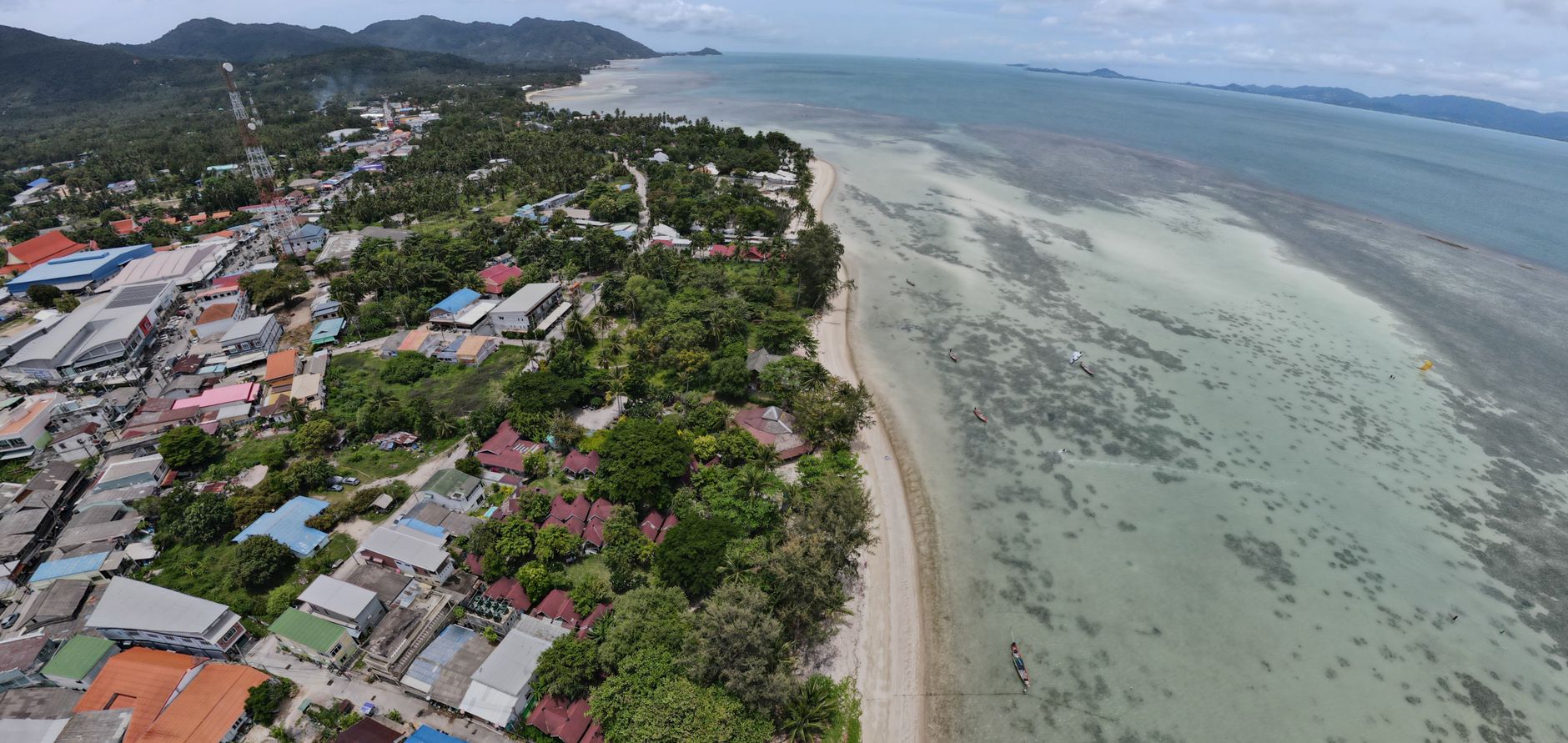
Bophut and Chaweng are the two most searched residential areas on Koh Samui for foreign buyers, but they serve very different buyers. Bophut suits long-stay residents and retirees who want a quieter pace, a village atmosphere, and lower entry prices. Chaweng suits investors targeting short-term rental income from a high-volume tourist corridor, at the cost of noise, traffic, and tighter long-term livability.
This guide compares both areas on the metrics that matter to an international buyer: price per square metre, rental yield profile, infrastructure, healthcare access, rainy-season character, and the honest fit-or-no-fit verdict for each buyer type.
Quick answer
- Bophut asking prices sit at roughly 55,000 to 90,000 THB per sqm for condominiums and 4 to 8 million THB for entry-level pool villas, as of 2026 market estimates
- Chaweng asking prices for condominiums range from 70,000 to 120,000 THB per sqm, reflecting the rental premium baked into the asking price
- Chaweng gross rental yields are estimated at 6 to 9 percent per year for well-managed short-stay units; Bophut yields are lower, roughly 4 to 7 percent, skewed toward longer-stay tenants
- Foreign quota condominiums (units foreigners can own outright under the Thai Condominium Act) are available in both areas, but overall supply is smaller on Samui than in Phuket
- Koh Samui airport (USM) is closer to Chaweng; Bophut adds roughly 10 to 15 minutes by road
- The rainy season on the Gulf Coast (October to December) hits Samui harder than Phuket's Andaman side - a critical factor for any rental income projection
- Both areas sit within a 30-minute drive of Bangkok Hospital Samui, the island's main international-standard facility
Options and scenarios
Who typically buys in Bophut?
Bophut stretches along the north coast of Koh Samui. The area is anchored by the Fisherman's Village, a walking street of wooden shophouses turned into restaurants, boutiques, and small hotels. The beach here is calmer than Chaweng - the water is shallower and not ideal for swimming at all tides, but the pace suits people who plan to live on the island, not just collect rental income.
The buyer profile in Bophut leans toward:
- Retirees and semi-retirees from Europe and Australia who want a social village centre within walking distance
- Digital nomads and remote workers who value quieter streets, reliable fiber internet (available in the main residential pockets), and proximity to co-working cafes
- Long-stay families who need a calm environment and do not rely on beach-club nightlife
- First-time Thailand buyers looking for a lower price entry and a more forgiving resale market with stable, if unspectacular, tenant demand
The Maenam area sits just west of Bophut and shares similar characteristics. If you are researching Bophut, include Maenam in your shortlist: prices are slightly lower and the beach is longer.
Bophut does have trade-offs. The Friday evening walking street brings noise and crowds one night per week. Parts of the area bordering the main ring road (Route 4169) are noisy from truck traffic. Construction noise corridors exist near the northern bypass road. Due diligence on road access and proximity to these corridors is essential before committing.
Who typically buys in Chaweng?
Chaweng is Koh Samui's main tourist beach. The 6-kilometre stretch of sand is the island's most visited. That footfall creates real short-term rental demand, and it also creates everything that comes with high-volume tourism: road congestion, nightlife noise until 2 a.m. or later, motorbike traffic, and a built environment that is oriented around transient visitors rather than long-term residents.
The buyer profile in Chaweng leans toward:
- Income-focused investors who will not live in the property and want maximum occupancy from Airbnb-style short rentals
- Buyers based elsewhere who visit Samui once or twice a year and want a managed rental unit the rest of the time
- Buyers who value airport proximity - Chaweng is roughly 10 to 15 minutes from Koh Samui Airport, versus 20 to 30 minutes from Bophut
Chaweng is a harder recommendation for anyone who plans to live there full-time. The noise level in the central and south-central Chaweng strips is not comparable to residential living in Bangkok's mid-city zones. Properties set back from Beach Road or positioned in the quieter north Chaweng pocket (sometimes called Chaweng Noi, transitioning toward Choeng Mon) offer better livability without fully leaving the Chaweng rental catchment.
Condominiums vs. villas: the foreign ownership layer
Foreign nationals cannot own land freehold in Thailand under the Land Code. The two practical routes for international buyers are:
- Freehold condominium unit under the Thai Condominium Act: foreigners can own up to 49 percent of total floor area in a registered condominium building. This is the cleanest legal structure for a foreign buyer on a budget.
- Leasehold villa: a long-term land lease (typically 30 years, sometimes renewable by contract) with the foreign buyer owning the structure. You do not own the land. Always have a Thai property lawyer review the lease terms before signing.
In both Bophut and Chaweng, the majority of villa projects are structured as leasehold for foreign buyers. In Chaweng, condominium buildings are more numerous, giving foreign buyers more freehold options. In Bophut, the stock is more villa-heavy, which means more buyers are navigating leasehold structures. This is neither good nor bad in itself, but it requires more careful legal review.
A Foreign Exchange Transfer (FET) certificate (officially called a Thor.Tor.3 form) is required when you transfer foreign currency into Thailand to buy a property. Your Thai bank issues it. You need this document to repatriate sale proceeds later. Without it, you cannot prove the funds originated offshore. This applies in both areas.
Rental management reality
Neither Bophut nor Chaweng has a mature, institutional property management sector comparable to Phuket's Bang Tao corridor. Rental management on Koh Samui is fragmented. Many projects use small local agencies or developer-linked management companies. Before buying, ask for audited occupancy data - not projected figures - from the management company. If they cannot provide at least two years of actual occupancy records, treat any yield projection as a developer estimate, not a verified track record.
The October-to-December Gulf Coast rainy season is the most important income variable specific to Samui. The island sits on the Gulf of Thailand side and catches the northeast monsoon directly. Rainfall is heavy and prolonged in these months, flights are sometimes delayed, and tourist numbers drop materially. Any rental yield model for Samui that does not account for three low-occupancy months is overstating returns.
Comparison table
| Parameter | Bophut | Chaweng |
|---|---|---|
| Condo price per sqm (2026 est.) | 55,000 - 90,000 THB | 70,000 - 120,000 THB |
| Entry-level pool villa asking price | 4 - 8 million THB | 7 - 15 million THB |
| Gross rental yield estimate | 4 - 7% (long-stay skew) | 6 - 9% (short-stay skew) |
| Primary tenant type | Retirees, remote workers, families | Holidaymakers, short-stay tourists |
| Foreign freehold condo supply | Limited | Moderate |
| Leasehold villa availability | High | High |
| Distance to Koh Samui Airport | 20 - 30 min by road | 10 - 15 min by road |
| Distance to Bangkok Hospital Samui | 20 - 25 min | 15 - 20 min |
| Nightlife noise exposure | Low to moderate | High (central strip) |
| Rainy season impact (Oct - Dec) | Significant | Significant |
| Beach quality for swimming | Shallow, calm, limited tides | Better surf, busier |
| Walking street / local dining | Fisherman's Village (weekly) | Full commercial strip (daily) |
| Livability for full-time residents | Good | Moderate to low (central) |
| Investment liquidity / resale market | Slower, smaller pool | Slightly faster, wider pool |
| Construction noise corridors | Ring road and bypass zones | Beach Road and Chaweng Lake zones |
| Best fit buyer | Long-stay resident, quiet investor | Income-focused absentee investor |
Risks and mistakes
Trusting yield projections without verified data
Developers and small agencies in both areas routinely publish gross yield figures of 8 to 10 percent. These are almost always based on peak-season occupancy rates applied to all 12 months. Ask for net yield after management fees (typically 20 to 30 percent of gross revenue), maintenance, insurance, and the three dead months. A realistic net yield for Chaweng after costs is closer to 4 to 6 percent in most cases.
Buying in oversupply pockets
Chaweng has seen a number of low-cost condominium developments targeting investment buyers. Some of these buildings carry high vacancy rates outside high season and have slow resale markets. Research the number of competing units within a 500-metre radius before committing. In Bophut, oversupply is less acute, but the resale pool is also smaller, which means longer time-to-sale if you need to exit.
Ignoring the leasehold renewal risk
Many villa leases on Samui are structured as a 30-year term with a contractual option to renew. Thai law does not automatically guarantee renewal rights. If the landowner refuses to renew or if the land is inherited by a party who disputes the agreement, you may lose your right to occupy. Have a qualified Thai property lawyer review the lease and assess whether the renewal clause is enforceable before you pay a deposit.
Missing the FET certificate requirement
If you fund your purchase with money already held in a Thai bank account (especially funds earned locally or transferred without documentation), you may not qualify for an FET certificate. Without it, you cannot repatriate your capital when you sell. This is a common and costly oversight for buyers who have been living in Thailand before buying.
Underestimating rainy-season dead months
The October-to-December period on Koh Samui is not simply 'quieter.' In some years, flooding on the ring road cuts access to properties in low-lying parts of Bophut and parts of Chaweng. Check the elevation and drainage record of any specific plot or building you consider. Properties near Chaweng Lake or in the inland sections of Bophut carry a higher flood risk.
Not checking the juristic person health
A juristic person is the legal management body of a condominium building in Thailand - equivalent to a homeowners' association. It holds the sinking fund (a capital reserve for major repairs) and collects common area maintenance fees. Before buying a resale unit, request the juristic person's accounts. A building with a depleted sinking fund and unpaid maintenance arrears is a financial liability, regardless of how good the unit looks.
Buying without a licensed Thai property lawyer
Neither Bophut nor Chaweng has a standardized conveyancing process that protects foreign buyers automatically. The Land Office transfer process is transparent, but title verification, lease review, developer background checks, and payment structure all require independent legal advice. Budget for a qualified Thai property lawyer - typically 20,000 to 50,000 THB for a straightforward transaction - as a non-negotiable cost.
FAQ
Is Bophut or Chaweng better for rental income?
Chaweng typically generates higher gross rental income due to higher tourist footfall and stronger short-term rental demand. However, after accounting for management fees, seasonal vacancy (especially October to December), and higher entry prices, the net yield difference narrows. Bophut can match or occasionally exceed Chaweng on net yield if the property targets long-stay tenants who provide year-round income with lower management overhead.
Can a foreigner own property freehold in Bophut or Chaweng?
Yes, but only for condominium units within the foreign ownership quota (up to 49 percent of a building's total floor area) under the Thai Condominium Act. For villas and land-based properties, foreign buyers typically use a long-term leasehold structure. Freehold land ownership is not available to foreign nationals under current Thai law.
What is the cheapest way to buy in Bophut?
The lowest entry point in Bophut as of 2026 market estimates is a studio or one-bedroom condominium unit in the 2 to 3.5 million THB range. Pool villas start around 4 million THB for older leasehold properties, though units at this price point often require renovation. Always factor in transfer fees, legal costs, and any required renovation budget.
How does the rainy season affect Chaweng property investments?
Koh Samui's Gulf Coast rainy season runs roughly from October to December, with November typically the wettest month. During this period, tourist numbers fall sharply, short-term rental occupancy drops, and some road sections flood. Any investment yield model must account for at least two to three low-income months per year. This is a structural characteristic of the Gulf Coast location, not a temporary anomaly.
Is Bophut good for full-time living as a foreigner?
Yes, Bophut is one of the more practical areas on Koh Samui for full-time foreign residents. The Fisherman's Village provides a social hub, international restaurants, and a weekly walking market. The area has good connectivity to Bangkok Hospital Samui and a quieter street environment than Chaweng. Internet infrastructure in the main residential pockets is adequate for remote work. Noise and flooding in specific sub-zones remain trade-offs to research before buying.
What is the FET certificate and why does it matter?
An FET certificate (Foreign Exchange Transfer certificate, issued as a Thor.Tor.3 form by Thai banks) documents that foreign currency was transferred into Thailand from abroad and converted to Thai baht for a specific property purchase. Foreign buyers need this document to legally repatriate sale proceeds when they sell. Without it, proving the offshore origin of your funds becomes difficult and repatriation may be blocked.
Which area has better resale liquidity, Bophut or Chaweng?
Chaweng has a slightly wider pool of prospective buyers due to its investor-focused reputation and higher tourist visibility. Bophut has a smaller but stable resale market oriented toward lifestyle buyers. Neither area has the transaction volume of Phuket's Bang Tao corridor. Expect longer sale timelines on Koh Samui generally - market estimates suggest 6 to 18 months to close a resale at market price, depending on unit type and asking price.
What is a sinking fund and should I check it before buying?
A sinking fund is a capital reserve held by the juristic person (the condominium management body) to cover major repairs - roof replacement, elevator maintenance, structural work. Thai law requires condominiums to collect a sinking fund at the time of first sale, but ongoing top-up contributions vary by building. Before buying a resale unit, review the juristic person's accounts to confirm the sinking fund balance is adequate. A fund below 12 months of projected maintenance costs is a warning sign.
Should I buy in Chaweng Noi instead of central Chaweng?
Chaweng Noi, the quieter northern pocket transitioning toward Choeng Mon, offers a useful middle ground. Noise levels are lower than central Chaweng, the beach is less crowded, and the area still benefits from proximity to Chaweng's commercial and rental infrastructure. Prices in Chaweng Noi tend to sit between central Chaweng and Bophut. If your goal is a livable property that still captures some short-term rental demand, Chaweng Noi and Choeng Mon deserve a place on your shortlist.
Who should not buy in Chaweng?
Chaweng is not a good fit for buyers who plan to live there full-time and value quiet streets, for families with young children who need a calm residential environment, or for buyers who want to avoid the noise and congestion of a high-volume tourist zone. It is also a poor fit for buyers who cannot tolerate extended low-income months during the rainy season and need consistent monthly cash flow to service costs.
Planning a property purchase in Thailand? Send us your requirements - the THAI.ESTATE team will reply with specific options and a safety checklist for your case.