Editorial
Bangkok Transfer Fee Deadline Gone: What Foreign Condo Buyers Pay Now
By THAI.ESTATE Editorial Team16 min read
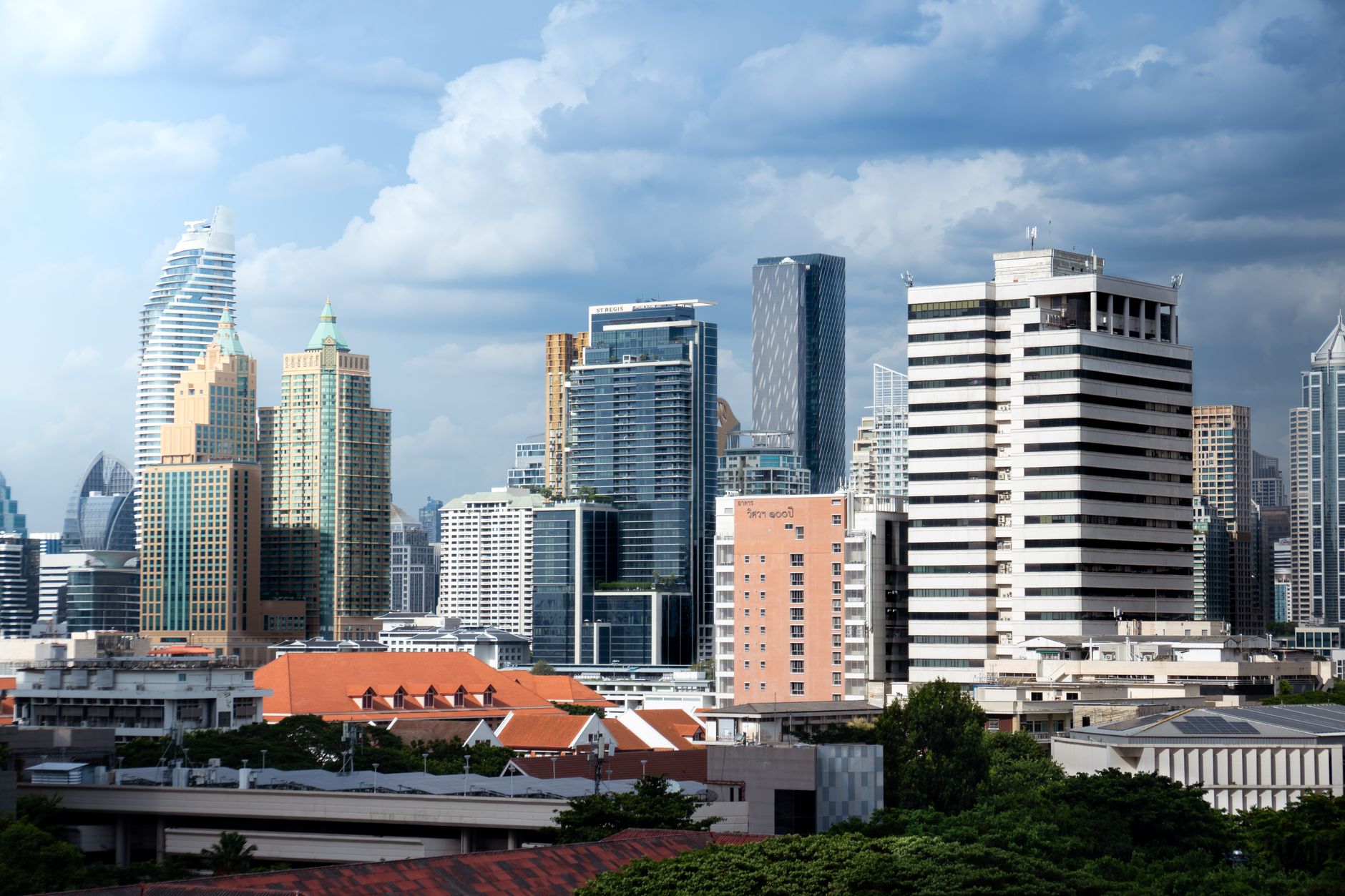
The reduced transfer and mortgage registration fees that drove a 20.8% surge in Bangkok condo transfers in H1 2026 are gone. Thailand's cabinet did not extend the incentive beyond June 30, 2026. Every foreign buyer who completes a purchase from that date forward pays the full statutory rates. This guide explains exactly what those rates are, how they change your budget, and what negotiating leverage you still have in a market where new supply has shrunk by roughly 50%.
If you are budgeting for a Bangkok condo purchase right now, the headline number is this: transfer costs at full rate add approximately 6.3% of the registered price when you combine the transfer fee, specific business tax, and stamp duty. The old reduced rate cut the transfer fee alone from 2% to 0.01%, saving tens of thousands of baht on a mid-range unit. That saving is no longer available.
Quick answer
- The transfer fee on residential property reverted to 2% of the appraised value after June 30, 2026
- The mortgage registration fee reverted to 1% of the loan amount (relevant for Thai-bank financed purchases, though most foreign buyers pay cash)
- Combined transfer-side costs for a foreign cash buyer (transfer fee + specific business tax or stamp duty) now run approximately 5.3% to 6.3% of the registered price, depending on how long the seller has held the unit
- Per Lanta News, September 2026, residential unit transfers in Bangkok rose ~20.8% year-on-year in H1 2026, evidence that buyers accelerated closings to beat the deadline
- New project launches in Bangkok fell ~20.9% and project value dropped ~18.0% in H1 2026 (Lanta News, September 2026), tightening resale inventory and reducing seller flexibility
- Foreign-linked entities held 76,840 condominium units as of a September 2026 government probe, representing 31.48% of all foreign-held units - a figure under active regulatory scrutiny
Options and scenarios
Scenario 1: Buying a resale condo held by an individual seller for more than 5 years
When the seller has owned the unit for more than five years and is an individual (not a company), specific business tax (SBT) does not apply. Instead, stamp duty of 0.5% applies on the higher of the appraised or contract price. You and the seller negotiate who pays what, but the Land Office collects from whoever is registered as liable.
The full cost breakdown for this scenario:
- Transfer fee: 2% of appraised value (split by negotiation, often 50/50 or buyer pays all)
- Stamp duty: 0.5% (in lieu of SBT)
- Withholding tax: paid by the seller, calculated on a sliding scale based on years of ownership and appraised value; not your cost, but it affects what net price the seller will accept
Total buyer-side exposure if you absorb the full transfer fee and stamp duty: 2.5% of appraised value, plus your own legal fees.
Scenario 2: Buying from a developer (new or recently completed unit)
Developers are companies. They have typically owned the unit for less than five years. This triggers Specific Business Tax (SBT) at 3.3% (3% SBT plus 0.1% local government tax) on the higher of the appraised or registered price. Stamp duty does not apply when SBT applies.
Developers often advertise 'free transfer fees' as a sales incentive, meaning they absorb the 2% transfer fee on your behalf. Always verify this in the Sale and Purchase Agreement (SPA) - a verbal promise has no legal weight. Even when a developer covers the transfer fee, you may still bear stamp duty or SBT depending on how the contract is structured.
Total buyer-side cost if developer absorbs transfer fee but not SBT: 3.3% of registered price minimum. If you absorb the transfer fee too: 5.3%.
Scenario 3: Buying a resale unit held by a company or held less than 5 years by an individual
SBT at 3.3% applies again. Transfer fee is 2%. If the seller pushes the full transfer fee to you, your cost is 5.3%. In a thin market with fewer new launches, some sellers do push harder on this. Know your position before you sit at the Land Office.
Scenario 4: Remote purchase using a Power of Attorney
You can complete every step - from signing the Reservation Agreement to attending Land Office registration - through a licensed Thai lawyer holding your Power of Attorney (POA). The POA must be notarized in your home country and, in most cases, authenticated with an apostille or Thai consulate stamp before it is valid in Thailand.
The substantive transfer costs are identical to in-person purchase. Add lawyer fees for POA preparation and Land Office attendance: typically 15,000 to 40,000 THB for a straightforward condo transfer, per market estimates as of 2026.
Comparison table
| Fee item | Before June 30, 2026 (reduced rate) | After June 30, 2026 (full rate) | Who typically pays |
|---|---|---|---|
| Transfer fee | 0.01% of appraised value | 2.0% of appraised value | Negotiated; often split or buyer absorbs |
| Mortgage registration fee | 0.01% of loan amount | 1.0% of loan amount | Borrower (less relevant for foreign cash buyers) |
| Specific Business Tax (SBT) | 3.3% (no change; not reduced) | 3.3% of registered price | Seller in law; often negotiated |
| Stamp duty | 0.5% (no change) | 0.5% of registered price | Seller in law; often negotiated |
| Withholding tax | Progressive; seller's liability | Progressive; seller's liability | Seller |
| Lawyer / POA fees | 15,000 - 40,000 THB estimate | 15,000 - 40,000 THB estimate | Buyer |
The FET form: why your transfer method determines your ownership rights
As a foreigner buying a condo unit in Thailand, you must bring purchase funds into Thailand from abroad in foreign currency. The receiving Thai bank issues a Foreign Exchange Transaction form (FET) - sometimes called a Thor.Tor.3 or a credit note for foreign currency exchange. This document proves that the money originated outside Thailand and was converted to Thai baht here.
The FET form is mandatory for Land Office registration of foreign condo ownership. Without it, the Land Department will not register the unit under your name in the foreign quota. One FET form per transfer, matched to the registered price.
Common and expensive mistakes with FET forms:
- Wrong transfer reference: your bank's SWIFT message must clearly state the purpose as 'purchase of condominium unit' or similar. If it reads 'general transfer' or 'personal funds', the receiving bank may issue a document that the Land Office rejects. Correcting this after the fact is slow and sometimes impossible
- Transferring in Thai baht: if your home bank converts the funds before sending, no foreign-currency conversion happens in Thailand, and the Thai bank cannot issue a proper FET form
- Multiple small transfers: if you wire funds in installments (for example, one transfer for reservation, one for down payment, one for balance), you need a valid FET document for each transfer. Consolidate where possible and verify with your Thai bank before each wire
- Keeping the FET form: you need the original FET form not only for initial registration but also when you sell the unit and repatriate proceeds. Store it permanently
The FET form also matters if you ever take a loan from a Thai bank. Mortgage registration reverted to 1% of the loan amount after June 30, 2026 - a cost the borrower pays at the Land Office on the day of transfer.
The step-by-step buying process for foreign buyers in 2026
Step 1: Reservation - what you sign and what you pay (1 to 3 days)
A Reservation Agreement secures the unit at the agreed price. You pay a reservation deposit, typically 50,000 to 200,000 THB for a condo unit, though developer policies vary. This deposit is deducted from the purchase price if you proceed. It is often non-refundable if you withdraw.
What to demand at this stage:
- Copy of the chanote title deed (a chanote is the highest-grade Thai land title, with GPS-verified boundaries; insist on chanote, not Nor Sor 3 Gor or lesser titles)
- Company affidavit of the developer, issued within 30 days, showing registered capital, directors, and shareholders
- Confirmation that the unit falls within the 49% foreign ownership quota of the building (the Condominium Act limits foreign ownership to 49% of total floor area per building)
Step 2: Due diligence - what to verify before you commit (1 to 3 weeks)
For a completed building, verify:
- Title deed is free of encumbrances (mortgages, liens) - your lawyer pulls this from the Land Office
- The juristic person (the legally registered body that manages the condominium building on behalf of all co-owners) is properly registered and has no outstanding legal disputes
- Common area maintenance fees and sinking fund contributions are current (a sinking fund is a one-time capital reserve payment collected at handover, typically 500 to 700 THB per square meter, used for major future repairs)
For an off-plan unit, also verify:
- Environmental Impact Assessment (EIA) approval for buildings above the threshold size (generally buildings over 80 units or 4,000 square meters require EIA approval before construction)
- Building permit (ใบอนุญาตก่อสร้าง) is issued and current
- The developer's construction payment schedule is linked to construction milestones, not arbitrary dates. There are no escrow arrangements for foreign property buyers in Thailand; the contractual payment schedule tied to physical construction progress is your primary financial protection
- Penalty clauses: the SPA should state a fixed daily or monthly penalty if the developer delays handover beyond the contracted date
Step 3: Sale and Purchase Agreement - key clauses to read (1 to 5 days)
The SPA is the binding contract. Have your lawyer review it before you sign. Critical clauses:
- Registered price vs contract price: Thailand law does not prohibit under-declaration, but the Land Office uses the higher of the appraised value or registered price to calculate fees. A lower registered price saves fees on paper but creates a smaller FET-documented amount, which limits the funds you can repatriate later without tax complexity
- Defect liability period: typically two years from handover for structural defects
- Foreign quota confirmation: the SPA should state in writing that the unit is being sold within the foreign quota
- Fee allocation: specify in writing which party pays transfer fee, SBT, and stamp duty. Do not rely on verbal agreements
Step 4: International money transfer and FET form (1 to 5 business days)
Wire funds from your overseas bank account to your Thai bank account or directly to the developer's account as specified in the SPA. Key rules:
- Send in foreign currency (USD, EUR, GBP, SGD, or other major currency)
- Amount must equal or exceed the registered purchase price in baht equivalent at the time of conversion
- Instruct your bank to include 'purchase of condominium' in the SWIFT payment purpose field
- Collect the FET form (or bank credit advice for foreign currency) from your Thai bank. Store the original permanently
For transfers above USD 50,000 equivalent, the Bank of Thailand requires the receiving Thai bank to record the transaction in the cross-border transfer system. This is automatic but confirm the form is correctly issued.
Step 5: Land Office registration - what happens on the day (half day to full day)
Both parties (or their POA holders) appear at the relevant district Land Office. The Land Officer:
- Verifies identity documents (passport for foreign buyers)
- Checks the FET form matches the registered purchase price
- Confirms the foreign ownership quota has not been breached
- Calculates fees due and collects payment
- Updates the title deed (chanote) with your name as owner
- Issues you a copy of the updated chanote
Land Office fees are paid in cash or cashier's cheque on the day. Bring more than the calculated amount; Land Officers do not give change for excess payments easily. Arrive early: Land Offices in Bangkok process a high volume of transfers and close queues before the official closing time.
Step 6: Handover - what to check before you accept the keys (half day)
Walk through the unit with a snag list. Check:
- All fixtures, fittings, and appliances listed in the SPA are present and functional
- No water damage, cracks, or unfinished surfaces
- Utility meters are in your name or the juristic person's name as agreed
- Receive the condominium unit title certificate (the blue-book tabien baan is for residents; foreign owners typically receive a copy for reference)
- Confirm the sinking fund and first year of common fees are paid or clarify who owes them
Risks and mistakes
Risk 1: Misjudging the fee split in negotiations
With the transfer fee back at 2%, a 5 million THB unit incurs 100,000 THB in transfer fees alone. Many buyers negotiate a 50/50 split, meaning 50,000 THB each. Sellers in a tight market (new supply down ~50% per Lanta News, September 2026) have less incentive to absorb costs. Set your all-in budget including worst-case full fee absorption before you make an offer.
Risk 2: Wrong FET form reference
Described above. This is the single most common avoidable error foreign buyers make. Verify the transfer purpose wording with your Thai bank before every wire. A rejected FET form can delay Land Office registration by weeks or invalidate a scheduled closing date, triggering penalty clauses against you.
Risk 3: Off-plan purchases without verified EIA and building permit
In Bangkok's contracted market, some smaller developers face financing pressure. Before committing, demand proof of EIA approval (for qualifying buildings) and a current building permit. A development that starts construction without these faces forced stoppage. Your contractual penalties are only as good as the developer's solvency.
Risk 4: Nominee structures
Per a government probe reported by Lanta News, September 2026, authorities are actively investigating foreign-backed entities that may be using nominee arrangements to hold land and condominiums beyond legal limits. Foreign buyers are legally entitled to own condo units within the 49% foreign quota under the Condominium Act. Any arrangement that purports to give you effective ownership of landed property (houses, land plots) through a Thai company where you are the economic beneficiary risks criminal investigation. The probe is ongoing. Obtain proper legal advice before using any corporate structure.
Risk 5: Under-declaring the registered price
Reducing the registered price to lower Land Office fees is a practice that exists in the market. It creates legal risk (potential tax fraud exposure), reduces the documented FET amount (limiting repatriable funds at exit), and can cause disputes at resale. The THAI.ESTATE Editorial Team does not recommend it.
Risk 6: Treating developer verbal promises as binding
Developers' sales teams sometimes offer to cover fees verbally. Only what is written in the SPA is enforceable. If a developer promises to absorb the 2% transfer fee, get it in the SPA before you sign the reservation.
FAQ
What are the full Land Office fees for a foreign condo buyer in Bangkok after June 30, 2026?
The transfer fee is 2% of the appraised value. If the seller is a company or has owned the unit for less than five years, Specific Business Tax (SBT) of 3.3% applies on the higher of the appraised or registered price. If SBT does not apply, stamp duty of 0.5% applies instead. Withholding tax is the seller's liability. Your total buyer-side exposure depends on what the SPA assigns to you, but if you absorb the transfer fee and half of SBT, budget at least 3.5% to 5% of the registered price for Land Office costs alone.
Can I buy a Bangkok condo remotely without visiting Thailand?
Yes. You can authorize a licensed Thai lawyer to act on your behalf using a notarized and apostilled Power of Attorney. The lawyer can sign the SPA, attend the Land Office, and accept the title deed on your behalf. Budget an additional 15,000 to 40,000 THB for lawyer attendance fees, per market estimates as of 2026. You still need to wire funds from abroad in foreign currency to generate the FET form.
Why does the FET form matter at resale?
When you sell and repatriate proceeds, Thai banks require evidence that the inbound funds were originally brought from abroad. The FET form (or bank foreign currency credit advice) is that evidence. Without it, you may face difficulty repatriating the full sale proceeds. Keep every FET form issued for every transfer related to the purchase, permanently.
Did the June 30, 2026 deadline affect the number of available resale units?
The deadline accelerated a large volume of transfers: unit transfers in Bangkok rose approximately 20.8% year-on-year in H1 2026 (per Lanta News, September 2026). This means many transactions that might have occurred in H2 2026 were pulled forward. Combined with a ~20.9% decline in new project launches, the resale pool available at standard (non-rushed) pricing may be smaller in the near term. This modestly reduces negotiating leverage for buyers on price, though it increases leverage on fee absorption since sellers still need to close.
Is there any government incentive still available to reduce transfer costs in 2026?
As of the time of publication (2026), no equivalent fee reduction program is in effect following the cabinet's decision not to extend the scheme past June 30, 2026. Monitor the Thai Revenue Department and Cabinet Resolution announcements for any future programs. The THAI.ESTATE Editorial Team will update this guide if policy changes.
What is the 49% foreign quota and how do I verify it?
The Thai Condominium Act limits foreign ownership to 49% of the total floor area of any registered condominium building. If that quota is full, you cannot register ownership as a foreigner regardless of what you pay. Verify the current foreign ownership ratio directly with the building's juristic person (the management body of the condominium) before signing any binding agreement. The Land Office will confirm it at registration, but discovering a full quota on the day of transfer is an avoidable and costly mistake.
What happens if a developer delays handover on an off-plan unit?
Your SPA should specify a penalty for late delivery, typically stated as a daily or monthly amount. In Thailand, there is no government guarantee fund or escrow mechanism for off-plan buyers. Your protection comes from: contractual penalty clauses, payment schedules tied to construction milestones (not upfront lump sums), and verification that the developer holds proper permits before you pay any significant installment. If a developer defaults entirely, recovery is through Thai civil courts and takes years.
How does the Bangkok market contraction affect my purchase decision?
Per Lanta News, September 2026, new project launches in Bangkok fell approximately 20.9% in H1 2026, and land subdivision permits dropped about 50.7% in project count. Fewer new projects means less choice and less competition among developers for buyers. On the positive side, developers under sales pressure may absorb more of the transfer costs in negotiations. Resale sellers, especially those who already paid fees when buying before June 30, 2026, may factor new full-rate costs into their pricing expectations. Factor this into your opening offer.
Should I be concerned about the government investigation into foreign property ownership?
The September 2026 investigation (per Lanta News) targets nominee arrangements and companies that may be circumventing ownership restrictions, not foreigners buying condo units legally within the 49% quota. If you are purchasing a condo unit in your own name within the legal quota, using proper FET documentation, you are on the right side of the law. If you are considering any corporate or indirect ownership structure, get independent Thai legal advice before proceeding.
Planning a property purchase in Thailand? Send us your requirements - the THAI.ESTATE team will reply with specific options and a safety checklist for your case.