Editorial
Bangkok New Zoning Plan 2026: How Higher FAR Affects Foreign Buyers
By THAI.ESTATE Editorial Team16 min read
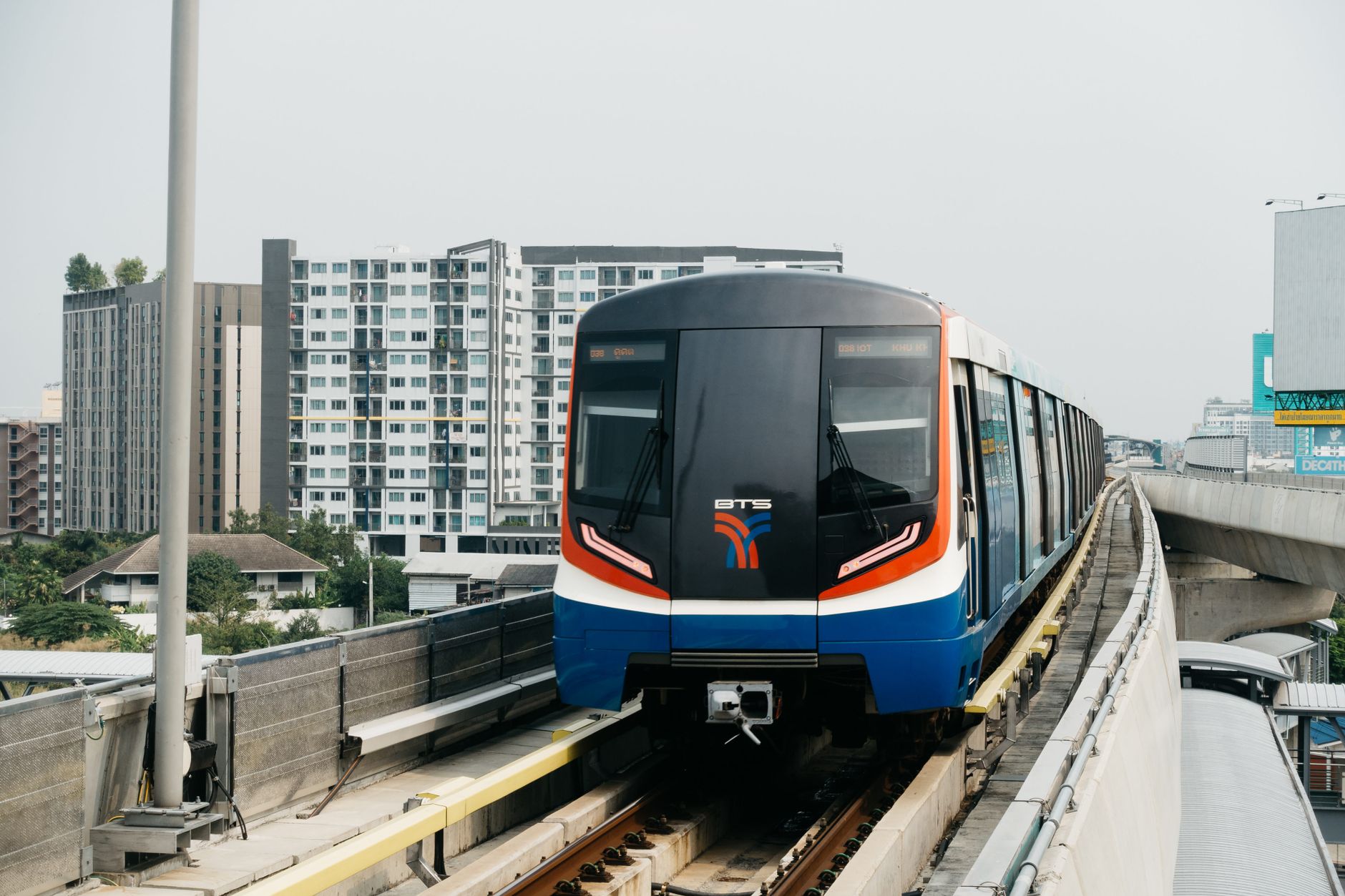
Bangkok's 4th Revision Comprehensive City Plan is not a minor administrative update. It changes where buildings can be built, how tall they can be, and which districts will attract new residential supply over the next decade. For a foreign buyer evaluating a Bangkok condo purchase, understanding the zoning framework is as important as reading the price per square metre.
The short answer is this: if you are buying in a district that is being reclassified to a higher-density or commercial zone, or that sits within the Transit-Oriented Development (TOD) radius around a mass transit station, your purchase is entering a market with structurally rising land values and a growing supply pipeline. Both signals matter, and they pull in opposite directions depending on your goal.
Quick answer
- The 4th Revision Bangkok Comprehensive City Plan expands orange zones (medium-density residential) and red zones (commercial), while reducing green-striped zones (rural conservation and agricultural land), per MGR Online International, September 2026
- Higher FAR (Floor Area Ratio - the total permitted floor space as a multiple of the plot area) allowances unlock taller buildings and larger mixed-use projects across many central and inner-ring districts
- One documented example: Chalermprakiat Ratchakan Thi 9 Road was upgraded from zone Y.2 to Y.5, raising FAR from 1.5x to 3x, per MGR Online International, September 2026
- The TOD framework prioritises development within walking or short transit distance of BTS, MRT, and Airport Rail Link stations, creating a '15-minute city' development model
- Previously restricted floodway areas in Thonburi (Taling Chan, Tawi Watthana, Bang Khun Thian, Bang Bon) and Eastern Bangkok (Prawet, Saphan Sung, Lat Krabang, Nong Chok) are being reclassified, enabling private residential projects (detached homes, townhomes) for the first time
- As of September 2026, foreign-invested legal entities hold over 1.06 million rai of Thai land and 4.1 million square metres of condominium space, per the Department of Business Development, September 2026 - underscoring the scale of foreign capital already positioned in this market
Options and scenarios
What does the zoning colour system actually mean for buyers?
Bangkok uses a colour-coded land-use map. Each colour sets the permitted uses, building height, and FAR for a given plot. The system controls supply at the district level, which is why a zoning reclassification is a direct signal about future property values.
Red zones permit commercial and high-density mixed-use development. Central Business District areas - Silom, Sathorn, parts of Sukhumvit - are primarily red or dark-red. New red zone designations in previously lower-density areas signal that developers can now build retail, hotel, and residential towers where only low-rise structures were allowed.
Orange zones are medium-density residential. They allow condominiums and apartment blocks, typically mid-rise. Expanding orange zones into areas that were previously yellow (low-density residential) or green-striped (agricultural) means new condo supply will enter districts that historically had little of it.
Yellow zones are low-density residential. Detached houses, townhomes, and small apartment buildings are the norm. Most of Bangkok's inner suburban ring sits here.
Green-striped zones are the most restrictive. These are rural, agricultural, or conservation areas where private residential development has been tightly limited. The 4th Revision is reducing these zones - a major structural shift.
What does higher FAR mean in practice?
FAR is the ratio of total building floor area to the area of the plot. A plot of 1,000 square metres with an FAR of 2.0 can accommodate a building with up to 2,000 square metres of floor space across all floors. If FAR rises to 4.0, the permitted floor space doubles on the same land.
For developers, higher FAR means more sellable units from the same land cost. In competitive land markets like Sukhumvit or Sathorn, this directly affects project feasibility. It also affects land prices: when FAR rises, the development potential of a plot increases, so land values tend to follow.
For a foreign buyer, a district with a recent FAR increase is a district where developers will bid up land prices and increase construction activity. That is a signal of near-term construction noise and medium-term capital appreciation, provided demand remains.
How does the TOD framework affect district selection?
Transit-Oriented Development (TOD) is a planning model that concentrates higher-density, mixed-use development within roughly 500 to 800 metres of a mass transit station. Bangkok's 4th Revision explicitly uses mass transit station locations as the organising principle for its highest FAR allowances and most permissive zone upgrades.
For foreign buyers, this means that proximity to a BTS Skytrain, MRT subway, or Airport Rail Link station is no longer just a lifestyle convenience. It is now a legal framework that will directly shape what gets built around that station and at what density.
Key TOD-relevant corridors as of 2026:
- Sukhumvit corridor (BTS Sukhumvit Line): Already red or orange along the main road, with high FAR. Extension stations (On Nut outward toward Bearing and Samut Prakan) are seeing zone upgrades from yellow-orange to orange and orange-red in the 4th Revision
- Silom/Sathorn (BTS Silom Line and MRT Blue Line): Core commercial zones unchanged in colour but benefiting from FAR increases where mixed-use nodes are being consolidated
- Ratchadaphisek - Lat Phrao MRT corridor: The MRT Yellow Line and Orange Line (under completion as of 2026) are prompting zone upgrades in previously overlooked inner-northeast Bangkok
- Bang Sue - Chatuchak (MRT Blue Line and future high-speed rail hub): Significant red and orange zone expansion, with Grand Station development expected to create a new mixed-use anchor
- Eastern Bangkok (Lat Krabang, Prawet): Floodway reclassification plus Airport Rail Link proximity is enabling a new wave of private residential estates
Which previously restricted areas are now open for development?
The most consequential change for buyers interested in house-format property (detached home, semi-detached, townhouse) is the floodway reclassification.
Previously, large portions of the Thonburi side (west bank of the Chao Phraya) and outer Eastern Bangkok were designated as floodways or green-striped zones. Private allotment residential projects were either prohibited or subject to strict limitations.
The 4th Revision reclassifies many of these areas to green zones (open space with limited residential use) or yellow zones (low-density residential), enabling private developers to build detached and semi-detached housing estates. The beneficiary districts include:
- Taling Chan and Tawi Watthana (west Bangkok, near future Orange Line MRT extensions)
- Bang Khun Thian and Bang Bon (south Bangkok, near the new ring road infrastructure)
- Prawet, Saphan Sung, Lat Krabang, and Nong Chok (east and outer east, benefiting from new road projects and completed flood barriers)
For foreign buyers specifically: Thai law does not permit foreigners to own land freehold. You can own a condominium unit in freehold (up to 49% of the building's total floor area may be foreign-owned, under the Condominium Act). House-format properties in these newly reclassified areas are therefore primarily relevant to foreign buyers through leasehold structures (typically 30 years, renewable by contract - not by law) or through Thai company ownership, which carries legal risk and is subject to increasing nominee scrutiny by the Department of Business Development as of 2026.
Who should buy in TOD-aligned districts and who should not?
This is the central strategic question. The honest answer has two parts.
You should consider TOD-aligned districts if: you are buying a condominium for medium to long-term capital growth (5 to 10 year horizon), you want rental demand from urban professionals or remote workers who depend on mass transit, and you are comfortable with the near-term reality of construction activity in the neighbourhood.
You should be cautious or look elsewhere if: you want immediate rental yield in a quiet environment, you are buying in a corridor where new supply is being unlocked at scale (more units compete for the same tenant pool, which compresses yields), or you are relying on short-term appreciation from a zone upgrade that the market has already priced in.
Comparison table
| District / Corridor | Zone direction (4th Revision) | FAR change (indicative) | Foreign condo price per sqm (market estimates, 2026) | Primary rental demand | Key risk |
|---|---|---|---|---|---|
| Sukhumvit (Asok to Phrom Phong) | Red, stable | High, incremental increases | THB 150,000 - 250,000 | Expat professionals, remote workers | Oversupply in mid-range segment |
| Sukhumvit (On Nut to Bearing) | Orange upgrading to orange-red | Moderate increase via TOD | THB 80,000 - 130,000 | Young professionals, long-stay tenants | New supply pipeline large |
| Silom / Sathorn | Red, stable to expanding | FAR increases at mixed-use nodes | THB 130,000 - 220,000 | Expat executives, retirees | Limited new land, premiums are high |
| Ratchadaphisek - Lat Phrao | Orange expanding, some red | Moderate to significant increase | THB 70,000 - 110,000 | Local professionals, some expats | Infrastructure completion delays |
| Bang Sue / Chatuchak | Red and orange expanding | Significant increase | THB 90,000 - 140,000 | Mixed - transit hub effect | Development timelines uncertain |
| Ari (Phahon Yothin area) | Orange, low FAR increase | Limited change | THB 100,000 - 160,000 | Remote workers, lifestyle buyers | Low new supply; limited rental scale |
| Lat Krabang / Prawet (east) | Green-striped to yellow/green | New development rights | THB 40,000 - 70,000 (houses) | Long-stay families, airport workers | Foreign ownership limited to leasehold |
| Taling Chan / Tawi Watthana | Green-striped to yellow | New residential rights | THB 35,000 - 60,000 (houses) | Local families, some expat tenants | Transit access still incomplete |
All price ranges are market estimates as of 2026. They reflect asking prices for foreign-eligible condominium units unless noted otherwise. Verify current prices with a licensed Thai property agent before transacting.
Risks and mistakes
Assuming a zone upgrade automatically means price appreciation
A zoning reclassification raises the development ceiling. It does not guarantee that developers will build, that buyers will come, or that prices will rise. In oversupplied corridors, higher FAR can increase inventory without increasing demand, which holds prices flat or pushes them lower. Check the existing vacancy rate in your target district before treating a zone upgrade as a buy signal.
Buying in a newly unlocked floodway area without verifying flood infrastructure status
The reclassification of former floodway zones in Eastern and Western Bangkok is conditional on new roads and flood barriers. If you are buying a house or condominium in one of these areas, verify that the specific flood infrastructure project protecting that land is complete and operational, not just approved on paper. Ask the developer for the relevant government project reference and confirm it independently with the Bangkok Metropolitan Administration (BMA).
Conflating FAR increases with immediate building permits
A higher FAR in the new plan does not mean a developer can start building tomorrow. The 4th Revision plan still requires the formal gazettal process to be completed at each stage, and individual building permit applications are assessed against the approved plan at the time of application. As of 2026, the plan is in implementation, but not all zone upgrades are simultaneously active for permit purposes. Ask your lawyer (preferably one specialising in Thai property law, not general civil law) to confirm the current zoning status of any specific plot you are considering.
Using a Thai company structure to buy land without understanding nominee risk
As of September 2026, the Department of Business Development has flagged over 1.06 million rai of Thai land held by foreign-invested legal entities and is actively forwarding data to security agencies to investigate nominee arrangements, per the Department of Business Development, September 2026. Buying land through a Thai limited company where Thai shareholders hold shares on your behalf (nominee structure) is illegal under the Land Code. The regulatory environment in 2026 is stricter than it was five years ago. Do not use this structure without a full legal opinion and do not assume that common practice equals legal safety.
Ignoring the 49% foreign ownership quota in condominiums
The Condominium Act caps the total foreign-owned floor area in any one building at 49%. In popular buildings near mass transit stations - especially those already sold heavily to Chinese or Japanese buyers, the two largest foreign investor groups per the Department of Business Development, September 2026 - the foreign quota may already be filled. A unit sold to you above the quota can be challenged legally and cannot be registered in your name at the Land Department. Always request a written confirmation of the current foreign quota status from the juristic person (the building management company) before paying any deposit.
Overpaying for the TOD story that is already priced in
In established transit corridors like Asok or Phrom Phong, the TOD premium has been in prices for years. You are not buying into a discovery; you are buying into a mature market. The actual FAR and zone upgrades that the 4th Revision introduces in these areas are incremental, not transformational. The larger structural opportunity is in the corridors where transit is arriving but where land prices have not yet moved fully - which by definition requires more patience and more due diligence.
Underestimating construction noise corridors
High FAR districts near transit stations will attract multiple simultaneous construction projects. If you are buying for rental use, a building surrounded by active construction sites may suffer from lower occupancy and lower rents for two to five years. Walk the immediate 300-metre radius of any target building and count active construction permits, not just the units already built.
FAQ
What is the Bangkok Comprehensive City Plan and why does the 4th Revision matter?
The Bangkok Comprehensive City Plan is the legal land-use document that controls what can be built on every plot in the city. The 4th Revision, introduced in the mid-2020s and entering implementation in 2026, updates zone colours, FAR limits, and permitted uses across hundreds of areas. It is the most significant revision in over a decade and will directly influence which districts attract development and which remain low-density for the foreseeable future.
What is FAR and how does it affect me as a foreign condo buyer?
FAR (Floor Area Ratio) is the permitted total floor space as a multiple of the plot area. A higher FAR allows a developer to build more units on the same land. For you as a buyer, a district with rising FAR will see more new supply - which can support capital growth if demand keeps pace, or compress yields if supply exceeds demand. It also tends to push up land prices as developers compete for well-located plots.
Which Bangkok districts benefit most from the 4th Revision zoning changes?
Based on the colour-zone and FAR changes, the districts with the most significant structural change are: the outer Sukhumvit corridor (On Nut to Bearing), the Bang Sue - Chatuchak transit hub area, the Ratchadaphisek - Lat Phrao MRT corridor, and the newly reclassified areas of eastern Bangkok (Lat Krabang, Prawet) and western Bangkok (Taling Chan, Tawi Watthana). Silom and Sathorn see incremental gains but are already mature markets.
Can a foreigner own property in the newly unlocked floodway areas?
In most cases, no - not in freehold. The newly reclassified floodway areas in Thonburi and Eastern Bangkok are being opened for detached houses, semi-detached homes, and townhomes. Thai law does not allow foreigners to own land. You could lease land for up to 30 years (renewable by contract), but leasehold provides no ownership security equivalent to a freehold title (chanote - a full title deed). Condominiums in these areas, if built, can be purchased freehold by foreigners within the 49% quota.
Is it safe to buy a condo in a TOD corridor given the new supply pipeline?
It depends on the specific corridor and your time horizon. High supply pipelines create near-term yield pressure. If you are buying for rental income over two to three years, a corridor with aggressive new supply is a risk. If you are buying for capital growth over seven to ten years, a well-located transit station with improving zone status is a reasonable thesis - provided you select a building with a defensible quality or service advantage over the incoming supply.
What is the 49% foreign ownership quota and how do I check it?
The Condominium Act limits foreign-owned floor area in any single condominium building to 49% of the total. Ask the juristic person (the building's registered management company) for a written statement of the current ratio before you pay any money. Do not rely on the developer's sales team for this number - they have an incentive to sell. A lawyer or licensed property agent with access to the Land Department records can verify it independently.
How does nominee scrutiny in 2026 affect foreign buyers considering a company structure?
The Department of Business Development reported in September 2026 that it holds detailed records of over 36,000 foreign-invested entities owning land in Thailand and is forwarding cases with nominee-risk signals to security agencies. This is a materially stricter environment than previous years. If you are using or considering a Thai limited company structure to buy land or a house, seek a formal legal opinion from a Thai property lawyer on the specific risks. Do not assume that a structure is acceptable because it has been used widely.
What is a chanote and why does it matter?
A chanote (full title deed, formally Nor Sor 4 Jor) is the highest-quality land title in Thailand. It is GPS-surveyed, registered at the Land Department, and provides the most legally secure ownership record. When buying a condominium, your unit will be registered on a condominium title deed (Nor Sor 5), which derives from the land's chanote. Always confirm that the land under any building you are buying sits on a chanote, not a lower-quality title such as Nor Sor 3 or Sor Kor 1, which carry more risk.
Will the zoning changes affect property taxes or transfer fees?
Zoning reclassification does not directly change transfer fees or withholding tax rates at the Land Department, which are calculated on the appraised value set by the Treasury Department. However, if the Treasury Department updates its appraised values to reflect higher development potential after a zone upgrade (which it does periodically), the tax base for that land rises. This affects sellers and developers more than initial condominium buyers, but it is worth noting if you are buying land or planning to resell within a few years of a zone upgrade.
What is the TOD framework and how does it affect which districts I should target?
TOD (Transit-Oriented Development) is a planning approach that concentrates higher-density, mixed-use development within walking distance of mass transit stations - typically 500 to 800 metres. Bangkok's 4th Revision uses this framework to allocate its highest FAR allowances. In practice, this means that a condominium within 500 metres of a BTS or MRT station in a reclassified district will benefit from the maximum permitted density, attracting more developer interest and, over time, more infrastructure investment. For rental yield, transit proximity remains the single strongest predictor of occupancy rates among Bangkok's urban tenant market.
Planning a property purchase in Thailand? Send us your requirements - the THAI.ESTATE team will reply with specific options and a safety checklist for your case.