Editorial
Bangkok Condo Supply Glut vs Rising Prices in 2026: What Foreign Investors Must Weigh
By THAI.ESTATE Editorial Team14 min read
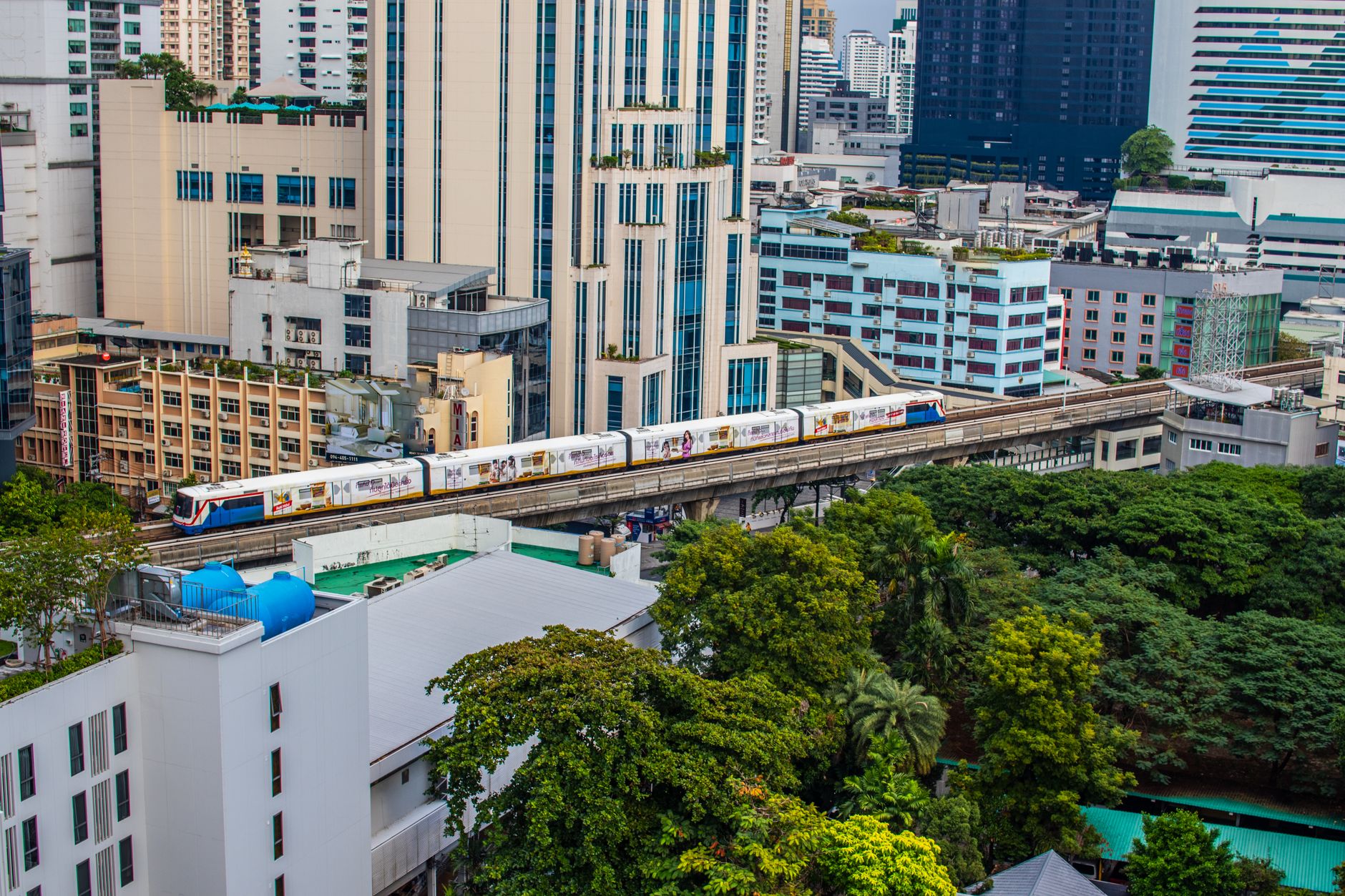
Bangkok's new condo market is sending two conflicting signals at once. Average launch prices in Greater Bangkok reached 120,364 baht per sq m in H1 2026 - close to the all-time peak of 126,373 baht set in 2018, per Cushman and Wakefield Thailand data cited in the Bangkok Post, July 2026. At the same time, unsold housing stock across Thailand is projected to hit 590,000 to 610,000 units in 2026, more than double the annual transfer pace, per Kasikorn Research Center projections reported in Money and Banking Magazine, July 2026.
These two facts do not cancel each other out. They describe two different markets operating inside the same city. If you are evaluating a Bangkok condo for capital appreciation or rental income, understanding which market your target unit sits in is the most important step before any other due diligence.
Quick answer
- New launch prices in Greater Bangkok averaged 120,364 baht per sq m in H1 2026, up 9.4% from end-2025, approaching the 2018 peak
- Unsold stock is forecast at 590,000 to 610,000 units nationwide in 2026, with roughly 52% concentrated in Bangkok and surrounding provinces, per Kasikorn Research Center, July 2026
- Residential construction permits collapsed 71.3% year-on-year for condos in Q1 2026, per data cited by Zagdim Overseas, July 2026 - meaning fewer new units are coming, but existing oversupply remains large
- Land prices are trading at discounts of around 40% in some areas, signalling that developers know the demand picture is uneven
- Completed transfers rose 11.2% year-on-year to 72,583 units in Q1 2026, but this uptick reflects selective, cash-backed demand, not a broad recovery
- Foreign buyers are limited by law to owning no more than 49% of the total floor area of any registered condominium building (the Condominium Act B.E. 2522, as amended); this foreign quota shapes both purchase access and resale liquidity
Options and scenarios
Scenario 1: Buying a new-launch unit on the Sukhumvit corridor for capital appreciation
About 90% of new launches in H1 2026 were concentrated along the Sukhumvit BTS (skytrain) corridor at higher price segments, per Bangkok Post, July 2026. Developers are deliberately targeting buyers with stronger purchasing power and avoiding mass-market price points where mortgage approvals are tightening.
For you as a foreign buyer, a transit-linked new launch in this corridor carries the highest per-sq-m entry price. The capital appreciation case rests on continued price recovery toward and beyond the 2018 peak. The risk is that you are buying close to a known historical ceiling, into a market where over 48% of unsold units priced above 10 million baht surged in Q1 2026 - mostly resale listings showing distress at the top end, per Kasikorn Research Center data.
Practical implication: developers in this segment have pricing power right now because they control supply. But if you need to resell before occupancy or within the first three to five years, you are competing against a growing pool of distressed resale stock in the same price bracket.
Scenario 2: Buying secondary-market stock or developer clearance units for rental yield
The supply glut creates genuine buyer opportunity in the secondary market. Resale listings surged approximately 34% year-on-year to around 2.4 months of supply, per Kasikorn Research Center. Developers in less-favoured locations are prioritising cash flow over profit, which creates negotiating room.
If rental yield is your primary goal, the entry price matters more than the brand. A unit purchased 15 to 25% below the new-launch equivalent in the same district can meaningfully improve your yield on cost. The structural constraint is that Bangkok's long-term rental market for condos in most inner districts targets local Thai professionals and expatriate workers. Monthly rents in most mid-range inner Bangkok condos run in indicative ranges of 18,000 to 45,000 baht per month depending on size, location, and fit-out, per market estimates as of 2026. Gross yields on new-launch prices at 120,364 baht per sq m are therefore tight - typically 3% to 5% gross for a standard 35 sq m unit at those rents, before any costs.
Scenario 3: Waiting for the supply cycle to correct before committing
The collapse in construction permits - down 50.2% year-on-year for residential overall, and 71.3% for condos specifically in Q1 2026, per Zagdim Overseas - means the pipeline of future completions is being choked off now. Units permitted today complete in two to four years. If you believe domestic and foreign demand stabilises or grows by 2028 to 2029, a wait-and-buy strategy after further market clearing could capture both better entry prices and a tightening supply environment.
The risk in this scenario is currency timing and the Thai baht's direction. Foreign buyers converting from USD, EUR, or GBP also take an exchange-rate position. A strengthening baht erodes the effective discount.
Scenario 4: Developer-linked guaranteed rental programs
Some Bangkok developers offer guaranteed rental return programs, typically promising 5% to 7% annual return for two to five years. These programs are common in tourist-heavy markets like Phuket, but some Bangkok developers use them to move slow inventory.
What a guarantee really means: the developer is pre-funding the return from your purchase price and future project revenues. It is not an independent rental market signal. When the guarantee period ends, actual net yield from the open market often falls to 2% to 4% in Bangkok locations with weak organic tenant demand. Always ask to see the underlying rental contracts - real tenants at real rents - before treating a guaranteed figure as investable income.
Also relevant: hotel licensing rules apply differently in Bangkok than in resort locations. Short-term daily rentals in Bangkok condos - listings on OTA platforms (online travel agencies) for stays under 30 days - operate in a legally grey area. The Thai Hotel Act B.E. 2547 requires hotel registration for buildings providing accommodation to transient guests. Most Bangkok condominium buildings are not registered as hotels. Accepting short-stay guests without proper licensing exposes you and the juristic person (the legal entity managing the building and common areas) to enforcement risk. For Bangkok condos, monthly letting is the realistic baseline for legal rental income.
Comparison table
| Factor | New launch, BTS corridor | Secondary market, inner Bangkok | Secondary market, suburban Bangkok |
|---|---|---|---|
| Typical entry price (indicative, 2026) | 120,000-180,000 baht/sq m | 70,000-120,000 baht/sq m | 40,000-70,000 baht/sq m |
| Foreign quota availability | Often limited; popular projects sell out fast | Easier to find available quota | Generally available |
| Gross rental yield (indicative) | 3%-4.5% | 4%-6% | 3%-5% |
| Net yield after costs (indicative) | 2%-3.5% | 3%-5% | 2%-4% |
| Capital appreciation potential | Moderate; near historical price ceiling | Moderate if location is strong | Lower; depends on infrastructure timeline |
| Resale liquidity | Good for well-located units; tighter at top end | Moderate; competing with growing resale pool | Lower; smaller buyer pool |
| Short-term rental viability | Low (hotel licensing risk in condos) | Low (same legal constraints) | Low (same legal constraints) |
| Developer distress discount available | Unlikely on flagship launches | Possible; 10%-20% negotiation room | Possible; 15%-25% negotiation room |
| Sinking fund and common-area fee exposure | Higher in premium buildings | Moderate | Lower in older stock |
Note: A sinking fund is a one-time payment made at purchase into a reserve account for major building repairs (lifts, roof, facade). Common-area fees are recurring monthly charges for shared building services. Both reduce your net yield and must be counted before comparing returns.
Risks and mistakes
Treating the headline price recovery as uniform
The 9.4% price increase to 120,364 baht per sq m in H1 2026 applies to newly launched projects - primarily those in transit-accessible, high-demand corridors. It does not apply to the 52% of unsold Bangkok-area stock sitting in the market. Averaging these two numbers produces a misleading picture of your specific unit's value trajectory.
Ignoring the foreign quota at resale
The Thai Condominium Act limits foreign ownership to 49% of total registered floor area per building. If you buy into a building where the foreign quota is already near saturation, your resale pool shrinks to Thai buyers and returning quota capacity. This is a structural liquidity constraint that affects exit timing and price.
Underestimating the cost stack on net yield
A realistic net yield calculation for a Bangkok condo must subtract: common-area fees (typically 40 to 80 baht per sq m per month in most Bangkok projects, per market estimates as of 2026), sinking fund top-ups where required, property management fees (if using an agent, typically 8% to 12% of monthly rent), vacancy months (in a market with 610,000 unsold units, vacancy risk is real), maintenance and repairs, and Thai withholding tax on rental income (5% withheld at source for foreign individuals receiving rent through an agent, or personal income tax if self-managed). Gross-to-net differences of 1.5 to 2.5 percentage points are typical. A quoted 5% gross yield may produce 2.5% to 3.5% net.
Relying on developer-quoted guaranteed returns without stress-testing
If a developer's guaranteed return program is funding your holding costs, model what happens at the end of the guarantee period. Is there genuine tenant demand at the rents implied? In Bangkok's oversupplied mid-market, the answer is often 'only at a lower rent than the guarantee implies'. Ask for evidence of actual occupancy rates in comparable completed buildings before signing.
Misreading the construction permit collapse as immediately bullish
Fewer permits today means fewer completions in two to four years. That could tighten supply by 2028 to 2029. But 590,000 to 610,000 unsold units already in the market will continue to absorb demand well before any supply shortage materialises. The near-term trajectory for most segments remains a buyer's market, not a seller's market.
Overlooking GDP and credit conditions
Developers themselves, per Nation Thailand reporting from July 2026, flag that meaningful market growth requires GDP growth above a certain threshold. Tight credit is already constraining mass-market transactions. If you are buying for rental yield that depends on local Thai tenant demand, the income levels and borrowing capacity of that tenant pool matter directly to your vacancy risk.
Neglecting the FET requirement for foreign fund transfers
A Foreign Exchange Transaction (FET) form - sometimes called a Thor Tor 3 - is the document your bank issues when you transfer foreign currency into Thailand to buy a condo. You must obtain and retain this document. Without it, you cannot legally remit sale proceeds or rental income abroad, and the Land Department will not register the transfer of a condominium unit to a foreign name. This is a step many buyers overlook until they are at the point of registration.
FAQ
Are Bangkok condo prices actually rising in 2026 or is it just new-launch positioning?
Both. New-launch average prices in Greater Bangkok reached 120,364 baht per sq m in H1 2026, close to the 2018 peak, per Bangkok Post citing Cushman and Wakefield data. But this reflects developers deliberately launching only in premium, transit-linked locations at higher price points. The secondary market and suburban stock tell a different story: unsold inventory is near record levels, and motivated sellers - including some developers - are accepting discounts. The headline figure and the market-wide reality are two separate things.
Can foreign nationals buy Bangkok condos outright in their own name?
Yes, under the Thai Condominium Act, foreign nationals can own a condominium unit in their own name as freehold - meaning full ownership, not a lease - provided the building's foreign ownership quota (49% of total floor area) has not been exceeded and the purchase funds are transferred from abroad in foreign currency with an FET form issued by a Thai bank.
What is a realistic net rental yield for a Bangkok condo in 2026?
For a standard inner-Bangkok condo in a transit-linked location, a realistic net yield after management fees, common-area charges, vacancy, and taxes sits in the range of 2.5% to 4.5% per year, based on market estimates as of 2026. Gross yields at new-launch prices are typically 3% to 5%. The gap between gross and net depends heavily on your vacancy rate and whether you self-manage or use an agent.
Is short-term renting (Airbnb-style) legal in Bangkok condos?
It is a legally risky activity in most cases. The Thai Hotel Act requires hotel registration for buildings providing accommodation to transient (short-stay) guests. Most Bangkok condominium buildings are registered as residential, not hotel premises. Operating short-term rentals without proper licensing - for the building and potentially for you as the operator - creates legal exposure for you and the building's juristic person. Monthly leasing (30 days or longer) is the legally straightforward baseline for Bangkok condos.
What does the 71.3% collapse in condo construction permits mean for buyers?
It means the future pipeline of new condo completions in Bangkok is being cut sharply now. Units permitted in 2026 typically complete in 2028 to 2030. If demand stabilises or grows, this reduced supply could support prices and rents in those years. In the near term (2026 to 2027), however, the existing unsold stock of roughly 310,000 to 320,000 units in Bangkok and surrounding areas (52% of the projected 610,000 national figure) will continue to weigh on prices and rents.
How do guaranteed rental programs work and what are the real risks?
A developer offers a fixed annual return - typically 5% to 7% - for a set period, often two to five years. The developer funds this return from project revenues or reserves, not from actual tenant income on your unit. When the guarantee ends, the unit competes in the open rental market. In locations with weak organic demand, post-guarantee yields often fall to 2% to 4%. Before buying, ask for actual occupancy data on comparable completed units and model the post-guarantee rent at current market rates.
What costs must I count to get from gross to net yield?
The main deductions are: common-area fees (typically 40 to 80 baht per sq m per month, per market estimates), sinking fund contributions, property management fees (8% to 12% of rent if using an agent), OTA commissions if short-stay letting is legally permissible in your building, estimated vacancy (at least one month per year is a conservative minimum in the current market), maintenance and repairs (budget roughly 1% of unit value per year), and Thai withholding tax on rental income. Adding these up, deduct 1.5 to 2.5 percentage points from any gross yield figure as a starting estimate.
What is the foreign ownership quota and how does it affect resale?
The Thai Condominium Act caps foreign ownership at 49% of a building's total registered floor area. If a building is near or at this cap, you may still buy a unit already held by a foreign owner (a quota transfer). But at resale, your buyer pool if the quota is saturated narrows to Thai nationals or foreign buyers returning quota through a simultaneous sale. This affects how quickly you can exit and at what price.
Should I wait for prices to fall before buying, given the oversupply?
There is no evidence of a broad price collapse in the premium segment. Developers in that tier are controlling launches and defending prices. Discounts are available in the secondary market and in less-favoured locations, but not uniformly. If you are buying for yield rather than appreciation, entry price is more important than timing the cycle perfectly. If you are buying for capital appreciation, the risk of buying close to a historical price ceiling (the 2018 peak) with large unsold inventory in the market is material and should be priced into your return expectations.
What due diligence steps are specific to Bangkok condos for foreign buyers?
Key steps include: confirming the building is registered under the Condominium Act and has a valid condominium licence; verifying the foreign ownership quota in writing from the juristic person; obtaining an FET form from your Thai bank for the inbound transfer; checking the sinking fund balance and any outstanding common-area fee arrears on the unit; reviewing the management company's track record and financial statements; and engaging a Thai-licensed lawyer (independent from the developer) to review the sale and purchase agreement before signing any deposit.
Planning a property purchase in Thailand? Send us your requirements - the THAI.ESTATE team will reply with specific options and a safety checklist for your case.