Editorial
Bangkok Condo Oversupply in 2026: Buyer Opportunity or Yield Trap?
By THAI.ESTATE Editorial Team14 min read
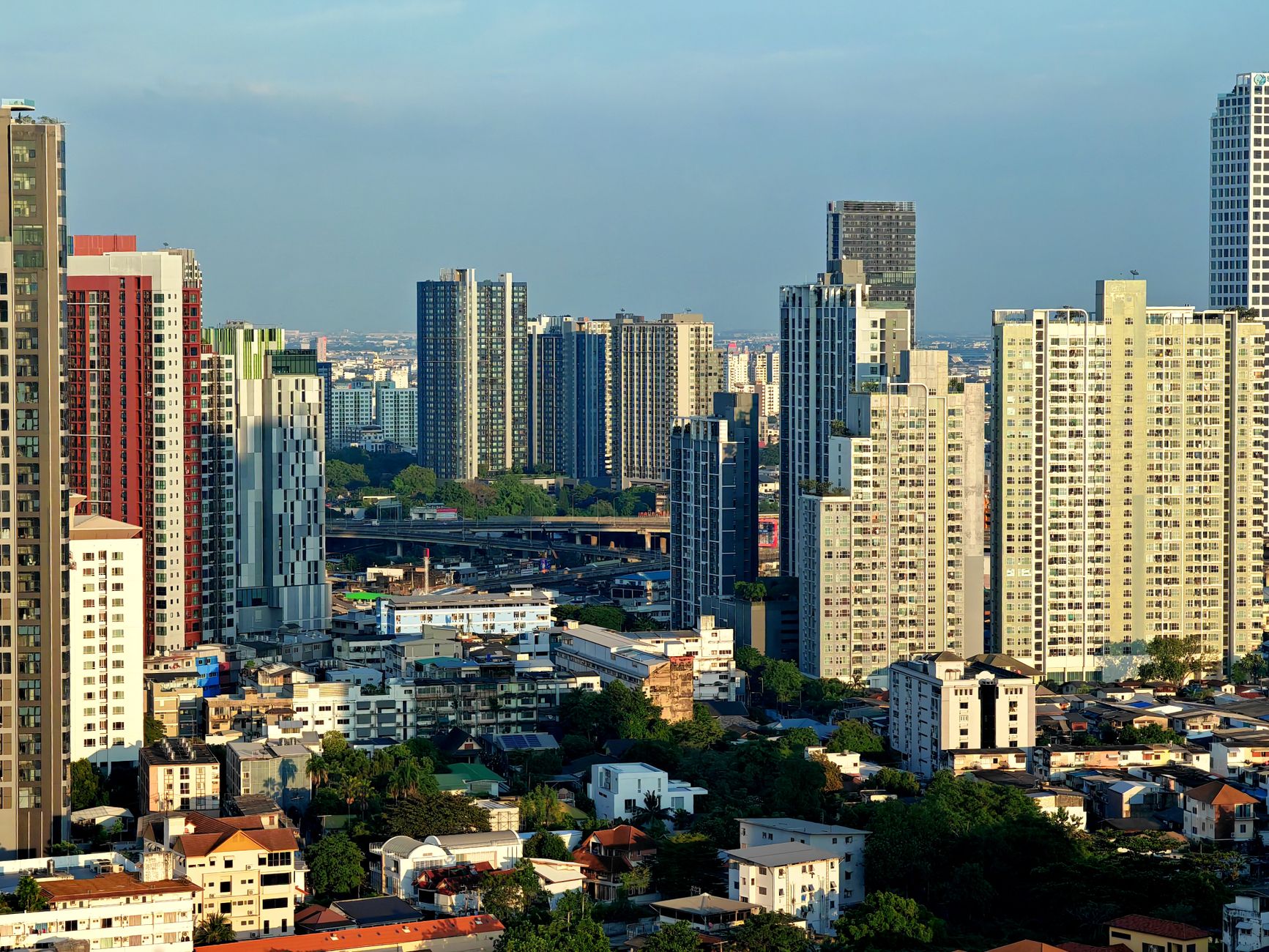
As of late 2026, Bangkok's condo market holds over 65,300 unsold units worth approximately THB 370 billion, according to data reported by The Nation Thailand in October 2026. At the same time, new condo prices in Bangkok rose 2.4% year-on-year in Q3 2026, per the Real Estate Information Center (REIC) index. These two signals look contradictory. They are not. Understanding why both can be true at once is the single most important thing you can do before committing capital to a Bangkok condo in this cycle.
The short answer: the oversupply is real, concentrated in the sub-THB 3 million price band, and it creates a genuine yield trap for foreign buyers chasing advertised gross returns. Price floors, meanwhile, are being held up by construction cost inflation, not by strong end-user demand. That combination - soft absorption, cost-pushed prices, and weak rental demand in oversupplied segments - deserves careful analysis before you sign anything.
Quick answer
- Bangkok has 65,300+ unsold condos on the market as of 2026; about 25,700 units (~40%) are completed and available for immediate transfer, per The Nation Thailand, October 2026.
- Roughly 55% of unsold stock is priced below THB 3 million; 76% falls below THB 150,000 per sqm - the segments with the weakest absorption and the most rental competition.
- New condo asking prices still rose 2.4% YoY in Bangkok in Q3 2026, driven by construction cost inflation (concrete products alone up 13.2% QoQ per REIC Q3 2026 data), not by demand recovery.
- Advertised gross rental yields on Bangkok condos typically run 5-7% in sales materials; realistic net yields after all costs run 2.5-4% for long-term lets and can fall below 2% in oversupplied sub-segments.
- The projected absorption timeline for current unsold stock is 2-3 years with no new launches - but 2026 has already seen approximately 14,400 new condo launches in the first nine months alone.
- Foreign demand remains subdued in 2026; Chinese buyer volumes have not recovered, and tightened documentation checks are slowing transactions.
Options and scenarios
Scenario 1: Buying completed oversupply stock below THB 3 million
This is where the yield trap is most visible. Developers are offering promotions - furniture packages, cash discounts, fee waivers - to clear inventory. The unit price may look attractive compared to a new launch. However, you are entering a segment where thousands of comparable units are competing for the same pool of tenants.
In Bangkok's outer districts and mid-ring locations (areas beyond the immediate BTS/MRT interchange zones), a THB 2.5 million studio or one-bedroom unit might achieve a monthly rent of THB 8,000-12,000 in a well-managed building, based on market estimates for 2026. That is a gross yield of 3.8-5.8%. After management fees (typically 8-12% of collected rent), common-area fees (THB 30-60 per sqm per month, paid by the owner), sinking fund contributions (a one-time reserve fund, typically THB 400-700 per sqm at purchase, but ongoing top-ups in some buildings), minor repairs, and vacancy allowance of 8-12 weeks per year in oversupplied corridors, your net yield falls to roughly 2-3.5%.
That range sits below Bangkok bank deposit rates and well below what you could earn in other regional markets with stronger rental demand fundamentals.
Scenario 2: Buying a new launch in a prime transit-linked location
New launches in 2026 continue despite the glut. The REIC Q3 2026 data shows approximately 14,377 condo units launched in the first nine months of 2026, up 6% year-on-year. Developers are concentrating new supply near BTS Skytrain and MRT stations in inner Bangkok (Sukhumvit, Silom, Ratchada corridors), where land is scarce and construction costs push asking prices above THB 150,000-200,000 per sqm.
A unit in this tier priced at THB 6-10 million can realistically achieve long-term rents of THB 25,000-40,000 per month depending on size, finish, and specific station proximity - market estimates for 2026. Gross yields here cluster around 4.5-6%. Net yields after the same cost chain land in the 3-4.5% range, which is more defensible. Capital value is also better supported because construction cost floors are real: the REIC construction cost index for Bangkok rose 2.1% YoY and 1.5% QoQ in Q3 2026, with structural engineering costs up 6.2% YoY. Developers cannot cut prices below cost without destroying their project economics.
The risk here is off-plan delivery: you are paying today's price for a unit that arrives in 2-4 years into an uncertain demand environment.
Scenario 3: Short-term rental (daily/weekly letting)
Short-term rental is legally restricted in Thailand. Under the Hotel Act, renting a residential condo unit for periods shorter than 30 days without a hotel license is prohibited. Enforcement has increased in Bangkok, and juristic persons (the management committees that run condo buildings) in many buildings actively block short-stay platforms. Unless the building has a hotel license or operates under a licensed serviced-apartment model, you cannot legally run short stays. This rules out the short-term premium for the vast majority of Bangkok condos you can buy as a foreign freehold owner.
Some developer-managed buildings with hotel licenses do offer guaranteed rental programs: the developer or an affiliated operator manages units in a pool, promises you a fixed annual return (commonly quoted at 5-7% gross in 2026 marketing materials), and handles all operations. These programs are discussed further in the Risks section.
Scenario 4: Long-term let, self-managed versus operator-managed
Self-managing a Bangkok rental from abroad is difficult. You need a reliable local contact for keys, repairs, and tenant communication. Professional property management companies charge 8-12% of collected rent as a base fee, plus a leasing fee (often one month's rent per new tenant), plus repair markups. Operator-managed programs remove that friction but at a cost to net yield. For a foreign non-resident buyer, operator management is often the only practical path - which is why the 'net' number matters more than the gross figure in any sales deck.
Comparison table
| Parameter | Sub-THB 3M completed stock | New launch, prime transit | Guaranteed rental program |
|---|---|---|---|
| Typical asking price | THB 1.5-3 million | THB 5-12 million | THB 3-8 million (varies) |
| Advertised gross yield | 5-7% | 4.5-6% | 5-7% (guaranteed) |
| Realistic net yield | 2-3.5% | 3-4.5% | 3-5% (program-dependent) |
| Vacancy risk | High (dense competition) | Moderate | Low on paper; pooled |
| Legal short-stay permitted | No (standard buildings) | No (standard buildings) | Only if hotel-licensed |
| Capital value support | Weak (demand-side glut) | Moderate (cost floor) | Moderate (developer-backed) |
| Absorption timeline risk | High (2-3 year glut) | Moderate | Depends on program term |
| Foreign freehold available | Yes (up to 49% of building) | Yes (up to 49% of building) | Yes (up to 49% of building) |
| Management complexity | High if self-managed | High if self-managed | Low (operator handles all) |
| Hidden cost level | High (older buildings) | Moderate | Moderate-high (revenue share) |
Risks and mistakes
Trusting the gross yield figure
Every developer sales deck in Bangkok shows a gross yield. Gross yield is calculated as annual rent divided by purchase price, before any deduction. It ignores management fees, common-area fees (called 'CAM charges' or maintenance fees - a fixed monthly charge per sqm that the owner pays to the condo juristic person regardless of occupancy), sinking fund top-ups, vacancy periods, repairs, and OTA or agent commissions if applicable. The gap between gross and net in Bangkok is typically 1.5-3 percentage points. On a 5.5% gross headline, your net may be 3% or lower.
Misunderstanding guaranteed rental programs
A guaranteed rental program is a contractual promise by a developer or operator to pay you a fixed annual return, regardless of actual occupancy. This sounds like risk elimination. It is not. The guarantee is only as strong as the guarantor's financial health. Key questions to ask: Is the guarantee backed by a separate legal entity or just a marketing commitment? What happens if the operator exits the program? What is the revenue-share structure after the guarantee period ends (typically 3-5 years)? In many Bangkok programs reviewed as of 2026 market terms, the guarantee is funded partly from your own purchase premium - the developer builds the guarantee cost into the unit price. You are, in effect, pre-paying your own 'guaranteed' returns.
Overlooking the Hotel Act constraint
If you are underwriting your yield using short-stay occupancy rates (Airbnb-style pricing), stop. Renting a standard Bangkok residential condo for fewer than 30 days per booking is illegal under Thailand's Hotel Act. Buildings that are not licensed as hotels cannot legally operate short stays, and enforcement has become more active. Buying into a building on the assumption of short-stay income, without verifying the building's hotel license status, is one of the most common mistakes foreign buyers make in Bangkok.
Ignoring the FET requirement
Foreign buyers must bring purchase funds into Thailand as foreign currency and convert them here. The receiving Thai bank issues a Foreign Exchange Transaction (FET) certificate - a document that records the inward transfer and currency conversion. You must hold this document to later repatriate sale proceeds or rental income. If you fund your purchase from a Thai bank account (for example, from prior savings already in Thailand), you may lose the paper trail needed to get money out. This is not a yield issue directly, but it affects your real return on capital if you cannot repatriate profits.
Buying in the wrong price segment for the wrong reason
The sub-THB 3 million glut is not uniformly bad. Some units in well-located buildings with strong tenant demand (near major universities, hospitals, or BTS stations with limited new supply) can still generate defensible net yields. The mistake is buying in this segment because the price looks low, without checking the specific building's occupancy history, the local supply pipeline, and the juristic person's financial health (a poorly funded sinking fund means future special assessments).
Underestimating common-area fee creep
Bangkok condos charge monthly common-area fees (maintenance fees) set by the juristic person. In older buildings or those with large amenity footprints (pools, gyms, concierge), these fees can run THB 50-80 per sqm per month. On a 35 sqm studio, that is THB 1,750-2,800 per month - a fixed cost you pay whether the unit is rented or vacant. Fee increases require a vote of unit owners but are common as buildings age and maintenance costs rise.
Off-plan risk in a soft demand environment
Buying off-plan means paying today's price for tomorrow's delivery into an uncertain market. Bangkok saw floods affect sentiment in 2026 (per The Nation Thailand, October 2026), and the demand picture for 2027-2028 delivery is genuinely uncertain. If you need to exit before completion, assignment sales (transferring your purchase contract to another buyer before the building is finished) are possible but not guaranteed, and discounts in a buyer's market can be steep.
FAQ
What is a realistic net rental yield for a Bangkok condo in 2026?
For a long-term let (monthly lease), realistic net yields after all costs - management fees, maintenance fees, vacancy, and minor repairs - run approximately 2.5-4% depending on location, price segment, and building quality. Prime transit-linked units in inner Bangkok at higher price points tend to land in the upper part of that range. Sub-THB 3 million units in outer districts often sit at or below the lower bound.
Why are Bangkok condo prices still rising if there is such a large oversupply?
Prices on new launches are rising because construction costs are rising. The REIC construction cost index for Bangkok increased 2.1% YoY in Q3 2026, with concrete products up 13.2% QoQ. Developers cannot sell new units below cost, so asking prices on new stock are pushed up by input costs. This is cost-push inflation, not demand-pull. It means price floors are real but they do not indicate strong demand. Resale and secondary market prices in oversupplied segments are under more genuine pressure.
Can a foreign buyer legally rent out a Bangkok condo on Airbnb or similar platforms?
No, not in a standard residential building. Thailand's Hotel Act requires a hotel license for rentals shorter than 30 days. Standard residential condos do not hold hotel licenses. Running short-stay lets without a license exposes you to fines, and many condo juristic persons actively prohibit it. Only buildings specifically structured and licensed as serviced apartments or hotels can legally operate short-stay rentals.
What is a sinking fund and why does it affect my yield?
A sinking fund is a reserve pool of money that a condo building accumulates for major future repairs - roof replacement, elevator overhaul, pipe replacement. In Thailand, buyers pay an initial sinking fund contribution at purchase (typically THB 400-700 per sqm in Bangkok, though this varies). Ongoing contributions may be levied when the fund runs low, and in older or poorly managed buildings these special assessments can be significant. A depleted sinking fund is a liability that reduces your effective return.
What does the 49% foreign ownership quota mean for resale?
Under Thailand's Condominium Act, foreign nationals can hold freehold title to condo units as long as foreign ownership in any single building does not exceed 49% of total unit floor area. If a building's foreign quota is full, you cannot buy freehold - your only option would be a long-term lease (typically 30 years), which is a weaker form of ownership and harder to resell. Always verify the remaining foreign quota before agreeing to purchase.
What is a guaranteed rental program and is it safe?
A guaranteed rental program is a contractual arrangement where a developer or operator promises a fixed annual return - commonly 5-7% gross in 2026 Bangkok marketing - regardless of actual occupancy. The safety depends on the financial strength of the guarantor, the legal structure of the guarantee, and what happens after the guarantee period (typically 3-5 years) ends. In many cases, the guarantee is priced into a premium purchase price, meaning you are effectively pre-funding your own returns. After the program ends, your yield reverts to whatever the market actually delivers.
How long will the Bangkok condo oversupply last?
With no new launches, the current stock of 65,300 unsold units would take an estimated 2-3 years to absorb, per figures reported by The Nation Thailand in October 2026. However, developers added approximately 14,400 new launches in just the first nine months of 2026. New supply is continuing to enter the market, which means the absorption timeline is likely to extend. The sub-THB 3 million segment faces the longest overhang.
What costs should I include when calculating net yield on a Bangkok condo?
Start with annual gross rent. Then subtract: property management fees (8-12% of collected rent), monthly common-area/maintenance fees (THB 30-80 per sqm depending on building), vacancy allowance (8-12 weeks per year in typical Bangkok conditions, more in oversupplied areas), leasing fees (often one month's rent per tenant change), minor repairs and appliance replacement (market estimate: 0.5-1% of property value per year), and any OTA or agent commission if applicable. What remains is your net rental income. Divide by purchase price for net yield.
Is now a buyer's opportunity or should I wait?
The honest answer is: it depends on which segment you are targeting. The glut in sub-THB 3 million units is a yield trap for most foreign buyers, not an opportunity, because rental demand in that segment is weak and oversupplied. In prime transit-linked locations with genuine scarcity, cost-floor pricing means entry prices are unlikely to fall sharply, but net yields are also modest. If your primary goal is yield, Bangkok in 2026 is a market where careful selection within the market matters far more than timing the market.
What is the FET certificate and why do I need it?
A Foreign Exchange Transaction (FET) certificate - sometimes called a Thor Tor 3 form - is issued by a Thai bank when you transfer foreign currency into Thailand and convert it to Thai baht to pay for a property. It records the transaction and proves that funds entered Thailand from abroad in the correct currency. You must keep this document because you need it to legally repatriate the proceeds when you eventually sell the property or transfer rental income out of Thailand.
Planning a property purchase in Thailand? Send us your requirements - the THAI.ESTATE team will reply with specific options and a safety checklist for your case.