Editorial
Bangkok Condo Supply Contraction 2026: What It Means for Rental Investors
By THAI.ESTATE Editorial Team16 min read
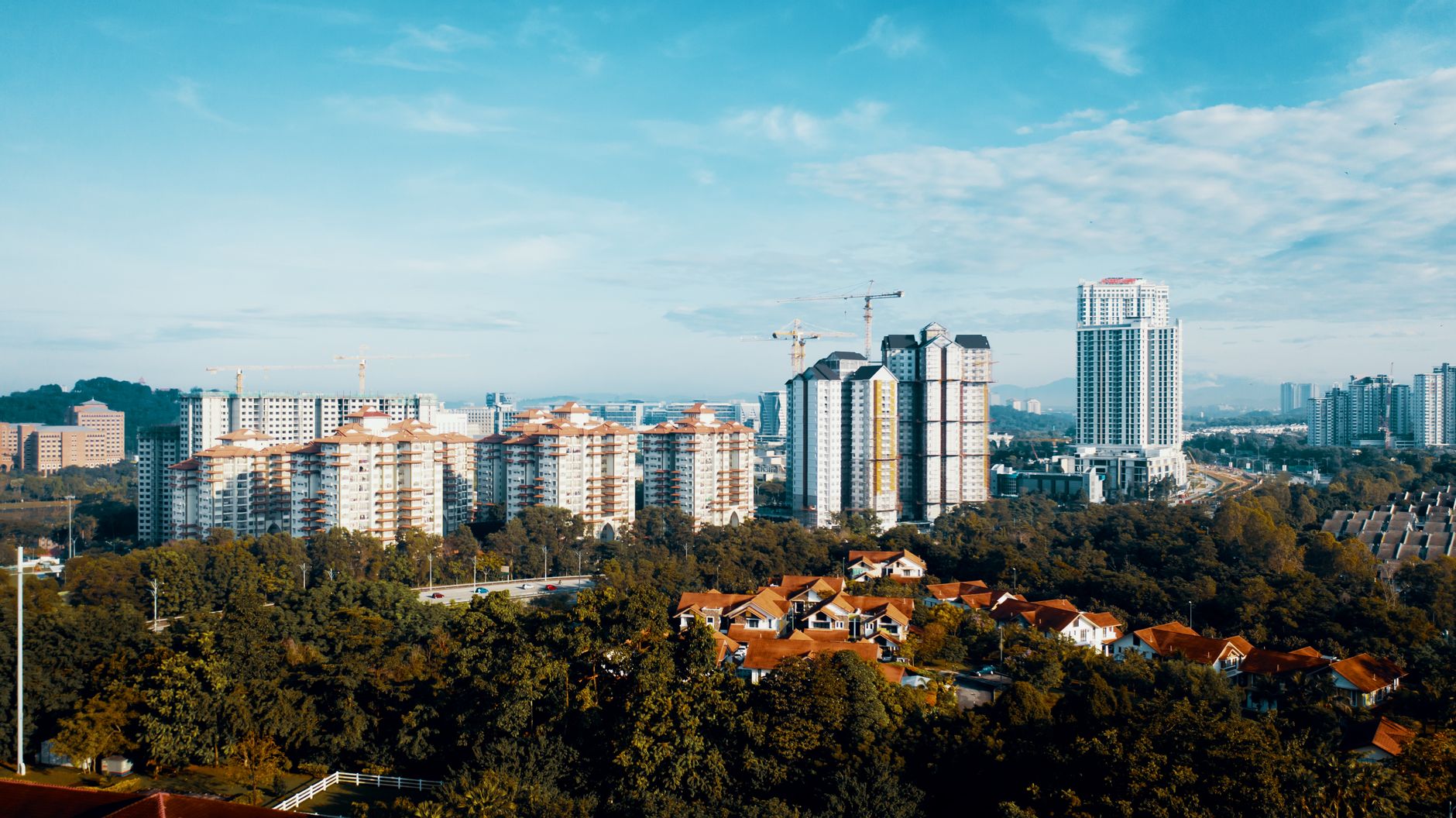
Bangkok's condo market is shrinking on the supply side, and that shift matters more to a long-term rental investor than any single quarter of sales data. Per Bangkok Post reporting in August 2026, new condo launches in Greater Bangkok are expected to stay below 20,000 units for the full year - already the lowest level on record - with Q2 2026 launches falling 67% year-on-year to just 2,332 units. The H1 2026 total sat at around 9,500 units.
For a foreign buyer who can purchase in cash, this is not a crisis signal. It is a structural shift that compresses future vacancy and, over a two-to-four year horizon, tends to support rental pricing as new stock stops entering the market while the tenant base stays broadly stable.
Quick answer
- New Bangkok condo launches in 2026 are tracking below 20,000 units, the lowest on record, per Cushman and Wakefield Thailand data cited in Bangkok Post, August 2026
- Mortgage rejection rates have risen to approximately 17%, up from around 15% the previous year, weakening domestic buyer demand and pushing more residents into renting
- Institutional buyers and private equity are stepping in, acquiring completed inventory in bulk at discounts - a classic late-cycle signal that precedes tighter supply
- Foreign cash buyers are structurally insulated from Thai mortgage rejection risk, which is entirely a domestic lending issue
- A shrinking supply pipeline typically precedes rental yield compression on the downside, meaning vacancy rates improve and landlords regain pricing power, usually within two to four years of a launch trough
- The realistic net rental yield on a Bangkok condo in 2026 sits in the 3% to 5% range after all costs, not the 6% to 8% gross figures cited in developer sales materials
Options and scenarios
Scenario 1: Buy into the current soft market as a cash buyer
Domestic Thai buyers are being squeezed by tightening bank lending. The 17% mortgage rejection rate reported in August 2026 means a meaningful share of would-be owner-occupiers are moving into rental accommodation instead. That directly expands the tenant pool. At the same time, developers are reducing new launches, which means fewer competing units will enter the resale and rental market over the next two to four years.
For a foreign buyer purchasing a freehold condo unit (the only direct ownership route available to non-Thai nationals under the Condominium Act, subject to the 49% foreign-quota rule per building), cash removes the mortgage dependency entirely. You are not exposed to Thai bank lending criteria, interest rate changes, or the loan-to-value restrictions that now affect domestic buyers.
The entry price argument is straightforward: when developers are offloading completed inventory to institutional buyers at discounts to accelerate cash flow, individual investors can sometimes access similar pricing on single units, particularly in buildings with high developer-held stock. Per Bangkok Post, August 2026, brokers and private equity are actively pursuing bulk purchases at discounted rates precisely because developers are prioritising liquidity over price.
What you should expect from this scenario: A hold period of at least five years to allow the supply-demand cycle to run. Net rental yields of 3.5% to 5% annually, with yield improvement possible in years three to five as new supply fails to arrive. Capital appreciation is possible but not guaranteed, and should not be the primary investment thesis.
Scenario 2: Long-term monthly letting in an established Bangkok district
Short-term letting (nightly or weekly rentals) in Bangkok condos sits in a legal grey area. Under Thai hotel law, operating a unit as a short-stay rental without a hotel licence exposes both the owner and the juristic person (the building's management company, which holds legal responsibility for the building's common affairs and compliance) to regulatory risk. Most Bangkok condo buildings explicitly prohibit short-stay rentals in their by-laws.
For a foreign investor, the practical and legally sound model is a long-term monthly tenancy of at least one month, typically targeting expatriates, professionals on secondment, or students. This model fits naturally with the growing pool of domestic renters being pushed out of ownership by rising mortgage rejection rates.
In established districts - Sukhumvit, Silom, Sathorn, Ratchada, Ladprao - a well-located unit in the 30 to 50 square metre range can achieve monthly rents in the range of 18,000 to 35,000 baht (indicative market estimates for 2026), depending on building quality, furnishing, and proximity to BTS or MRT stations. Against a purchase price of 4 to 7 million baht for a mid-range unit in those areas, the gross yield lands at roughly 5% to 7%. After costs, the realistic net figure drops to 3% to 5%.
Scenario 3: Guaranteed rental program offered by a developer
Some developers - particularly in projects targeting foreign investors - offer a guaranteed rental return, typically quoted at 5% to 7% gross per year for a fixed term of three to five years. The structure sounds simple: you buy, the developer manages and guarantees the income, you receive a fixed payment regardless of actual occupancy.
You should read these programs with caution. The guarantee is paid by the developer, not generated by the rental market. In a soft-demand period like 2026, where actual occupancy in some buildings is running well below projections, the developer is effectively subsidising your return from project revenues or presale margins. When the guarantee period ends, you take on the real market yield, which may be materially lower.
Additionally, guaranteed programs typically transfer management control to the developer. You may have restricted use of your own unit, limited ability to self-manage or switch agents, and no transparent view of actual occupancy. If the developer faces cash flow pressure - as many Bangkok developers explicitly are in 2026 - the guarantee can become difficult to enforce.
Use the guaranteed yield as a floor benchmark only, not as the investment thesis.
Comparison table
| Parameter | Short-term letting (nightly) | Long-term monthly letting | Guaranteed rental program |
|---|---|---|---|
| Legal status in Bangkok condos | High regulatory risk; hotel licence required | Generally permitted; check building by-laws | Varies; developer-managed programs may hold licences |
| Gross yield range (indicative, 2026) | 7% to 12% if high occupancy | 5% to 7% | 5% to 7% (fixed by contract) |
| Realistic net yield after all costs | 3% to 6% (highly seasonal) | 3% to 5% | 3% to 5% (then market-dependent after guarantee) |
| Vacancy risk | High; seasonal and platform-dependent | Lower; tenant turnover 12 to 24 months typical | Zero during guarantee period; market rate after |
| Management complexity | High; OTA commissions 15% to 20%, frequent turnovers | Moderate; one agent fee of one month rent typical | Low during program; high when it ends |
| Foreign cash buyer advantage | Moderate | Strong | Limited; developer controls the terms |
| Supply contraction benefit | Indirect | Direct; fewer competing rental units over time | Indirect; market conditions matter after program ends |
| Recommended hold period | 3 to 5 years minimum | 5 to 7 years minimum | Match to guarantee term plus 2 years minimum |
The full cost chain: from purchase price to net yield
Sales decks typically show gross yield: annual rental income divided by purchase price. That number ignores every cost that sits between the rent collected and the cash you actually receive.
Here is the full chain for a typical Bangkok condo in 2026, using indicative figures for a unit purchased at 5,000,000 baht with a monthly rent of 22,000 baht (gross annual income: 264,000 baht, gross yield: 5.3%):
- Common area fee (CAM fee): Charged per square metre per month by the juristic person. Typical range in Bangkok: 35 to 80 baht per square metre per month. For a 35 sqm unit at 50 baht: 21,000 baht per year
- Sinking fund top-up (a one-time or periodic reserve contribution to the building's capital repair fund, distinct from the monthly CAM fee): Usually collected at purchase and on resale. Ongoing top-ups are building-specific but plan for 5,000 to 15,000 baht per year in older buildings
- Property management fee (if you use an agent): Typically 8% to 12% of monthly rent. At 10%: 26,400 baht per year
- Repairs and maintenance: Budget 1% to 1.5% of purchase price annually for a furnished unit. At 1%: 50,000 baht per year
- Vacancy allowance: Even in a tightening market, budget for one to two months vacant per year. At 1.5 months: 33,000 baht
- Withholding tax on rental income: Thailand taxes rental income for non-residents. The rate depends on tax treaty status and income level; a conservative estimate is 5% to 15% of gross rent withheld at source or declared. At 10%: 26,400 baht per year
Total estimated annual costs: approximately 156,000 to 172,000 baht
Net annual income: approximately 92,000 to 108,000 baht
Net yield on a 5,000,000 baht unit: approximately 1.8% to 2.2% in a worst-case scenario, and 3.2% to 4.5% if vacancy stays low and management is efficient.
The variance is large because vacancy and management efficiency are the two biggest levers. In a supply-constrained market where fewer new units are entering the rental pool, vacancy risk falls - which is precisely why the 2026 supply contraction data matters to a long-term investor.
How supply contraction translates into rental dynamics
When fewer new condo units are launched, the stock available to rent does not grow as fast as the tenant pool. This happens for two reasons in the current Bangkok environment.
First, the 17% mortgage rejection rate means a segment of Thais who expected to buy are now renting instead. Second, the Bangkok Post August 2026 data confirms that institutional buyers are absorbing completed developer inventory - often holding it off the individual resale market - which reduces the number of units available for private landlords to compete with.
The result, over a two to four year lag, is typically a reduction in vacancy rates and an improvement in landlords' ability to hold or raise rents. This is the standard supply-demand mechanism in any urban property market, and Bangkok's cycle is no different in structure, even if the specific drivers (Thai mortgage policy, Chinese buyer retreat, developer cash flow pressure) are local.
For a foreign buyer purchasing in cash today, this means entering at a point when prices are soft, competition from other buyers is reduced, and the structural conditions for improving rental economics are in place. The benefit is not immediate - it plays out over years - but the entry price advantage and the coming supply shortage are real, not speculative.
Structural constraints foreign buyers must understand
The 49% foreign quota rule: Under the Condominium Act, no more than 49% of the total unit area in a registered condominium building can be owned by non-Thai nationals. In buildings where the quota is close to full, a foreign buyer cannot purchase regardless of willingness to pay. Always verify quota availability before committing any funds.
FET documentation (Foreign Exchange Transaction form): To transfer ownership of a condo unit to a foreign national at the land office, the buyer must show a FET form - a bank document proving that the purchase funds were remitted from overseas in foreign currency and converted to Thai baht in Thailand. Without this document, the transfer cannot proceed and the foreign ownership quota is not available. Ensure your bank issues the FET form correctly at the time of remittance, not retrospectively.
Rental income repatriation: Thailand does not restrict repatriation of rental income for foreign investors, but you should maintain clear documentation of income received and tax paid in Thailand to support any repatriation or home-country tax filings.
Hotel licensing and short-stay restrictions: As noted above, operating a Bangkok condo as a short-stay rental without a proper hotel licence under the Hotel Act creates legal exposure. Most buildings prohibit it. The long-term monthly letting model avoids this risk entirely.
Risks and mistakes
Relying on gross yield figures from developer marketing: The gap between gross and net yield in Bangkok is typically 2 to 3 percentage points. A project advertised at 7% gross may deliver 4% to 5% net in practice. Always build the full cost model before committing.
Underestimating vacancy in a soft-demand environment: Even as supply contracts, the current period (2026) is one of weak purchasing power and cautious domestic demand. Vacancy in mid-tier Bangkok buildings can run at two to three months per year in current conditions. The supply-contraction benefit takes time to materialise.
Buying in a building with a high developer-held inventory share: When a developer retains a large portion of units and is simultaneously under cash flow pressure, they may rent those units at discounted rates to improve cash flow, which directly competes with your unit and caps your achievable rent. Check the ownership breakdown of any building before buying.
Assuming a guaranteed rental program is risk-free: The guarantee is only as strong as the developer's financial position. In a market where developers are explicitly prioritising liquidity and balance sheet management (per Bangkok Post, August 2026), the credit risk of the guarantee counterparty matters. Read the contract carefully, understand what happens if the developer restructures or sells the project management rights, and do not rely on the guarantee beyond its contractual term.
Ignoring the FET form requirement: Foreign buyers who transfer funds incorrectly - for example, through a Thai bank account held locally rather than a direct overseas remittance - may be unable to register foreign ownership at the land office. This is not a recoverable error after the fact in most cases.
Buying outside the 49% foreign quota without legal advice: Some sellers market units in buildings where the foreign quota is already at or near 49%, suggesting workarounds such as Thai company structures. These carry significant legal and tax risk. A qualified Thai property lawyer should review any structure that departs from direct freehold ownership under the Condominium Act.
Treating Phuket and Bangkok as interchangeable: Per Bangkok Post, August 2026, Phuket is noted as showing stronger resilience in the international demand segment, driven by sustained tourism and lifestyle migration. Bangkok's rental market is fundamentally tenant-driven and long-term in nature, while Phuket blends long-term and short-term demand. The investment logic, cost structures, and legal risk profiles differ between the two markets. Apply Bangkok-specific analysis to Bangkok assets.
FAQ
Can a foreign national own a Bangkok condo outright?
Yes. Under the Condominium Act, a non-Thai national can hold freehold title to a condo unit, provided the building's foreign ownership share does not exceed 49% of total unit area. You must also show a valid FET form (Foreign Exchange Transaction form, issued by a Thai bank) proving funds were remitted from overseas in foreign currency. These are the two non-negotiable legal requirements for foreign freehold condo ownership.
What is a realistic net rental yield on a Bangkok condo in 2026?
Based on indicative market data for 2026, a realistically managed long-term rental in a well-located Bangkok condo delivers a net yield of approximately 3% to 5% per year after management fees, common area fees, vacancy allowance, maintenance, and withholding tax. Gross yields quoted in sales materials typically run 5% to 7%, but the cost chain reduces that figure materially.
Why does the supply contraction matter for rental investors?
Fewer new launches mean fewer competing rental units entering the market over the next two to four years. If the tenant pool stays stable or grows - which is supported by the 17% mortgage rejection rate pushing would-be buyers into renting - then vacancy rates improve and landlords can hold or raise rents. Supply contraction does not deliver immediate yield gains, but it sets up better rental economics over a medium-term hold.
What is the 17% mortgage rejection rate and how does it affect rental demand?
Per Bangkok Post, August 2026, Thai banks are rejecting approximately 17% of mortgage applications from developers' buyer pools, up from around 15% the previous year. This reflects tighter lending standards and weaker household purchasing power. The practical effect is that a portion of Thais who planned to buy are instead renting, which expands the tenant base for landlords.
What is a FET form and why does a foreign buyer need it?
A Foreign Exchange Transaction (FET) form is a document issued by a Thai commercial bank confirming that funds were remitted from abroad in a foreign currency and converted to Thai baht in Thailand. The land office requires this document to register a condo unit under foreign ownership. Without it, you cannot use the foreign quota and cannot hold freehold title. Always ensure your bank issues the FET form at the point of remittance, before the transfer date.
Are guaranteed rental programs from Bangkok developers safe?
Guaranteed rental programs offer a fixed return, typically 5% to 7% gross, for a defined period. The income is paid by the developer, not generated purely by market occupancy. In 2026, many Bangkok developers are under cash flow pressure and are prioritising balance sheet management. The guarantee is only as reliable as the developer's financial health. Read the contract terms carefully, understand what happens at the end of the guarantee period, and do not use a guaranteed program as the sole basis for your investment decision.
Can I run my Bangkok condo as a short-stay Airbnb-style rental?
In most cases, no. Thai hotel law requires a hotel licence for operating short-stay accommodation. Most Bangkok condo buildings explicitly prohibit short-stay rentals in their juristic person by-laws. Operating without a licence creates legal risk for the owner and for the building's management company. The legally safe model for Bangkok condos is a long-term monthly tenancy of at least one month.
What does 'institutional bulk buying' mean for individual investors?
Per Bangkok Post, August 2026, institutional buyers and private equity are purchasing completed inventory from developers in bulk, at discounted prices, to help developers improve cash flow quickly. This reduces the stock of units available on the open market, which can support pricing for individual sellers over time. It also signals that sophisticated capital sees value in the current pricing environment - a useful, though not infallible, secondary indicator.
How long should I plan to hold a Bangkok condo rental investment?
A minimum hold of five years is advisable to allow the supply-demand cycle to run and to amortise transaction costs. Transfer fees and taxes at purchase and resale in Thailand can total 3% to 6% of the transaction value depending on the structure (new developer sale versus secondary market). Short hold periods make it very difficult to achieve a positive total return after those costs.
What is a juristic person in the context of a Bangkok condo building?
The juristic person is the legal entity that manages a condominium building's common affairs - the lobby, lifts, pool, security, and shared infrastructure. It is governed by the Condominium Act and funded by the monthly common area fees paid by all unit owners. As an owner, you have voting rights in the juristic person's annual general meeting. The juristic person's by-laws determine what you can and cannot do with your unit, including rules on short-stay rentals and subletting.
Planning a property purchase in Thailand? Send us your requirements - the THAI.ESTATE team will reply with specific options and a safety checklist for your case.