Editorial
Bangkok Condo Market Bifurcation: What Foreign Buyers Face in 2026
By THAI.ESTATE Editorial Team14 min read
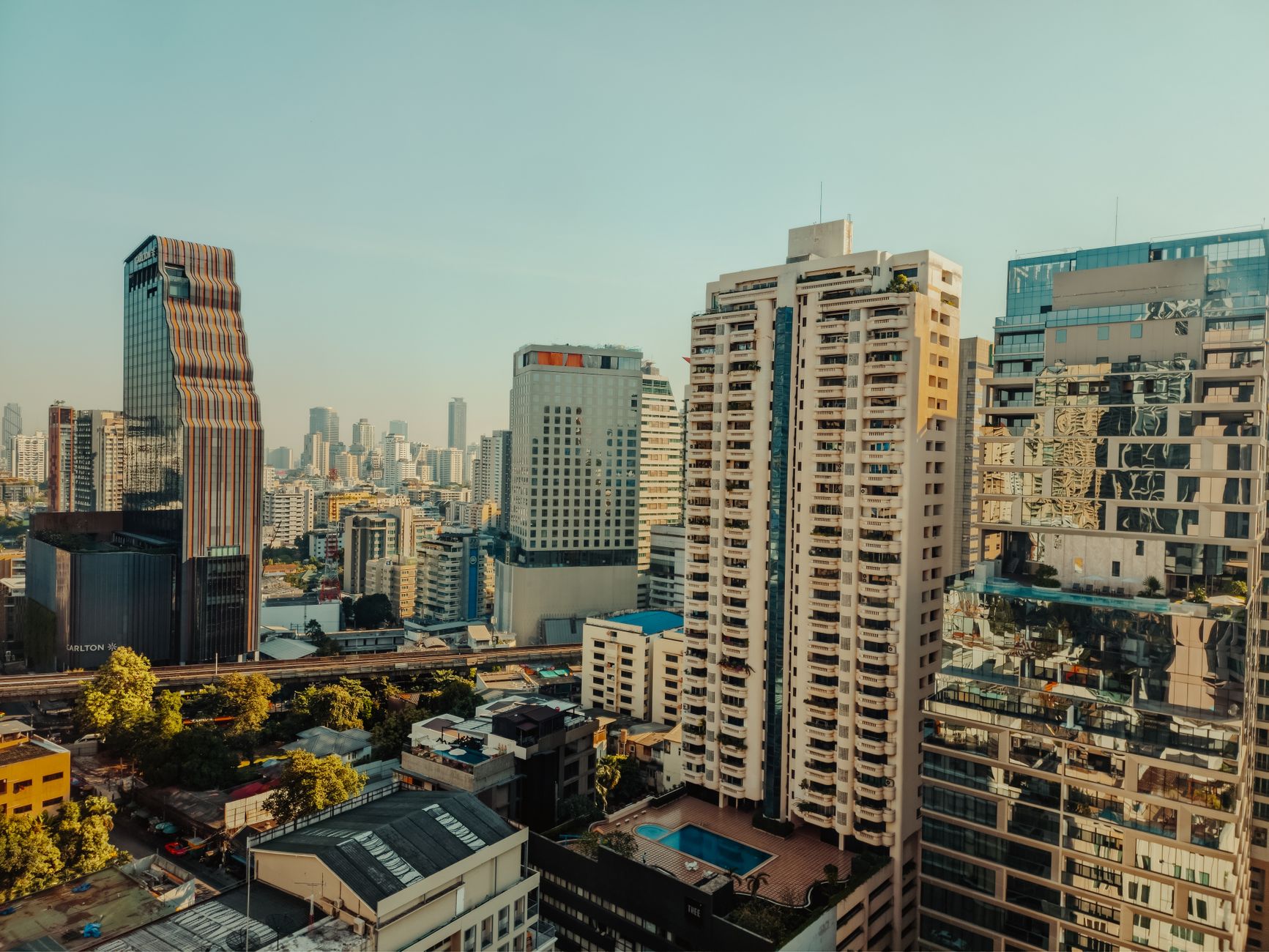
Buying a Bangkok condominium in 2026 means entering a market that is moving in two directions at once. Condo transfers rose 19.5% year-on-year in Q2 2026 while low-rise housing sales fell 11.4%, per REIC (Thailand's Real Estate Information Center) data published September 2026. At the same time, average new condo launch values dropped sharply from roughly THB 20 million to around THB 7.3 million as developers pivot to lower price points. For you as a foreign buyer, this creates a genuine tension: the condo segment looks active, but the underlying price compression and inventory split change the math on entry cost, capital growth, and rental yield in ways that sales materials rarely explain.
This guide works through what the bifurcation means in practice - how to read the headline numbers, where the real risks sit, and what a realistic return looks like once every cost is counted.
Quick answer
- Condo transfers are up; low-rise housing is stalling. Bangkok metro condo sales rose 19.5% in value and 14.7% in units in Q2 2026 (REIC, September 2026). Low-rise sales fell 11.4% in the same period.
- Total supply is shrinking. Approximately 214,083 unsold residential units remain in Bangkok and five surrounding provinces, down 9.6% year-on-year (REIC, Q2 2026). Condo stock of around 85,249 units would take roughly 39 months to clear at the current absorption pace.
- New launches are cheaper, not scarcer. Average new condo launch value fell from approximately THB 20 million to approximately THB 7.3 million per unit as developers target the mass-market segment. This compresses the price tier where most foreign buyers compete.
- Foreign buyers are concentrating in higher-value units. Per REIC data for H1 2026, foreign condo transfers totalled 6,533 units and THB 28.3 billion in value, with Q2 showing a 20.2% value rebound even as foreign unit-count share slipped to 10.2%. Fewer units, more money per unit.
- Gross rental yields in Bangkok range from roughly 4% to 7%. After management fees, vacancy, and platform commissions, realistic net yields land between 3% and 5% for most foreign-owned units. Mid-city and mass-market condos sit at the lower end.
- Capital growth assumptions need re-examining. Price compression from developer pivots to lower price points can hold down resale values in developments where many units are similar in specification and price.
Options and scenarios
Scenario 1: You buy in a newly launched mass-market condo (under THB 5 million)
This is the segment where developer activity is now concentrated. Average launch prices have dropped to around THB 7.3 million overall, and many new projects in outer Bangkok districts target the THB 3 million to THB 5 million range.
For a foreign buyer, the legal position is the same regardless of price: under the Condominium Act, foreigners may own up to 49% of the total area of a registered condominium building on a freehold basis. There is no price floor on this entitlement.
The yield story here is mixed. Gross rental yields on budget units can appear attractive - sometimes 6% or 7% based on advertised rents. But vacancy risk is higher because you are competing with a large pool of similar units. In Bangkok's outer districts as of 2026, market estimates suggest effective occupancy can fall below 70% outside peak corporate relocation seasons, pulling net yields toward 3% to 3.5% after fees.
Capital growth in this tier is the bigger concern. When developers flood a district with units priced around THB 3 million to THB 5 million, secondary market prices for similar units are anchored by new-build competition. Exit at a premium becomes difficult without a differentiated unit or a significant time horizon.
Scenario 2: You buy in a mid-market condo (THB 5 million to THB 15 million)
This is the segment that was, until recently, the developer mainstream. Average launch values previously sat near THB 20 million; as that average drops, the THB 5 million to THB 15 million tier now represents a relative mid-market position rather than the entry level it once was.
Rental demand in this tier, particularly in transit-connected inner districts such as Sukhumvit, Sathorn, and Silom, is more stable. Long-term tenants - expatriate workers, young professionals, regional corporate assignees - target this price band. A 50 sqm to 70 sqm unit near a BTS or MRT station (Bangkok's elevated and underground rail systems) can achieve monthly rents of THB 20,000 to THB 40,000, depending on finishes and exact location, per market estimates as of 2026.
Gross yields on a THB 10 million unit renting at THB 25,000 per month work out to 3.0%. That figure is low even before costs. The attraction here is not yield - it is lower vacancy risk, more liquid resale, and steadier capital value.
Scenario 3: You buy a high-value unit (above THB 15 million)
The REIC H1 2026 data shows foreign buyers concentrating here. Q2 value rebounded 20.2% year-on-year while unit count share fell to 10.2%, which implies a higher average price per transaction. Buyers from the United States, Taiwan, France, and the United Kingdom are among those active in this segment (REIC, September 2026).
Luxury and upper-grade units in prime Bangkok locations have more defensible pricing because land scarcity and construction costs in those districts limit new supply. The 67-month clearance time for low-rise housing does not apply here; the condominium-specific figure of roughly 39 months reflects the broader condo market, and the prime sub-segment tends to clear faster.
Gross yields are lower - typically 3% to 4.5% - because purchase prices are high relative to achievable rents. But vacancy is lower, tenant quality is higher, and resale liquidity is better. For many buyers in this tier, the condo functions as a part-time residence and a capital store rather than a pure income asset.
Scenario 4: You accept a guaranteed-rental program
Many Bangkok developers, particularly in the THB 3 million to THB 8 million range, offer guaranteed rental programs. A typical structure (market estimates, 2026 terms) promises 5% to 8% per annum for 3 to 5 years, managed by the developer or an affiliated operator.
The guarantee is funded from the original sales proceeds - effectively from your own purchase price. When the guarantee period ends, you receive what the market actually yields, which may be 3% to 4% if the development is in a low-demand area. The guarantee masks weak underlying demand. If the developer faces financial difficulty during the guarantee period, payments may be delayed or restructured. Always read whether the guarantee is secured against an identifiable asset or simply a contractual promise.
Comparison table
| Parameter | Mass-market (under THB 5M) | Mid-market (THB 5M to 15M) | High-value (above THB 15M) | Guaranteed-rental program |
|---|---|---|---|---|
| Typical entry price | THB 2M - 5M | THB 5M - 15M | THB 15M+ | THB 3M - 8M (common range) |
| Gross rental yield (indicative) | 5% - 7% | 3% - 5% | 3% - 4.5% | 5% - 8% (guaranteed period) |
| Realistic net yield after costs | 2.5% - 4% | 2% - 3.5% | 2.5% - 3.5% | 3% - 5% (period only) |
| Effective occupancy risk | High - many similar units | Moderate | Low - limited comparable supply | Masked during guarantee |
| Capital growth outlook | Compressed by new supply | Moderate - location-dependent | Best-supported | Depends on underlying demand |
| Resale liquidity | Lower | Moderate | Higher | Variable |
| Foreign freehold eligibility | Yes (49% building quota) | Yes | Yes | Yes |
| Main risk | Oversupply, weak resale | Yield vs. price ratio | High entry cost | Post-guarantee yield drop |
Risks and mistakes
Accepting gross yield as the real yield
Sales materials typically show gross yield: annual rent divided by purchase price. The net yield you actually receive requires subtracting common-area fees (charged monthly by the juristic person - the legally constituted body managing the building), sinking fund contributions (a one-time or periodic capital reserve for major repairs), management fees (typically 8% to 15% of rent collected if you use a letting agent), repair and maintenance costs, and vacancy periods. On a THB 10 million unit with a 5% gross yield, these deductions can reduce actual income by 30% to 40%, leaving a net yield of 3% to 3.5%.
Misreading the bifurcation as broad market strength
The 19.5% rise in condo transfer value (REIC, Q2 2026) refers to value, not unit count. Unit transfers rose 14.7%. The overall market still has approximately 202,414 unsold units across Bangkok and surrounding provinces (REIC data, September 2026), and low-rise housing carries a 67-month absorption shadow. The condo rebound is real but narrow. It does not mean all Bangkok condos are in demand.
Assuming developer price pivots help you
When the average new launch price drops from THB 20 million to THB 7.3 million (REIC, 2026), it signals that developers are competing for buyers who could not previously afford Bangkok condos. This increases the total supply of affordable units. If you already own a unit in the THB 5 million to THB 10 million range in an outer district, new cheaper launches nearby pressure your resale value and your rental pricing.
Underestimating hotel licensing rules for short-term rentals
In Thailand, offering a unit for stays of fewer than 30 days without a hotel license violates the Hotel Act. Most Bangkok condominiums are not licensed hotels. This means short-term rental platforms are legally off-limits for most condo owners. Enforcement varies, but the risk is real: fines, listing removal, and juristic-person prohibitions within the building. If your yield model depends on short-stay income, check the building's juristic rules and the legal position before purchase, not after.
Ignoring the Thai mortgage rejection rate
High mortgage rejection rates for Thai buyers, referenced in REIC's Q2 2026 analysis, reduce the pool of local buyers who can purchase your unit when you sell. For a foreign seller, the exit depends either on another foreign buyer (limited to the 49% foreign-quota share of the building) or a Thai buyer with sufficient cash or credit. In a building that is at or near its 49% foreign ownership ceiling, your buyer pool shrinks further.
Over-relying on a guaranteed-rental promise
A guarantee printed in a sales brochure is a contractual obligation of the developer, not a regulated financial product. If the project underperforms and the developer's cash flow tightens, the guarantee is the first cost they will seek to renegotiate. Check the financial standing of the developer and the legal enforceability of the guarantee clause in your purchase contract, reviewed by an independent Thai lawyer.
Missing transfer and holding costs
At purchase, transfer fee (typically 2% of appraised value, sometimes shared with the developer as an incentive), stamp duty or specific business tax (depending on how long the seller has held the unit), and legal fees apply. During ownership, annual maintenance fees in Bangkok condos run from roughly THB 40 to THB 100 per square metre per month (market estimates, 2026) depending on building grade and facilities. A 50 sqm unit could carry THB 2,000 to THB 5,000 in monthly common-area fees alone.
FAQ
What does the Bangkok condo bifurcation mean for a foreign buyer's entry price today?
The bifurcation means you face more new supply at lower price points (around THB 3 million to THB 7 million per unit) but fewer premium new launches. If you are buying for yield, lower entry prices in outer districts look attractive on paper but carry higher vacancy risk. If you are buying for capital preservation, the higher-value inner-city segment offers better protection against new-supply pressure, though entry costs are proportionally higher.
Is the 19.5% condo transfer growth in Q2 2026 a reliable signal of sustained demand?
It is a positive signal, but one quarter of value growth does not confirm a sustained trend. The full H1 2026 picture shows foreign condo transfers down 1.5% in value overall, with Q2 recovering after a weak Q1. Total unsold condo inventory in Bangkok still stood at approximately 85,249 units as of Q2 2026 (REIC data). Treat the Q2 rebound as stabilisation, not acceleration.
What net rental yield should I expect from a Bangkok condo in 2026?
For most foreign-owned units in Bangkok, realistic net yields after management fees, common-area charges, vacancy, and maintenance fall between 3% and 5%. Well-located units in transit-connected inner districts with stable long-term tenants sit toward the middle of that range. Units in outer districts or buildings with many competing similar units sit at the lower end.
Can I legally rent my Bangkok condo on a short-term basis to tourists?
In most cases, no. Short-term lets of fewer than 30 days require a hotel license under the Hotel Act. Most Bangkok condominiums are not licensed hotels, and the building's juristic person (the management body responsible for the building's rules and common areas) often prohibits short-term rental explicitly. You can legally offer monthly lets without a hotel license. If you plan to use a rental program, confirm that the operator holds the required licensing and that the building permits it.
What does the drop in average launch price (from THB 20 million to THB 7.3 million) mean for resale values?
It means that buyers in the mid-range are now competing against cheaper new alternatives. If you own a THB 8 million unit in a district where new projects launch at THB 4 million to THB 5 million, buyers will compare the two. Your unit must justify the price premium through location, finishing quality, building reputation, or size. Without a clear differentiator, resale at a significant gain becomes harder in the near term.
How does the 49% foreign ownership quota affect my exit strategy?
Under the Condominium Act, foreigners may collectively own up to 49% of the total registered area of any one building. If a building is near or at that ceiling, you cannot sell to another foreign buyer without someone selling their foreign-quota unit first. This limits your buyer pool. Check the current foreign ownership percentage in any building before you purchase - ask the juristic person for this figure, as it is a legal disclosure requirement.
Are guaranteed-rental programs offered by Bangkok developers reliable?
They provide income predictability during the guarantee period (typically 3 to 5 years), which helps cash-flow planning. The main risks are that the guarantee is a developer contractual promise, not a regulated product; it is effectively pre-funded from your purchase price; and yields after the guarantee period often reflect weak underlying market demand. Review the guarantee clause with an independent Thai lawyer before signing.
Which nationalities are most active in Bangkok condo purchases as foreign buyers in 2026?
Per REIC data covering H1 2026, active foreign buyer nationalities include buyers from Myanmar, the United States, Taiwan, France, the United Kingdom, Germany, and Australia, among others. Buyers from the United States showed the highest average unit values (approximately THB 6.6 million per unit), while buyers from India purchased the largest average unit sizes (approximately 72 square metres). This breadth of nationalities reflects Bangkok's role as a regional business and lifestyle hub rather than a single-nationality driven market.
What due diligence documents should I request before buying a Bangkok condo?
Request the title deed (a chanote - full freehold title - is the strongest form, recording exact boundaries and ownership), the building's juristic person registration confirming the building is legally registered under the Condominium Act, the foreign ownership ratio as of the date of purchase, the building's most recent financial accounts and maintenance fund balance, any pending special assessments against the sinking fund, and the seller's original purchase contract to verify the transfer process. Use an independent Thai property lawyer for all document review.
How do I transfer money to Thailand for a condo purchase as a foreigner?
You must transfer purchase funds from abroad in a foreign currency and ensure the receiving Thai bank issues a Foreign Exchange Transaction (FET) form - sometimes called a Thor.Tor.3 certificate. This document confirms that foreign currency entered Thailand and was converted, which is the legal record you need to repatriate funds when you sell. The FET form is essential. Transfers of USD 50,000 equivalent or more typically generate this form automatically; confirm the process with your receiving bank before sending funds.
Planning a property purchase in Thailand? Send us your requirements - the THAI.ESTATE team will reply with specific options and a safety checklist for your case.