Editorial
Ayutthaya and Saraburi: Emerging Property Markets for Foreign Buyers in 2026
By THAI.ESTATE Editorial Team15 min read
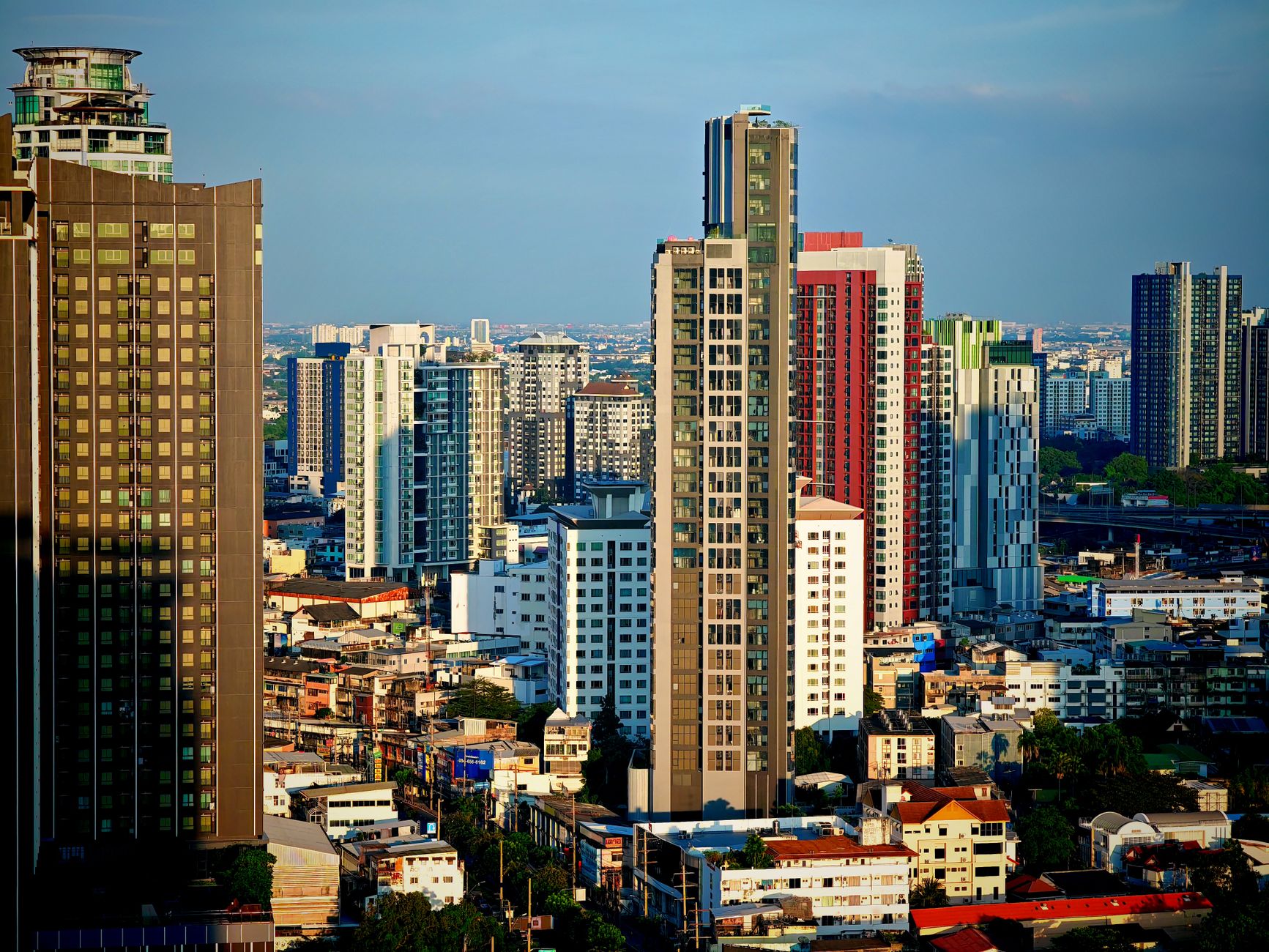
Foreign buyers researching Thailand property beyond the usual Phuket-Pattaya-Bangkok triangle are increasingly asking about central-plains provinces. Per REIC regional data released in October 2026, new home sales in surveyed projects across Ayutthaya and Saraburi surged 108.4% year-on-year in H1 2026 - a figure that stands out sharply against the national picture, where nine-month presales for the nine largest listed developers fell 7.2% year-on-year to 138.4 billion baht, per CGS-CIMB Securities (CGSI) analysis from October 2026.
That divergence is not a coincidence. It reflects structural demand from industrial workers, domestic upgraders, and Bangkok commuters priced out of the capital. For a foreign buyer, these markets raise a practical question: is the outperformance investable, and what risks come with buying in a market that most international advisory guides have not yet mapped?
This guide answers both questions directly.
Quick answer
- H1 2026 new sales growth: 108.4% year-on-year in Ayutthaya and Saraburi, per REIC October 2026 data - one of the sharpest regional outperformances recorded in the current cycle
- Contrast: The western region (Prachuap Khiri Khan) reported roughly a 25% sales decline in the same period, per the same REIC update, illustrating how fragmented the Thai market has become
- Nationwide context: CGSI cut its full-year 2026 presales forecast for covered developers by 3.4% to 192.1 billion baht, partly due to Bangkok floods in late September 2026 that disrupted site visits and weakened sentiment
- Entry prices: Indicative landed house prices in Ayutthaya and Saraburi start from approximately 1.5 million to 3.5 million baht for townhouses and from 3.5 million to 7 million baht for detached homes in established estates, as of 2026 market estimates - well below Bangkok suburban equivalents
- Foreign ownership note: Foreigners cannot own Thai land freehold. Condominium freehold (up to 49% of a building's floor area) is the most accessible legal route. Landed options require a Thai company structure or a long-term leasehold - both carry legal complexity
- Who benefits most: Buyers seeking yield from domestic rental demand, or long-term residents working in the Eastern Economic Corridor or Bangkok who want more space at lower cost
Options and scenarios
What is driving the 108.4% sales jump in Ayutthaya and Saraburi?
Three forces are at work simultaneously.
Industrial corridor spillover. The Eastern Economic Corridor (EEC) receives most international attention, but Thailand's central-plains industrial belt - running through Ayutthaya, Saraburi, and Lopburi - has absorbed significant manufacturing investment across automotive supply chains, food processing, and logistics. Factory workers, engineers, and mid-level management generate stable residential demand that is less sensitive to the tourism cycle than Phuket or Pattaya.
Bangkok proximity and infrastructure. Ayutthaya province sits roughly 80 kilometres north of central Bangkok. The dual-track rail upgrade on the Northern Line, ongoing as of 2026, is cutting commute times. Saraburi, about 100 kilometres northeast, benefits from Highway 1 and the Bangkok-Nakhon Ratchasima motorway corridor. These links make both provinces credible commuter catchments for Bangkok workers who cannot afford suburban Bangkok prices.
Price accessibility for domestic buyers. Bangkok suburban townhouses in established estates now commonly list above 5 million to 8 million baht. Comparable product in Ayutthaya and Saraburi can be found for 1.8 million to 4 million baht, per 2026 market estimates. That gap drives first-time domestic buyers outward and is the primary engine behind the H1 2026 volume surge.
For a foreign buyer, this matters because demand is domestically anchored, not dependent on tourism or foreign-buyer quotas. That is both a strength (more durable in downturns) and a limitation (less foreign-buyer infrastructure).
Is Ayutthaya good for foreign property investment?
Ayutthaya's historical city core is a UNESCO World Heritage Site. That status limits construction density in central areas and restricts certain types of development, which helps preserve residential character but also constrains new condominium supply. The practical result: the condominium market is thin. Very few buildings currently meet the legal 49% foreign-quota threshold (the rule under the Condominium Act that limits foreign freehold ownership to 49% of total floor area in any registered condominium building).
This creates a structural problem for foreign buyers who want freehold title. The most common property types in Ayutthaya are landed houses in gated estate developments (moo baan), which foreigners cannot own freehold under Thai law. A long-term leasehold (typically 30 years, renewable by contractual agreement though not automatically guaranteed under Thai law) or a Thai company structure are the main workarounds. Both require qualified Thai legal counsel before any contract is signed.
The investment case rests on rental demand from domestic tenants - factory workers, university staff, and Bangkok commuters who rent rather than buy. Indicative gross rental yields on landed houses in Ayutthaya and Saraburi range from 4% to 6% per year, as of 2026 market estimates, based on domestic tenant profiles. These are respectable figures, but transaction costs (transfer fee, specific business tax or stamp duty, agent fees) and ongoing management costs reduce net yields materially.
Is Saraburi different from Ayutthaya as a market?
Saraburi is primarily an industrial and logistics province. It hosts cement manufacturing, petrochemicals, and a significant warehouse and distribution sector. Residential demand is more uniformly driven by worker accommodation than by heritage tourism or commuter lifestyle appeal. This gives Saraburi a narrower tenant profile: predominantly industrial workers and their families rather than the mixed tenant base Ayutthaya attracts.
For a foreign buyer, Saraburi is harder to position as a lifestyle purchase. It offers lower entry prices than Ayutthaya (indicative townhouses from 1.5 million to 2.5 million baht, market estimates 2026) and potentially more stable industrial-demand rental income, but essentially zero holiday-rental upside and very limited resale liquidity to foreign buyers. It is a market almost exclusively for investors targeting domestic yield, not personal use or capital appreciation driven by international demand.
Who should buy in Ayutthaya or Saraburi, and who should not?
Buy if:
- You want exposure to Thai residential property outside the tourist-market cycle
- You are comfortable with domestic-tenant rental management, either directly or through a local property manager
- You already have legal counsel familiar with Thai property law and are comfortable with leasehold or company-structure ownership
- Your investment horizon is 7 to 15 years, long enough to benefit from infrastructure improvement and wage growth in the industrial corridor
- You are diversifying a portfolio that already includes more liquid assets elsewhere in Thailand
Do not buy if:
- You need freehold condominium title (supply is very limited in both provinces as of 2026)
- You are expecting holiday-rental income or short-term Airbnb-style returns
- You want a property you can sell quickly to an international buyer pool
- You are unfamiliar with Thai land law and do not have access to independent Thai legal advice
- You need English-language property management services readily available (provider choice is significantly narrower than in Phuket or Bangkok)
How does the national market softness affect these provinces?
The nationwide presales picture is mixed. CGSI, in its October 2026 analysis, flagged that nine-month 2026 presales across its covered developers fell 7.2% year-on-year to 138.4 billion baht, and cut the full-year forecast by 3.4% to 192.1 billion baht. Bangkok floods in late September 2026 disrupted sales activity and reduced domestic purchasing power. CGSI maintains a Neutral sector view for the remainder of 2026.
For Ayutthaya and Saraburi, the relevant question is whether the H1 2026 surge is self-sustaining or partly a catch-up effect after years of underinvestment. The honest answer is that REIC's H1 data captures a strong period but does not confirm whether H2 2026 maintained the same trajectory. Infrastructure-linked demand is durable, but volume spikes can also reflect a single large estate launch skewing headline numbers. Buyers should ask developers for project-specific absorption rate data, not rely solely on the provincial aggregate.
Comparison table
| Parameter | Ayutthaya | Saraburi | Bangkok (suburban, e.g. Rangsit corridor) |
|---|---|---|---|
| Indicative landed house price (as of 2026, market estimates) | 2.5M - 7M baht | 1.5M - 4M baht | 4M - 10M baht |
| Condominium supply for foreign quota | Very limited | Minimal | Moderate to high |
| Primary demand driver | Commuters, heritage tourism, industrial workers | Industrial and logistics workers | Commuters, families, students |
| Indicative gross rental yield (landed, domestic tenant) | 4% - 6% per year | 4.5% - 6.5% per year | 3.5% - 5.5% per year |
| Holiday-rental upside | Low | Negligible | Low |
| International school access | Limited (Bangkok schools reachable by commute) | Limited | Moderate |
| Private hospital access | 1-2 provincial hospitals, Bangkok Ayutthaya Hospital | 1-2 provincial facilities | Multiple major hospitals |
| Airport proximity | 50-60 min to Don Mueang (DMK) | 60-90 min to DMK | 20-40 min to DMK or Suvarnabhumi |
| Foreign buyer resale liquidity | Low | Very low | Moderate |
| H1 2026 sales growth (REIC data) | +108.4% YoY (combined with Saraburi) | +108.4% YoY (combined with Ayutthaya) | Mixed; nationwide presales down 7.2% YoY per CGSI |
| Legal complexity for foreigners | High (leasehold or company structure for land) | High (same) | Moderate (condominium quota more available) |
| Rainy-season flood risk | Moderate to high (Chao Phraya floodplain history) | Lower than Ayutthaya but not negligible | High in some sub-districts (Bangkok floods Sept 2026) |
Risks and mistakes
Flood risk is not theoretical
Ayutthaya sits on the Chao Phraya floodplain. The 2011 floods inundated large parts of the province for months and caused severe property damage. Flood mitigation infrastructure has improved since then, but the risk has not disappeared. The Bangkok floods of late September 2026 - which CGSI cited as a factor in reduced Q3 presales - are a reminder that water management in this river basin remains a live issue. Before buying, verify the specific plot elevation, proximity to flood-retention zones, and whether the developer's estate has perimeter barriers. Ask for insurance availability and cost.
Thin condominium market means limited freehold access
Many buyers assume they can simply buy a condominium freehold (the cleanest legal route for foreigners under the Condominium Act, which allows foreign nationals to hold up to 49% of a registered building's total floor area in their own name). In Ayutthaya and Saraburi, qualifying condominium stock is very limited as of 2026. Buyers who proceed with a Thai company structure to hold landed property must understand that this route is legally and operationally complex, requires ongoing compliance (annual accounts, director meetings, genuine business rationale), and carries regulatory risk if the structure is found to be a nominee arrangement - which Thai law prohibits.
Developer track record is harder to verify in secondary markets
In Bangkok, Phuket, and Pattaya, the market is large enough that developer reputations are well-documented and legal advisors have seen most project structures before. In Ayutthaya and Saraburi, many active developers are regional or local operators. Their financial health, construction quality standards, and ability to complete projects on schedule are harder for an international buyer to assess independently. Always instruct a Thai lawyer to conduct title due diligence (verify the chanote - the full-title land deed, the highest form of freehold land title in Thailand - and confirm there are no encumbrances, liens, or disputes), inspect construction permits, and review the juristic person (the management body that governs common areas in a condominium or estate) financials before any payment.
The volume surge may reflect a small project base
A 108.4% year-on-year increase in sales sounds definitive, but in provinces with relatively few surveyed projects, a single large estate entering the market can shift the percentage dramatically. The REIC figure covers surveyed projects only - not the full province. Buyers should treat this as a directional signal, not a guarantee of market depth. Request project-level data from the developer and cross-check with land office transfer records where possible.
Currency and repatriation risk
Foreign buyers wiring money into Thailand to purchase property should ensure funds are transferred as a foreign currency into a Thai bank account and that a Foreign Exchange Transaction (FET) form is issued for amounts above 50,000 USD equivalent. The FET form (sometimes called a Thor Tor 3) is the document a foreign buyer needs to repatriate sale proceeds or demonstrate the legal import of purchase funds. Without it, transferring money out of Thailand after a future sale becomes difficult. This applies in Ayutthaya and Saraburi exactly as it does anywhere in Thailand.
Oversupply risk in specific estate categories
The H1 2026 surge has attracted new developer interest. If multiple estates launch simultaneously in a small catchment, absorption slows, prices soften, and exit timing becomes critical. Monitor the pipeline: ask local agents how many new units are under construction or planned for the next 24 months in the specific subdistrict you are targeting.
Limited English-language property management
If you buy a rental property in Ayutthaya or Saraburi and do not live in Thailand, you will need a local property manager to find tenants, collect rent, and handle maintenance. English-language property management firms with proven track records in these provinces are scarce as of 2026. Factor in the cost and difficulty of this before committing.
FAQ
Can a foreign national buy property in Ayutthaya or Saraburi?
Yes, with significant restrictions. Foreigners can own a condominium unit freehold (under the Condominium Act, up to 49% of a building's total floor area may be foreign-owned). However, qualifying condominium stock in these provinces is very limited as of 2026. For landed houses - which dominate the local market - foreigners cannot hold freehold land title. The main options are a long-term leasehold (typically 30 years with contractual renewal clauses) or a Thai company structure. Both require independent Thai legal advice before any commitment.
What is driving the 108.4% sales surge in H1 2026?
Per REIC data released October 2026, the growth reflects a combination of industrial-corridor demand from workers in Ayutthaya and Saraburi's manufacturing and logistics sectors, Bangkok commuters seeking lower-cost housing within rail and road commuting distance, and a low base of sales in H1 2025. It does not reflect foreign buyer activity or tourism-driven demand. Infrastructure investment - particularly rail upgrades on the Northern Line - is a structural tailwind.
How does this compare with the national market trend?
The national picture is weaker. CGSI reported in October 2026 that nine-month 2026 presales for its covered developers fell 7.2% year-on-year to 138.4 billion baht, and cut the full-year forecast to 192.1 billion baht. Bangkok floods in late September 2026 contributed to the slowdown. Ayutthaya and Saraburi are outperforming the national average, but buyers should note this is a provincial-level aggregate, not a guarantee of performance in any specific project.
Is flood risk a serious concern for property buyers in Ayutthaya?
Yes. Ayutthaya has a documented flood history, most severely in 2011. The Chao Phraya river system and its tributaries make low-lying areas vulnerable during heavy monsoon seasons. Before purchasing, verify plot elevation, proximity to flood-retention zones, and the availability of property insurance. The Bangkok flooding of September 2026 is a reminder that this is an active regional risk, not a historical footnote.
What rental yields can a foreign investor expect in these provinces?
Indicative gross rental yields on landed houses with domestic tenants range from approximately 4% to 6.5% per year in Ayutthaya and Saraburi, as of 2026 market estimates. Net yields after transfer costs, property management fees, maintenance, and periods of vacancy will be lower. Holiday-rental income is not a realistic expectation in either province. Yields are driven by local wage levels and industrial employment, which are more stable than tourism but offer less upside.
What is a chanote and why does it matter here?
A chanote (Nor Sor 4 Jor) is the highest form of Thai land title deed. It represents full freehold ownership with GPS-surveyed boundaries. In secondary markets like Ayutthaya and Saraburi, some plots still carry lower-grade title documents (such as Nor Sor 3 or Sor Kor 1), which offer weaker legal protection and restricted transferability. Always instruct a Thai lawyer to confirm the title type before proceeding. Only buy with chanote title.
How do I transfer purchase funds legally as a foreign buyer?
Transfer funds as foreign currency directly from your overseas bank account to your Thai bank account. For amounts equivalent to 50,000 USD or more, your Thai bank is required to issue a Foreign Exchange Transaction (FET) form. Keep this document. It is your legal evidence of funds imported from abroad and is essential for repatriating proceeds when you sell. Without it, transferring money out of Thailand after a future sale is significantly more difficult.
Is Saraburi suitable for a lifestyle or retirement purchase?
No, not for most foreign buyers. Saraburi is primarily an industrial and logistics province. It has limited lifestyle amenities, negligible international community, and minimal English-language services. It suits investors specifically targeting domestic industrial-worker rental demand at low entry prices. For retirement or long-stay living, Ayutthaya's historical character, broader service base, and transport links to Bangkok make it the more liveable of the two, but it still falls short of Phuket, Chiang Mai, or Bangkok for international lifestyle buyers.
What due diligence steps are essential before buying in these markets?
Four steps are non-negotiable. First, instruct an independent Thai lawyer (not the developer's lawyer) to verify chanote title, check for encumbrances, and review all contracts. Second, confirm the condominium building's foreign-quota availability (or, for landed property, get a written legal opinion on your ownership structure). Third, obtain a FET form for all incoming funds. Fourth, physically inspect the estate and ask the developer for current absorption rates, completion certificates for finished phases, and the juristic person's sinking fund balance. A sinking fund is a reserve fund that juristic persons collect from owners to cover major future repair costs - a depleted sinking fund is a warning sign.
Will infrastructure improvements increase property values in these provinces?
Infrastructure is a genuine long-term tailwind. Rail upgrades on the Northern Line (Bangkok to Ayutthaya) and the Bangkok-Nakhon Ratchasima motorway corridor serving Saraburi improve commuting viability and expand the effective tenant pool. However, infrastructure timelines in Thailand have historically extended beyond initial projections. Do not price in infrastructure benefits that have not yet been delivered. Treat them as a potential upside, not a guaranteed return driver.
Planning a property purchase in Thailand? Send us your requirements - the THAI.ESTATE team will reply with specific options and a safety checklist for your case.